

Zcash Foundation debuts Rust DNS seeder for faster node bootstraps
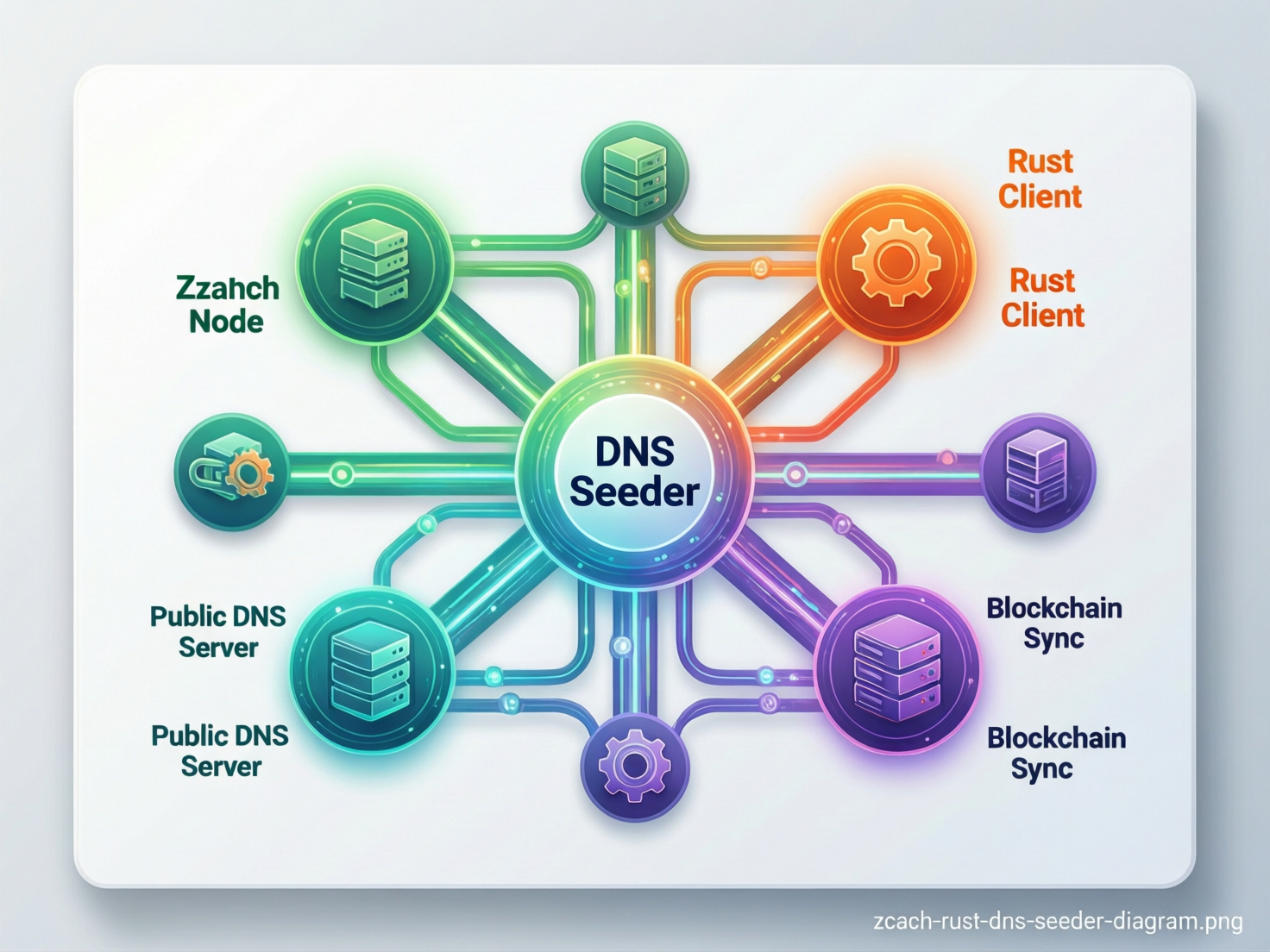
Zcash Foundation has launched a new Zcash Rust DNS seeder designed to help new nodes connect to the network more quickly and reliably. This native Rust implementation provides healthy peer addresses to nodes as soon as they come online, reducing delays during the initial connection process. By using Rust, the tool also benefits from improved performance, memory safety, and long-term maintainability, strengthening the overall stability of the Zcash ecosystem.
The seeder’s crawler follows Zebra’s networking rules, ensuring better compatibility and more accurate peer discovery. In addition, modern security safeguards have been integrated to protect against outdated or unreliable peers. Together, these upgrades aim to make node bootstrapping faster, more resilient, and more secure, improving network efficiency and helping new participants join the Zcash network with greater confidence and stability.
What is the Zcash Rust DNS seeder?
DNS seeders are the “on-ramps” of decentralized networks: they answer initial A/AAAA queries with a shortlist of reachable peers so fresh nodes can join the network without a hardcoded address book. Zcash’s new seeder is written in Rust, integrates the crate used by the Zebra full node, and serves responses via the framework. This reduces mismatches between crawler behavior and node expectations, improving reliability during growth or stress.
Features for safety and performance
The Foundation highlights a lock-free design to keep latency low under load and per-IP rate limiting to blunt abuse such as DNS-amplification attempts. Operators can expose Prometheus metrics for real-time visibility and deploy quickly using the provided Docker assets. Support for both IPv4 and IPv6 ensures broad compatibility for wallets and nodes.
Availability and open source
The project is open source and marked “beta ready for production testing,” with docs, Dockerfiles, and the repository. The readme documents configuration (including metrics endpoint and per-IP query limits) and simple usage, with examples to verify A (IPv4) and AAAA (IPv6) replies.

Why the Zcash Rust DNS seeder matters
Recent efforts to expand and regionalize Zcash’s seeders underline the importance of diverse, well-maintained entry points. A safer, faster seeder helps wallets and nodes connect reliably, even if other infrastructure is offline, and gives operators a clearer, measurable way to contribute capacity.
Context & Analysis
The move continues a broader Rust-first trajectory for Zcash infrastructure (Zebra node, Rust crates) and aligns with common industry shifts toward memory-safe, async-friendly networking services. Open governance via forum posts and public repos should help external operators audit and adopt the tool quickly.

To Sum Up
The Rust DNS seeder updates an important yet often ignored part of Zcash’s networking infrastructure. It introduces safer default settings, better monitoring, and container-based operations, making the system more reliable and easier to manage. These improvements strengthen overall performance and reduce technical risks in daily operations.
With these upgrades, nodes and wallets are expected to connect more successfully on their first attempt. The modern design also encourages wider community participation, allowing more users to operate, review, and improve the system. This collaborative approach helps build stronger security, transparency, and long-term stability for the Zcash network.
FAQs
Q : What is the Zcash Rust DNS seeder?
A : It is a Rust-based service that provides healthy peer IPs (A/AAAA records) to help new Zcash nodes connect to the network quickly.
Q : How does it improve safety?
A : A lock-free design and per-IP rate limiting help prevent abuse while keeping response latency low.
Q : Does it support IPv6?
A : Yes, AAAA responses are supported through the Hickory-DNS stack.
Q : Can I run it with Docker?
A : Yes, the repository includes Dockerfiles and docker-compose configurations for easy deployment.
Q : Where is the code and documentation available?
A : The code and full documentation are available on GitHub under ZcashFoundation/dnsseederNG, including architecture and operations guides.
Q : Is it production-ready?
A : It is currently marked as beta and “ready for production testing” on both mainnet and testnet.
Q : How is this different from older seeders?
A : It is written in native Rust, aligned with Zebra’s networking logic, and includes built-in metrics and rate limiting for better performance and security.
Facts
Event
Zcash Foundation releases native Rust DNS seeder for peer discoveryDate/Time
2026-01-21T00:00:00+05:00Entities
Zcash Foundation; Zebra (Rust full node) Hickory-DNSFigures
Per-IP QPS and burst limits configurable (e.g., 10 QPS, burst 20 default in repo) IPv4/IPv6 A/AAAA responses; Prometheus metrics endpoint.Quotes
“a native Rust implementation of the Zcash DNS Seeder” Zcash Foundation blog.Sources
Zcash Foundation blog; GitHub repo; Zcash Forum; CoinDesk coverage (links below)