

Youth Cryptocurrency Adoption in the Arab World Explained
Youth cryptocurrency adoption in the Arab world is being driven by a mix of economic pressure, social-media culture and easier access to Gulf-based exchanges and apps. For US, UK and European policymakers, this matters because it shapes remittance flows, financial inclusion pathways and financial-crime risks connected to a very young, very online population. In practice, you are dealing with a mid-sized crypto region whose youth behaviour has outsized development and compliance implications.
Introduction.
Youth cryptocurrency adoption in the Arab world is rising at the same time that the region has become one of the world’s more dynamic crypto markets. Chainalysis estimates that the wider MENA region received roughly $339 billion in on-chain value between July 2023 and June 2024, about 7.5% of global crypto transaction volume. With over half the population under 30 in several Arab states, young people are at the centre of that activity, experimenting with trading, stablecoins, Web3 jobs and remittance use cases.
If you work in policy, development or impact investing in the United States, United Kingdom, Germany or the wider European Union, you are already connected to this story through remittances, sanctions policy, development finance and youth-employment programmes. The key question is not whether Arab youth are using crypto — they are — but where youth adoption is highest, what drives it, how Gulf hubs like the United Arab Emirates and Saudi Arabia shape access, what the regulatory patchwork means for young users, and what practical steps can reduce harm while supporting financial inclusion.
None of this is investment advice; it is a risk-and-opportunity map for institutions deciding how to engage.
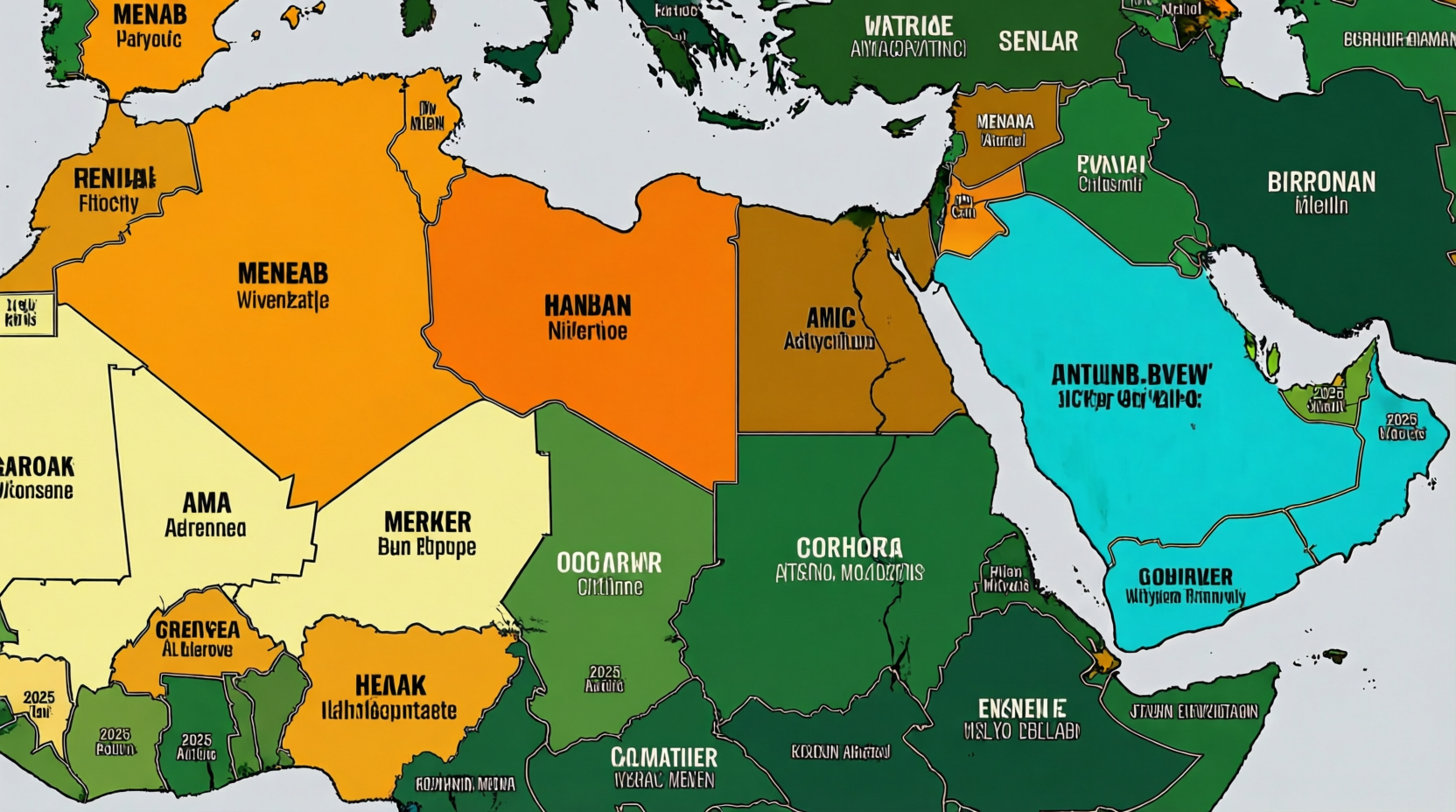
Regional snapshot of youth cryptocurrency adoption in the Arab world
Youth cryptocurrency adoption in the Arab world is significant because it sits on top of a relatively large, fast-growing MENA crypto market and a structurally young population. In the 2024 Chainalysis MENA chapter, transaction volumes for the region are estimated at about $338.7 billion over 12 months, with most value flowing through centralized exchanges and a growing share via DeFi in markets like the UAE and Saudi Arabia. At the same time, youth unemployment across the Middle East and North Africa remains close to 18–19%, well above the global average.Together, those two facts help explain why crypto catches the attention of Arab Gen Z.
MENA youth crypto adoption in numbers.
Chainalysis data suggests that MENA is now a mid-tier crypto region by total value, but with pockets of very intense engagement. In 2023–24, the region ranked around seventh globally by on-chain value, accounting for roughly one in every thirteen dollars moved on public blockchains. Within that, Türkiye, the UAE and Morocco dominate volumes, while Gulf economies show above-average participation in DeFi and altcoins.
For this article, “Arab world” refers broadly to the 22 members of the Arab League: from the Gulf (UAE, Saudi Arabia, Qatar, Kuwait, Bahrain, Oman) through the Levant (Jordan, Lebanon, Syria, Palestine) and into North Africa (Egypt, Morocco, Tunisia, Algeria and others). Many analytics providers bundle these markets into “MENA,” sometimes adding non-Arab states such as Türkiye or Iran, so US or European readers need to be careful when interpreting “regional” charts.
While no dataset cleanly breaks out “Arab youth crypto adoption,” multiple survey and platform sources indicate that 18–34-year-olds account for the majority of retail trading accounts and app downloads in the region, often above 60%.
Hotspots vs laggards: GCC, Levant and North Africa compared
Underneath the headline numbers there is a clear split between Gulf hubs, crisis-affected economies and more cautious or infrastructure-poor markets. Chainalysis shows the UAE and Saudi Arabia with relatively high DeFi activity and strong altcoin usage, while countries like Egypt, Morocco and Jordan lean more on centralized exchanges and stablecoins.
A simple way for Western readers to think about sub-regional youth adoption.
| Sub-region | Example markets | Youth adoption (rough guide) | Notes |
|---|---|---|---|
| GCC | UAE, Saudi Arabia, Qatar | High | Better access to licensed exchanges, higher incomes, strong social-media marketing |
| Levant | Jordan, Lebanon | Medium–High | Driven by economic stress, remittances, often via offshore platforms and P2P |
| North Africa | Egypt, Morocco, Tunisia, Algeria | Medium but growing | Mix of speculative trading and store-of-value use, constrained by FX rules and licensing |
This is not a league table, but a reminder that “MENA crypto” is not homogeneous. A young engineer in Dubai can attend Web3 meetups, open accounts with licensed platforms and pay with stablecoin cards, while a student in Cairo or Tripoli may rely on informal OTC desks and Telegram groups.
How US, UK and EU audiences are reading the youth crypto story
US-based analytics firms such as Chainalysis tend to frame MENA youth crypto adoption as a mix of opportunity and adaptation: a way to route remittances, hedge against inflation, and plug into global digital-asset markets from under-banked environments. In Washington, MENA crypto often shows up in conversations about sanctions enforcement and regional stability, but also in development-finance discussions about digital public infrastructure.
UK and EU narratives lean more heavily toward AML/CTF, sanctions and systemic-risk concerns. EU policymakers point to MiCA the Markets in Crypto-Assets Regulation as a way to force better risk management, capital and disclosures onto stablecoin issuers and crypto-asset service providers.The UK’s Financial Conduct Authority brings crypto promotions under a regime that demands “clear, fair and not misleading” marketing, with mandatory risk warnings for retail users in London or Manchester. German debates, shaped by BaFin, focus on how to supervise crypto-asset services consistently with MiCA while keeping the banking system insulated from speculative excess.
What is driving youth cryptocurrency adoption in the Arab world today?
Youth cryptocurrency adoption in the Arab world is driven by a combination of economic insecurity, the search for side income, social-media-fuelled FOMO and the practical benefits of cheaper cross-border transfers. Young Arabs are turning to crypto because it promises faster income opportunities, a hedge against local currency volatility and an always-on way to move money that fits how Gen Z already lives online.
Economic pressures, unemployment and search for side income
Many Arab economies are still wrestling with high youth unemployment and under-employment roughly one in five young people in the Middle East and North Africa are jobless, compared with around 13% globally.Inflation, FX controls and periodic banking crises in markets like Lebanon and Egypt have further eroded trust in local currencies and traditional saving products.
In that context, retail crypto trading, US-dollar-pegged stablecoins and even high-risk “play-to-earn” schemes can appear, to a 22-year-old graduate in Cairo or Tunis, as one of the few visible paths to extra income. Chainalysis data for Turkey often grouped into MENA analysis shows hundreds of billions of dollars in annual transaction volume, much of it linked to hedging against inflation and speculative altcoin trading.Similar patterns, on a smaller scale, show up in Gulf and North African markets, where crypto is pitched as both a side hustle and a financial lifeline.
Social media, influencers and FOMO in youth crypto culture
Social media is arguably the strongest cultural driver of youth crypto uptake in the region. TikTok, Instagram, X and YouTube are saturated with short-form content promising “signals,” “alpha” and shortcuts to wealth. In GCC countries with high smartphone penetration and cheap mobile data, Telegram groups and Arabic-language YouTube channels function as 24/7 trading rooms.
Global research on Gen Z crypto investors shows consistent patterns: they skew younger, more risk-tolerant, more confident in their own investing skill and often exposed to herding behaviour.Regional behavioural-finance studies in Gulf markets also find strong evidence of speculative trading, overconfidence and herd effects among crypto investors. Add in celebrity endorsements, e-sports sponsorships and partnerships between exchanges and football clubs, and you get a potent FOMO cocktail especially in Dubai, Riyadh and Doha.
Remittances, cross-border ties and digital-native convenience
A third driver is utility: young workers and students using crypto for cheaper, faster cross-border transfers along Gulf–Levant–North Africa corridors. Remittance fees from, say, a junior developer in Riyadh sending money home to Cairo can easily reach 5–7% through traditional channels; stablecoins on major blockchains can cut that cost sharply, particularly for larger transfers.
Reports on MENA crypto use highlight rising stablecoin volumes in both the UAE and Saudi Arabia, where stablecoins serve as a bridge between local banking systems and global exchanges.For students and freelancers who already live on their phones, funding a Binance or local-exchange account, converting to USDT or USDC and cashing out via P2P marketplaces can feel more intuitive than filling in SWIFT forms at a bank branch.
Micro-answer (AEO-ready)
Young Arabs are turning to crypto because it promises faster income, a hedge against local economic volatility, easier cross-border transfers and a way to trade, save and send money that matches their always-online, social-media-driven lives.
What role do Gulf crypto hubs like the UAE and Saudi Arabia play in youth adoption?
Gulf crypto hubs such as the UAE and Saudi Arabia act as magnets for exchanges, startups and talent, and their policies shape how easily young people across the Arab world can access crypto platforms. They provide much of the region’s formal infrastructure — licensed exchanges, on-ramps, jobs and community events that make it simpler for Arab youth to start using, working in and talking about crypto.

Dubai, Abu Dhabi and Riyadh as regional crypto magnets
Over the past decade, Dubai and Abu Dhabi have deliberately positioned themselves as global crypto hubs, combining free zones, progressive regulatory frameworks and active courting of Web3 firms.The creation of the Virtual Assets Regulatory Authority (VARA) and the Abu Dhabi Global Market’s crypto framework has allowed dozens of exchanges, custodians and tokenisation platforms to serve users under clear rulebooks.
Riyadh is moving more cautiously but is increasingly part of the same conversation, especially as Saudi Arabia’s Vision 2030 agenda emphasises digital transformation and youth employment. Gulf conferences, hackathons and university programmes now routinely feature crypto, DeFi and blockchain, giving young people in the region aspirational pathways into Web3 jobs from Solidity developer roles to compliance analyst positions.
Licensed exchanges, on-ramps and youth-focused apps in the GCC
The relative regulatory clarity in Gulf hubs has encouraged the growth of licensed exchanges and youth-oriented investment apps offering Arabic interfaces, micro-investing and social trading features. Regional and global platforms, from local players to giants like Binance, use the UAE as a base for serving customers across the Arab world, subject to KYC/AML controls.
This matters for youth because it determines whether their first crypto experience is a fully anonymous Telegram channel or a licensed platform with risk warnings, 2FA and support. DeFi activity in the UAE, for example, grew by around 70–80% year-on-year in 2023–24, signalling a broader ecosystem of wallets, DEXs and yield products that young users can tap into.
Cross-border spillovers
Gulf hubs are not just local markets; they export crypto culture. Marketing campaigns shot in Dubai reach students in Amman and Casablanca on TikTok. Gulf-based exchanges launch ambassador programmes, scholarships and hackathons that attract participants from Jordan, Egypt, Tunisia and beyond. Web3 job openings in Dubai or Abu Dhabi circulate through regional Telegram groups, reinforcing the idea that crypto is part of a bigger GCC digital-economy story.
Micro-answer (AEO-ready)
Gulf hubs provide the infrastructure regulated exchanges, jobs, events and on-ramps — that makes it far easier for young people across the Arab world to start using, working in and talking about crypto.
Arab Gen Z, Islamic finance and the appeal of digital assets
Arab Gen Z is drawn to digital assets because they feel modern, borderless and empowering, and they offer a narrative of financial autonomy that resonates strongly in societies with limited formal job opportunities. When framed as Shariah-compliant, crypto can also appear to bridge faith and financial aspiration for young Muslims.
Why are Arab Gen Z and young millennials increasingly attracted to crypto and digital assets?
Identity and aspiration matter as much as economics. For many Arab Gen Z, crypto is part of a broader tech-optimistic worldview that includes cloud, AI and gaming all accessible from a smartphone in Cairo, Rabat or Muscat. Crypto promises “borderless money” in a region where borders often complicate labour mobility, payments and even access to digital services.

Academic studies of prospective Arab crypto users find that performance expectancy (belief that crypto will improve one’s financial situation), social influence and perceived ease of use are among the strongest predictors of adoption.For a 19-year-old in Amman or Tunis, buying a small amount of bitcoin or a Shariah-screened token can feel like becoming part of a global financial conversation that is otherwise closed off.
Islamic finance and Shariah-compliant youth investing
Islamic finance principles place restrictions on interest (riba), excessive uncertainty (gharar) and pure speculation (maysir). Scholars differ on whether mainstream cryptocurrencies are permissible: some classify bitcoin and major stablecoins as acceptable “digital assets” when used as a medium of exchange or store of value, others see highly volatile tokens and leveraged trading as incompatible with Shariah.
In response, Shariah-screened crypto funds, indices and token lists have emerged in Gulf and Malaysian markets, aiming to filter out interest-bearing products and highly speculative coins.For young Muslims who want both faith alignment and exposure to the digital-asset space, these vehicles are a natural focal point especially when promoted through local mosques, student societies and Islamic-finance influencers.
Risk awareness vs reality.
The challenge is that enthusiasm often outpaces understanding. Survey-based research in Gulf and wider Arab samples suggests that many young crypto users overestimate their financial literacy, underestimate volatility and have limited knowledge of leverage, rug-pulls and on-chain fraud.At the same time, they are operating in markets where formal investor-protection regimes are still evolving.
Academic work on Gen Z crypto investors globally shows that herding behaviour and the need for achievement can push young people toward concentrated bets and short-term trading rather than diversified, long-term investing.Those patterns are visible in MENA too, amplified by local Telegram “pump” groups and unlicensed signal sellers.
Micro-answer (AEO-ready)
Arab Gen Z is drawn to crypto because it feels modern, borderless and empowering and where it is presented as Shariah-compliant, it offers a way to invest that speaks both to their faith and to their desire for financial progress.
How is regulation in Arab countries shaping youth access to crypto and exchanges?
Regulation shapes whether Arab youth primarily encounter crypto through licensed, supervised platforms or in unregulated grey markets and scams. It affects everything from KYC quality and leverage limits to the likelihood that a 20-year-old is onboarded via a regulated app or an anonymous Telegram group.
A patchwork of licensing, bans and “grey zones” across Arab states
The Arab world today is a mosaic of regulatory approaches.
Proactive licensing hubs
The UAE and Bahrain have developed detailed frameworks for virtual-asset service providers (VASPs) and are racing to align with MiCA-style standards, while Saudi Arabia and Qatar are moving more slowly but signalling openness via sandbox initiatives.
Tightly controlled access
Some North African states allow limited crypto use while restricting local exchanges and enforcing strict FX and banking rules.
Formal or de facto bans
A handful of countries maintain broad prohibitions on trading or using crypto, pushing activity into P2P markets and foreign platforms.
For young users, this means that access can range from “download a regulated app, pass eKYC and start with $10” to “find a trusted OTC dealer on Telegram and hope they don’t disappear.”
Interplay with US, UK and EU rules.
Because many platforms that serve Arab youth are headquartered or banked in Europe or the UK, Western rules have real downstream effects. MiCA introduces licensing, capital and disclosure standards for crypto-asset service providers offering services into the EU, including from MENA. The FCA’s financial-promotion regime applies to any firm marketing cryptoassets to UK consumers, including from overseas, and demands prominent risk warnings and restrictions on incentives.
At the same time, US and EU sanctions and AML/CTF expectations influence how global exchanges manage onboarding, PEP screening and controls on high-risk geographies. Europe’s new Anti-Money Laundering Authority (AMLA), based in Frankfurt, is explicitly mandated to focus on crypto-related illicit finance across the bloc.That indirectly affects Arab youth whenever an exchange de-risks certain corridors or tightens KYC in response.
Consumer protection, fraud and AML/CTF risks in youth usage
Youth-focused risks in Arab crypto markets broadly mirror those seen in New York or London but with fewer safety nets:
Romance and “pig-butchering” scams targeting young users on Instagram and messaging apps
Pump-and-dump schemes centred on meme coins and illiquid tokens
Unlicensed Telegram groups offering signals, leverage and custodial services
Misuse of youth accounts for laundering or terrorist finance, especially where KYC is weak
Chainalysis estimates that global illicit crypto flows jumped sharply in recent years, with laundered volumes reaching tens of billions of dollars annually. Without clearer consumer-protection rules, dispute-resolution mechanisms and risk-based enforcement, young Arabs are likely to bear a disproportionate share of the losses.
Micro-answer (AEO-ready)
Regulation determines whether Arab youth meet crypto through licensed platforms with safeguards or in unregulated grey markets shaping everything from KYC quality and leverage limits to their vulnerability to scams and financial crime.
Why does youth crypto adoption in the Arab world matter for US, UK and European policymakers?
Youth crypto trends in the Arab world matter for Western policymakers because they influence remittance flows, financial-inclusion outcomes and financial-crime exposure linked to allies and aid recipients. For US, UK and European institutions, this is both a development issue and a security and compliance issue.
Financial inclusion, remittances and development cooperation
Crypto touches several core development themes: remittance costs, access to transaction accounts and the design of digital public infrastructure. The World Bank has long highlighted that fewer than half of adults in many MENA economies (excluding high-income Gulf states) have a bank account; DeFi and mobile-first wallets can help close some of that gap if used responsibly. (Chainalysis)
For Western donors funding youth-employment or entrepreneurship programmes in places like Jordan, Tunisia or Morocco, ignoring crypto now means ignoring a tool that a meaningful minority of programme participants are already using — whether to receive payments, send money home or speculate.
Sanctions, AML/CTF and systemic risk considerations
From a risk perspective, youth adoption intersects with concerns about sanctions evasion, terrorist finance and fraud. Global reports show crypto-based money-laundering volumes rising sharply since 2020, and regulators warn that pseudonymous wallets and P2P markets complicate supervision.
For Western banks and payment companies serving corridors like New York–Dubai–Cairo or London–Riyadh–Amman, this raises questions about transaction-monitoring models, Travel Rule compliance and how to treat inflows from young customers whose primary “bank” is a crypto exchange.
Market, research and partnership opportunities for US/UK/EU institutions
There is also upside. Universities in Boston, London or Berlin can partner with Gulf and North African institutions on joint research into youth digital-asset use. US or European NGOs can co-design literacy programmes with local CSOs. Fintechs that already work with cloud, data and payments in the region often alongside partners like Mak It Solutions on cloud architecture and analytics can extend into Web3-adjacent services with the right regulatory guardrails.
Micro-answer (AEO-ready)
Youth crypto trends in the Arab world influence remittance flows, financial-inclusion outcomes and financial-crime risk for US, UK and European institutions, so they matter for both development policy and financial-stability agendas.
How can NGOs, educators and regulators reduce risks and improve financial literacy around crypto for Arab youth?
The most effective way to reduce crypto-related risks for Arab youth is to combine targeted education, safer product design and cross-border cooperation. The goal is for young people to meet crypto in supervised, informed settings not solely through anonymous signal channels or high-pressure marketing.
Designing youth-centred crypto education and literacy programmes
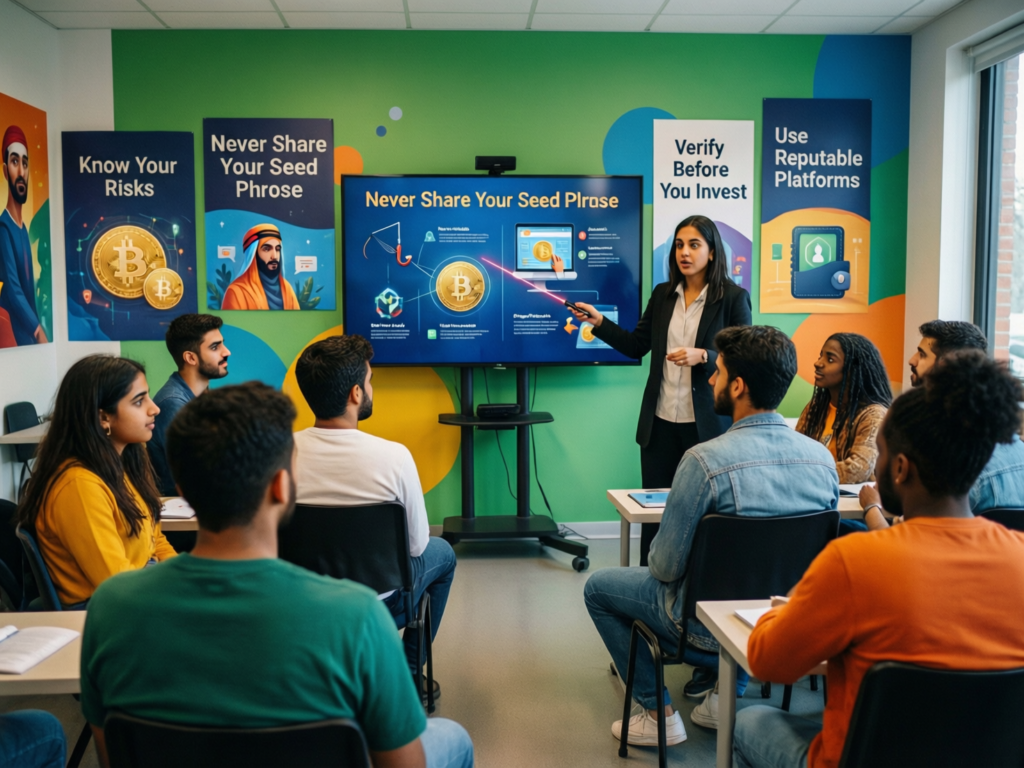
A practical youth-crypto curriculum in Amman, Rabat or Muscat can be layered onto existing employment or entrepreneurship programmes rather than built from scratch. Core components might include:
Basics of blockchain and digital assets what coins, tokens, stablecoins and NFTs are (and aren’t)
Risk management volatility, leverage, diversification and realistic return expectations
Fraud and scam awareness common patterns in romance scams, pump-and-dumps, fake airdrops and phishing
Rights and responsibilities what KYC/AML means, how to use strong authentication and the basics of data protection
Banks and regional players highlighted in AMINA’s work on the Middle East’s crypto hub vision note that structured education can reduce mis-selling and improve engagement. NGOs and ministries can partner with firms like Mak It Solutions to build interactive dashboards and micro-learning modules hosted on modern web platforms and GCC cloud regions.
Safer product and policy design for youth-focused apps and platforms
Product teams behind MENA-focused exchanges and trading apps can do a lot to protect young users without banning them.
Default limits and cooling-off periods for new or unverified accounts
Extra friction for high-risk products like perpetuals or 50x leverage
Clear, Arabic-first risk warnings and fee disclosures
In-app nudges and “learn before you trade” modules
Simple complaint and redress channels, clearly signposted in-app
Western neobanks and brokers surveyed by Strategy& note that trustworthiness and security are the top criteria for retail investors choosing platforms. (PwC) Those same principles apply in MENA youth markets; the UX should make safe behaviour the default.
Building cross-regional coalitions between Arab institutions and US/UK/EU partners
Finally, coalitions matter. Practical steps include.
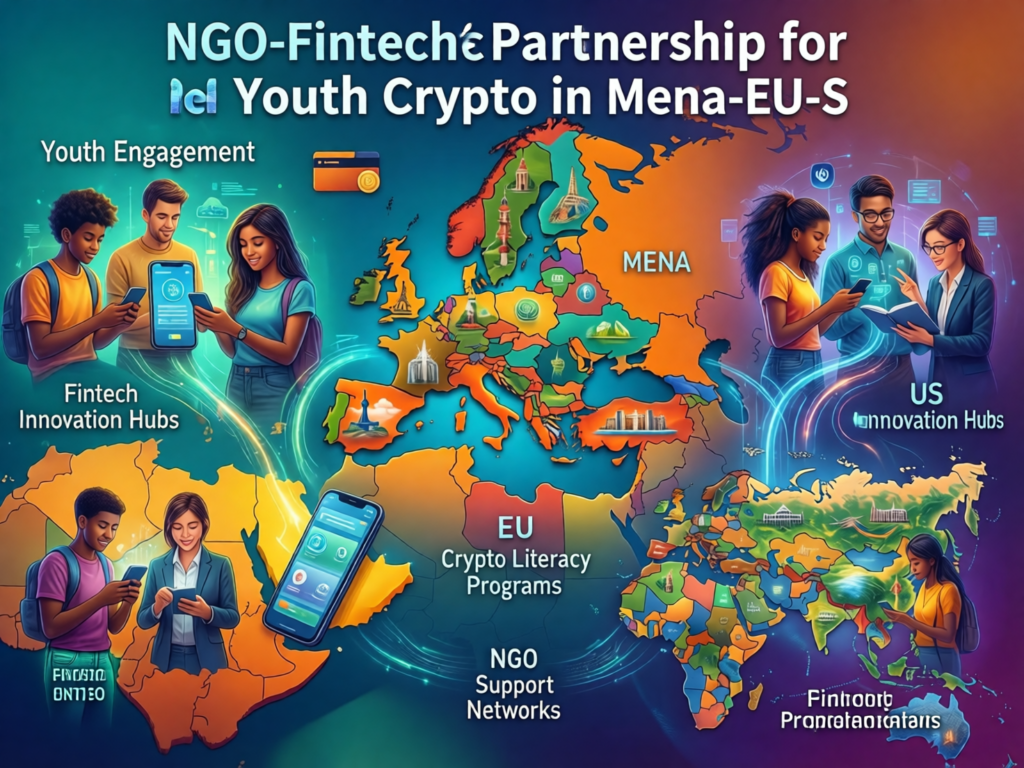
Joint working groups linking Gulf regulators, North African central banks, Western development agencies and civil-society partners
Shared sandboxes or pilot programmes focused on Shariah-compliant, youth-safe crypto products
Funding models where US/UK/EU donors back independent evaluation of youth literacy programmes and risk outcomes
Cloud and analytics partners including Mak It Solutions teams already working on MENA data platforms and CIO-level cloud strategies can help build the underlying infrastructure: secure data lakes, dashboards tracking youth usage patterns and impact-evaluation pipelines.
Micro-answer (AEO-ready)
The best way to reduce youth crypto risks is to combine targeted education, safer product design and cross-border cooperation so young people encounter crypto in supervised, informed contexts rather than purely speculative channels.
Last Words
For regulators, the message is not “switch crypto off” but “treat youth crypto as part of wider youth, labour-market and financial-inclusion strategies.” Regulatory patchiness, high youth appetite and growing cross-border flows mean that fully ignoring the space simply pushes young users toward higher-risk channels. Integrating youth cryptocurrency adoption in the Arab world into broader remittance, digital-ID and consumer-protection policies is now a necessity, not an option.
Next steps for NGOs, educators and researchers
NGOs and universities can move quickly on three fronts: baseline surveys of youth crypto behaviour in specific countries; pilot literacy modules embedded into existing programmes and independent evaluation of what works. Commissioning country-level diagnostics on youth cryptocurrency adoption in the Arab world is a realistic first step, supported by data platforms and analytics partners who already understand GCC and North African cloud and data-residency constraints.
Signals for investors and fintechs considering youth-focused MENA products
For investors and fintech founders, the region is attractive but not a blank canvas. The right strategy is cautious engagement: partnering early with local regulators, aligning with MiCA, UK-GDPR and US AML standards, and backing products that emphasise literacy, transparency and consumer protection. Platforms built on compliant cloud infrastructures, with robust data-governance models, will be better placed to win over both young users and regulators in Dubai, London and Berlin.
Key Takeaways
MENA is a mid-tier global crypto market by volume, but its unusually young population means youth adoption has outsized policy implications for both the region and Western partners.
Economic pressure, social-media FOMO and remittance use cases are the main drivers of digital-assets adoption among Arab youth.
Gulf hubs like Dubai and Abu Dhabi export crypto infrastructure and culture across the region, shaping how easily young people in North Africa and the Levant access exchanges and jobs.
Regulatory patchwork across Arab states, combined with tightening MiCA and FCA regimes, creates complex compliance dynamics for any platform serving youth from the US, UK or EU.
NGOs, educators and regulators can reduce harm by embedding crypto literacy into existing programmes, encouraging safer product design and building cross-regional coalitions around youth protection.
If you’re a policymaker, NGO, university or fintech team trying to make sense of youth cryptocurrency adoption in the Arab world, you don’t have to piece the data together alone. Mak It Solutions can help you turn fragmented MENA and GCC signals into concrete dashboards, risk maps and programme designs that stand up to scrutiny in Washington, London, Berlin and Dubai.
Start by scoping a small, focused project a youth-crypto baseline survey, a literacy pilot, or an analytics dashboard and we’ll help you design the architecture, data pipelines and reporting you need to move from anecdotes to evidence.( Click Here’s )
FAQs
Q : Which Arab countries are currently most restrictive or most open to retail crypto use by young people?
A : Most open are Gulf hubs with clear licensing frameworks, such as the UAE and Bahrain, where regulated exchanges, custodians and brokers can serve retail users under detailed rulebooks. Countries like Saudi Arabia and Qatar are more cautious but increasingly open to sandboxes and pilot regimes. North African markets and parts of the Levant often sit in the middle, allowing crypto use but restricting local exchanges or FX access. A few states maintain broad prohibitions, which tends to push youth activity into offshore exchanges and informal P2P markets.
Q : Are stablecoins a safer way for Arab youth to experiment with crypto than meme coins or leveraged trading?
A : From a pure risk perspective, fiat-backed stablecoins used as a payment or remittance tool are generally less volatile than meme coins or leveraged derivatives. However, “safer” does not mean risk-free: young users still face issuer risk, smart-contract risk, scams and regulatory uncertainty, especially if a stablecoin does not fully comply with frameworks like MiCA. In contrast, meme coins and 20x perpetuals are almost entirely speculative and can wipe out capital quickly. Literacy programmes should make these distinctions explicit before young people fund their first wallet.
Q : What data sources and reports can I use to track youth crypto adoption trends in MENA over time?
A : For macro trends, Chainalysis’ annual Geography of Cryptocurrency and MENA-specific reports are the best starting point for transaction volumes, platform mix and country rankings.For labour-market and financial-inclusion context, use World Bank Findex data and ILO youth-employment reports.For investor behaviour, studies like Strategy&’s Crypto Survey 2023 and regional academic work on Arab or GCC crypto investors add useful detail on demographics and risk attitudes.
Q : How can a US, UK or European NGO integrate crypto literacy into existing youth employment or entrepreneurship programmes in Arab countries?
A : The easiest route is to treat crypto as an add-on module rather than a standalone course. For example, a youth-entrepreneurship bootcamp in Jordan or Morocco could dedicate one or two sessions to digital-asset basics, risks and practical use cases like remittances or cross-border payments. Materials should be co-created with local partners, translated into Arabic, and explicitly reference Western regulatory expectations so young people understand how MiCA, FCA rules or US sanctions may affect the platforms they use. NGOs can then work with analytics partners to measure shifts in knowledge and behaviour over time.
Q : What should Western fintechs consider before launching youth-focused crypto apps or remittance products in the Arab world?
A : First, they need a clear regulatory map: which Arab jurisdictions allow retail crypto, how local rules interact with MiCA, FCA promotions rules and US AML/CTF obligations, and what sanctions constraints apply. Second, they should invest in UX and policy safeguards for young users default limits, risk warnings, strong authentication and in-app education. Third, partnering with local banks, telcos and regulators in places like Dubai, Riyadh or Cairo can help align products with local expectations and data-residency rules. Finally, Western teams should build cloud and data architectures that respect GDPR/DSGVO, UK-GDPR and PCI DSS where card payments are involved.