

Vitalik Buterin calls for better DAOs, pushes beyond token voting and weak oracles
Ethereum co-founder Vitalik Buterin has called for the creation of “different and better” decentralized autonomous organizations (DAOs), encouraging the crypto community to move beyond the current model of token-holder voting that mainly focuses on managing treasuries. He believes this system limits innovation and often leads to low engagement, decision-making fatigue, and unequal influence among participants. According to Buterin, DAOs should evolve into more meaningful coordination platforms rather than just financial governance tools.
He emphasized that future DAO designs must prioritize stronger privacy protections, more reliable and accurate oracles, and human-centered coordination systems. These improvements can help reduce participation fatigue, improve trust, and make decentralized governance more inclusive, efficient, and sustainable for long-term growth.
Why Buterin says the status quo isn’t enough
Buterin argued that while coin-weighted voting is functional, it doesn’t solve the shortcomings of human politics and can encourage cynicism in DAO communities. He highlighted the need to rethink assumptions across governance mechanics and infrastructure, rather than default to token voting for every decision.
The case for resilient DAO infrastructure
Vitalik Buterin calls for better DAOs core priorities
Stronger oracles for DeFi
Today’s decentralized stablecoins and prediction markets depend on oracle designs whose security ceiling is bounded by token market cap, limiting the cost to attack.
On-chain dispute resolution
Especially for insurance and complex smart-contract use cases.
Curated, canonical registries
Lists of secure apps, verified token addresses, and interfaces that DAOs steward as public goods.
Agile funding & long-term maintenance
Mechanisms to quickly pool capital for short-term efforts and to sustain projects after founders depart.
Vitalik Buterin calls for better DAOs privacy and decision fatigue
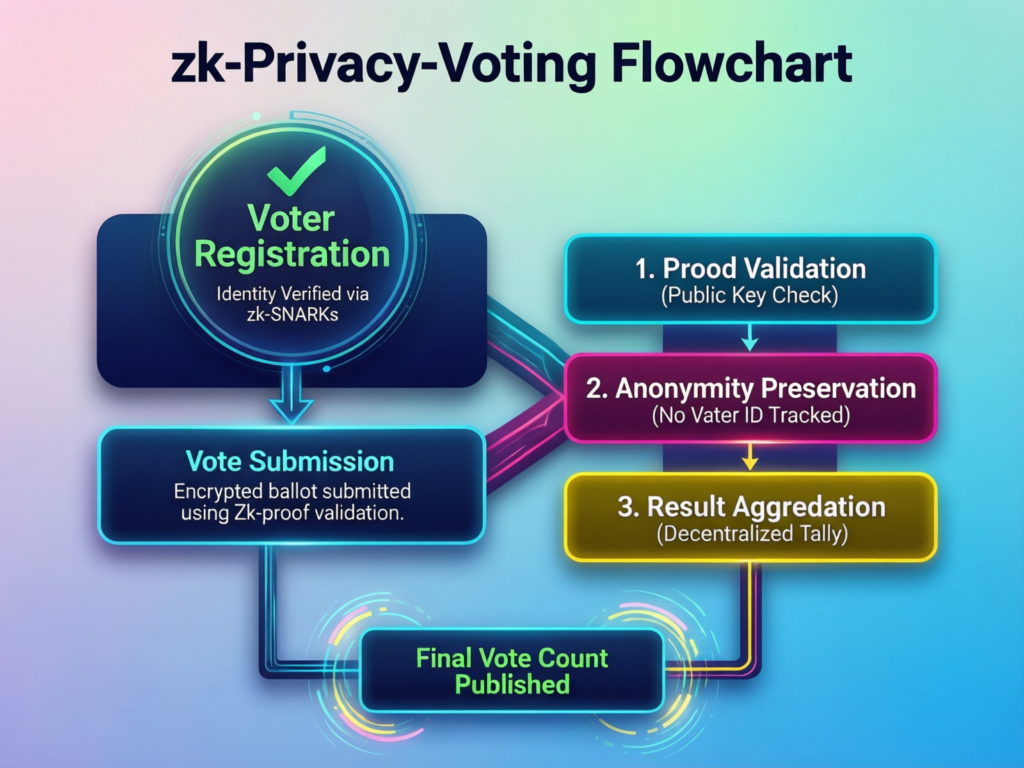
Buterin identified two blockers: privacy (without it, governance becomes a social popularity game) and decision fatigue (participation wanes when voting is frequent and heavy). He pointed to zero-knowledge proofs for privacy and AI for triage/summary to reduce cognitive load used carefully to augment, not replace, human intent.
Add a communication layer, by default
Governance should include a built-in communication layer forums and dedicated platforms to help communities find consensus and context before voting. This should be treated as a major part of the job, not an afterthought.
Context & Analysis
Buterin’s latest comments extend a multi-year critique of coin-voting governance and oracle fragility. The emphasis on attack-cost economics for oracles directly affects decentralized stablecoins and prediction markets, while ZK-enabled privacy and AI summarization echo broader Web3 research trends in verifiable privacy and agent tooling.
Final Thoughts
Vitalik Buterin believes that if DAOs adopt privacy-preserving participation, strong oracle economics, and well-designed communication layers enhanced by AI, the decentralization of Ethereum’s base layer can successfully extend to the applications built on top of it. Instead of replacing human decision-making, AI should support better coordination, transparency, and efficiency within decentralized communities.
He argues that these improvements will help create more secure, reliable, and user-friendly decentralized systems. By strengthening trust, protecting user privacy, and improving how information flows across networks, DAOs can become more resilient and scalable, allowing Ethereum’s ecosystem to grow while maintaining its core values of decentralization and openness.
FAQs
Q : What did Vitalik Buterin propose?
A : He called for “different and better” DAOs that fix privacy, oracle, and participation-fatigue issues, using ZK and AI carefully.
Q : Why are token-voting DAOs considered inefficient?
A : Coin-weighted voting can mirror human political pitfalls and fails to provide defensive advantages against capture.
Q : How do oracles limit DAO-run DeFi today?
A : Token-based oracles have attack-cost ceilings tied to market cap, constraining security for high-value assets.
Q : What role should AI play in DAO governance?
A : AI should be assistive only handling summarization, clustering, and triage, while humans retain intent and judgment.
Q : How can DAOs reduce decision fatigue?
A : By using delegation, parameter ranges, and better communication layers to reduce repetitive voting.
Q : Does Vitalik Buterin’s call for better DAOs imply fewer DAOs?
A : No. He emphasizes “more DAOs, but different and better,” focusing on robust design instead of quantity.
Q : What near-term use cases benefit from improved DAOs?
A : DeFi oracles, on-chain dispute resolution, curated registries, agile funding, and long-term protocol maintenance.
Facts
Event
Vitalik Buterin urges development of “different and better” DAOs with ZK privacy, AI assistance, and stronger oracles.Date/Time
2026-01-19T12:00:00+05:00Entities
Vitalik Buterin; Ethereum; DAOs (decentralized autonomous organizations)Figures
Attack-cost ceiling tied to oracle token market cap (conceptual limit)Quotes
“We need more DAOs but different and better DAOs.” — Vitalik Buterin, post on XSources
The Block report; Vitalik Buterin on X