
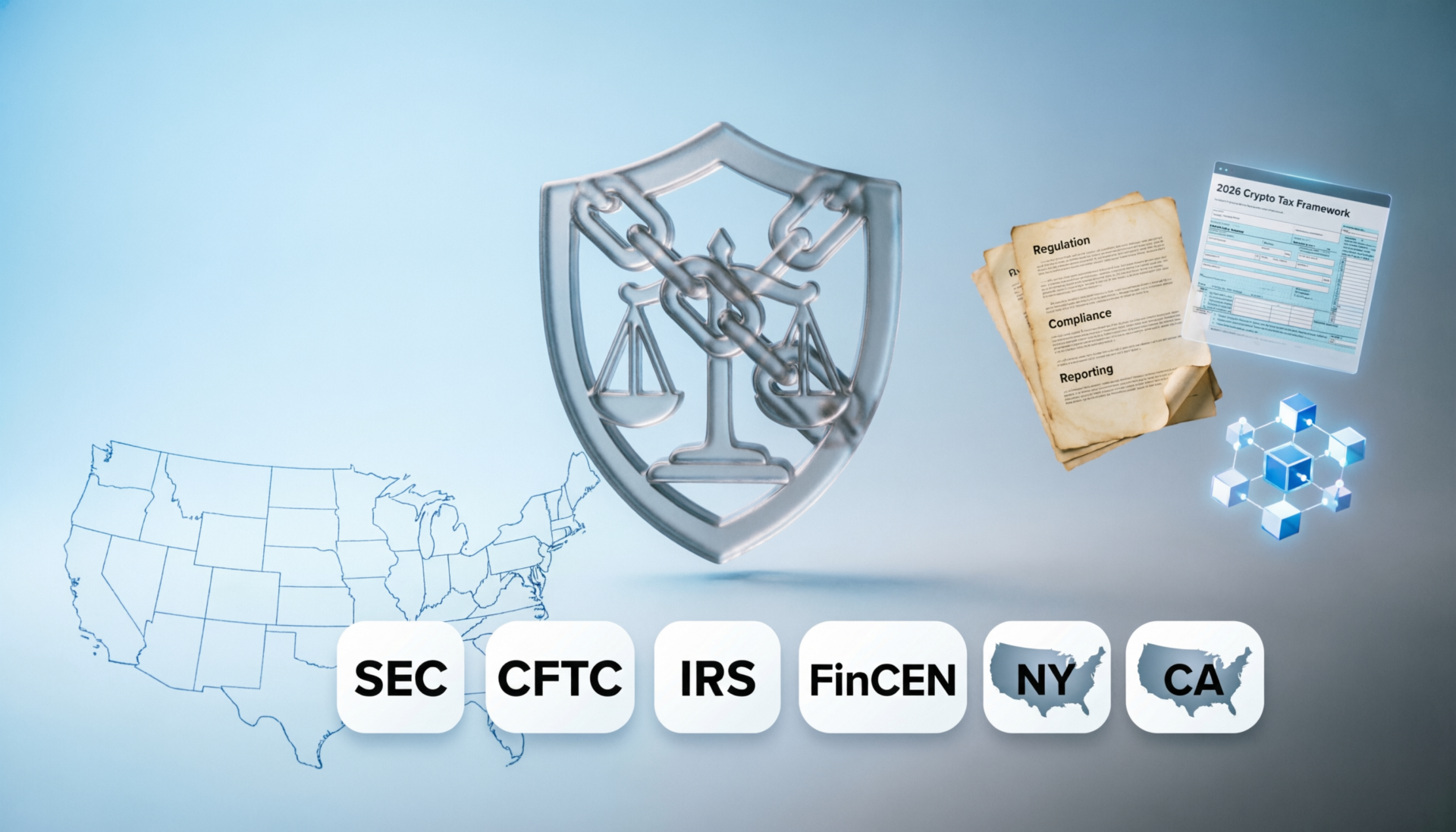

US Crypto Laws Explained for Investors and Firms
Crypto is still legal in the United States, but the rules around it are not simple. That is the core of US crypto laws explained in 2026: legality is not the issue anymore. Classification, compliance, tax reporting, and state licensing are. The biggest shift came on March 17, 2026, when the SEC issued an interpretive release clarifying that federal securities laws apply to certain crypto assets and transactions, not automatically to every token in circulation.
For investors, founders, exchanges, and crypto-adjacent tech teams, that change matters because it narrows one of the biggest gray areas in the U.S. market. But it did not erase other obligations. The IRS still treats digital assets as property for tax purposes, FinCEN rules still matter for money transmission and AML, and states like New York and California still shape how firms can legally operate.
Is Crypto Legal in the U.S.?
Yes. Crypto is legal in the U.S., but not every token, platform, or crypto activity is treated the same way.
That distinction matters more in 2026 than ever. A token may fall outside federal securities law in one context, yet still trigger tax reporting, anti-money-laundering controls, consumer protection duties, or state licensing rules in another. In practice, U.S. crypto law is a patchwork, not a single code.
A good way to think about it is this: owning crypto is usually legal, but offering, marketing, custodying, staking, transmitting, or selling it as part of a business can bring multiple regulators into the picture at once.
Why “US Crypto Laws Explained” Is Still a Complicated Topic
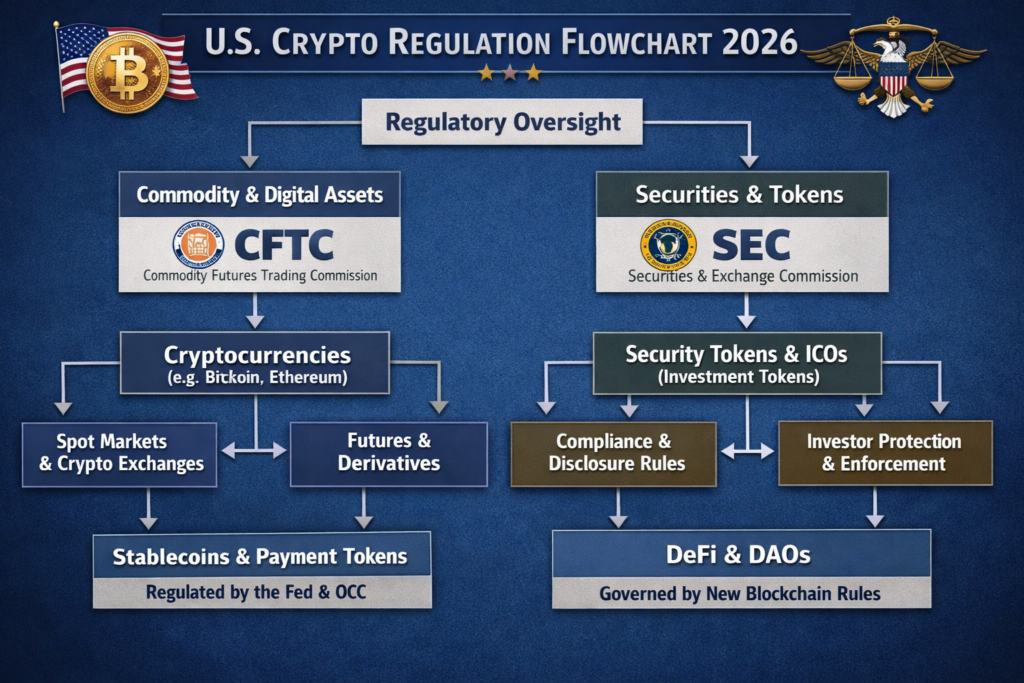
The U.S. does not have one national crypto regulator. It has overlapping agencies with different mandates.
Here is the practical breakdown
SEC looks at securities issues.
CFTC oversees commodities and derivatives markets, and also polices certain fraud and manipulation involving digital assets.
FinCEN focuses on AML, money transmission, and Bank Secrecy Act obligations.
IRS handles tax treatment and broker reporting.
States handle licensing, money transmission, and local consumer protection frameworks.
That is why two companies serving the same national audience can still face very different compliance burdens depending on what they do, how they market it, and which states they touch.
What Changed in March 2026?
The most important 2026 development was not that crypto suddenly became legal. It already was. The real change was the SEC’s effort to clarify where federal securities law begins and ends for crypto assets.
On March 17, 2026, the SEC published an interpretive release on the application of federal securities laws to certain crypto assets and transactions involving crypto assets. The CFTC publicly joined that interpretation and said it would administer the Commodity Exchange Act consistently with that framework.
The Plain-English Version
A crypto asset is not automatically a security just because it exists on-chain or trades on a blockchain network.
The securities question turns on the facts of the transaction. In particular, the SEC focused on whether the asset is being offered or sold as part of an investment contract. That means the legal risk often depends on the promises being made, the structure of the offering, and whether buyers are being led to expect profits based on managerial or entrepreneurial efforts.
For crypto businesses, that is a meaningful shift. It does not eliminate securities risk, but it does move the conversation away from the old assumption that every token automatically falls inside the SEC’s lane.
What the SEC Oversees Now
After the March 2026 guidance, the SEC remains central to one big question: is the relevant crypto transaction part of a securities offering or investment contract?
That matters for
Token launches
Fundraising structures
Exchange listings
Staking and yield products
Promotional materials
Custody and disclosure practices
Even where an asset itself may not be treated as a security, misleading statements, incomplete disclosures, or investment-style marketing can still create exposure. In practice, many founders are learning that legal classification is only one part of the risk. Governance, documentation, and how the product is sold matter just as much.
Where the CFTC, FinCEN, and IRS Fit In
The CFTC continues to matter because virtual currencies and some related products may fall within commodities and derivatives oversight. The agency’s role is especially relevant where trading platforms, market conduct, or derivative products are involved.
FinCEN matters whenever a crypto business starts looking like a money services business or money transmitter. That can trigger registration, AML programs, customer identification procedures, sanctions screening, suspicious activity workflows, and recordkeeping. For startups, this is often the point where “we are just building a platform” turns into a serious compliance exercise.
The IRS matters because digital assets are treated as property for U.S. federal tax purposes. Selling, exchanging, or receiving crypto can create taxable consequences even when no dollars hit your bank account.
Why New York and California Matter So Much
If you want to understand operating risk in U.S. crypto, you cannot stop at federal law.
In New York, businesses conducting virtual currency activity generally need a BitLicense or a charter-based alternative approved by the New York State Department of Financial Services. That alone makes New York one of the most important states in the national crypto compliance picture.
California is becoming just as hard to ignore. The state’s Digital Financial Assets Law says that by July 1, 2026, certain crypto companies serving Californians must either hold a DFAL license or have submitted a completed application. For firms serving users across the U.S., New York and California increasingly shape the real-world roadmap.
From a business point of view, that means national growth can create state-by-state friction much earlier than many teams expect.
U.S. Crypto Compliance in Practice
For businesses, crypto compliance is not one box to tick. It is a layered operating model.
Most serious crypto teams need to think about
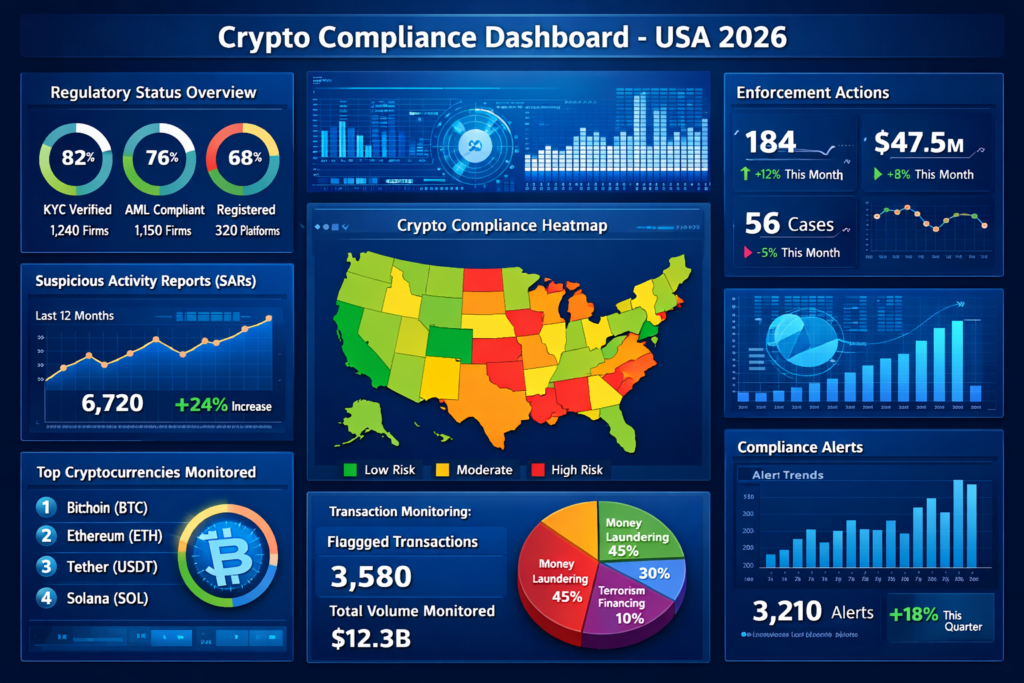
AML and KYC controls
Sanctions screening
Transaction monitoring
Tax documentation
Token classification analysis
Internal controls and governance
Cybersecurity and vendor oversight
State licensing readiness
This is why product design and compliance design usually have to happen together. If your platform architecture, onboarding flow, or custody model ignores regulation until later, fixing it later gets expensive fast.
That is also where infrastructure decisions start to matter. Teams building customer-facing platforms often need stronger governance around data, access control, and auditability, especially when scaling digital products or integrating regulated workflows. That is one reason crypto-adjacent firms often revisit broader technical priorities like web development services, mobile app development services, Confidential Computing for Sensitive Cloud Workloads, or FinOps Cloud Cost Optimization for US, UK & EU Teams. In practice, compliance debt often turns into architecture debt.
Crypto Tax and Form 1099-DA
Tax is one of the least glamorous parts of crypto law, but it is one of the most important.
The IRS says digital assets are treated as property. That means sales, exchanges, and certain income-like events may create gains, losses, or taxable income. Investors who assume tax only applies when they cash out to dollars often learn the hard way that this is not how the rules work.
What Form 1099-DA Means
Form 1099-DA is the IRS form for reporting digital asset proceeds from broker transactions. IRS materials say this reporting applies beginning with transactions on or after January 1, 2025. The agency has also moved toward easier electronic delivery of these statements for later reporting periods.
For investors, the message is simple: keep records, track basis, and do not assume crypto reporting is still optional or informal.
U.S. vs. UK vs. EU vs. Germany
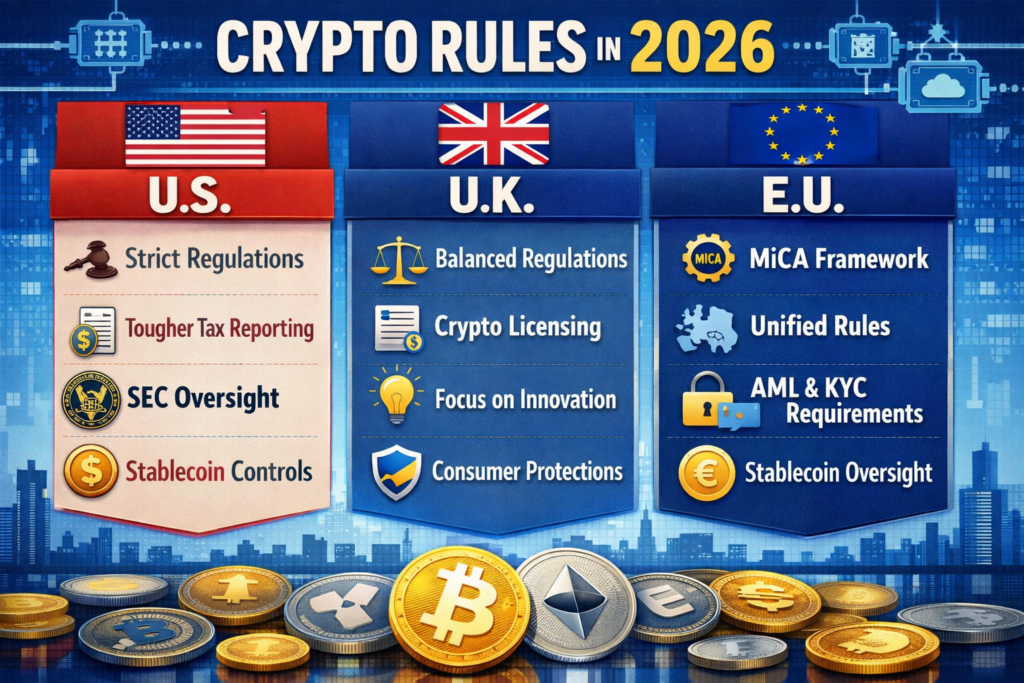
Compared with Europe, the U.S. still feels fragmented.
The American approach is split among federal agencies and state regimes. By contrast, the EU’s MiCA framework created a more harmonized market structure for crypto-asset services, and Germany operates within that wider framework under BaFin supervision. ESMA’s MiCA materials also highlight the transitional pathway for firms already operating under national law before December 30, 2024.
The UK is taking a timetable-driven route. The FCA says firms that want to undertake the new cryptoasset regulated activities can apply from September 30, 2026 to February 28, 2027, with the new regime expected to come into force on October 25, 2027.
For international operators, the contrast is important.
The U.S. is agency-split and state-layered.
The EU is more framework-led under MiCA.
The UK is moving through a defined authorization timetable.
Germany applies the EU structure through national supervision by BaFin.
That does not mean Europe is easy. It means the structure is easier to map.
What Investors, Exchanges, and Startups Should Do Next
Perfect clarity is still not here. But the right move is not to wait.
If You Are an Investor
Ask a few basic questions before buying, staking, or parking assets on a platform
Is the platform serving U.S. customers lawfully?
Are returns being marketed in a securities-like way?
Who holds custody?
What happens if access is frozen or limited?
What tax forms and transaction records will you receive?
That kind of due diligence is not exciting, but it is far more useful than hype.
If You Are Building a Crypto Business
Start with five workstreams.
Asset and activity classification
AML and money-transmission scoping
State licensing review
Tax reporting readiness
Security and governance controls
Then test your disclosures, vendor contracts, incident response process, and evidence trail before scaling. Teams that do this early are usually in a stronger position than teams trying to patch legal exposure after launch.
When to Escalate to Legal or Tax Advice
Get professional advice early if you are.
Launching a token
Offering staking or yield
Onboarding users across multiple states
Handling custody
Operating an exchange workflow
Receiving a 1099-DA you do not understand
This article is for general information only and is not legal, tax, or financial advice.

Last Words
Key Takeaways
US crypto laws explained in 2026 comes down to one reality: crypto is legal, but the legal treatment depends on the asset, the transaction, and the business model.
The March 17, 2026 SEC interpretation gave the market more clarity on when federal securities laws apply. That was a real shift. But it did not remove the rest of the rulebook. The CFTC still matters. FinCEN still matters. The IRS still matters. New York and California still matter.
For investors, the lesson is to focus on platform risk, disclosures, and tax reporting.
For founders and operators, the lesson is even clearer: treat compliance as part of product strategy, not an afterthought. If your team is building a crypto-adjacent platform, exchange workflow, compliance dashboard, or regulated digital product, getting the legal and technical foundations right early is far cheaper than fixing them later.
FAQs
Q : Does owning Bitcoin trigger a U.S. licensing requirement for individuals?
A : Usually not. Simply owning Bitcoin or another digital asset for personal investment does not normally create a money transmitter or business licensing issue. Those obligations usually appear when someone starts transmitting, exchanging, or offering crypto services for others as a business.
Q : Can a foreign crypto exchange legally serve U.S. customers?
A : Sometimes, but not automatically. A foreign platform serving U.S. users can still face U.S. securities, AML, tax, commodities, and state-law exposure depending on what it offers and where its customers are located.
Q : Are stablecoins regulated the same way as other digital assets?
A : Not always. The March 2026 federal guidance treated stablecoins as a distinct category in the broader crypto discussion, but that does not make them lightly regulated. Structure, reserves, disclosures, payments use, and state law can all matter.
Q : Do U.S. crypto investors owe tax even if they did not cash out to dollars?
A : They can. Because the IRS treats digital assets as property, taxable gain, loss, or income can arise from sales, exchanges, or certain other events even without a bank withdrawal.
Q : What is the difference between MiCA authorization and U.S. state crypto licensing?
A : MiCA is an EU-wide framework designed to harmonize crypto-asset regulation across member states. U.S. state licensing is more fragmented and sits on top of federal rules, which makes multi-state analysis far more important for American operators.