

The Rise of AI-Driven Crypto Trading
Artificial intelligence is changing how digital assets are analyzed, executed, and risk-managed. Over the past two years, AI-driven crypto trading has accelerated across centralized exchanges and DeFi powered by machine learning on order-book signals, on-chain analytics, and natural-language models that digest news and social chatter in seconds. Academic work shows that microstructure features (e.g., liquidity & price discovery metrics) can have predictive power for BTC/ETH returns when modeled with ML, helping explain why quants are leaning into AI methods.
At the same time, the ecosystem faces real challenges: backtest overfitting, exchange manipulation/wash-trading noise, API security incidents, and the rising use of generative AI in fraud. EU-level MiCA rules are now in force with ongoing technical standards, while the UK and India tighten algorithmic controls context every desk adopting AI-driven crypto trading must understand.
TL;DR: AI-driven crypto trading can confer a measurable edge but only with disciplined data engineering, rigorous validation, and a compliance-first approach.
What Is AI-Driven Crypto Trading?
AI-driven crypto trading
Uses ML/AI to generate signals, optimize execution, and automate risk. Typical inputs include:
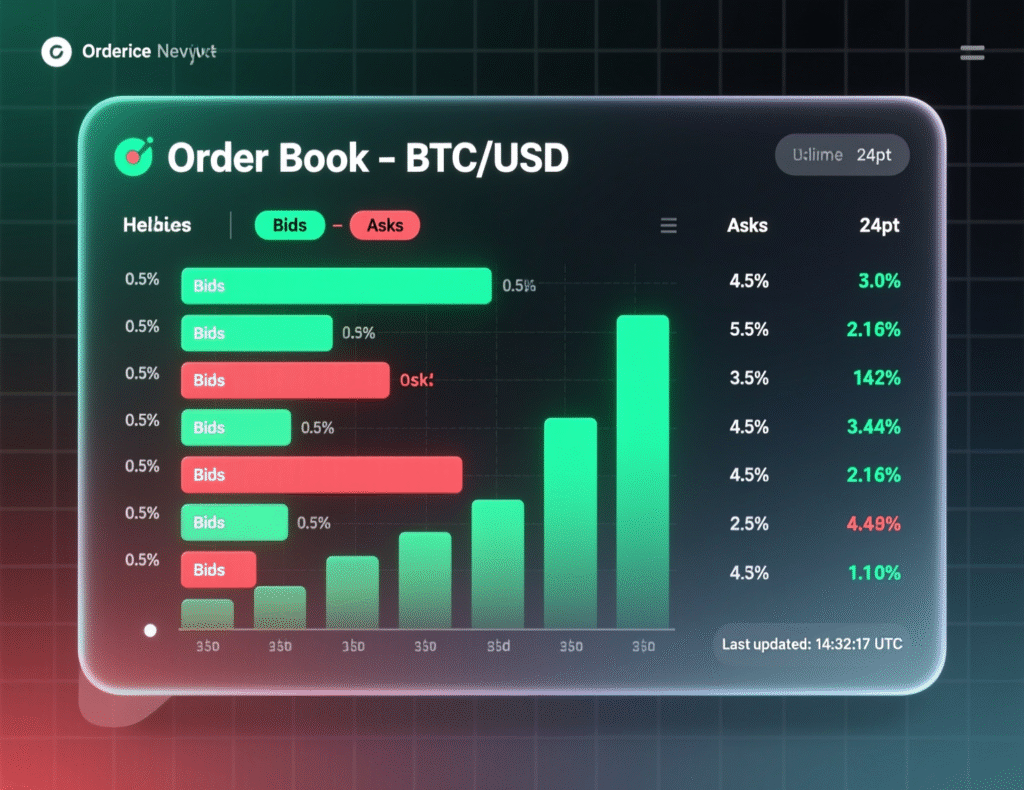
Order-book & trade microstructure
Spreads, depth, VPIN/Roll measures, adverse selection; modeled with tree-based ML or deep nets. stoye.economics.cornell.edu+1On-chain data
Flows, large wallet behavior, DEX pool imbalances, liquidations.Unstructured text
LLM/NLP over news, GitHub, forums, and X/Reddit sentiment.
Well-designed systems separate research (signals), portfolio construction, execution/routing, and risk (limits/PnL protections). Studies show ML can help forecast short-horizon returns in crypto when features are engineered from microstructure and realized vol.
Why AI-Driven Crypto Trading Is Surging in 2025
Data abundance
Ticks, order books, and transparent on-chain flows feed models at high frequency.Tooling maturity
Cheaper GPUs, vector DBs, and live data APIs make near-real-time inference feasible.Agentic commerce
Even Big Tech is formalizing agent payments, laying plumbing for AI agents that transact (including with stablecoins) a tailwind for AI-driven crypto trading research.Regulatory clarity (EU)
MiCA is applicable (with Level 2/3 acts rolling out), nudging desks to institutionalize controls.
Caveat
Some “bot share of volume” figures online are vendor estimates and vary widely treat bold percentages skeptically and VERIFY LIVE.
Core Methods Used in AI-Driven Crypto Trading
Microstructure ML
Engineer features from spreads, depth, imbalance, order-flow toxicity (e.g., VPIN), then train XGBoost/LightGBM to predict short-term direction/volatility; apply Bayesian calibration to avoid over-confidence.
Regime-Aware Trend & Mean Reversion
Combine state detection (HMM/switching Kalman) with trend or mean-reversion rules. Reinforcement learning can adapt leverage/exposure by regime.
NLP/LLM Pipelines
Use LLMs to classify headlines/dev posts into catalysts, score sentiment, and summarize narratives; throttle to avoid “headline echo.” (News-driven alts frequently exhibit fleeting edges.)
On-Chain Graph Signals
Track whale clusters, new token unlocks, or DEX routing anomalies as features for spreads/hedge ratios.
Case Studies & Examples
Case 1: China’s High-Flyer & the AI Arms Race
Reuters reports an “AI revolution” in China’s fund industry after High-Flyer’s AI success, spurring broad adoption of AI across managers and intensifying demand for quant talent and compute. While equities-oriented, the same ML pipelines are being adapted to digital assets by regional quants, feeding the AI-driven crypto trading trend.
Case 2: DeFi Risk Simulation as “AI Risk Brain”
Risk platforms (e.g., Gauntlet) run agent-based simulations to tune lending protocol parameters (liquidation thresholds, LT/CF) and reduce insolvency risk an adjacent but critical part of AI-driven crypto trading because it drives borrow costs, yields, and liquidity dynamics your models trade against. Public governance posts and resources document these simulation approaches for Aave and Compound.

Benefits, Pitfalls, and “Don’t Get Burned”
Benefits
Faster signal discovery and adaptive models.
Scalable execution/risk controls across many pairs/venues.
Potential alpha from combining order-book ML with on-chain features.
Pitfalls
Backtest overfitting
Classic trap. Use combinatorially-symmetric cross-validation (CSCV) to estimate the probability of backtest overfitting before deploying.Market microstructure noise & manipulation
Wash trading and fake volume can contaminate training data; stick to reputable venues and robust outlier filters.API security & key hygiene
Past API-key leaks at third-party bot platforms underline operational risk—rotate keys, IP-whitelist, and least-privilege perms.AI-enabled fraud
TRM Labs & Chainalysis highlight deepfakes/scams rising; never source signals from unverified “AI guru” channels.
Building an AI-Driven Crypto Trading Stack (Reference Architecture)
Data & Feature Store
Market data: Level-2/3 order books, trades, funding, open interest.
On-chain: events, DEX swaps, liquidation feeds.
Text: curated news/Twitter/X/Reddit via hydrated, TOS-compliant pipelines.
Storage/ops: stream to Kafka → feature store; track data lineage.
Modeling
Fast baselines (ridge/logit) → tree-based models → DL/RL where justified.
Robust validation: walk-forward CV, CSCV, white’s reality check, leak tests.
Execution
Venue selection, child orders (TWAP/VWAP/POV), slippage models, smart-router with toxicity filters.
Risk & Governance
Limits (per pair/day), kill-switches, shadow mode, red-team backtests.
Model cards, audit logs, UIDs per order (already appearing in India’s API algo framework).



Compliance Snapshot (2025)
EU MiCA
Fully applicable since Dec 30, 2024, with delegated acts rolling through 2025; expect continued clarifications on market abuse/surveillance relevant for AI-driven crypto trading.UK FCA
Ongoing scrutiny of algorithmic controls; recent review required firms to strengthen governance and third-party algo oversight.India SEBI
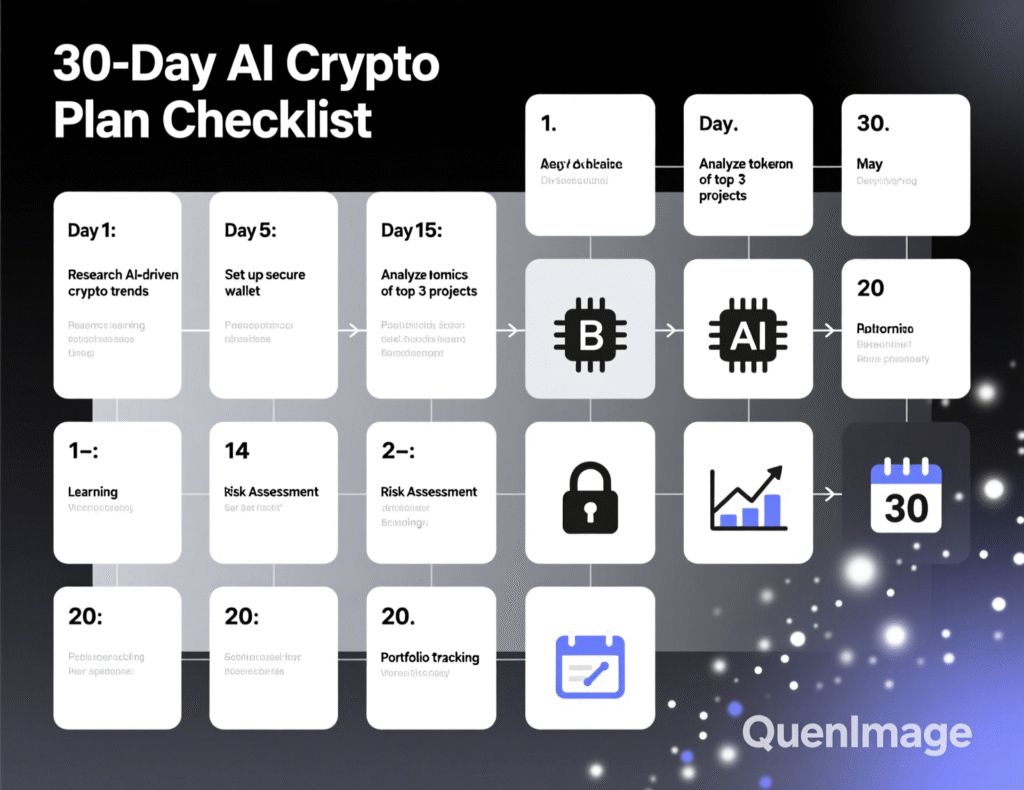
Retail API-algo timelines and unique order identifiers signal tighter control good practice for crypto algos, too. ch a Minimal AI-Driven Crypto Trading Pilot
Days 1–7: Data & Baselines
Ingest BTC/ETH L2 from two reputable venues; engineer 20 microstructure features.
Build two fast baselines (ridge for direction; LightGBM for volatility).
Set shadow PnL & slippage trackers.
Days 8–14: Validation & Risk
Implement walk-forward + CSCV; reject any strategy with PBO > 20%.
Add tight per-venue risk limits; dry-run in paper trading.
Days 15–21: NLP/Narratives
Add news/NLP factor: LLM-scored catalysts (no social spam).
Re-optimize portfolio weights; monitor drift.
Days 22–30: Execution & Review
Integrate SOR/TWAP/POV; measure realized vs simulated slippage.
Governance docs, model card, rollback plan; start with 1–2 bps risk budget.
(Always coordinate with legal/compliance before going live under your local regime.)
Concluding Remarks
AI-driven crypto trading is moving from “experimental bot” to institutional discipline using ML on microstructure data, on-chain signals, and LLM-filtered news with rigorous controls. Expect greater agent-based automation (including payments plumbing) and more prescriptive regulation. The edge won’t come from hype; it’ll come from clean data, robust validation, and boringly good risk management. If you’re ready to prototype, use the 30-day plan, start small, and socialize results with risk/compliance before scaling.
CTA: Want a customized AI-driven crypto trading roadmap or a review of your model validation? Reach out we’ll tailor a build plan around your data, venues, and risk constraints.
FAQs
Q : How does AI improve crypto trading execution?
A : AI learns venue-specific slippage/toxicity and adapts order slicing (TWAP/POV) to minimize impact. It also routes away from toxic flow and stale quotes, improving realized PnL over naive execution. (Backtest and live A/B are essential.)
Q : How can I prevent backtest overfitting?
A : Use CSCV/White’s Reality Check, walk-forward splits, strict data lineage, and hold-out periods. Reject strategies with high PBO and require live shadow trading before production.
Q : How do LLMs help in trading?
A : They classify catalysts, summarize risk events, and filter noise. Use them as signal augmenters, not price predictors, and cap their influence to avoid headline overreaction.
Q : How is AI-driven crypto trading regulated?
A : No single global regime. In the EU, MiCA is live with additional standards coming; the UK and India are tightening algorithmic controls, document models, audit trails, and third-party oversight.
Q : How do I secure API keys for bots?
A : Use IP whitelists, key scopes, vaults, and auto-rotation. Never paste keys into third-party UIs you don’t trust; the 3Commas leak shows the cost of lax hygiene.
Q : How do I measure model drift?
A : Track feature distributions (PSI), hit ratios, and error decomposition. Retrain on schedule or on drift events; keep champion/challenger models.
Q : How can AI be abused in crypto?
A : Generative AI enables convincing deepfake scams and “pig-butchering” operations; reference TRM Labs/Chainalysis for current patterns and mitigation.
Q : How do I start AI-driven crypto trading with a small budget?
A : Begin with BTC/ETH only, free/low-cost data, and CPU-friendly models; paper trade first, then deploy with minimal risk and clear stop conditions.
Q : How do I evaluate claims like “bots do 40% of volume”?
A : Treat as unverified marketing unless backed by robust, peer-reviewed or transparent exchange data. Prefer academic/forensic sources; assume variance by venue/pair. (VERIFY LIVE.)