


The Future of Crypto Wallets
If you’ve built or used a Web3 app in the last five years, you’ve felt the friction: seed phrases, gas settings, failed approvals, and confusing signatures. That’s changing—fast. The future of crypto wallets is being shaped by three converging forces: account abstraction (smart, programmable accounts), passwordless passkeys (biometric sign-in with WebAuthn), and embedded wallets that hide blockchain complexity inside familiar apps.
These shifts will redefine onboarding, security, and retention for consumer and enterprise crypto alike. In this guide, we map what’s coming next, the standards behind it (ERC-4337, EIP-7702, WalletConnect v2), and how teams can prepare today without breaking what already works.
What’s driving the future of crypto wallets?
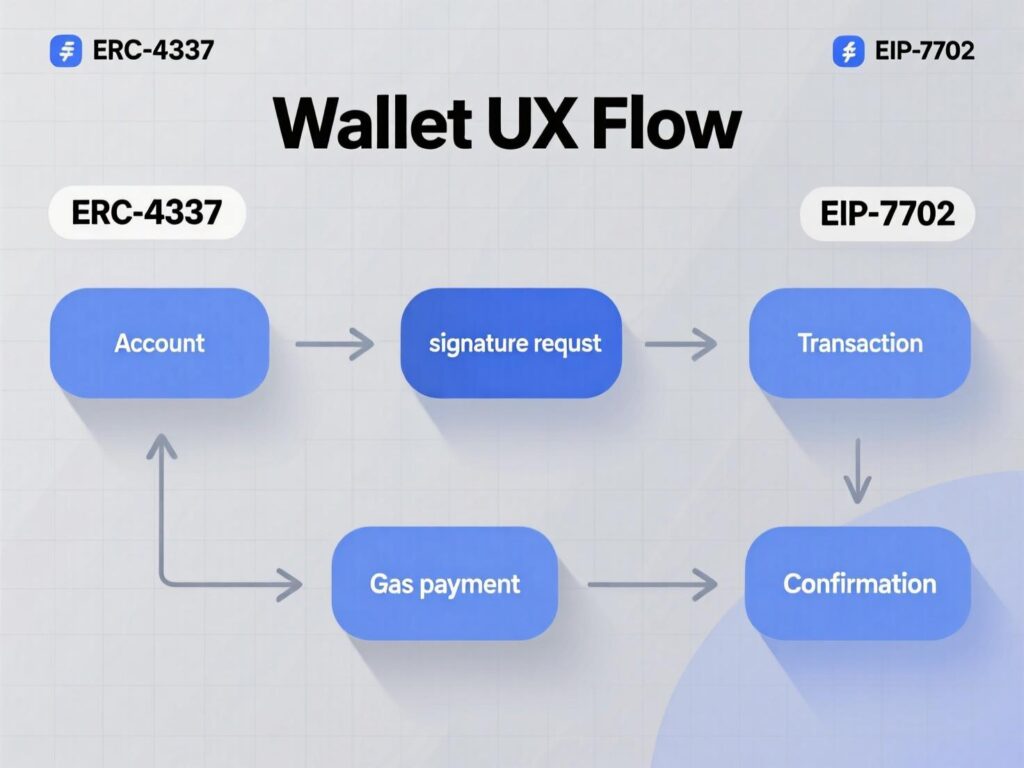
A handful of protocol upgrades and standards are finally unlocking wallet UX we wanted all along gasless transactions, batch actions, human-readable approvals, and recovery that doesn’t depend on a 24-word seed. Ethereum’s account abstraction track (ERC-4337) and the Pectra path with EIP-7702 let externally owned accounts gain smart-account superpowers, while passkeys eliminate phishing-prone passwords. Together, these deliver the biggest UX inflection since mobile wallets.
The engine behind the future of crypto wallets
ERC-4337
introduced a parallel transaction system using UserOperations, enabling smart wallets to control validation, gas payment, batching, and recovery without changing L1 consensus. In practice, this lets wallets sponsor gas, set spending limits, or require multiple factors before approval.
EIP-7702
(part of Ethereum’s Pectra track) allows an EOA to “act like” a smart account by delegating code per transaction, keeping the same address while gaining features such as delegation and batching. 7702 and 4337 aren’t adversaries they complement each other, and many stacks will use both.
Why this matters:
the more logic moves into the account, the less users must understand the chain. Approvals can be policy-based (“you’re over your daily limit” or “guardian approval required”), and gas can be paid in ERC-20s via paymasters or abstracted entirely. Expect fewer pop-ups, fewer failed txs, and safer defaults.
Passwordless onboarding, wallet-grade security
Passkeys (FIDO2/WebAuthn) replace passwords with phishing-resistant cryptographic keys that live on your device (or secure hardware) and unlock with Face ID, Touch ID, Windows Hello, or a security key. Awareness and adoption surged in 2025; FIDO Alliance reports strong global recognition and growing real-world deployments, making passkeys the default for mainstream sign-in experiences. Wallets can piggyback on this, binding accounts to biometrics instead of seed phrases.
On chains like Solana and EVM, developers are already wiring passkeys into smart accounts to remove credential friction and dramatically reduce phishing risk. Expect passkey-based onboarding to become the “Sign in with Biometrics” moment for Web3.
Two roads to safer self-custody
Two families of wallets dominate the roadmap:
MPC wallets split a private key into shares across devices/servers and jointly sign without reconstructing the whole key. Enterprises love MPC for policy control and HSM-like resilience; large consumer wallets are shipping MPC to remove single-point-of-failure seed phrases.
Smart contract wallets (AA wallets) move auth and policy into code: social recovery, daily limits, session keys, and gas sponsorship via paymasters. With EIP-7702, EOAs can gain many of these powers without migrating addresses. ethereum.orgSafe Global
Reality check: this isn’t a zero-sum game. Many teams combine MPC for key-share security with AA for UX (limits, recovery, gas), plus passkeys for sign-in. The winners will be the stacks that make all three feel invisible.
Case Study #1: Coinbase Smart Wallet passkeys, cloud backup, and gasless paths
Coinbase introduced a passkey-based smart wallet that leans on account-abstraction patterns, cutting onboarding to seconds and backing up credentials in the cloud. For new users, this feels familiar (biometrics > seed phrase), and for devs, paymasters and gasless flows reduce drop-offs. It’s a strong example of how large consumer wallets are packaging AA + passkeys for mass adoption.
Developer angle:
Coinbase’s docs highlight how EIP-7702 and ERC-4337 interplay, making it easier to upgrade EOAs and support sponsored gas with paymasters.
Case Study #2: Safe (formerly Gnosis Safe) enterprise-grade smart accounts at scale
Safe has become the de facto smart account for DAOs, treasuries, and power users, securing tens of billions in assets and integrating across the EVM ecosystem. As EIP-7702 rolls out, smart-account benefits can reach even more users without address changes, and Safe’s modules (limits, multisig, recovery) showcase where consumer UX is headed: policy-driven, not seed-driven.
Crypto without the crypto UX
“Wallet-as-a-Service” (WaaS) providers let apps embed non-custodial wallets behind standard logins. Users see “Continue with email/Apple/Google,” while the app handles keys, smart-account deployments, and chain routing behind the scenes. Platforms like Privy, Dynamic, and Magic offer SDKs for instant wallet creation, MPC/AA key management, and multi-chain support perfect for fintechs and consumer apps that don’t want to teach gas and chains on day one.
Why this matters:
WaaS abstracts blockchain in the same way Stripe abstracted acquiring. Expect more “crypto-powered apps” that never mention seed phrases in onboarding.
Verifiable Credentials and the EUDI wallet
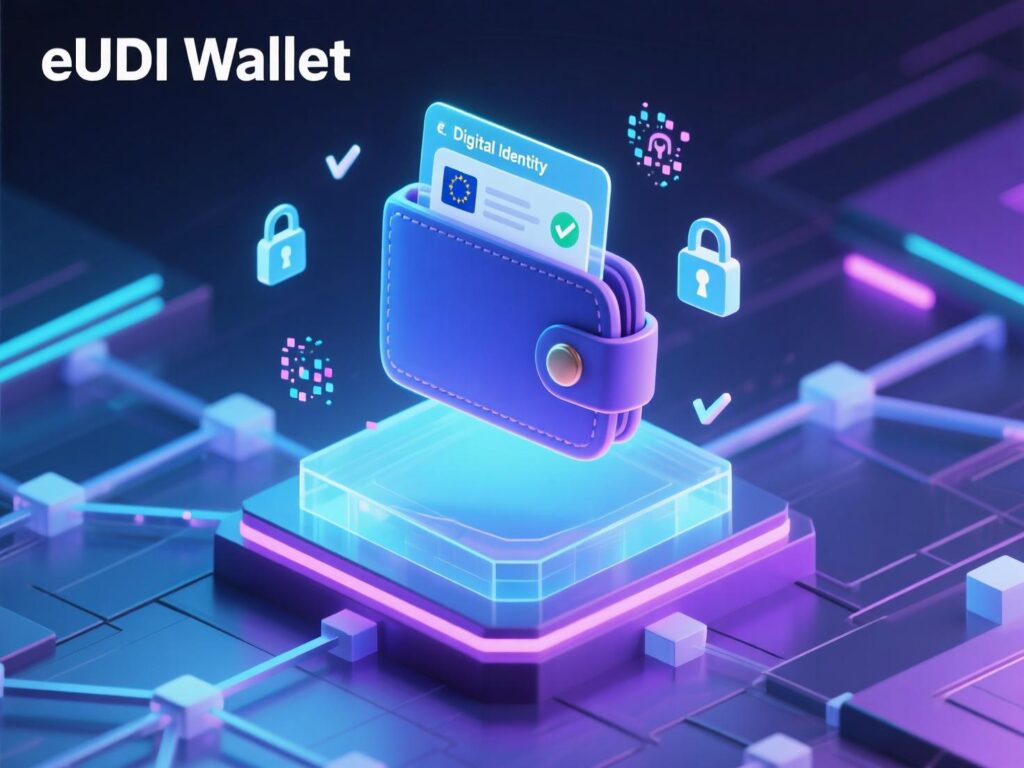
Wallets won’t just hold coinsthey’ll hold credentials. The W3C Verifiable Credentials 2.0 standard reached Recommend ation status in 2025, enabling privacy-preserving IDs, proofs, and attestations. In parallel, the EU is rolling out the EU Digital Identity (EUDI) Wallet, requiring each Member State to offer citizens a secure digital ID wallet. Crypto wallets and identity wallets are converging, especially for on-chain identity, compliance, and seamless KYC-lite proofs.
Dencun (EIP-4844) and the “pennies” era
Ethereum’s 2024 Dencun upgrade with EIP-4844 slashed L2 data costs via blob transactions, translating into dramatically lower rollup fees. When sending costs a few cents (or less), wallets can absorb gas, batch actions, and retry without punishing users critical for mobile. This is a foundational enabler for AA wallets and embedded UX at scale.

Fewer pop-ups, safer approvals
WalletConnect v2 standardized multi-chain permissions and better session management, and the ecosystem is moving toward session keys/delegation—temporary permissions for a game, a DeFi strategy, or an app session reducing endless signature prompts. Emerging standards like ERC-7710 propose common interfaces for secure delegation in smart accounts. Intents-based protocols (e.g., UniswapX) further shift users from “approve this tx” to “get me the best result,” with the wallet managing policy and risk.
Fewer phishing wins, better recoveries
Phishing resistance:
Passkeys are resistant to credential phishing by design. Wallets using passkeys and human-readable policy prompts should see fewer social-engineering compromises versus passwords and blind signature approvals.Recovery:
Social recovery (guardians/time-locks) and MPC-based recovery remove the single point of failure of seed phrases, pulling crypto toward practical resilience.Risks to watch:
New power means new attack surfaces—bundlers, paymasters, delegate contracts, and relayers introduce complexity that demands rigorous audits and cautious defaults.
90-day action plan (mini How-To)
Ship passwordless sign-in
Adopt passkeys (WebAuthn) in your auth flow and map them to wallet creation (embedded or native). Result: instant onboarding without seed phrases.
Add an AA path
Integrate ERC-4337 smart accounts (or upgrade EOAs via EIP-7702 where available). Start with gas sponsorship for key flows (mint, swap, bridge).
Define wallet policies
Implement spending limits, allow-lists, session keys, and human-readable prompts. Explore ERC-7710 style delegation.
Choose key management
Decide on MPC, AA, or hybrid. For consumer apps, WaaS platforms can accelerate time-to-market while preserving self-custody properties.
Design for pennies
Assume L2 gas is cheap. Batch, abstract, and retry. Pay fees for high-value moments.
Concluding Remarks
Over the next two years, the future of crypto wallets will look less like a “wallet app” and more like a built-in capability across consumer products. Passkeys will become the default for onboarding, AA will make approvals understandable and safe, and WaaS will make crypto invisible until it’s needed. The teams that win won’t just bolt on a wallet; they’ll craft policy-driven experiences where security and simplicity are aligned by design. Start now: implement passkeys, pilot an AA flow, and embed wallet logic where users already are.
CTA: Want a prioritized roadmap and integration plan for your stack? Get a 1-page architecture sketch (MPC vs. AA vs. hybrid), vendor shortlist, and UX guidelines tailored to your app.
FAQs
Q1 . How will account abstraction change wallets for non-technical users?
A . It pushes logic into the account: gas sponsorship, limits, batching, and recovery. Users see fewer pop-ups and fewer failed transactions, with safer defaults and human-readable prompts moving from “approve this tx” to “do this action.”
Q2 . How do passkeys improve crypto wallet security?
A . Passkeys (FIDO2/WebAuthn) are phishing-resistant and replace passwords with device-bound cryptographic keys. They enable biometric logins (Face ID, Touch ID), cutting credential theft risk while speeding onboarding.
Q3 . How can we migrate EOAs without breaking addresses?
A . EIP-7702 lets an EOA temporarily delegate code and gain smart-account features at the same address, complementing ERC-4337 infrastructure. This enables gradual upgrades without forcing new addresses.
Q4 . What’s the difference between MPC and smart contract wallets?
A . MPC splits keys into shares for joint signing without reconstructing the key, favored by enterprises and consumer apps wanting seed-less recovery. Smart accounts encode policy in code (limits, social recovery). Many stacks mix both.
Q5 . Will cheaper L2 fees really affect wallet UX?
A . Yes. Post-EIP-4844, L2 data costs dropped, enabling wallets to absorb gas, batch actions, and retry safely—particularly important on mobile.
Q6 . How do WalletConnect v2 sessions help?
A . They standardize permissions and session lifecycles across chains, reducing re-pairing and enabling safer, more granular approvals.
Q7 . What role will identity play in wallets?
A . W3C Verifiable Credentials 2.0 and the EU’s EUDI Wallet signal a future where wallets hold credentials (IDs, diplomas, proofs) for privacy-preserving verification across services.
Q8 . How should startups get started in 90 days?
A . Ship passkeys → pilot an AA flow with sponsored gas → define policies (limits, session keys) → choose MPC/AA/hybrid → measure completion and retention.