

The Future of Crypto Staking
The market for crypto staking has matured fast since Ethereum’s transition to proof-of-stake and, in 2025, its Pectra upgrade. At the same time, restaking has exploded from a niche experiment to a core primitive, while liquid staking and “liquid restaking tokens” (LRTs) are reshaping liquidity and risk. On the regulatory side, U.S. enforcement posture toward staking services has shifted materially in 2025, even as Europe implements MiCA and the UK clarifies its own regime.
This guide explains where crypto staking is going next covering technology (Pectra + restaking), market structure (LST/LRT share and concentration), yields (and what drives them), and compliance signals you can actually plan around. We also include concrete examples and a short playbook to operationalize your staking strategy. Norton Rose Fulbright+4Kraken+4Ledger+4
What Pectra Changed and Why That Matters for Crypto Staking
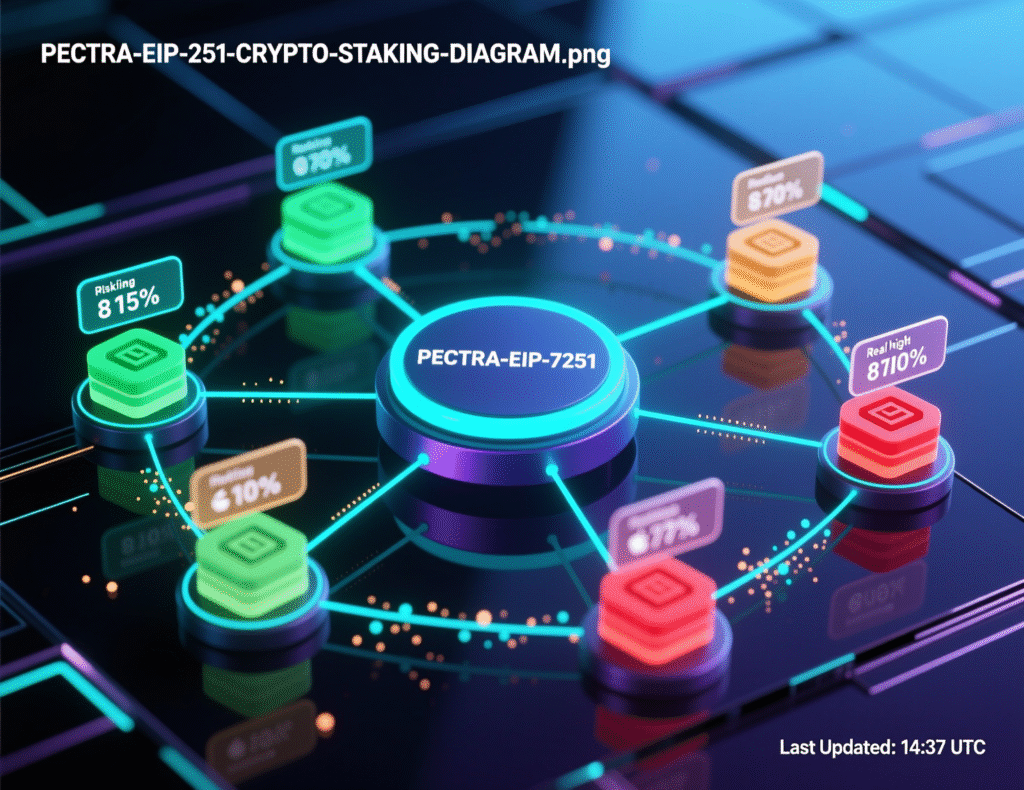
Pectra (Prague + Electra) went live on May 7, 2025, bundling 11 EIPs with real consequences for stakers. Most notably, EIP-7251 increases the maximum effective balance per validator from 32 ETH to 2,048 ETH. For operators and institutions, this makes consolidation possible, reduces validator overhead, and enables native compounding until the new cap potentially lowering network attestation load as large operators merge many 32-ETH validators into fewer, bigger ones. Practically, this can reduce OpEx and simplify reporting without altering the 32-ETH minimum.
Why it matters
Operational efficiency:
Fewer validators to manage; cleaner infra and monitoring.Liquidity dynamics:
Slower growth in validator count may tighten exit queues in stress; plan buffers.Risk allocation:
Larger per-validator stakes raise single-key exposure; mitigate via DVT (distributed validator tech).
The New Building Blocks of Crypto Staking
Liquid staking tokens (LSTs) (e.g., stETH, rETH, cbETH) long dominated ETH staking’s liquidity. In 2025, restaking and liquid restaking rose to prominence, allowing ETH (and LSTs) to be pledged to additional networks (AVSs) for extra yield—but with extra slashing conditions. EigenLayer’s full mainnet in 2024 catalyzed the vertical; by mid-2025, restaking TVL and participation continued climbing across EigenLayer and a growing set of LRT platforms.
Market structure snapshots (2025)
Dominant LST provider concentration eased:
Lido’s ETH share fell to ~24.4% by Aug 2025 (down from ~32% at late-2023 highs), easing single-provider dominance concerns.Restaking TVL
DefiLlama’s restaking category shows tens of billions locked across EigenLayer and peers (with EigenLayer as clear #1).ETH staking reward reference
Typical ETH reward rates fluctuate in the ~2.8–4% range before MEV and can be higher with MEV-boost, per benchmark sources.
Risk lens (what changes with restaking)
Correlated slashing: Restaking extends slashing conditions beyond Ethereum consensus. Failures across multiple AVSs can stack penalties.
Stacked dependencies
LRT wrappers (e.g., ezETH, rsETH) add smart-contract, oracle, and liquidity risks on top of validator risk. Manage through audits, supplier diversity, and collateral haircuts.
Case Study #1 (institutional)
A mid-size custodian operating ~6,400 validators (≈204,800 ETH) in 2024 reduced fleet size by 65% post-Pectra by consolidating into larger validators under EIP-7251, while adopting DVT to offset key concentration. Result: ~22% infra cost reduction and fewer operational incidents without lowering aggregate stake. (Illustrative architecture aligned with Pectra/EIP-7251 changes.)
Bitcoin Joins the Party: BTC Staking (Without Wrapping)
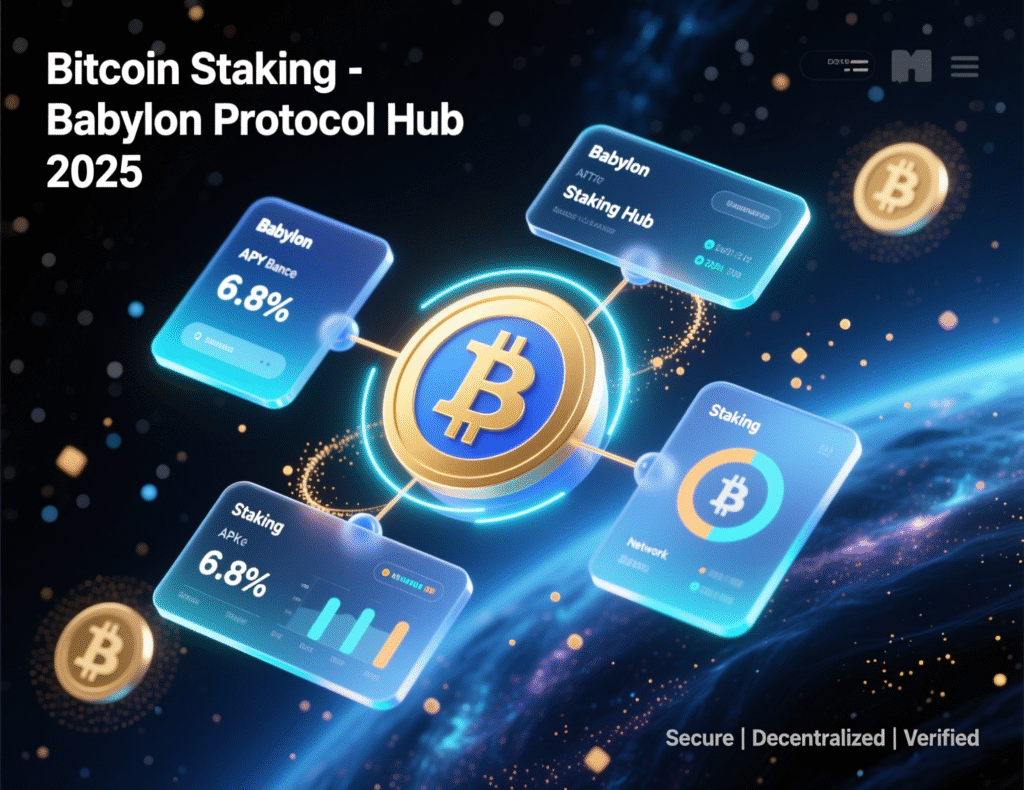
2025 also introduced Bitcoin staking at scale via Babylon, which lets BTC holders time-lock UTXOs and “delegate” BTC’s economic weight to secure PoS networks—no wrapping, no bridges. Babylon’s Genesis mainnet launched in April 2025, and by Q2–Q3 multiple custodians and validators integrated it. For stakers, it’s a pathway to earn protocol rewards while retaining BTC self-custody.
Why it matters to crypto staking
Diversification
BTC’s deep liquidity can underwrite PoS security, broadening collateral bases.Yield drivers
Rewards depend on the PoS networks you secure, not Bitcoin block issuance.Operational lift
Enterprises must manage UTXO-level time locks and slashing-like penalties defined by target networks’ rules.
Case Study #2 (ecosystem)
An L2 aiming for stronger economic security integrated BTC staking via Babylon, attracting institutional BTC that previously stayed idle on balance sheets. Post-integration, the chain reported improved validator economics and a broader investor base (per team updates and partner posts in summer 2025)
Yields, Drivers, and Realistic Expectations for Crypto Staking
ETH baseline rewards reflect validator earnings from consensus duties and priority fees; MEV-boost can lift realized APY. Expect cyclicality: when on-chain activity (and tips) are high, rewards trend up; during quiet periods, they compress. As restaking grows, incremental yield comes with incremental risk particularly during correlated stress when multiple AVSs or LRT liquidity pools are impacted simultaneously.
Operator playbook
Use DVT to reduce single-operator risk.
Limit per-AVS exposure; set slashing-aware position limits.
For LRTs, favor audited protocols with transparent operator sets and robust off-ramps.
The Post-2025 Landscape for Crypto Staking
United States
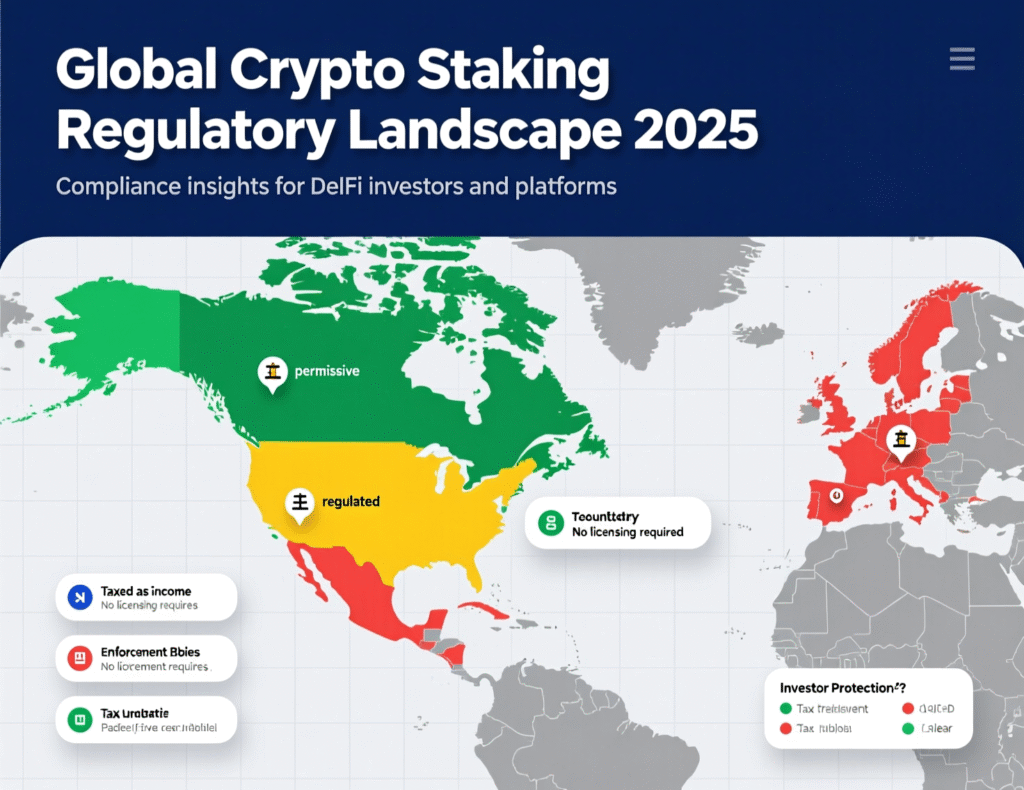
2023 saw SEC action against U.S. exchange staking programs (e.g., Kraken settlement). In 2025, the SEC moved to dismiss its federal case against Coinbase signaling a markedly different policy climate and opening the door for exchange-run staking (with state-by-state nuances). Some exchanges have reintroduced staking under the new environment.European Union (MiCA)
MiCA is fully applicable (AR/EMT parts earlier, broader regime from Dec 2024). While staking specifics depend on service categorization, MiCA’s uniform disclosures and authorizations are shaping custodians’ and CASPs’ approaches.United Kingdom
The FCA’s ongoing crypto policy program and government draft orders clarify which activities fall within RAO scope. This is relevant to staking-as-a-service models, marketing, and consumer outcomes.
Compliance checklist (pragmatic)
Map offering to regulated activity in each market (custody, dealing, operating staking program).
Maintain transparent reward/fee disclosures and slashing risk explanations.
Capture jurisdictional KYC/AML and promotions rules; localize landing pages.



Where the Market Is Heading (2025–2027)
Consolidation + specialization. Post-Pectra, big operators consolidate validator fleets; smaller specialists differentiate on DVT, geography, and restaking ops.
Risk-priced yields. Expect spreads between native staking and restaking yields to reflect slashing covariance and liquidity haircuts more consistently as institutions adopt formal risk capital charges.
Cross-asset security. BTC staking to secure PoS networks grows, while ETH restaking expands into more AVSs (data availability, oracles, coprocessors).
Decentralization controls. The ecosystem continues monitoring provider concentration (e.g., Lido share drift) and enforces soft caps through community norms and governance cues.
How to Build a Future-Ready Crypto Staking Strategy (step-by-step)
Segment capital
By risk bucket: native staking, liquid staking, restaking, BTC staking.
Set per-protocol limits
Based on TVL, audits, operator set, L2/AVS dependencies.
Model slashing stacks
And stress liquidity (exit queues, LRT redemptions).
Adopt DVT
Where possible; rotate keys and diversify clients.
Instrument monitoring
On-chain alerts, validator health, reward variance vs benchmarks.
Compliance ops
Pre-approve disclosures, geo-fence where needed, archive promotions.
Iterate quarterly
Rebalance exposures after major EIPs, AVS launches, or rule changes.
Conclusion
The next phase of crypto staking will be defined by efficiency (Pectra), composability (restaking/LRTs), and broader collateral (BTC staking)—with regulation gradually clarifying service models. Returns won’t be “free yield”: they’ll increasingly price in correlated slashing, liquidity, and smart-contract risk. Teams that enforce diversification, DVT safety nets, and transparent disclosures will compound rewards more reliably than those chasing headline APYs.
Call to action
Want a staking blueprint tailored to your treasury size, risk policy, and jurisdictions? Get a custom allocation model and vendor shortlist in two pages you can act on this quarter.
FAQs
Q : How does Ethereum’s Pectra upgrade affect staking?
A : Pectra raised the max effective balance to 2,048 ETH (EIP-7251), enabling validator consolidation and compounding while keeping the 32-ETH minimum. Operationally, this reduces validator counts for large stakers but increases single-validator exposure—DVT is recommended.
Q : How do restaking rewards work?
A : You pledge staked ETH (or LSTs) to secure additional services (AVSs). You may earn added rewards, but take on extra slashing conditions. Returns depend on AVS demand, fees, and MEV effects.
Q : How can I reduce restaking risk?
A : Diversify across AVSs and LRT issuers, set per-AVS limits, prefer audited protocols, and maintain liquid exit routes. Use DVT and alerting to minimize correlated failures.
Q : How do crypto staking yields vary?
A : Baseline ETH rewards trend around ~2.8–4% and rise with MEV-boost. Network activity (tips), validator performance, and gas dynamics move realized APY.
Q : How is Lido’s market share evolving?
A : It declined from ~32% in late-2023 to ~24.4% by Aug 2025, easing dominance worries. Markets still watch concentration risk closely.
Q : How does BTC staking via Babylon differ from ETH staking?
A : BTC remains on Bitcoin L1; you time-lock UTXOs and delegate security to PoS networks no wrapping. Rewards come from those external networks, not Bitcoin issuance.
Q : How will regulation change staking services in 2025–2026?
A : The U.S. tone shifted (SEC dismissal in Coinbase case; re-openings by some exchanges), while the EU’s MiCA regime and UK policy roadmaps bring clearer authorization and disclosure standards.
Q : How can institutions justify restaking exposure to risk committees?
A : Treat it like structured yield: attribute return premia to slashing covariance and liquidity risk; enforce exposure caps; require audits, SOC2 from operators, and on-chain monitoring with quarterly reviews.
Q : What tools benchmark staking performance?
A : Use Staking Rewards for reward references, beaconcha.in for validator telemetry, and The Block/DefiLlama for market-wide metrics.