
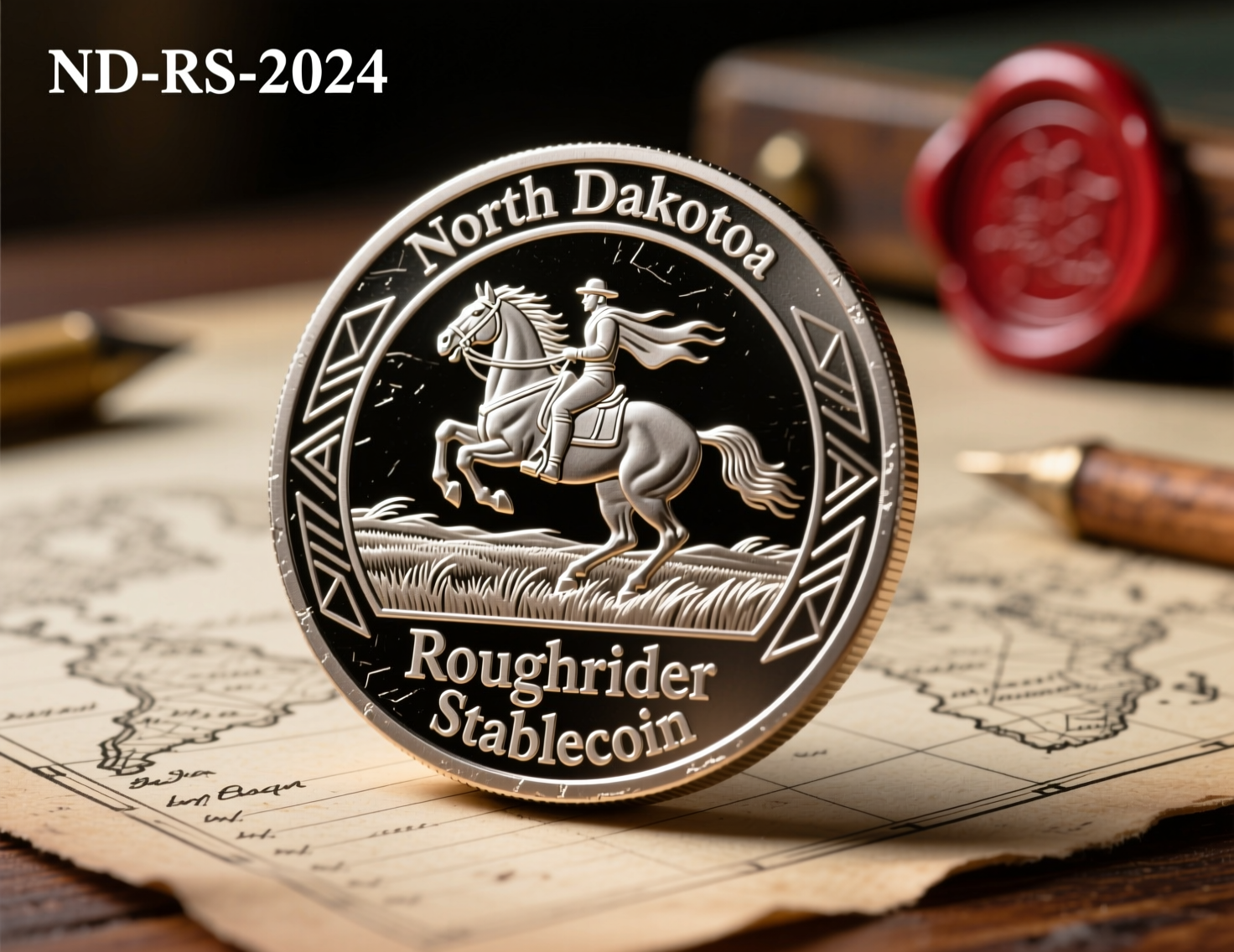

North Dakota to Issue Stablecoin With Fiserv as Digital Dollar Trend Expands
North Dakota is stepping into the future of digital finance with the launch of the North Dakota Roughrider Coin a fully U.S. dollar–backed stablecoin developed by the state-owned Bank of North Dakota in collaboration with Fiserv. Built on Fiserv’s regulated digital asset infrastructure, the project aims to bring secure, transparent, and efficient financial innovation to the state’s banking ecosystem.
Scheduled for release in 2026, the Roughrider Coin will be introduced to banks and credit unions across North Dakota. Its primary goal is to enhance bank-to-bank settlements, streamline merchant payments, and strengthen local financial operations through blockchain-powered technology. By combining state oversight with Fiserv’s trusted platform, this initiative positions North Dakota as a national leader in the adoption of regulated digital money.
What is the North Dakota Roughrider Coin stablecoin?
The Roughrider Coin is described as a fully dollar-backed token that will launch on Fiserv’s digital asset platform, leveraging the company’s FIUSD infrastructure built for regulated financial institutions. Initial availability focuses on North Dakota banks and credit unions, with goals to improve interbank transactions, cross-border flows, and merchant acceptance.
How will the North Dakota Roughrider Coin stablecoin be implemented?
Fiserv’s platform announced in June 2025 alongside FIUSD—integrates with the firm’s existing banking and merchant rails (10,000 FIs; ~90B transactions/year). FIUSD is available via Solana and aims for interoperability with other leading stablecoins, signaling similar technical pathways for Roughrider Coin. Specific chain(s) for Roughrider have not been formally named beyond leveraging the platform.
Who can use it at launch?
Per the announcement, the coin will be offered to in-state banks and credit unions, with merchant use-cases encouraged via Fiserv’s network. Retail availability details weren’t disclosed.
Why now? Federal clarity via the GENIUS Act
In July 2025, the GENIUS Act was signed into law, establishing a federal framework for payment stablecoins (e.g., reserve quality, disclosures, and marketing restrictions). The law aligns state and federal regimes and clears a path for regulated institutions to issue or adopt stablecoins an important catalyst cited by stakeholders.
State peers and market context
Wyoming launched the Frontier Stable Token (FRNT) in 2025, making it the first state-issued stable token to go live, and offering a relevant U.S. public-sector precedent. Meanwhile, the total stablecoin float surpassed $300 billion in early October 2025, highlighting rapid adoption. Global Government Fintech+1
Governance, partners, and quotes
Fiserv says Roughrider Coin will combine bank-grade compliance with 24/7 settlement benefits. Statements from Fiserv leadership and BND’s CEO emphasize interoperability and support for North Dakota’s community FIs; the state’s governor has also framed the initiative as part of a “new financial frontier.” (Quotes and positioning per Fiserv’s press release.)
<section id=”howto”> <h3>How to prepare your institution to support Roughrider Coin</h3> <ol> <li id=”step1″><strong>Step 1:</strong> Identify priority use-cases (interbank settlement, merchant payouts, cross-border flows).</li> <li id=”step2″><strong>Step 2:</strong> Engage your Fiserv account team to review API/SDK integration paths and compliance features.</li> <li id=”step3″><strong>Step 3:</strong> Map KYC/AML, reserve-treatment, and accounting policies to GENIUS Act requirements.</li> <li id=”step4″><strong>Step 4:</strong> Pilot limited transaction cohorts (e.g., internal treasury moves, selected merchant disbursements).</li> <li id=”step5″><strong>Step 5:</strong> Train ops and support staff; establish incident/rollback plans before scaling.</li> </ol> <p><em>Note: Process may vary by jurisdiction/provider. Confirm requirements before acting.</em></p> </section>
Context & Analysis
North Dakota’s approach mirrors a broader migration of stablecoin tech into bank-led stacks rather than purely crypto-native issuers. Leveraging Fiserv reduces vendor sprawl for community banks and could accelerate merchant acceptance through existing terminals and software. Key watch-items: chain selection, interoperability with FIUSD/PayPal USD, reserve custody model, and whether retail wallets will be supported—or if use remains institutional in early phases.
Conclusion
If successfully executed, the Roughrider Coin could transform North Dakota’s financial landscape by offering banks and credit unions faster settlements, programmable payouts, and improved transaction efficiency all within a secure, fully regulated banking framework. This innovation blends blockchain capability with trusted financial oversight.
The next steps in the project’s roadmap include releasing detailed technical documentation, launching sandbox pilots with partner institutions, and finalizing preparations for its 2026 rollout. Each milestone will play a key role in ensuring the Roughrider Coin meets compliance standards while delivering real-world value to North Dakota’s banking and payments ecosystem.