
Middle East NFT Art: Guide for Global Collectors
Middle East NFT art refers to blockchain-based digital artworks created by artists from the broader MENA region or focused on Middle Eastern themes, minted on chains like Ethereum, Tezos and Polygon. For collectors in the US, UK and Europe, it’s a way to access the fast-growing Gulf and wider MENA digital art scene while supporting Arab creators in a transparent, on-chain way.
Within a typical buying journey, that means browsing curated drops from MENA artists, paying in crypto via a self-custodied wallet, and holding verifiable, tradable digital artworks that sit alongside global NFTs in your portfolio.
Introduction
Walk into Art Dubai today and the digital halls look very different from the early “NFT hype” years. Since 2022, Art Dubai Digital has become a permanent pillar of the fair, with curated booths from Web3 galleries, museums and DAOs showing NFTs and AI-driven works alongside blue-chip painting and sculpture.
Middle East NFT art is the slice of this movement tied to MENA artists, stories and collectors. In practice, “Middle East NFT art” means blockchain-based artworks by creators from the Gulf, Levant and North Africa or works that explore regional themes minted as NFTs on public chains. For US, UK, German and wider EU collectors, it offers access to the MENA digital art scene at a much earlier stage of maturity than New York, London or Berlin, but in cities like Dubai, Riyadh and Doha that are racing to become global Web3 art hubs.
In this guide, we’ll walk through three pillars: what makes Middle East NFT art distinct, which Arab artists and communities to watch, and how collectors in the US, UK and Europe can buy safely while staying aligned with regulation, culture and ethics.
What Is Middle East NFT Art?
Defining Middle East NFT Art in 2025
Middle East NFT art in 2025 is best understood as digital artworks images, animations, generative pieces or immersive experiences minted as NFTs by artists from MENA or focused on the region’s cultures, cities and histories. These works typically live on public chains like Ethereum, Tezos and Polygon, giving collectors verifiable, blockchain-based art ownership that can be bought, sold or displayed across wallets and Web3 art platforms in the Middle East and globally.
What sets it apart from generic NFT art is the narrative layer: Arabic calligraphy, Gulf futurism, Palestinian and Levantine storytelling, Islamic geometry, desert and coastal landscapes, and references to intangible heritage that UNESCO tracks in its cultural lists. Where a PFP project might be purely speculative, many Arab creators are treating NFTs as a new way to fund and circulate fine art, often in parallel with physical works. EMERGEAST, for example, started as an online gallery for MENA artists and later curated NFT exhibitions like “NFT M.E.” and Meta MENA to bridge collectors into this space.
How the Regional Digital Art Scene Evolved into NFTs
The path to Middle East NFT art runs through at least a decade of digital experimentation. By the mid-2010s, galleries in Dubai, Beirut and Cairo were already showing video art, interactive installations and net art. Online galleries such as EMERGEAST built early communities of regional and diaspora collectors who were comfortable buying art online long before NFTs went mainstream.
From 2020–2022, MENA artists and galleries began minting on Ethereum and Tezos, often through global marketplaces like OpenSea and Foundation. Wamda reports that Middle East–based NFT marketplaces raised around $10 million in 2021, and EMERGEAST staged
Art Dubai then institutionalised this momentum. Its inaugural Art Dubai Digital section in 2022 has since become a permanent feature, highlighting NFTs and other digital works as part of the fair’s core programme rather than a side experiment.Qatar Museums followed with large-scale digitisation and online-collection projects, plus a metaverse pilot for the National Museum of Qatar (NMoQ), signalling that Gulf cultural institutions see Web3 and virtual experiences as long-term infrastructure, not hype.
Why Dubai, Riyadh and Doha Became Crypto Art Hubs
Dubai, Riyadh, Abu Dhabi and Doha are emerging as crypto art hubs for structural reasons: tech-friendly policy, strong financial centres and young, online populations. Dubai’s Virtual Assets Regulatory Authority (VARA) and the DFSA’s crypto token regime in the DIFC give exchanges and platforms a clearer licensing path than in many jurisdictions Abu Dhabi Global Market (ADGM) positions itself as a regional digital-assets centre with a full virtual-asset framework, attracting institutional players.
Meanwhile, Saudi Arabia’s Vision 2030 push and a conservative approach to crypto trading are creating a nuanced landscape where NFTs are often framed more as digital collectibles or cultural products than speculative tokens. ([The Library of Congress][9]) Doha is consolidating its role through Qatar Museums, the coming Art Basel Qatar fair and a flurry of metaverse and AI-driven initiatives.
For global collectors, this puts Gulf cities in dialogue with New York, London and Berlin. Art Dubai Digital and NFT expos in Dubai sit alongside Frieze or Art Basel; Riyadh and Doha host Web3 conferences that complement New York or Los Angeles NFT weeks. If you’re planning a Web3 art platform for the region, our guide to Web Development Trends in the Middle East for KSA & UAE shows how Gulf UX and infrastructure expectations are evolving.
Arab NFT Artists and Communities to Watch
Arab artists are embracing NFTs because they offer global reach, programmable royalties and direct relationships with collectors in the US, UK and Europe—without relying entirely on physical galleries. In a market where global NFT trading volume fell from around $3.7B in Q2 2023 to about $1.6B in Q3 2023, niche scenes with strong storytelling like MENA have stood out to serious collectors.
Breakout Arab NFT Artists Across the Gulf and Levant
Press coverage and gallery programmes highlight names like:
Kristel Bechara (UAE)
Among the first female Arab artists to launch an NFT series from the UAE, combining bold figurative painting with digital drops and showing in Dubai’s DIFC.
Aya Tarek (Egypt)
A pioneer in Egyptian street and digital art whose NFT collections riff on Cairo’s visual culture and have featured in early NFT exhibitions. Ruba Salameh (Palestine)
Alongside other Levantine artists, she explores displacement, memory and the politics of place, now extended into tokenised formats.
Beyond the Gulf and Levant, diaspora artists based in New York, London, Berlin and Paris are minting NFTs that connect MENA themes with global aesthetics: glitch collages, cyber-Arabic typography, Berlin club-culture references layered with Middle Eastern motifs exactly the kind of hybrid language that appeals to cosmopolitan collectors.
If you’re building or scaling an online art gallery for Middle Eastern artists, you can lean on the same kind of API-first stacks and high-performance hosting we use in projects like Data Lakehouse Architecture for US & EU Enterprises, so streaming-heavy art sites don’t fall over during big drops.
Female Arab NFT Artists Changing the Narrative
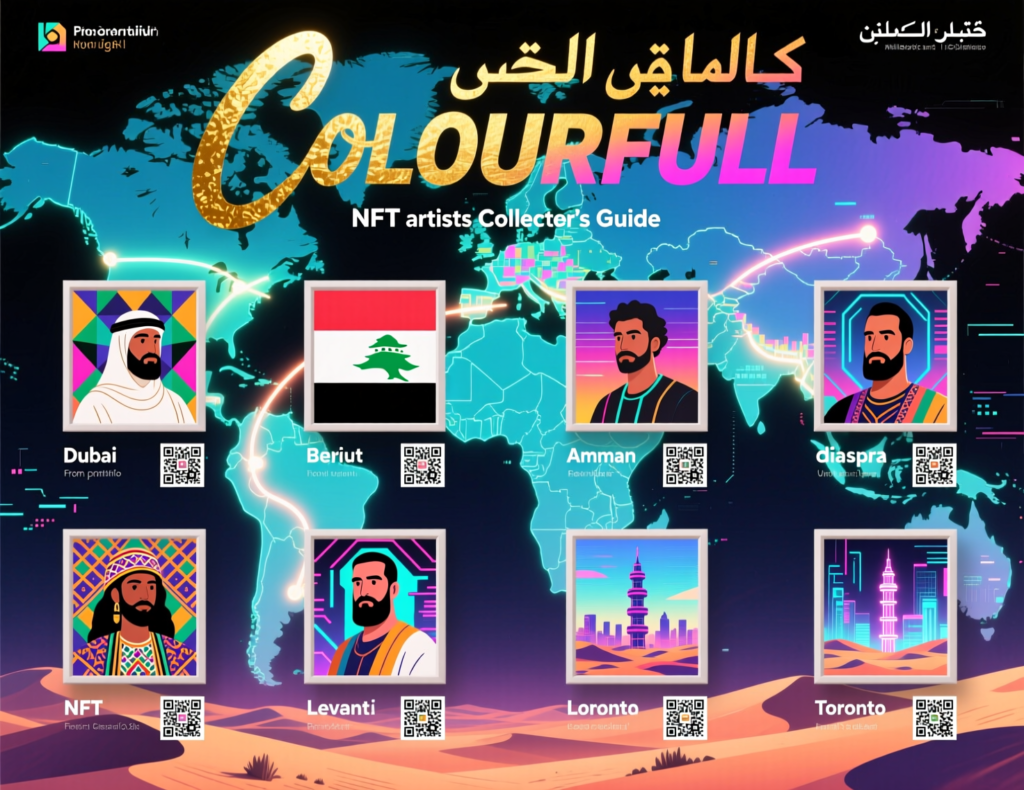
Features in outlets like Grazia spotlight a growing cohort of female Arab NFT artists and illustrators among them Zeinab Alhashemi, Kristel Bechara, Ruba Salameh, Nourie Flayhan and Ichraq Bouzidi who are diversifying what the NFT marketplace looks like. Their work often tackles identity, gender, migration, futurism and the digital self, resonating with collectors who care about both aesthetics and impact.
Others, like Miriam Motlaq, are using NFTs to bring Arabic calligraphy and Islamic art into the digital realm, leveraging Kufic script and generative techniques to create 1/1 pieces that feel rooted in tradition but natively Web3.For UK buyers asking “how UK collectors can support Arab NFT artists”, buying directly from these creators, bidding on curated drops and re-sharing their work on social channels is often more impactful than chasing anonymous PFPs.
NFT Collectives, DAOs and Web3 Communities in MENA
NFT collectives and DAOs are the social fabric of the region’s crypto art market. They help new collectors discover trusted artists by curating exhibitions, running Discords and hosting IRL events at fairs like Art Dubai Digital or regional NFT expos.
In Dubai, communities like Arts DAO and various Web3 clubs create on-ramps for English-speaking collectors and Gulf nationals alike. In London, pockets of “Arab NFT artists in London” meet-ups connect Middle Eastern diaspora creatives with UK-based collectors, while in Berlin there is growing interest in arabische NFT-Künstler in Berlin within broader crypto-art circles. In the US, Discords dedicated to “Middle Eastern diaspora artists USA” and Twitter Spaces around MENA drops help bridge time zones between New York or Los Angeles and the Gulf.
These communities are especially valuable for first-timers. By following their curation, you’re more likely to encounter doxxed artists, transparent royalty policies and contracts that have been battle-tested by other collectors.
How US, UK and European Collectors Can Buy Middle East NFT Art
Buying Middle East NFT art safely as a US, UK or German collector means combining good Web3 hygiene (wallets, security) with regulated on-ramps and clear tax reporting. In practical terms, the answer to “how to buy Middle East NFT art as a US collector” is: use a compliant exchange, hold your own keys, verify artists and contracts, and document every trade.
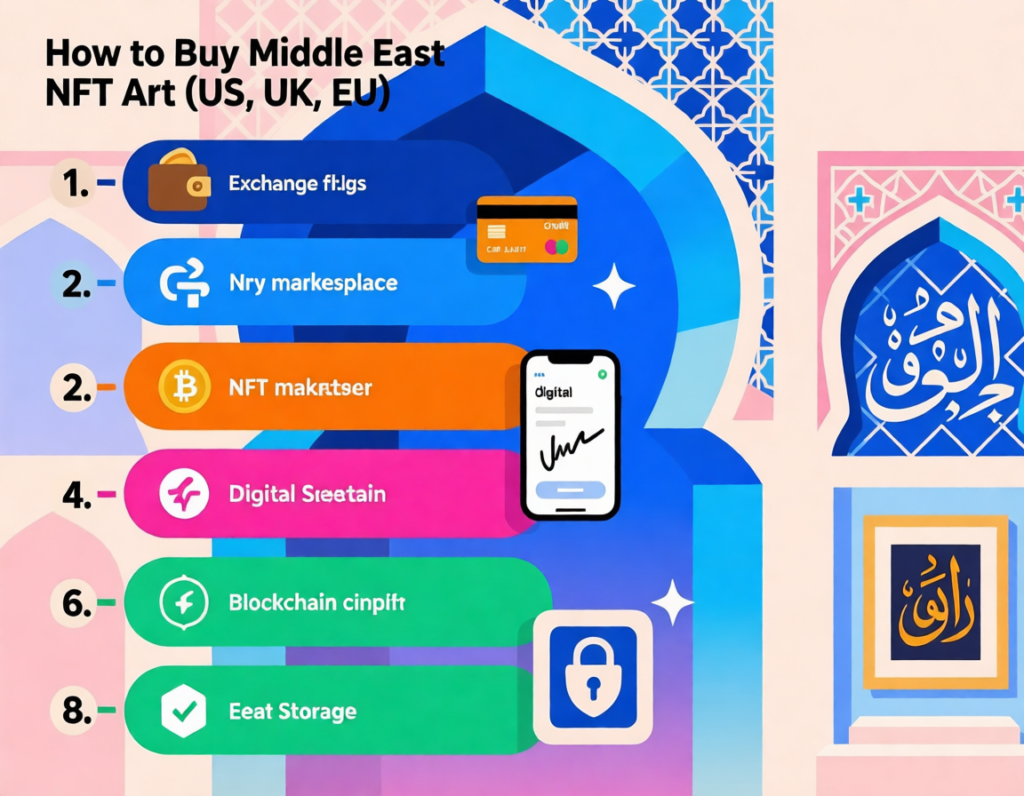
Step-by-Step: How to Buy Middle East NFT Art as a US Collector
Here’s a streamlined flow US collectors can follow.
Choose a secure wallet
Start with a reputable browser wallet (for example, MetaMask) or a mobile wallet, and strongly consider adding a hardware wallet for high-value pieces.
Use a regulated US exchange
Open an account with a US-regulated exchange, complete KYC and fund it with USD via ACH or wire. Look for exchanges with strong AML controls and SOC 2–level security where possible.
Convert USD to crypto
Buy ETH, MATIC or XTZ depending on where your target artist mints. Withdraw crypto to your self-custodied wallet never buy NFTs directly from an exchange hot wallet.
Connect to marketplaces
Connect your wallet to curated platforms that list MENA NFT art (for example, EMERGEAST-curated drops on OpenSea, SuperRare or Foundation).
Verify the collection and contract
Check the artist’s official site or social profiles for direct links, verify contract addresses and ensure royalties are set correctly.
Place your bid or buy now
Be mindful of gas fees and network congestion, especially when bidding in live auctions.
Secure your holdings and track taxes
Move long-term pieces to a hardware wallet and export your transaction history into a tax tool that supports US capital-gains rules on crypto.
For more complex builds like launching your own online art gallery for Middle East NFTs you can lean on partners offering web development services and mobile app development services to design secure minting flows, dashboards and API integrations.
UK and EU Guide.
UK collectors typically fund wallets in GBP via Open Banking rails or fintech apps, then swap to crypto on FCA-registered exchanges. From there, the buying process mirrors the US: connect a wallet, verify the artist and contract, then bid or buy.
For EU and especially German collectors
wie deutsche Sammler Middle East NFT-Kunst kaufen können EUR on-ramps must now navigate the EU’s MiCA rules for crypto-asset service providers and BaFin’s stricter stance on unlicensed foreign exchanges.When searching for eu-regeln für den kauf von nft-kunst aus dem nahen osten, you’re really looking at a mix of MiCA, local tax law and cross-border KYC checks.
On tax: in both the UK and Germany, NFTs are generally treated as assets, so profits are often subject to capital gains tax, and frequent trading may be viewed as a business activity. Guidance evolves quickly, so treat all blog content (including this) as education, not tax advice always consult HMRC, a UK tax advisor or a German Steuerberater for specifics.
Best Platforms and Marketplaces for MENA NFT Art
To discover and buy Middle East NFT art, most collectors combine:
Regional online galleries
EMERGEAST and similar platforms curate MENA artists and sometimes host NFT exhibitions (like “NFT M.E.”), often in partnership with fairs and museums.
Curated marketplaces
Platforms with application-based onboarding (for example, SuperRare, Foundation) that emphasise curation, on-chain royalties and collector tools.
Open marketplaces
OpenSea and other global platforms where many Arab artists mint 1/1s or small editions.
When evaluating platforms, look for clear royalty settings, verified smart contracts, strong KYC/AML practices and payment flows processed by PCI DSS–compliant providers with robust security credentials.
In practice, the go-to options to start exploring Middle East NFT art are curated MENA-focused galleries (such as EMERGEAST), high-quality curated NFT marketplaces and large global platforms like OpenSea where Arab artists run collections under verified profiles.
Regulation, Culture and Ethics Around MENA NFT Art
Key NFT Regulations in UAE, Saudi Arabia, Qatar and Beyond
The regulatory backdrop should influence how you buy and where platforms are based. In the UAE, the Securities and Commodities Authority (SCA) adopted a crypto-assets regulation framework in 2020, while VARA in Dubai and the DFSA in the DIFC have issued virtual-asset and crypto-token rulebooks that cover licensing, consumer protection and AML. ([The Library of Congress][9]) ADGM in Abu Dhabi has its own comprehensive digital-assets regime and explicit guidance on virtual assets and NFTs.
Saudi Arabia’s authorities, including the Saudi Central Bank and Capital Market Authority, have repeatedly warned about crypto trading, and commentary suggests that cryptocurrency remains effectively restricted, though not always via specific NFT statutes. For Qatar, general financial-services and sanctions rules apply, but museums and cultural bodies like Qatar Museums are experimenting with digital collections and metaverse programmes under close oversight.
In Germany and the wider EU, BaFin evaluates NFTs case by case and may classify some as regulated crypto-assets or financial instruments, while MiCA broadly excludes one-off NFTs but can apply to large collections that behave like fungible tokens.
Sharia Compliance, Cultural Heritage and On-Chain Provenance
Sharia considerations mostly come in around how NFTs are structured (no interest-bearing mechanics, transparent ownership) and what is being tokenised. Many scholars and Islamic finance practitioners see no problem with NFTs representing discrete artworks as long as the rights are clearly defined and speculation is not the sole purpose.
Cultural heritage is more sensitive. Tokenising museum artefacts or intangible practices like calligraphy styles that appear on UNESCO’s Intangible Cultural Heritage lists raises questions about custodianship, community consent and fair revenue sharing.Some Gulf institutions are responding by digitising collections (Qatar Museums’ online platform has put more than 1,000 works online) while keeping physical custodianship and scholarly context firmly in-house.
For Arab digital artists, provenance and royalties matter because they provide a transparent record of authorship and ensure they’re paid each time a work resells, unlike many traditional gallery deals in the region. On-chain provenance also helps collectors verify that a work comes from the original artist or an approved institution, reducing the risk of fakes and misattributed cultural heritage.
Data, Security and Cross-Border Compliance for Collectors
When you buy Middle East NFT art from London, Berlin or New York, your data and payment details may touch multiple jurisdictions. Platforms should.
Handle personal data in line with GDPR/DSGVO, UK-GDPR and related data-protection rules.
Use PCI DSS–compliant processors for card payments.
Maintain strong information security, ideally evidenced via frameworks like SOC 2.
From a collector’s perspective, cross-border compliance boils down to three things:
KYC/AML
Always use exchanges and marketplaces that verify identity and screen against sanctions lists.
Sanctions and de-risking
Be aware that some banks in the US, UK and EU de-risk exposure to certain jurisdictions; withdrawing large crypto proceeds might trigger enhanced checks.
Wallet and contract security
Use hardware wallets, avoid signing arbitrary transactions and stick to verified contracts.
You can mirror the kind of secure architectures we design for high-risk data environments see our cloud cost optimization and high-performance WordPress playbooks for NFT platforms that need both speed and compliance.
Market Outlook: Is Middle East Crypto Art a Good Investment?
Market Size and Growth of the MENA NFT Art Scene
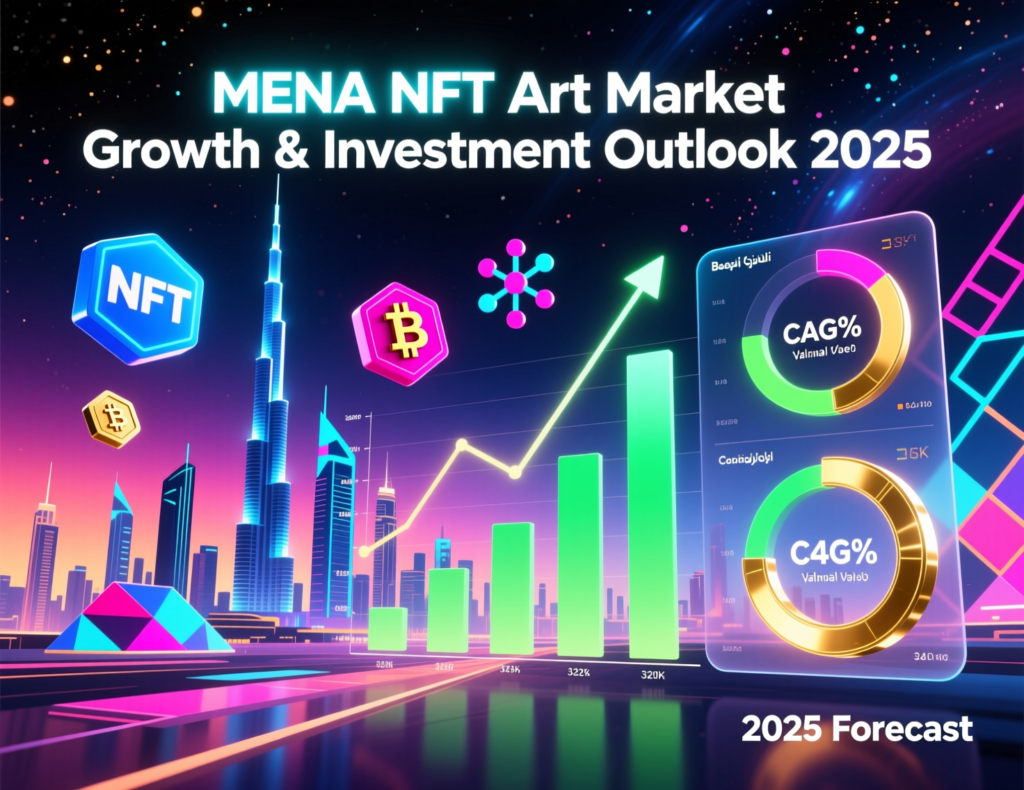
Research estimates that the Middle East & Africa NFT market generated roughly USD 1.86 billion in revenue in 2023, with a projected CAGR of about 27% from 2024 to 2030, and art singled out as one of the fastest-growing segments.Global NFT markets are also forecast to grow from roughly USD 4 billion in 2023 to anywhere between USD 34–83 billion by 2030, depending on methodology.
Yet traditional art-market data shows that the entire Middle East still accounts for less than 1% of global art turnover, even as events like Art Basel Qatar launch to change that. For sophisticated collectors, that combination small base, high growth often signals an interesting but risky frontier.
What US, UK and EU Collectors Look For in Middle East NFT Art
When US, UK and EU buyers ask “is Middle East crypto art a good investment for American buyers?”, the balanced answer is: high upside, high risk and a long-term horizon. Many New York or London collectors use Middle East NFTs to diversify away from saturated PFP niches, gain early exposure to emerging scenes and back artists whose stories they care about. German and other EU collectors may also look for impact-aligned themes: cultural preservation, diaspora narratives or collaborations with recognised institutions.
In practical terms, serious collectors often prioritise:
Artist trajectory
Exhibitions at Art Dubai, shows with Qatar Museums or other institutional partners, or features in regional galleries like EMERGEAST.
Technical quality
Well-crafted smart contracts, multi-chain strategies and thoughtful use of generative tools.
Cultural depth
Works that engage with region-specific histories rather than generic “crypto aesthetics.”
For most portfolios, Middle East NFT art belongs in the speculative, venture-style allocation not the core savings bucket you’d keep in index funds or blue-chip stocks. This is not financial advice; always do your own research and consider professional guidance before making investment decisions.
How Fairs, Museums and Brands Are Validating the Space
The social proof around Middle East NFT art is strengthening:
Art Dubai Digital has evolved from a novelty to a recurring programme that international galleries and brands now plan for.
Qatar Museums is investing in digital collections, AI-guided tours and NMoQ’s metaverse pilot, embedding digital-first engagement into its core strategy.
Art Basel’s decision to launch a fair in Doha from 2026 underlines long-term confidence in the wider Gulf art market, even as global art sales softened by around 12% in 2024.
Meanwhile, exhibitions in London, Berlin and Paris featuring MENA NFT artists, plus collaborations between Gulf banks (for example, Commercial Bank of Dubai’s early NFT art exhibition) and Web3 creatives, help anchor price discovery and collector trust.
How to Start Collecting Middle East NFT Art Today
Choose Your Focus
The easiest way to avoid overwhelm is to choose a focus before you start bidding. Beginners often narrow by.
Artists
For example, following a handful of female Arab NFT artists or a specific Palestinian or Lebanese creator whose work resonates.
Themes
Gulf futurism and sci-fi cityscapes, Levantine memories, Islamic geometry, Arabic typography or cultural-heritage-inspired works aligned with UNESCO-style preservation debates.
Countries and hubs
Dubai/Riyadh/Doha drops, Cairo or Beirut collectives, or diaspora communities in London, Berlin, Amsterdam or New York.
That way, your first 5–10 NFTs build a coherent collection rather than a random wallet of experiments.
Practical Starter Checklist for US, UK and German Collectors
Use this quick checklist before you buy your first Middle East NFT:
US.
Open an account with a regulated exchange, complete KYC.
Set up a browser + hardware wallet combo.
Convert USD to the right chain (ETH/MATIC/XTZ).
Shortlist platforms and artists; avoid FOMO mints.
Track gas fees and keep a simple spreadsheet for the IRS.
UK.
Top up GBP via Open Banking/fintech apps into an FCA-regulated exchange.
Confirm UK-GDPR and PCI DSS practices on any platform that stores your card or personal data.
Note that HMRC treats most NFT profits as capital gains log all trades.
Germany / EU.
Use BaFin-licensed or MiCA-aligned platforms where possible; avoid services that geo-block EU users.
Watch for VAT on certain primary sales; clarify with a Steuerberater.
Document any cross-border transfers to and from Middle East exchanges.
Wherever you are, reading broader digital-transformation pieces like Public Private Tech Partnerships in MENA for Vision 2030 helps you understand the macro context behind Gulf NFT art infrastructure.
Build Long-Term Relationships with Arab NFT Artists and Galleries
Collecting Middle East NFT art isn’t only about flipping tokens it’s about building relationships.
Practical steps
Follow artists and galleries on X, Instagram and Lens; join their Discords or Telegram groups.
Attend fairs and events like Art Dubai, NFT expos in Dubai or Riyadh, and museum-led digital programmes in Doha or Abu Dhabi.
For deeper collaborations, commission on-chain works, sponsor drops or partner on curated exhibitions.
If you’re planning a more ambitious platform a bilingual NFT gallery, a Web3-native museum extension or a data-heavy collector dashboard teams like Mak It Solutions can help architect it end-to-end, from services overview and web development to analytics and mobile experiences.
Key Takeaways
Middle East NFT art combines blockchain-based ownership with MENA-specific narratives from Gulf futurism to Levantine memory and Islamic art.
Gulf hubs like Dubai, Abu Dhabi, Riyadh and Doha are building regulated virtual-asset regimes and cultural programmes that legitimise NFTs as part of the wider Gulf art market NFTs ecosystem.
US, UK and EU collectors should always use regulated exchanges, self-custodied wallets, robust KYC/AML platforms and clean tax records for cross-border trades.
Regulation (VARA, ADGM, BaFin, MiCA), GDPR/UK-GDPR and PCI DSS all shape how Web3 art platforms in the Middle East handle data, payments and investor protection.
The MENA NFT market is small but fast-growing, making Middle East crypto art a high-risk, high-upside satellite allocation rather than a low-risk investment.
Working with experienced tech partners helps you build compliant, high-performance NFT galleries, apps and analytics tooling for online art galleries for Middle Eastern artists and global collectors.
If you’re serious about collecting or building platforms around Middle East NFT art, you need infrastructure that’s as strong as the art itself. Mak It Solutions can help you design compliant, fast NFT galleries, Web3-ready websites and mobile apps that work for users in Dubai, London, Berlin and New York. Explore our services, then contact us to scope a secure, high-performance roadmap for your MENA-focused NFT art project.
FAQs
Q : Is Middle East NFT art still a good entry point for first-time collectors in 2025?
A : Yes, Middle East NFT art can still be a strong entry point because the scene is relatively early compared with US or East Asia, but already has institutional validation from Art Dubai, Qatar Museums and soon Art Basel Qatar. ([Al Jazeera][1]) Prices for many emerging Arab artists are still accessible, and you can build a curated collection of 1/1s and small editions rather than chasing hyped PFPs. The trade-off is higher market risk and lower liquidity, so it’s wise to start small, focus on artists you truly believe in and treat any capital as long-term, high-risk exposure.
Q : What risks should US and European buyers know before investing in Arab crypto art?
A : Key risks include extreme price volatility, evolving regulations (especially around cross-border crypto services), potential sanctions exposure and the usual Web3 threats of scams, fake collections and compromised wallets. ([Binance][12]) In some jurisdictions, banks may also scrutinise large inflows from crypto platforms in the Gulf more closely. To manage risk, stick to regulated exchanges, hardware wallets, verified artists and contracts, and never allocate money you can’t afford to lose.
Q : How do royalties work for Arab NFT artists compared with traditional Middle East galleries?
A : On most NFT marketplaces, royalties are encoded in the smart contract so artists automatically receive a percentage of each secondary sale—often 5–10%—paid directly to their wallet. That’s a major contrast with traditional gallery deals in parts of the Middle East, where resale royalties may not exist or are handled informally. On-chain royalties give Arab artists more predictable long-term income from successful works, but they’re still partly dependent on marketplace policies and industry standards, which can change, so collectors should always review royalty settings before minting or buying.
Q : Are NFTs minted on non-Ethereum chains (like Tezos or Polygon) accepted by serious MENA art collectors?
A : Yes. Many serious collectors and galleries in the MENA digital art scene are chain-agnostic, especially as Tezos and Polygon offer lower gas fees and a smaller carbon footprint. Curated exhibitions and marketplaces have already shown Middle East NFT art on these networks alongside Ethereum, and some museums and galleries favour them for environmental or cost reasons. Ultimately, serious collectors care more about artist quality, provenance and platform reputation than whether a piece is on Ethereum, Tezos or Polygon though Ethereum still commands the most liquidity.
Q : Can Middle East NFT art help preserve cultural heritage, or does it risk exploiting it?
A : It can do both, depending on how it’s used. NFTs can help document and fund the preservation of intangible cultural heritage—like calligraphy, music or crafts by creating new revenue streams and digital records that complement institutions such as UNESCO and national museums.But when heritage motifs or artefacts are tokenised without community consent or proper context, NFTs can slip into digital extraction or cultural appropriation. The safest route is to support artists and institutions that work transparently with local communities, publish clear provenance and share royalties or benefits fairly.