
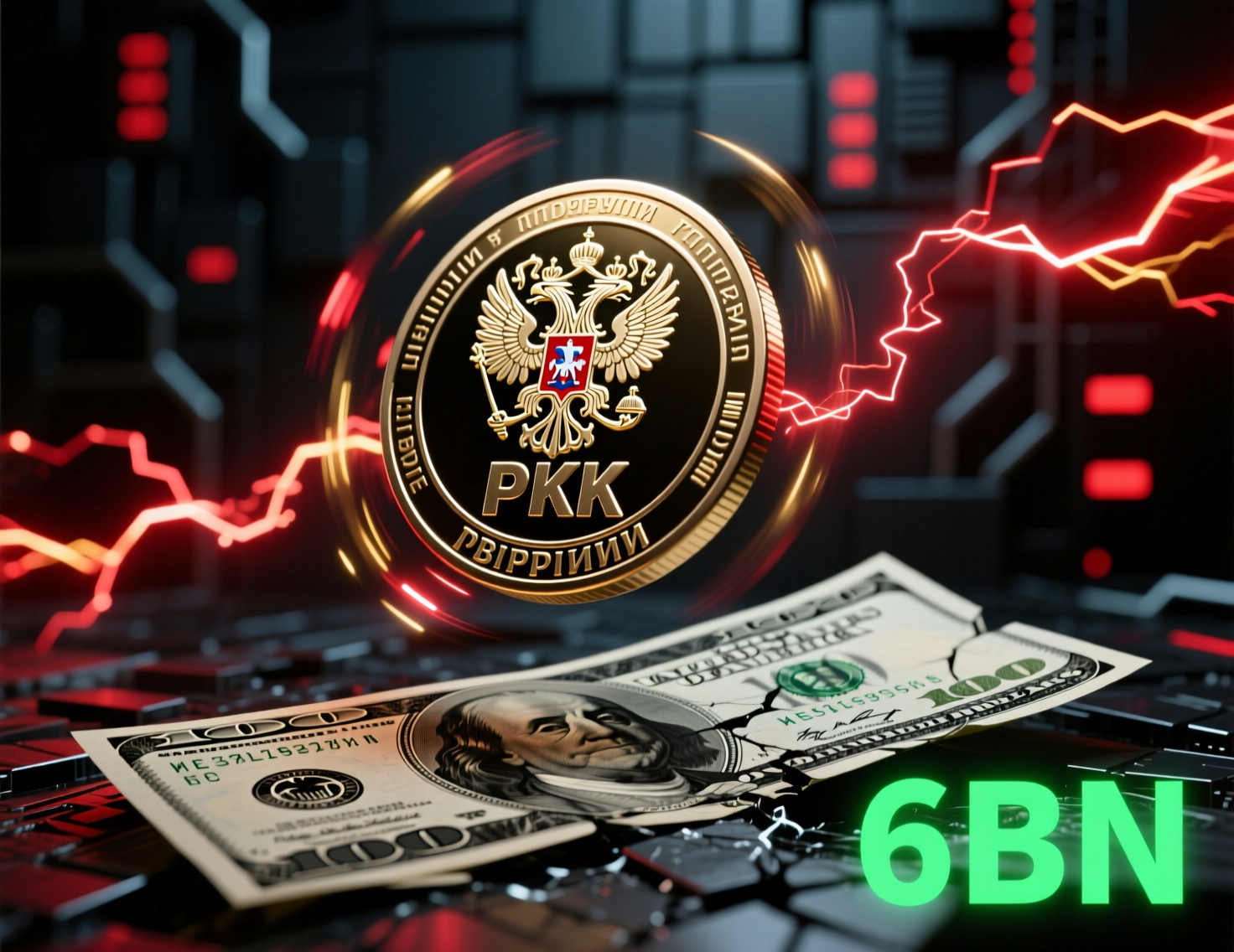

Kremlin-backed crypto coin moves $6bn despite US sanctions
A Kremlin-linked stablecoin has reportedly transferred around $6 billion since new U.S. sanctions took effect. The ruble-pegged A7A5 token, identified as a Kremlin-backed digital asset, continued large-scale movements despite restrictions imposed on August 14. Officials noted that the token’s administrators quickly adapted to the penalties.
According to recent reports and regulatory disclosures, the team behind A7A5 restructured its supply and rerouted transaction channels to maintain liquidity and cross-border use. These adjustments have raised fresh concerns among Western authorities about the growing use of state-supported cryptocurrencies to bypass financial sanctions and stabilize restricted economies.
What happened and why it matters
The A7A5 token—central to Russia’s A7 cross-border payments network—continued operating after U.S. sanctions targeted related firms, including Kyrgyzstan-based exchange Grinex and issuer Old Vector. Blockchain records reviewed by reporters show more than 80% of A7A5 in circulation was destroyed and re-issued to break links to sanctioned wallets, after which a new wallet processed around 6.1 bn in transactions. Financial Times
Russia subsequently recognized A7A5 as a digital financial asset (DFA), allowing sanctioned PSB to offer it on a trade platform for importers and exporters formally embedding the coin in state-aligned payment rails.
Kremlin-backed crypto coin moves 6bn despite US sanctions: what the data shows
Post-sanctions rerouting
A7A5 administrators used token-management commands to zero out targeted wallets and re-mint equivalent balances elsewhere. Activity then concentrated in a successor wallet that moved ~6.1 bn.Work-week patterns
Transfers cluster in Moscow business hours, with minimal weekend/overnight movement consistent with enterprise settlement usage.Institutional ties
OFAC says A7 (and subsidiaries A71 and A7 Agent) is owned by Ilan Șor and PSB; issuer Old Vector worked with Garantex and others to create A7A5.
Timeline: Kremlin-backed crypto coin moves 6bn despite US sanctions
Mar 6–7, 2025
DOJ and partners disrupt Garantex; Tether freezes ≈$27–28 mn in Garantex-linked USDT.Aug 14, 2025
OFAC designates Grinex, Old Vector, and the A7 network.Aug–Sept 2025
A7A5 supply is burned/re-minted; a new wallet processes ≈6.1 bn with weekday peaks.Late Sept–Oct 2025
Russia formalizes A7A5 as a DFA; A7A5 sponsors major crypto events despite scrutiny.
Links to state banks and global expansion
PSB already under Western sanctions backs A7A5 with ruble deposits, and holds a minority stake in A7 alongside Șor, per public records and prior reporting. Russian officials have publicly touted the system as a basis for cross-border settlements, while analytics firms estimate tens of billions in cumulative flows since launch. Garantex takedown
U.S. and European authorities dismantled Garantex’s infrastructure in March, alleging it processed at least $96 bn and facilitated ransomware and other crimes. OFAC later targeted Grinex—described as a successor platform plus entities behind A7A5. The post-August re-minting maneuver underscores how token controls can obscure provenance and complicate sanctions tracing.
<section id=”howto”> <h3>How to audit A7A5 wallet activity yourself</h3> <ol> <li id=”step1″><strong>Step 1:</strong> Identify relevant A7A5 contract addresses on TRON/Ethereum from trusted sources (regulators, reputable media, analytics).</li> <li id=”step2″><strong>Step 2:</strong> Use a block explorer to locate flagged wallets and review token mint/burn (“destroy”/“reissue”) events by date.</li> <li id=”step3″><strong>Step 3:</strong> Export transaction histories to CSV and filter by business hours in Moscow (UTC+03:00) to spot patterns.</li> <li id=”step4″><strong>Step 4:</strong> Trace large transfers across counterparties to see whether funds converge in successor wallets.</li> <li id=”step5″><strong>Step 5:</strong> Cross-reference with sanction lists (OFAC/EU/UK) to tag entities and update risk scoring.</li> </ol> <p><em>Note: Process may vary by jurisdiction/provider. Confirm requirements before acting.</em></p> </section>
Context & Analysis
Analysis: The A7A5 case illustrates how centrally managed stablecoins can be reconfigured to minimize taint and maintain liquidity after enforcement actions. Formal recognition inside Russia increases domestic legitimacy even as it heightens compliance risk abroad, especially for venues that interface with A7A5 via bridges or OTC desks. Continued designations and secondary-sanctions exposure remain likely as authorities track evolving wallet patterns.

Conclusion
A7A5’s swift restructuring and steady transaction flow reveal how adaptable tokenized financial systems can be, even under strict international sanctions. The coin’s resilience underscores the challenges regulators face in controlling digital assets that can quickly shift networks and liquidity routes.
Backed by official Russian support, A7A5 remains under close Western scrutiny. Its future now depends on whether global authorities can effectively block off-ramps and limit institutional access outside allied territories, determining if such state-linked digital currencies can continue operating beyond the reach of traditional financial oversight.
FAQs
Q : What is A7A5?
A : A7A5 is a ruble-pegged stablecoin issued via Old Vector (Kyrgyzstan) and linked to Russia’s A7 payments network. OFAC sanctioned related entities on August 14, 2025.
Q : How did the network keep moving funds after sanctions?
A : The network destroyed and re-minted a large portion of its token supply to sever connections with sanctioned wallets, then continued transacting through newly created addresses.
Q : Who controls A7 and A7A5?
A : According to OFAC, A7 and its subsidiaries are controlled by Ilan Șor and PSB. Old Vector issued A7A5 and collaborated with Garantex and others in its development.
Q : Did Russia officially recognize the token?
A : Yes. Russian authorities granted A7A5 official digital financial asset status, allowing its use on a PSB-managed platform for trade settlements.
Q : Is this legal outside Russia?
A : Legality varies by jurisdiction. Interacting with designated entities or wallets poses compliance challenges and risks of secondary sanctions.
Q : What happened to Garantex?
A : The U.S. Department of Justice and partners disrupted Garantex’s infrastructure in March, and Tether froze approximately $27–28 million on the exchange.
Q : Does “Kremlin-backed crypto coin moves 6bn despite US sanctions” mean sanctions failed?
A : Not entirely. It indicates that evasion methods can temporarily sustain transactions, but regulators continue expanding sanctions lists and targeting off-ramps to tighten enforcement.