
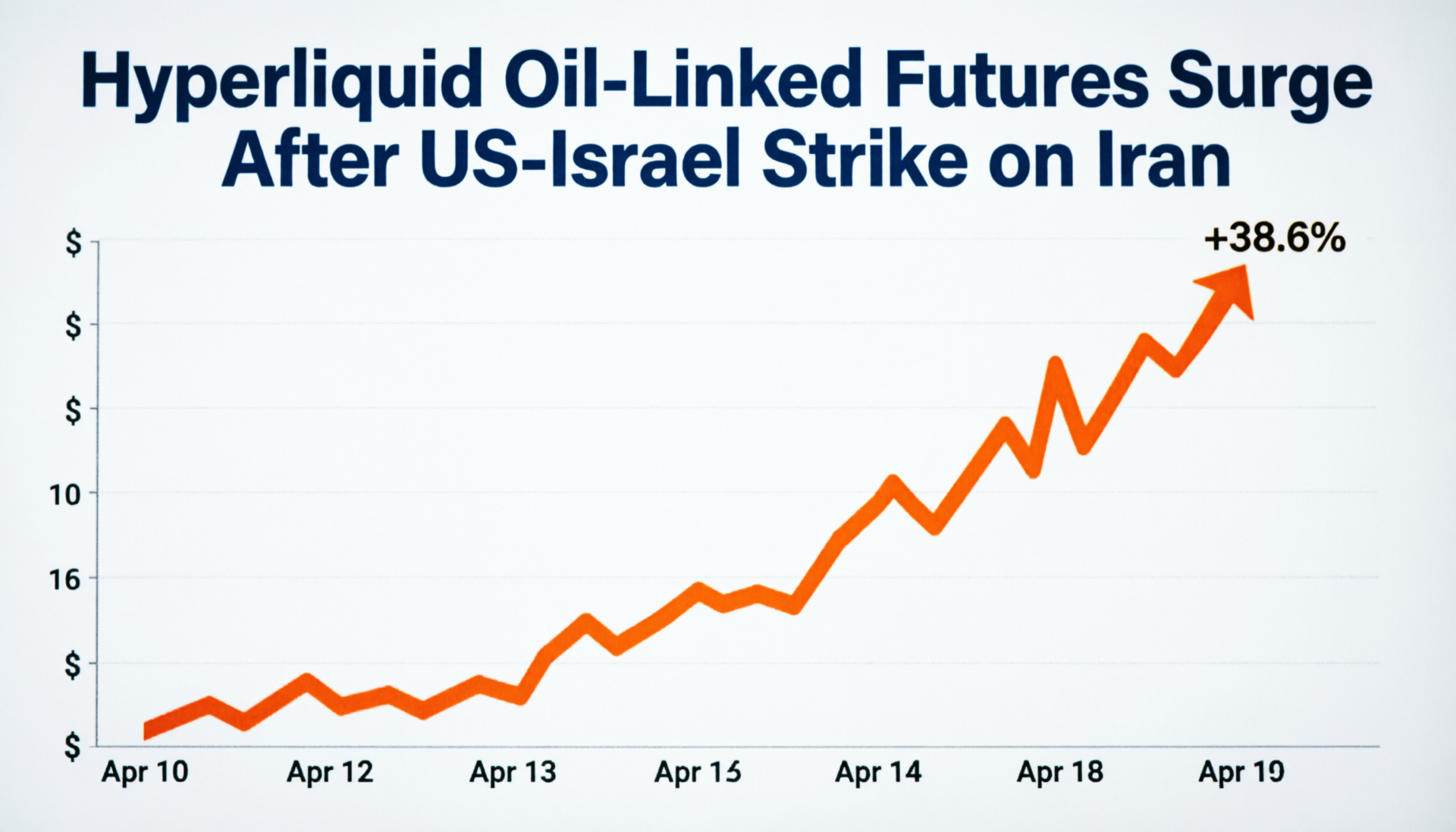

Hyperliquid sees oil, gold, silver perps climb after U.S.-Israel strikes on Iran
Perpetual futures tied to oil prices on Hyperliquid jumped sharply on Saturday, with Hyperliquid oil-linked futures surge after U.S.-Israel strike on Iran becoming an immediate on-chain expression of escalating geopolitical risk. Oil-linked contracts climbed more than 5% in weekend trading as the strikes raised concerns about potential supply shocks and shipping disruptions in the Middle East.
What moved on Hyperliquid
Hyperliquid’s oil-perpetual contracts posted notable gains:
Oil-USDH rose more than 5% to around $71.26.
USOIL-USDH traded above $86.00.
The two contracts together recorded roughly $4 million in trading volume and over $5 million in notional open interest, according to figures cited from Hyperliquid data.
Precious metals perps also advanced, with gold and silver contracts rising as traders positioned for higher uncertainty and potential risk-off sentiment.
Hyperliquid oil-linked futures surge after U.S.-Israel strike on Iran amid chokepoint fears
The rally followed reports of coordinated U.S. and Israeli strikes on Iran, with explosions reported in Tehran and a broader regional escalation risk entering the market narrative.
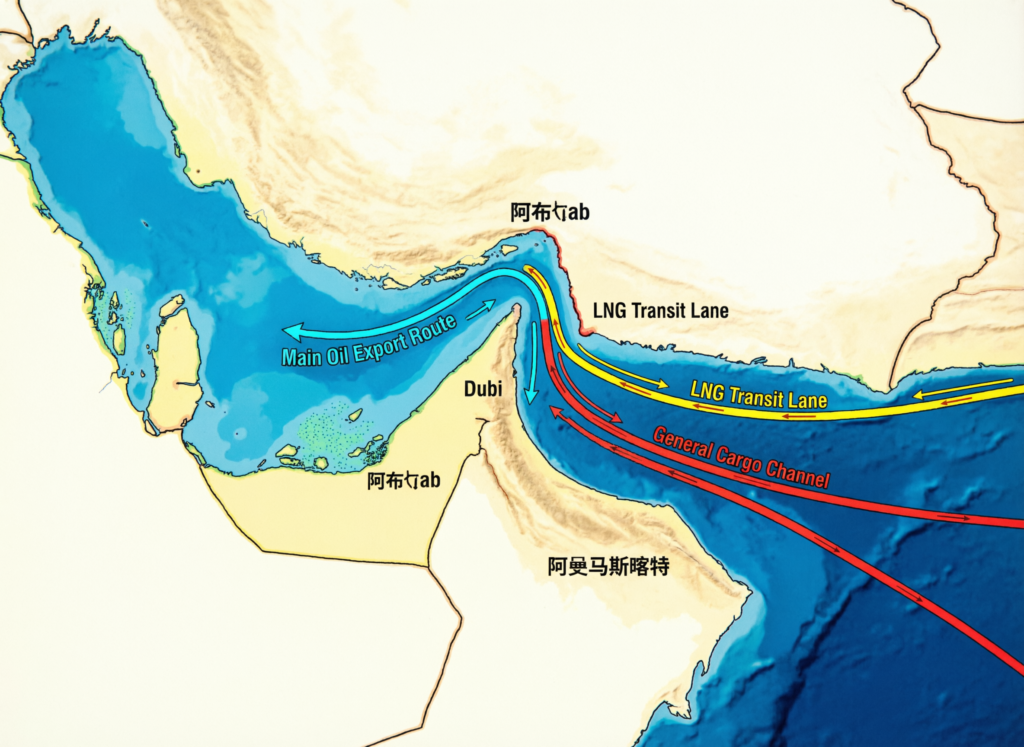
For oil markets, attention often turns quickly to the Strait of Hormuz, the narrow passage between Iran and Oman that is widely described as one of the world’s most important oil chokepoints. Reuters has previously summarized that about one-fifth of global oil consumption (over 20 million barrels per day) transits the strait, making any threat to shipping a major risk factor for prices.
Why DeFi reacted first
Hyperliquid and similar on-chain derivatives venues operate continuously, allowing traders to price in weekend headlines in real time contrasting with many traditional futures and equity markets that have limited hours. This structure can concentrate rapid repricing into short windows when breaking news hits outside weekday sessions.
Hyperliquid’s HIP-3 context
The oil perps referenced were described as trading under Hyperliquid’s HIP-3 framework, which relates to “builder-deployed perpetuals” and a more permissionless approach to launching markets.
Context & Analysis
If higher oil prices persist, the move can feed into inflation expectations one reason energy shocks often matter beyond commodities, influencing rate-cut expectations and broader risk appetite. Reuters has also highlighted the potential for supply disruption scenarios tied to the region and the Strait of Hormuz’s scale.
To Sum Up
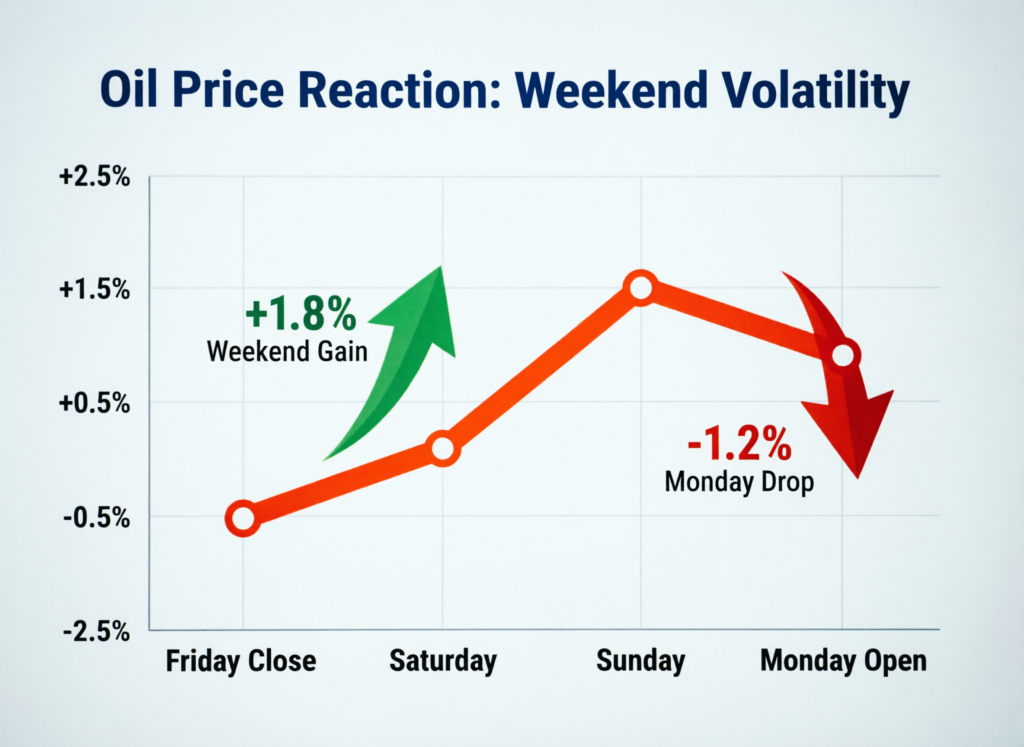
The weekend jump in on-chain oil perps shows how quickly geopolitical shocks can be expressed in 24/7 DeFi markets. Next market moves are likely to track confirmation of operational impacts, regional escalation signals, and any concrete disruption risk around Gulf shipping routes and infrastructure.
FAQs
Q : What happened to oil perps on Hyperliquid after the Iran strikes?
A : Oil-linked perpetual futures on Hyperliquid jumped by about 5% as traders rapidly repriced geopolitical risk and the possibility of supply shocks.
Q : Why would strikes on Iran move oil prices so quickly?
A : Iran is a major oil producer, and the surrounding region includes critical export routes. Any escalation raises the perceived risk of supply or shipping disruptions, which markets price in immediately.
Q : Why is the Strait of Hormuz so important to oil markets?
A : It’s a key global chokepoint. Reuters has described it as carrying roughly one-fifth of global oil consumption, or over 20 million barrels per day.
Q : Did other assets move too?
A : Yes. Gold and silver perpetuals also moved higher, reflecting increased demand for assets viewed as relative “safe havens” during periods of uncertainty.
Q : How does Hyperliquid trade when traditional markets are closed?
A : On-chain perpetual futures platforms operate 24/7, allowing traders to react on weekends and outside standard exchange hours.
Q : What is HIP-3 on Hyperliquid?
A : HIP-3 refers to builder-deployed perpetuals, a framework that enables permissionless market deployment within the Hyperliquid ecosystem.
Q : Is “Hyperliquid oil-linked futures surge after U.S.–Israel strike on Iran” likely to hold?
A : That depends on whether the conflict widens, whether energy infrastructure or shipping lanes are affected, and how broader markets reassess risk in upcoming sessions.
Facts
Event
Oil-linked perpetual futures on Hyperliquid rose sharply after reports of coordinated U.S. and Israeli strikes on Iran.Date/Time
2026-02-28T00:00:00+05:00 (event date as reported; intraday times vary by outlet)Entities
Hyperliquid; Iran; United States; Israel; Strait of Hormuz; Oil-USDH; USOIL-USDH; HIP-3Figures
Oil-USDH ~ $71.26 (+5%+); USOIL-USDH > $86.00; ~ $4m volume; > $5m notional open interest (combined)Key context figure
~20% of global oil consumption / >20 million b/d transits the Strait of Hormuz (Reuters summary).Sources
CoinDesk (market move); Reuters/AP (strikes and escalation context); Reuters/EIA background on Hormuz