

How to Avoid Crypto Scams in Arab Countries
To avoid crypto scams in Arab countries, treat any “guaranteed” or secret high-return offer as a red flag, verify platforms directly with regulators, and move slowly with small test amounts. Before sending money to a UAE or Saudi project, check licences (VARA, DFSA, ADGM FSRA, Saudi CMA), warning lists, reviews and ownership details, and always fund from a secure, reputable exchange in your home country.
Introduction
Crypto adoption in hubs like Dubai, Abu Dhabi, Riyadh and Doha has grown fast – and so have scams. The FBI’s Internet Crime Complaint Center estimates crypto fraud losses at more than $5.6 billion in 2023, roughly 45% higher than 2022. In the same year, the US FTC says total fraud losses topped around $10 billion, with investment scams (including many crypto plays) leading at over $4.6 billion.
If you’re in New York, London, Frankfurt or Berlin and wondering how to avoid crypto scams in Arab countries, the core problem is information asymmetry. You might trust the story about a “licensed Dubai exchange” or “Saudi oil-backed token” without knowing which regulators VARA, DFSA, ADGM’s FSRA, Saudi CMA, SAMA – to check or how to read their warning lists.
This guide takes a regulator-style, practical approach. By the end, you’ll be able to:
Quickly spot classic crypto scams and Ponzi schemes
Apply a repeatable safety checklist to any offer
Check whether a UAE or Saudi platform is genuine
Know what to do and who to report to – if things go wrong
Nothing here is legal, tax or investment advice; it’s practical safety guidance you can combine with your own professional advisers in the US, UK, Germany or EU.
How to Avoid Crypto Scams Core Safety Rules for Any Investor
To avoid crypto scams, never trust “guaranteed” or secret returns, don’t pay upfront in crypto to strangers, verify platforms with regulators (SEC, FCA, BaFin, VARA/DFSA), and use secure wallets and exchanges that pass KYC/AML checks. Treat urgency, secrecy and pressure to move off regulated channels as your loudest red flags.
Basic Crypto Safety Tips for Beginners
A crypto scam is any scheme that uses digital assets or tokens as the hook to steal your money or data. A Ponzi scheme is a specific type where “profits” to earlier investors are paid almost entirely from money deposited by new investors, with no real underlying business. Regulators in the US, UK and Germany regularly describe some high-yield crypto offers as “similar to Ponzi schemes” because they match this pattern.
A few golden rules.
If someone rushes you to “act now”, it’s probably a scam.
If they flatter you as a “VIP investor” or “smart early adopter”, be extra suspicious.
If they tell you to keep things secret from banks, family or regulators, walk away.
Normal investment risk means your holdings can go up or down based on markets and project execution. Fraud is different: the promoter lies about licences, business activity or returns, or uses fake platforms where the “profits” screen is just a script. Your job is not to avoid all risk, but to avoid situations where the other side is actively cheating you.
Common Types of Crypto Scams to Watch For
Across the US, UK, Germany and the GCC, the scam toolbox looks similar:
Phishing links that steal seed phrases or logins
Fake support agents on Telegram/WhatsApp/Discord
Giveaway and airdrop scams that ask you to “verify” your wallet
Rug-pull tokens that launch, pump and then drain liquidity
Cloud-mining or “AI trading bot” schemes with unrealistic daily yields
Pig-butchering romance investment scams that build long-term trust before the big ask
Kaspersky and other security vendors highlight how fake crypto trading platforms and cloned websites mimic real exchanges, right down to similar domain names and UI.UK banks like NatWest now cap consumer transfers to exchanges partly because of these scams.
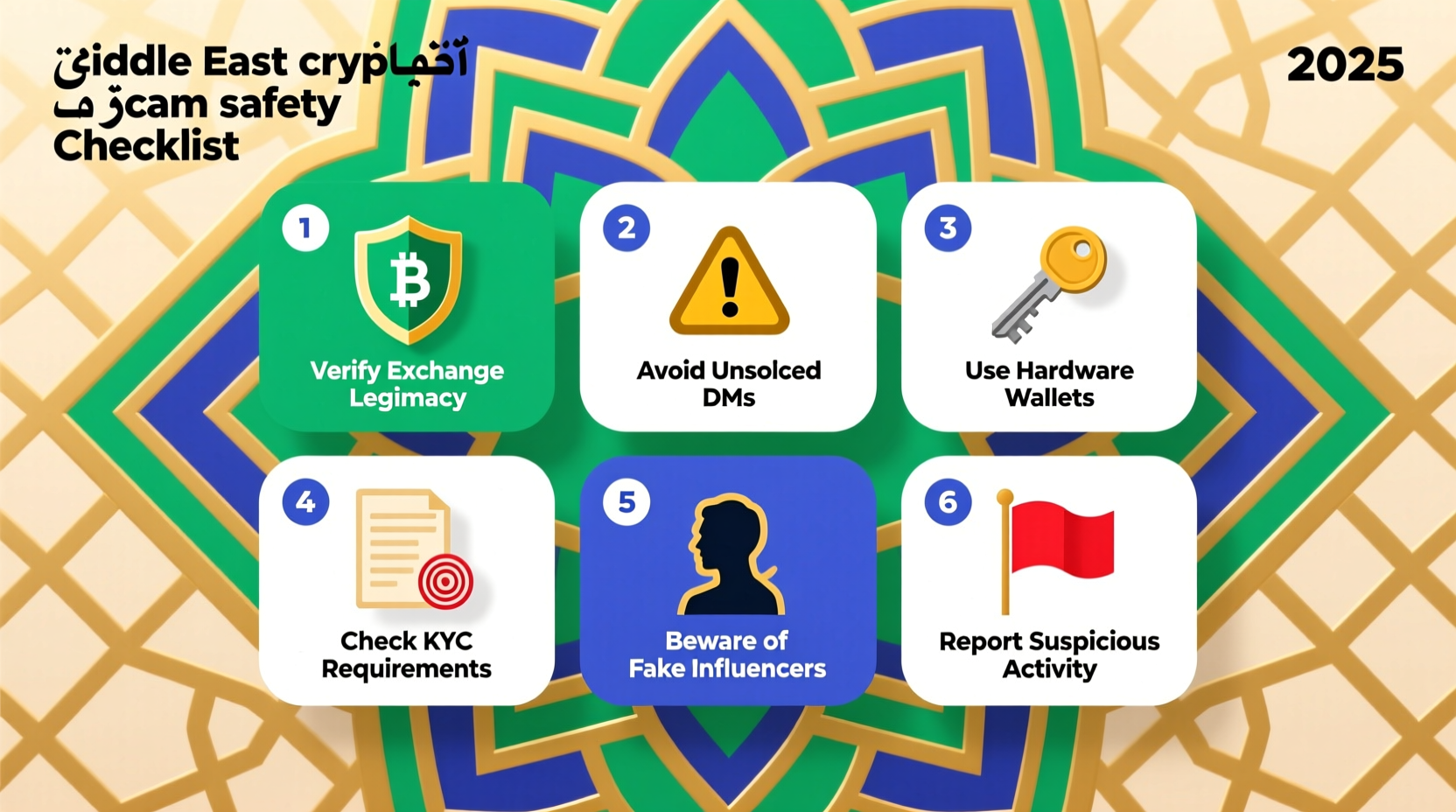
Crypto Safety Checklist You Should Follow Every Time
Use this checklist for any offer whether it’s in New York, London, Berlin or Dubai:
Verify the website/app: type the URL yourself, look for HTTPS, and search the brand plus “scam” or “review”.
Check regulators and warning lists: FCA, BaFin, SEC/CFTC, your state regulator (e.g., DFPI), VARA/DFSA/FSRA, Saudi CMA.
Sanity-check returns: anything promising fixed daily or monthly ROI (for example, 2–3% per day) is almost certainly fraud.
Confirm company details: real registered office, directors, licence numbers that match regulator records.
Never bypass KYC/AML: scammers use “no KYC” or “we can save you fees if you send direct” to pull you off regulated rails.
Use strong security: hardware or reputable software wallets, MFA, and clean devices.
Make this checklist a habit. You should be able to run through it in under 15 minutes before committing serious capital.
Crypto Scams in Arab Countries.
In Arab countries like the UAE, Saudi Arabia and Egypt, scams often exploit fast-growing crypto hubs (Dubai, Abu Dhabi, Riyadh), Telegram/WhatsApp groups, and cross-border investors who don’t know local regulators such as VARA, DFSA, ADGM’s FSRA or the Saudi CMA. They also lean on cultural proximity – language, religion, diaspora ties to supercharge affinity fraud.

Biggest Crypto Scam Trends in UAE, Saudi Arabia, Egypt and Qatar
Regional cases show recurring patterns.
Dubai Ponzi and “Arab Gulf” funds promising 5–20% monthly returns allegedly from trading, real estate or oil-linked tokens.
Copy-trading and “AI quant” scams claiming access to secret bots on global exchanges.
Fake Sharia-compliant crypto schemes that lean heavily on religious branding but offer no credible Sharia board or legal opinions.
High-yield mining or “data centre in Dubai/Riyadh” stories where the photos are often stock images.
Regulation across MENA is patchy. The UAE is tightening up with VARA, DFSA and ADGM’s FSRA publishing detailed virtual asset rules and regulatory alerts, including warning lists of unauthorised firms.VARA has already fined multiple firms for unlicensed operations and misleading marketing. Other countries may have only high-level central bank warnings, which criminals exploit to market “offshore” or free-zone structures.
Telegram, WhatsApp and Affinity Fraud in the Middle East
Telegram and WhatsApp are at the heart of many crypto affinity fraud schemes in the Gulf. Groups are often branded around:
Shared nationality or city (“Dubai Expats Investment Club”, “Riyadh Traders”)
Religious or community identity
VIP “signal” or copy-trading rooms
Scammers mix Arabic and English, post screenshots of supposed profits, and encourage members to “bring family and friends”. It’s similar to pig-butchering romance investment scams seen in the US, UK and Germany, but with less dating and more “brother/sister in faith” language.
Treat any group where
The admin pushes you to a separate “broker” or “assistant”
You are asked to pay in advance for access to VIP signals
Withdrawals are blocked unless you pay extra “taxes”
…as extremely high risk.
Why Regulators Compare Some Crypto Schemes to Ponzi Schemes
Saudi Arabia’s CMA and SAMA have repeatedly warned that many digital currency offers resemble classic Ponzi structures high volatility, no regulation and invitations via social media to “guaranteed” investments.The SEC, CFTC, BaFin and FCA all use similar language when promoters:
Promise stable, above-market returns regardless of conditions
Pay earlier investors directly from new deposits
Use complex referral trees, binary options, or “compensation plans” instead of real products
In Europe, MiCA and updated AMLD rules aim to standardise expectations for legitimate providers: clear disclosures, authorisation and supervision across the EU.Before you invest, ask whether a project’s structure could survive this scrutiny – and whether it appears on BaFin, FCA or ESMA warning lists.
Common Crypto Scams and Ponzi Schemes to Avoid
The most common crypto scams targeting Arab-country projects are fake trading platforms, Ponzi-style “investment clubs”, cloud-mining schemes, phishing and support scams, and rug-pull tokens promising huge, guaranteed returns. If you understand these patterns, you’ll recognise them faster even when rebranded with regional or religious flavour.
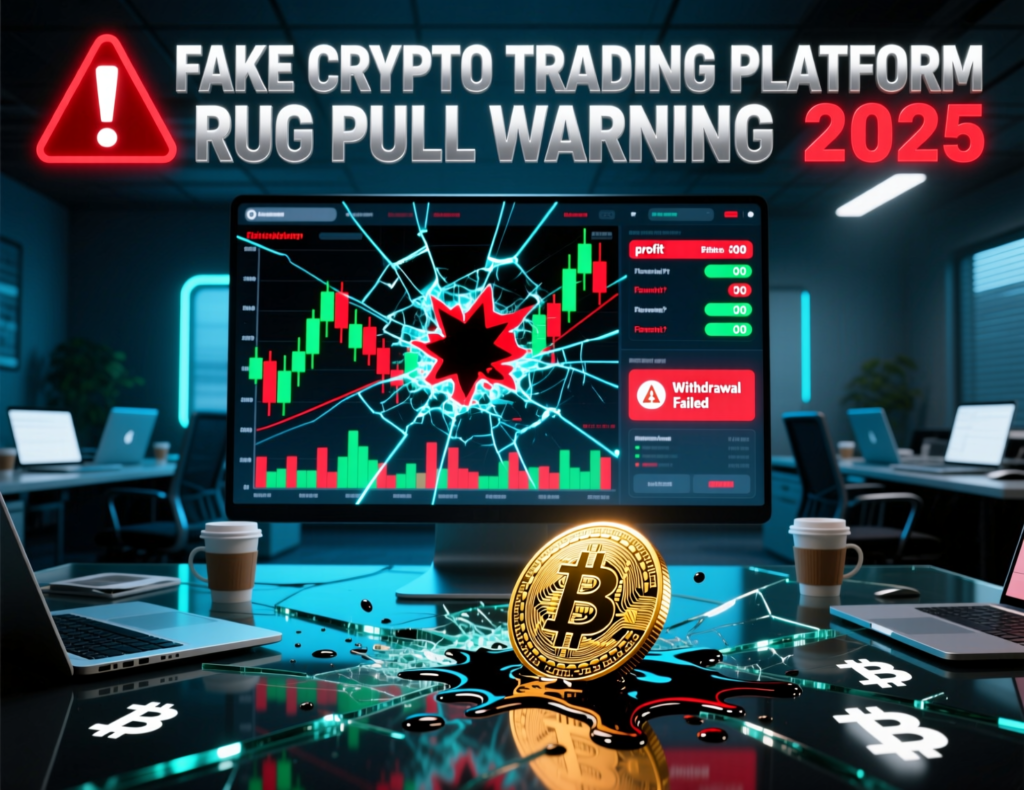
Fake Trading Platforms, Apps and Cloned Websites
Many “cyber-trading” platforms don’t trade at all. They simulate profits on-screen, then block withdrawals unless you pay extra “verification fees”, “taxes” or “liquidity charges”.
Red flags include.
No clear licence or regulator listed anywhere
Only crypto deposits, no bank transfers through reputable institutions
Pressure to install remote-access tools so “analysts” can help you trade
Domain names that are one letter off a real exchange (classic cloned-site trick highlighted by vendors like Kaspersky)
If you’re wondering how to avoid crypto scams when investing in Dubai projects from the USA, start with this simple rule: never log in or deposit via a link received in WhatsApp, Telegram or email. Always navigate to a platform from a clean bookmark or by manually typing the URL, then confirm the company on regulator registers.
Ponzi Schemes, Cloud Mining and “Guaranteed Return” Deals
Ponzi-style offers targeting the Gulf and wider Middle East often use.
Tiered “investment packages” with daily ROI (for example, 3% per day)
Referral commissions on multiple levels (classic MLM structure)
Buzzwords like “AI quant”, “Arab sovereign fund partner”, “Saudi oil-backed token” or “Dubai data centre”
EU and US regulators look for key Ponzi characteristics: investors paid mainly from new deposits, no real underlying revenue, and marketing that stresses guaranteed or risk-free returns.
If someone offers you a “Sharia-compliant” crypto fund in the Gulf, ask for:
The names of recognised scholars or boards involved
Written opinions you can independently verify
Clear disclosures on where and how assets are invested
No credible answers → walk away.
Phishing, Fake Support, Airdrops and Rug-Pull Tokens
Technical scam patterns you’ll see across Dubai, London and New York alike:
Phishing links in Telegram/WhatsApp groups, Instagram DMs or email that lead to fake wallet sites and drain funds
Fake support posing as Binance, Coinbase or local Gulf exchanges asking for seed phrases “to verify your identity”
Malicious airdrops or “approve this contract to claim” links that give scammers unlimited spending rights
Kaspersky reports almost 900 million blocked phishing attempts in 2024 alone, up about 26% on the previous year crypto wallets are a prime target.
A rug-pull token often looks like this on-chain:
Tiny real liquidity compared to claimed market cap
An anonymous or unverifiable team
No lock-ups or vesting schedules
A sudden liquidity drain once hype peaks
Protect yourself with hardware wallets, strong MFA and a strict rule: never enter your seed phrase on any website, form or support chat.
Checking If a Middle East Crypto Platform Is Legit
Before sending money to a UAE or Saudi crypto platform, confirm it’s licensed or registered (VARA, DFSA, ADGM FSRA, Saudi CMA) or allowed for cross-border use (FCA, BaFin, SEC), check warning lists, verify ownership details, and start with small test transactions from a secure wallet. Assume nothing is regulated until you see it on an official register.
Regulator and Warning-List Checks.
Use this quick due-diligence flow before funding a platform:
Dubai / Abu Dhabi
Check VARA’s registers and enforcement/warning notices for virtual asset service providers in Dubai (outside DIFC).
For DIFC-based entities, search DFSA’s public registers and scam alerts (they regularly warn about impersonation of DFSA staff).
For Abu Dhabi Global Market, search FSRA regulatory alerts.
Saudi Arabia
Check the Capital Market Authority (CMA) and SAMA sites for warnings against digital currencies and unlicensed investment promotions.
US, UK, Germany/EU exposures.
For US investors, review SEC and CFTC enforcement actions and the FinCEN MSB register.
For UK links or marketing, use the FCA register and warning list.
For German- or EU-facing offers, search BaFin’s warning pages and, where relevant, ESMA/ESMA-linked alerts.
Watch for firms that use a name almost identical to a regulated entity or list an address only in opaque offshore zones.
Safe Wallets, KYC/AML and Payment Flows for US/UK/German/EU Investors
For US, UK, German and EU investors, a safer pattern is:
Use a reputable, regulated home-country exchange (FCA-, BaFin-, SEC-/FINRA-supervised) as your on-/off-ramp.
Withdraw only what you’re prepared to risk to your own wallet (hardware or high-quality software).
From there, send small test amounts to any UAE/Saudi platform you’ve vetted.
KYC/AML checks are not an annoyance to be bypassed; they’re often the main signal that a platform is trying to comply with rules similar to MiCA, AMLD, GDPR/DSGVO and UK-GDPR. When a broker proposes that you avoid KYC to “save fees” or “stay anonymous”, they’re asking you to step into a compliance blind spot.
Look for platforms and service providers that talk openly about PCI DSS, SOC 2, Open Banking integrations and regional data residency controls – these are the same reference points Mak It Solutions uses when building fintech and SaaS platforms for US, UK, German and GCC clients. (Mak it Solutions)
Quick Due-Diligence Workflow Before Funding UAE or Saudi Projects
Before you fund any Middle East project.
Research the project: read the whitepaper, roadmap and tokenomics; avoid anything you don’t truly understand.
Check the team: LinkedIn, prior roles, verifiable past projects – beware of stock photos or unverifiable “advisers”.
Verify licences: look up entities on VARA, DFSA, FSRA and CMA registers; confirm licence numbers and scope.
Scan communities: review Telegram/Discord/Reddit for independent discussion, not just marketing.
Run regulator and warning-list checks in your home country (SEC, FCA, BaFin, state regulators).
Do a tiny test transfer from a regulated exchange; confirm deposit and withdrawal work cleanly.
Monitor behaviour: sudden KYC policy changes, withdrawal delays or pressure to bring friends are early exit signals.
This workflow works whether you’re sitting in Austin, London, Manchester, Berlin or Munich looking at Gulf-based deals.

What To Do If You’re a Victim of a Crypto Scam
If you’re scammed, act fast: stop sending funds, secure your devices and wallets, collect evidence (wallet addresses, chats, bank records), report to police and regulators in both your country (FTC/FBI IC3, Action Fraud, BaFin) and the Arab jurisdiction (Dubai Police, DFSA/VARA, Saudi CMA), and consider specialist legal help. Recovery is hard but early action improves your odds.
First 24 Hours Contain Damage and Capture Evidence
In the first 24 hours.
Stop all payments and block the scammer on every channel.
Revoke approvals from suspicious smart contracts and move remaining funds to a new, clean wallet.
Change passwords, enable two-factor authentication and scan devices for malware (security vendors are seeing a sharp rise in crypto-draining tools)
Document everything: wallet addresses, transaction hashes, usernames, email headers, screenshots, voice notes, contracts and invoices.
This evidence will be essential for police, exchanges, banks and any specialist law firm you involve.
How and Where to Report in UAE, Saudi Arabia, Egypt vs US/UK/Germany/EU
Reporting paths vary by jurisdiction, but common options include:
UAE
Dubai Police e-crime portals for online fraud and cybercrime.
VARA, DFSA, FSRA complaint/enforcement channels for regulated VASPs.
UAE Central Bank cyber-fraud and unlicensed virtual asset reporting lines.
Saudi Arabia
CMA and SAMA reporting for fraudulent investment schemes and digital currency promotions.
US
FTC complaint assistant and FBI IC3 for internet and investment fraud.
UK
Action Fraud (police) plus FCA for unauthorised firms and scams.
Germany/EU
Local police, national Financial Intelligence Units (FIUs) and BaFin for unauthorised investment services.
If you’re an expat in Dubai, Riyadh, Doha or Cairo, you may need to report in both your home country and locally especially if fiat legs of the scam touched banks in New York, London, Frankfurt or Berlin.
Working With Banks, Exchanges and Specialist Law Firms
You may have options if part of the scam involved bank transfers or card payments:
Chargebacks and recalls: sometimes possible where there’s clear fraud and funds are still with an intermediary.
Exchange support: compliant exchanges like Coinbase, Kraken or licensed Binance entities cooperate with law enforcement and may be able to freeze funds in time.
Blockchain analytics: specialist firms can trace flows across chains, often used by German, UK and US law practices focused on Krypto-Betrug and cross-border recovery.
Realistically, you might not recover everything. But fast reporting, strong evidence and engagement with competent firms can improve outcomes.
Practical Crypto Safety Tips for US, UK, German and EU Investors
Investors from the US, UK, Germany and the wider EU can dramatically reduce risk by combining home-country protections with careful checks on Middle East crypto regulations and virtual asset laws. Use your domestic regulatory framework as the anchor, and treat Gulf exposures as higher-risk satellite positions.
For US Investors Funding Middle East Crypto Projects
If you’re US-based and eyeing Dubai or Riyadh deals.
Check US signals first: SEC and CFTC enforcement pages, FinCEN advisories and state-level alerts (for example, California DFPI) for the project or promoters.
Use compliant US exchanges: fund from platforms that meet US AML, sanctions and consumer-protection expectations.
Consider tax implications: the IRS treats crypto disposals as taxable events; cross-border projects add complexity.
For example, sending funds from a regulated US exchange to a known, VARA-licensed Dubai platform is far safer than wiring money to an unlicensed broker who cold-messaged you on WhatsApp.
For UK Investors and Gulf-Based Expats
UK investors including expats in Dubai, Abu Dhabi, Jeddah or Doha should.
Prefer FCA-authorised firms where possible and always check the FCA warning list before dealing with any broker claiming links to the Gulf.
Use the way you trust the NHS brand as a mental model: scammers know this and build fake sites or adverts that look “official”; treat FCA or bank branding with the same healthy scepticism.
Leverage Open Banking protections (strong authentication, traceability) rather than sending random international wires to personal accounts.
Search “crypto scam warning signs for UK expats in Dubai and Abu Dhabi” and you’ll see how often the story begins with a WhatsApp or Instagram pitch plus a fake endorsement. Always cross-check with FCA and local regulators before sending money.
For German and EU Investors Looking at MENA Tokens
For German and broader EU investors, the anchor is MiCA plus existing AMLD and DSGVO/GDPR rules. These demand strong transparency from legitimate providers.
Before committing funds
Check BaFin’s databases and warnings, especially for offers targeting “deutsche Anleger” with VAE or MENA tokens.
Look for clear statements on where data is stored and which EU or GCC laws apply.
Search for “Krypto-Betrug VAE erkennen: Tipps für deutsche Anleger” style content from German law firms; many publish detailed checklists for Gulf-related offers.
Treat non-EU exchanges in the Middle East as high-risk unless you can map their governance and custody arrangements to standards you already know from EU-regulated platforms.
Wrapping It Up
Crypto in the Middle East sits at an awkward crossroads: genuine innovation alongside aggressive scams that target cross-border investors. You don’t have to avoid the region entirely but you do need a disciplined playbook for checking platforms, structuring payment flows and responding quickly if something feels wrong.
If you’re planning a regulated fintech, exchange, wallet or investment app that needs to serve users across the US, UK, Germany/EU and the Gulf, Mak It Solutions can help you design secure, compliant architectures from day one. Explore our work on DevSecOps best practices, zero trust security, generative AI security risks, or GCC cloud and data localisation and Middle East cloud providers. You can also explore our broader SaaS and fintech platform development services or reach out to scope a crypto-safety and compliance review tailored to your product.
Key Takeaways
Treat any “guaranteed” or high, fixed-yield crypto offer especially via Telegram or WhatsApp as a red flag, whether it’s pitched from Dubai, Riyadh or online.
Always verify Middle East platforms directly with regulators like VARA, DFSA, ADGM FSRA and Saudi CMA, and cross-check with SEC, FCA and BaFin registers and warning lists.
Use reputable, regulated exchanges in your home country as on-/off-ramps, and send only small, test amounts to vetted Gulf platforms from secure wallets.
If you’re a victim, move quickly: secure wallets and devices, collect evidence, and report to both local and home-country authorities while banks or exchanges may still intervene.
For US, UK, German and EU investors, anchor decisions in familiar frameworks (MiCA, AMLD, GDPR/UK-GDPR, FCA/BaFin rules) and treat non-EU/non-UK exchanges as higher risk unless proven otherwise.
When building or scaling crypto products across regions, invest early in security, DevSecOps and compliance architectures so your platform doesn’t accidentally mimic the patterns of scams.
FAQs
Q : Can I recover money sent to a Dubai crypto platform that turned out to be a scam?
A : Recovery is difficult but not impossible. If any part of the scam used bank transfers or cards, your bank may attempt chargebacks or recalls while funds are still with an intermediary. Regulated exchanges in the UAE or abroad may freeze assets once they receive law-enforcement requests. You should report promptly to Dubai Police, relevant UAE regulators, and your home-country authorities such as FTC/FBI IC3 or Action Fraud/BaFin. Specialist law firms and blockchain analytics providers can sometimes trace and recover part of the funds, but there are no guarantees and timelines can be long.
Q : Is it safe to trust “Sharia-compliant” crypto investment schemes in the Gulf?
A : Sharia-compliant” is a marketing claim, not proof of safety. Some projects do real work with recognised scholars, but scammers also use Islamic branding to make investors feel comfortable. Before trusting such schemes, ask for the names of scholars and boards involved, verify them independently, and request written opinions that match the actual structure of the product. Combine this with standard checks: regulator licences (VARA, DFSA, CMA), warning lists, and realistic returns. If transparency is poor or you’re pressured to commit quickly, treat it like any other high-risk offer and walk away.
Q : What on-chain signs show that a new Middle East token could be a rug pull?
A : On-chain you’re looking for structural red flags: extremely low real liquidity compared to the stated market cap, a highly concentrated holder base, and smart-contract functions that allow unlimited minting or owner-only transfers. Lack of time-locked liquidity or vesting for founders is another bad sign. If the team is anonymous, the token is only traded on obscure DEXs, and marketing focuses on “guaranteed” or overnight returns, treat it as a potential rug pull. Sophisticated investors will also run contract audits and use block explorers or analytics tools to analyse holder patterns and past rug-pull links.
Q : How can I safely use Telegram or WhatsApp for crypto discussions without getting scammed?
A : Use messaging apps only for conversation, not for discovery or execution. Never click login or payment links from groups, and never share seed phrases, screenshots of backup keys, or full KYC documents. Treat all “VIP signal” or “guaranteed profit” groups as entertainment at best. If you discover a new exchange or project there, step away and do independent research: search regulators, review sites and official domains. Consider using app settings to limit who can add you to groups, and keep serious trading activity on platforms and devices you control, not via links shared in chats.
Q : Do US, UK or German laws protect me if I invest in a crypto project based in an Arab free zone?
A : You may have some protection, but it’s usually indirect and complex. Your home country regulators (SEC, CFTC, FCA, BaFin) can pursue promoters who target their residents, and consumer laws may help if domestic banks or payment providers failed to act on obvious red flags. Free zones like DIFC or ADGM have their own regulators (DFSA, FSRA), which may take action locally. However, cross-border enforcement is slow, and funds moved through unregulated offshore chains can be hard to recover. It’s safer to assume that once money leaves a regulated environment, your practical protections shrink dramatically.