

Hot Wallet vs Cold Wallet: Secure Crypto Storage
If you are comparing hot wallet vs cold wallet, the real trade-off is simple: speed versus security. A hot wallet keeps your private keys on an internet-connected app or device, which makes it better for trading, payments, and DeFi. A cold wallet keeps keys offline, which usually makes it the safer choice for long-term storage, especially for Bitcoin or larger balances.
For most investors in the US, UK, and EU, the practical answer is not choosing one forever. It is using a hot wallet for smaller, active balances and a cold wallet for long-term holdings you do not plan to move often. That setup gives you flexibility without leaving your full portfolio exposed online.
If you are new to self-custody, this choice matters because it changes your risk profile. A trader in New York using MetaMask daily needs quick access. A buyer in London may want only spending funds online. A security-focused holder in Berlin or Frankfurt may prefer a hardware wallet, offline recovery backup, and minimal exposure to browser-based risks. At the same time, tax, custody, and consumer-protection expectations continue to evolve across the US, UK, Germany, and the wider EU.
What Is a Hot Wallet and What Is a Cold Wallet?
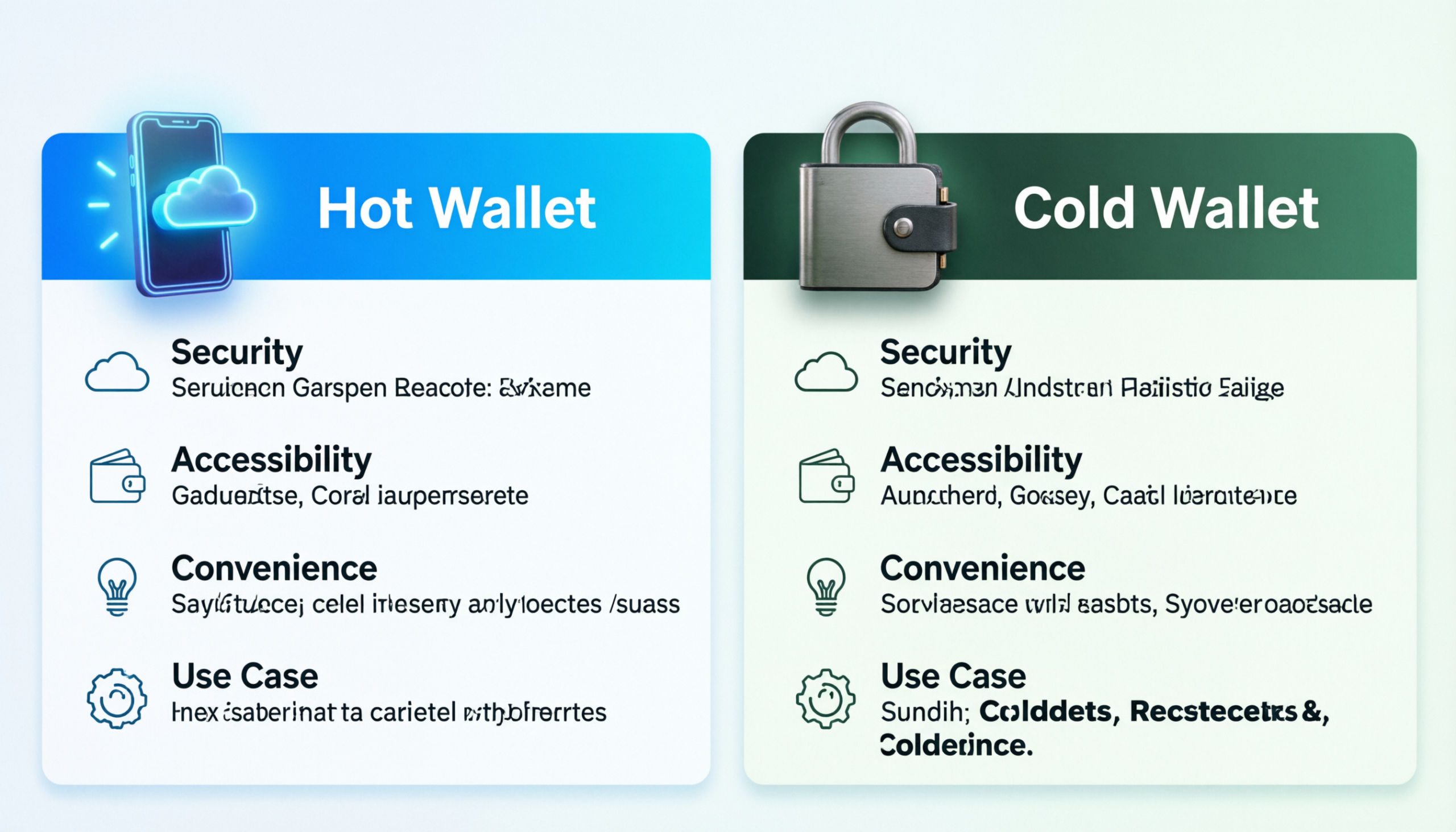
The difference is straightforward. A hot wallet is connected to the internet. A cold wallet stores private keys offline. That makes hot wallets easier for everyday use and cold wallets stronger for long-term protection.
What Is a Hot Wallet?
A hot wallet is usually a mobile app, browser extension, or desktop wallet that stays connected to the internet. It is designed for convenience. You can send crypto quickly, connect to Web3 apps, approve transactions, and interact with DeFi without much friction.
That is why hot wallets are so popular with active users. If you trade Ethereum-based tokens, move stablecoins regularly, or connect to dApps often, a hot wallet is usually the fastest tool for the job. The downside is clear: your device, browser, and wallet approvals all become part of the attack surface.
What Is a Cold Wallet?
A cold wallet stores private keys offline. In practice, that usually means a hardware wallet rather than a software-only wallet.
Cold wallets are built for storage first. Because the keys stay offline, remote attackers have a much harder time stealing funds through phishing, browser exploits, malware, or malicious approvals alone. That is why cold wallets are widely considered the safer option for long-term holding.
Hot Wallet vs Cold Wallet at a Glance
| Feature | Hot Wallet | Cold Wallet |
|---|---|---|
| Internet connection | Yes | No, or only indirect signing |
| Typical form | Mobile app, browser extension, desktop wallet | Hardware wallet or offline device |
| Best for | Daily transactions, DeFi, active trading | Long-term storage, larger balances |
| Main risk | Phishing, malware, bad approvals | Loss, poor backup, setup mistakes |
| Speed | Faster | Slower |
| Cost | Usually free | Usually paid device |
A simple rule helps here: software wallets optimize access, while hardware wallets optimize protection.
Hot Wallet vs Cold Wallet Security: Which Is Safer?
In pure security terms, a cold wallet is usually safer than a hot wallet because the private keys remain offline. That does not make it foolproof, but it removes a major class of internet-based attacks.
Why Hot Wallets Feel Easier but Carry More Risk
Hot wallets are built for convenience. You can open the app, paste an address, approve a swap, or connect to a protocol in seconds. For active traders and DeFi users, that ease matters.
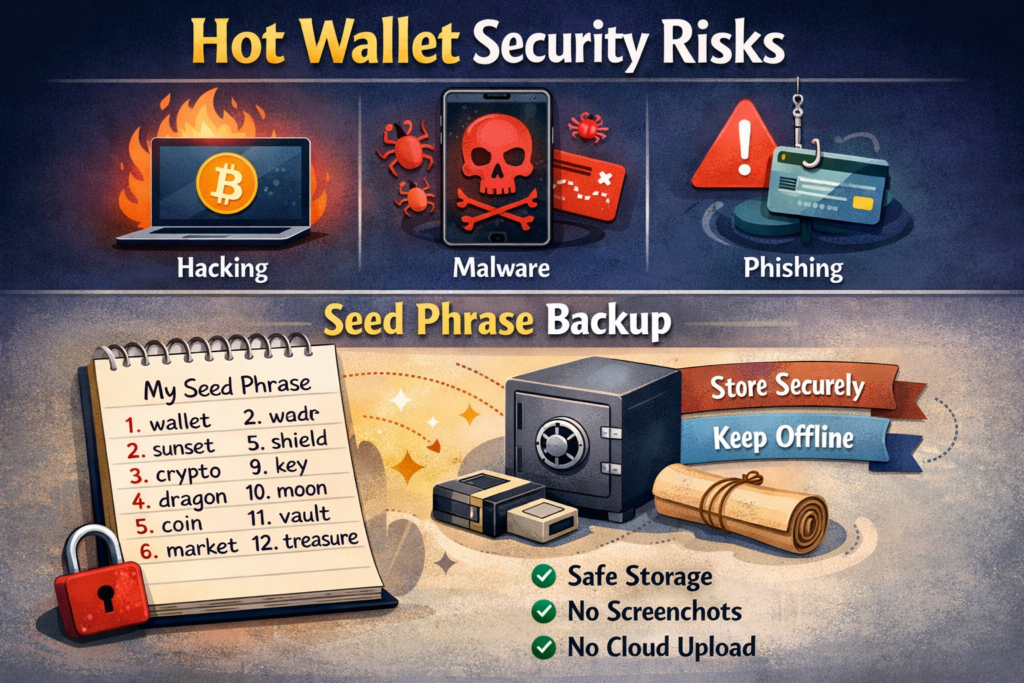
But convenience comes with more exposure. Phishing sites, fake support chats, malicious browser extensions, clipboard malware, and risky smart-contract approvals are all real threats in a hot-wallet workflow. Chainalysis reported that $2.2 billion was stolen from crypto platforms in 2024, with 303 hacking incidents that year. It also noted that private key compromises accounted for 43.8% of stolen crypto in 2024.
Why Cold Wallets Are Better for Long-Term Storage
Cold wallets reduce online exposure by keeping your private keys offline and requiring transaction approval through a physical device. If you are holding Bitcoin or Ethereum for the long term rather than moving assets every week, that extra friction is often worth it.
Still, a hardware wallet is not magic. If you buy from an untrusted source, ignore device verification, or type your seed phrase into a fake recovery page, you can still lose funds. In practice, cold storage works best when the wallet stays offline, the recovery phrase stays offline, and the user follows a disciplined setup process.
Seed Phrase Backup Matters More Than Wallet Type
Whether you use a hot wallet or a cold wallet, your recovery phrase is the real backup. If someone gets it, they can usually take control of your funds. If you lose it and also lose wallet access, recovery may be impossible.
That is why strong self-custody is not just about choosing the safer wallet. It is about how you store the seed phrase, how carefully you verify addresses, and whether you avoid risky shortcuts like cloud notes, screenshots, or emailed backups.
Hot Wallet vs Cold Wallet by Use Case
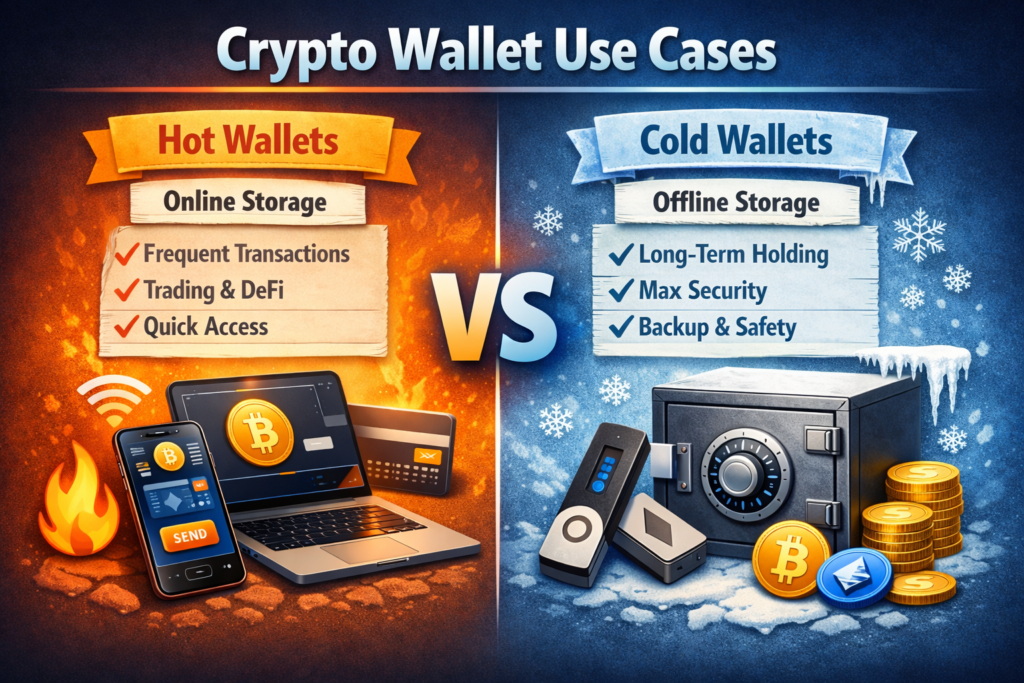
The best wallet depends on what you actually do with crypto. Use a hot wallet for frequent activity. Use a cold wallet for savings-style storage. Many investors end up using both because each one solves a different problem.
Best for Daily Transactions, DeFi, and Active Trading
A hot wallet is usually the better choice for daily crypto activity. If you trade often, connect to dApps, move stablecoins, or interact with Ethereum-based tools, the experience is much smoother in a software wallet.
The smart move is to keep only a limited balance there. Think of it like cash in your physical wallet, not your entire savings account. That habit alone reduces damage if your device, approvals, or browser environment is compromised.
Best for Long-Term Storage and Bitcoin Holding
A cold wallet is usually the better choice for long-term storage and larger balances. If your plan is to buy, hold, and move assets rarely, a hardware wallet gives you stronger separation from internet-connected risks.
This is especially relevant for readers in Germany and the wider EU who care about custody, documentation, and platform dependence. ESMA says its interim MiCA register remains available until it is formally integrated into ESMA systems in mid-2026, while BaFin continues to define and supervise crypto custody business in Germany.
Why Many Investors Use Both
For most people, the hybrid model is the most practical one. Keep the majority of long-term holdings in cold storage. Keep a smaller working balance in a hot wallet for trading, staking, or DeFi.
That approach works well across regions. A US user may move only what they need off an exchange. A UK buyer may separate long-term holdings from active spending. A Germany-based investor may prefer the same split while keeping self-custody records tidy for future tax and reporting needs.
Should Beginners Choose a Hot Wallet or a Cold Wallet?
Beginners usually do best by starting simple. A reputable hot wallet is often easier for learning basic transfers, wallet addresses, and network selection. Once balances grow or confidence improves, moving long-term holdings to a cold wallet usually makes sense.
The right choice depends on three things: how much crypto you hold, how often you use it, and how comfortable you are with self-custody.
For Beginners in the US
In the United States, many beginners first buy through an exchange, then decide whether to leave small balances there, move active funds to a hot wallet, or shift long-term assets into cold storage.
The tax angle matters too. The IRS says taxpayers may have to report digital-asset transactions and must answer the digital asset question on their tax return. That makes clean recordkeeping important, especially if you move funds between exchanges and self-custody wallets.
For UK Investors
In the UK, the FCA continues to treat crypto as high risk for consumers. Its Crypto assets Consumer Research 2025 found that current ownership fell from 12% of UK adults in 2024 to 8% in 2025, even though average holdings among owners increased. That suggests a smaller but more committed market.
For practical wallet choice, that means many UK users may be better served by keeping only active-use funds in a hot wallet and moving longer-term holdings offline.
For Germany and EU Readers
In Germany and the EU, security-minded users often focus on more than wallet convenience. They also care about who controls custody, what records exist, and how crypto service providers fit into the MiCA framework.
From a risk-management point of view, a hardware wallet reduces dependence on a third-party platform. The trade-off is that you carry full responsibility for recovery and backup.
How to Move Crypto Safely From an Exchange to a Wallet
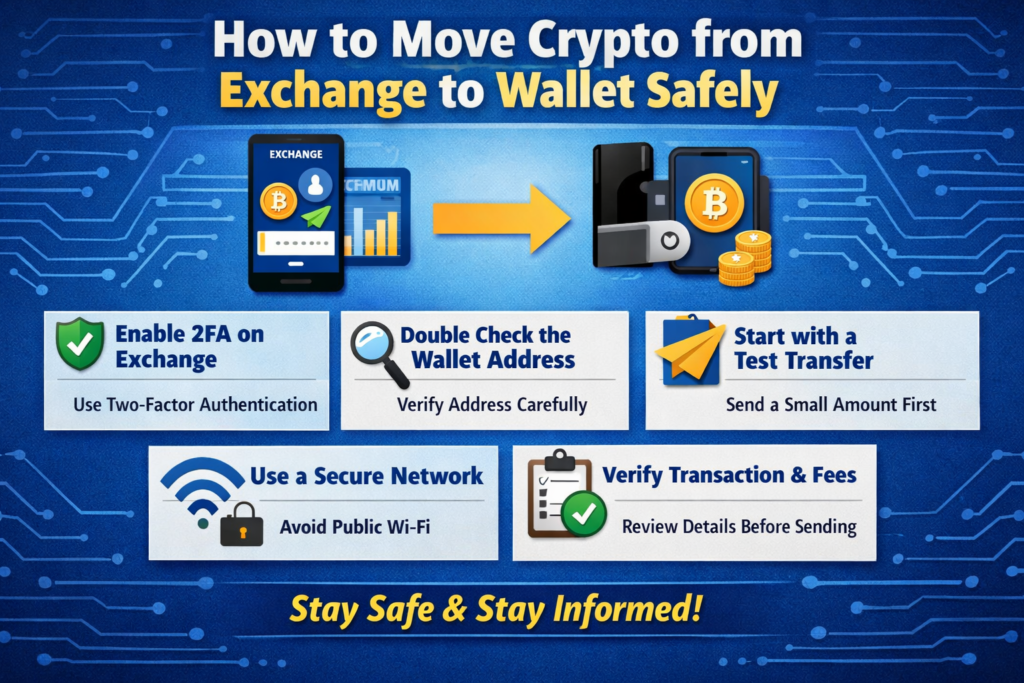
Moving crypto safely is less about brand names and more about process. The safest approach is simple: set up the wallet correctly, verify the address and network, send a small test transaction, and only then move the full amount. Coinbase states that on-chain sends are irreversible and funds sent to the wrong address or network cannot be retrieved by Coinbase.
Set Up the Wallet From the Official Source
Download the wallet app or initialize the hardware wallet only from the official source. Do not trust random links, copied apps, or marketplace listings from unknown sellers.
Write down the seed phrase offline. Do not store it in screenshots, cloud drives, email drafts, or notes synced across devices.
Verify the Address and Network
Before sending, double-check the receiving address and make sure the blockchain network matches the asset you are transferring. A wrong network or incompatible address can lead to permanent loss.
Send a Small Test Transaction First
This step feels slow, but it prevents expensive mistakes. Send a small amount first, confirm it arrives correctly, then move the remaining balance.
Save Basic Records
For US, UK, and EU users alike, it is wise to keep a record of the transfer date, asset, amount, wallet used, and transaction hash. It helps with tax reporting, portfolio tracking, and future troubleshooting.
Cost, Convenience, and Common Mistakes to Avoid
Hardware Wallet Cost vs Free Software Wallets
Hot wallets are often free. Hardware wallets cost money upfront. For small balances, that may feel unnecessary at first.
But once your holdings become meaningful, the cost of a hardware wallet is usually modest compared with the potential downside of leaving everything in a hot wallet environment. In practice, many investors see the device cost as part of basic portfolio protection.
Common Mistakes New Investors Make
The most common mistakes are not glamorous. They are basic.
Saving the seed phrase online
Skipping a test transaction
Using the wrong blockchain network
Signing approvals without understanding them
Trusting fake support messages
Treating exchange security and self-custody security as the same thing
Those are the habits that tend to cause preventable losses far more often than the wallet brand itself.

Final Verdict
If your main priority is speed, frequent transactions, and DeFi access, a hot wallet usually makes more sense.
If your main priority is security, long-term storage, and lower exposure to online attacks, a cold wallet is usually the better choice.
For most investors, though, the strongest answer to hot wallet vs cold wallet is not one or the other. It is both. Use a hot wallet for active funds. Use a cold wallet for long-term holdings. That gives you day-to-day flexibility without exposing your full balance unnecessarily.( Click Here’s )
Key Takeaways
Hot wallets are better for speed, trading, DeFi, and smaller active balances.
Cold wallets are generally safer for long-term storage because private keys stay offline.
Your seed phrase backup is critical regardless of wallet type.
US, UK, Germany, and EU users should also think about taxes, custody rules, and recordkeeping.
A hybrid setup is often the safest practical choice.
FAQs
Q : Is a hardware wallet worth it for a small crypto portfolio?
A : It can be. If your holdings are tiny and you move funds often, a reputable hot wallet may be enough while you learn. But if you hold Bitcoin or Ethereum for months at a time, even a modest portfolio can justify a hardware wallet because it reduces online exposure.
Q : Can I store Bitcoin and Ethereum in the same cold wallet?
A : Yes, many hardware wallets support both Bitcoin and Ethereum in the same ecosystem. You still need to verify official support for the exact asset, network, and software flow before moving funds.
Q : What happens if I lose my hardware wallet but still have my seed phrase?
A : In many cases, you can restore access using the seed phrase on a replacement wallet or another compatible wallet. The seed phrase is the real backup. The device itself is replaceable.
Q : Do I need a cold wallet if I only buy crypto occasionally?
A : Not always. If you buy small amounts and do not hold a meaningful balance, a hot wallet may be reasonable. A cold wallet becomes more compelling as your holdings grow and long-term protection starts to matter more than convenience.
Q : Can I move crypto back from a cold wallet to an exchange anytime?
A : Usually yes. You can send assets back whenever you want as long as you control the wallet and follow the correct address and network steps. It is just less immediate than using a hot wallet, which is exactly why many investors prefer it for storage.