
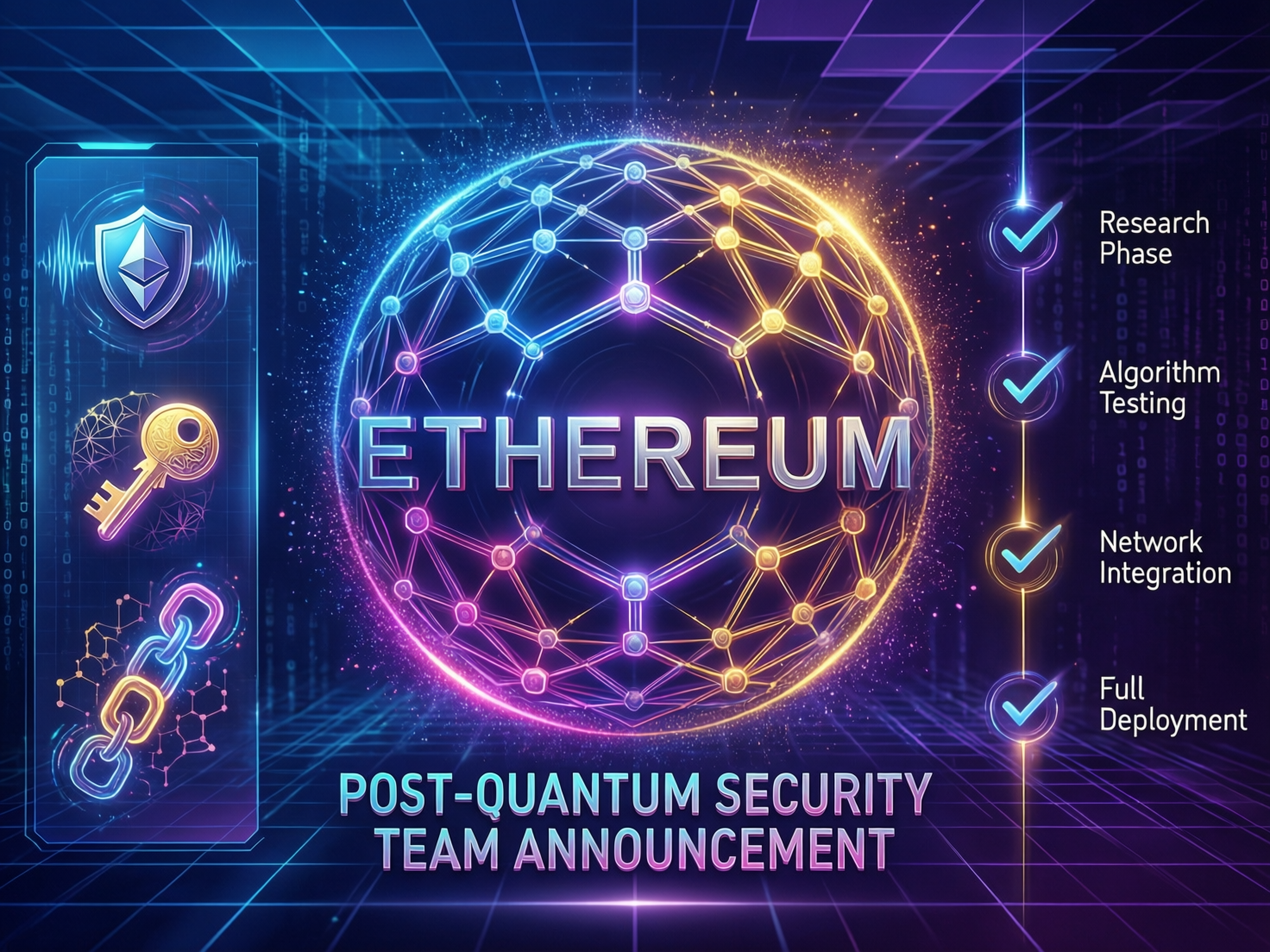

EF launches Ethereum post quantum security team, unveils $1M prizes
Ethereum is moving from research to engineering on quantum resilience. The Ethereum Foundation (EF) has established an Ethereum post quantum security team headed by Thomas Coratger, with cryptographer Emile (of leanVM) supporting the effort.
EF researcher Justin Drake said the initiative elevates PQ security to a top strategic priority, aiming to harden wallets, protocol cryptography, and consensus through coordinated engineering and community programs.
Why the Ethereum post quantum security team matters
Quantum threats remain long-term, but shipping safe transitions takes years. EF leaders argue that coordination must begin now to protect user keys and enable smooth upgrades across wallets and clients. The new team will drive user-facing defenses and protocol-level tooling while aligning researchers and client implementers.
Near-term roadmap.
EF plans biweekly developer sessions focused on PQ transactions, led by researcher Antonio Sanso, covering protocol cryptographic tools, account abstraction paths, and signature aggregation with leanVM. In parallel, EF is funding research with the $1 million Poseidon Prize and a separate $1 million Proximity Prize. On engineering, multi-client PQ consensus devnets have begun with weekly interop coordination among participating teams.
Community engagement and education
EF signaled new community touchpoints, including PQ-focused events around industry conferences and educational materials (e.g., explainer videos, enterprise-oriented guides) to prepare developers and enterprises for future migrations.

Technical backdrop.
The broader “Lean Ethereum”/leanVM efforts are exploring hash-based signatures and consensus changes intended to keep Ethereum secure in a post-quantum world. Recent devnet plans describe staged integration milestones to exercise PQ signing and interoperability across multiple clients before public testnets.
Context & Analysis
Headlines about quantum risk often spike market anxiety, but the practical threat horizon remains uncertain. EF’s move concentrates on lead-time: building, testing, and coordinating PQ-safe primitives and migration paths before they’re urgently required. Early devnets and prize-driven research can de-risk choices and accelerate standardization across the Ethereum stack.
What’s next for the Ethereum post quantum security team
Expect more public engineering artifacts: updated specs, interop reports, and wallet-facing guidance emerging from the biweekly sessions, plus prize-driven research outputs that inform protocol choices.

Concluding Remarks
By formalizing leadership structures, funding essential research, and operating interoperability-focused development networks, the Ethereum Foundation is actively transforming post-quantum security from theory into execution. These coordinated efforts strengthen collaboration among developers, accelerate technical testing, and ensure real-world readiness across ecosystem components. Rather than treating quantum safety as a distant concern, EF is embedding it into current infrastructure planning, making resilience a measurable engineering objective.
This strategy positions quantum protection as a long-term operational program that must begin immediately. Early preparation reduces future disruption, protects users, and supports seamless network upgrades, ensuring a smooth transition as quantum technologies evolve.
FAQs
Q : What is the Ethereum post-quantum security team?
A : A new Ethereum Foundation (EF) group led by Thomas Coratger to coordinate post-quantum (PQ) engineering across wallets, protocol cryptography, and testnets.
Q : Who is leading the effort?
A : Thomas Coratger leads the initiative, with support from cryptographer Emile (leanVM).
Q : What are the $1M prizes about?
A : The Poseidon Prize and Proximity Prize fund research to strengthen hash functions and advance PQ-safe cryptography.
Q : When do the biweekly PQ sessions start, and who leads them?
A : Sessions start next month and will be led by EF researcher Antonio Sanso, focusing on PQ transactions and user-facing defenses.
Q : Are PQ devnets already live?
A : Yes, multi-client PQ consensus devnets are live with weekly interoperability calls underway.
Q : How does this affect regular users?
A : No immediate changes. Future wallet updates and key migration guidance are expected as standards mature.
Q : What is leanVM / Lean Ethereum?
A : An initiative exploring hash-based signatures and lean consensus to improve post-quantum security.
Facts
Event
EF forms PQ team; prioritizes post-quantum security; launches prizes, sessions, and devnetsDate/Time
2026-01-24T00:00:00+05:00Entities
Ethereum Foundation (EF); Justin Drake (EF researcher); Thomas Coratger (PQ team lead); Emile (leanVM cryptographer); Antonio Sanso (EF researcher)Figures
$1 million Poseidon Prize; $1 million Proximity Prize; biweekly PQ transaction sessionsQuotes
“We’ve formed a new Post Quantum (PQ) team, led by the brilliant Thomas Coratger.” EF on X.
“Today we are announcing a $1M Poseidon Prize to harden the Poseidon hash function.” Justin Drake on X.Sources
CoinDesk report; EF/Justin Drake posts; PQ devnet plans (HackMD)