

‘Crypto’s Time Has Come’: SEC Chair Outlines Vision for On-Chain Markets and Agentic Finance
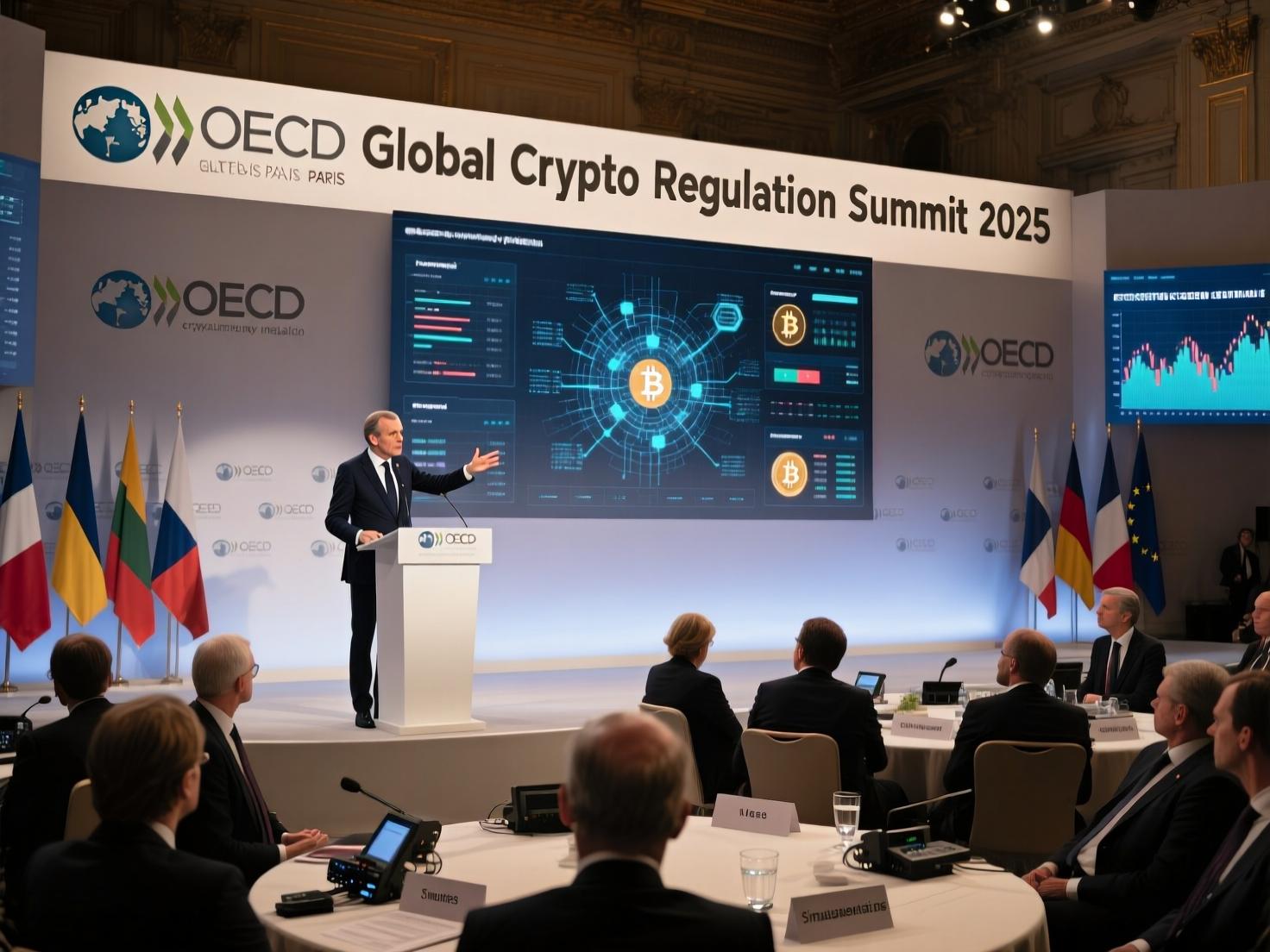
In Paris, U.S. SEC Chair Paul Atkins shared a detailed vision for “Project Crypto,” highlighting the need for a structured regulatory path for digital assets. He stressed that the era of inconsistent, ad-hoc enforcement must end, and instead, the industry should benefit from clear and predictable rules. His remarks underscored the importance of building trust through transparency and regulatory certainty.
Atkins emphasized that the goal is not to stifle innovation but to align modern finance with blockchain while ensuring strong investor protections. Project Crypto aims to balance growth and safeguards, creating a framework where digital assets can thrive responsibly. By moving finance on-chain with rules integrated from the start, the initiative seeks to set a global example for how regulation and innovation can work hand in hand.
What Atkins Announced in Paris
Speaking at the OECD’s inaugural Roundtable on Global Financial Markets on September 10, Atkins said the SEC will shift from enforcement-first policymaking to transparent rulemaking for tokens, custody, and integrated platforms. He framed the next phase as a “golden age of financial innovation on U.S. soil,” centered on practical pathways for capital formation and market integrity.
How SEC crypto regulation 2025 Could Streamline Digital Assets
Atkins pledged bright-line tests to determine when crypto assets fall under SEC oversight and reiterated that most tokens should not be treated as securities. Under SEC crypto regulation 2025, entrepreneurs would have a clearer path to raise capital on-chain without endless legal ambiguity, while investors gain stronger, technology-aware safeguards.
Unified Rules for Tokens, Staking, and Lending
Project Crypto envisions a single regulatory umbrella for trading, lending, and staking reducing fragmentation across licenses and agencies. With SEC crypto regulation 2025, platforms could operate under one comprehensive framework that aligns disclosures, market surveillance, and risk controls across product lines.

Custody That Matches Today’s Infrastructure
Atkins said custody rules will be modernized so institutions and intermediaries can securely hold digital assets through multiple compliant options. As SEC crypto regulation 2025 takes shape, expect explicit standards for wallets, segregation of client assets, proof-of-reserve-style attestations, and clearer responsibilities for qualified custodians.
Tokenization Is Moving From Pilot to Product
The SEC chair said Project Crypto will clear a path for tokenized securities and new on-chain asset classes bridging traditional markets with blockchain rails. Major market operators are already signaling interest, and SEC crypto regulation 2025 could accelerate listings, secondary trading, and settlement for tokenized equities, funds, and real-world assets.
From AI to “Agentic Finance”
Atkins highlighted autonomous, compliance-aware AI systems that allocate capital, manage risk, and execute trades in real time“agentic finance.” Coupled with programmable, on-chain infrastructure, these tools could deliver lower costs and faster markets while expanding access to sophisticated strategies. Guardrails, he said, should be commonsense and proportionate to risk.
Global Standards and Europe
Beyond crypto, Atkins flagged cross-border listing rules, accounting convergence, and European regulatory trends. He warned about “double materiality” in EU reporting, urged stable IASB funding, and said the SEC could revisit its 2007 IFRS-without-reconciliation stance if funding concerns persist aiming to protect U.S. investors while preserving global comparability.
Why It Matters
If implemented, SEC crypto regulation 2025 would shift U.S. policy from case-by-case actions to a durable rulebook. Clear definitions, unified licenses, modern custody, and support for tokenization could keep innovation stateside while AI-driven “agentic” systems help embed compliance into code and scale trust.

The Bottom Line
Atkins signaled that the U.S. has the chance to lead the next wave of finance by moving markets on-chain and aligning regulation with today’s digital realities. He framed blockchain not as a threat but as an opportunity to modernize financial systems while maintaining trust.
With SEC crypto regulation set for 2025, the challenge now shifts to execution. The priority is building clear standards that encourage growth, fair competition, and strong investor protection. Atkins stressed that the U.S. must strike the right balance so innovation flourishes domestically instead of migrating overseas in search of friendlier environments.