
Crypto Philanthropy
Crypto philanthropy is rapidly moving from experiment to strategy. As nonprofits and donors look for faster settlement, lower fees, and on-chain transparency, tokenizing charitable giving representing donations, impact claims, or grant tranches as digital tokens is emerging as the next big unlock. In 2025, industry observers project billions in potential crypto donations, with stablecoins processing trillions in value annually evidence that the rails for crypto philanthropy are already here.
Tokenized giving adds programmable features like automated disbursements, milestone-based releases, and real-time reporting, helping donors verify impact and helping charities diversify funding. This guide explains how crypto philanthropy works, why tokenized donations matter, the tax and compliance basics, and a step-by-step framework to launch your first tokenized campaign. We’ll also cover tooling, governance, metrics, and real-world case studies you can learn from.
Sources: projections and trend data from The Giving Block’s 2025 report and site materials; IRS guidance for U.S. deductions on non-cash (digital asset) contributions; and UNICEF’s public materials on its CryptoFund indicate institutional traction for blockchain-enabled giving.
What Is Crypto Philanthropy?
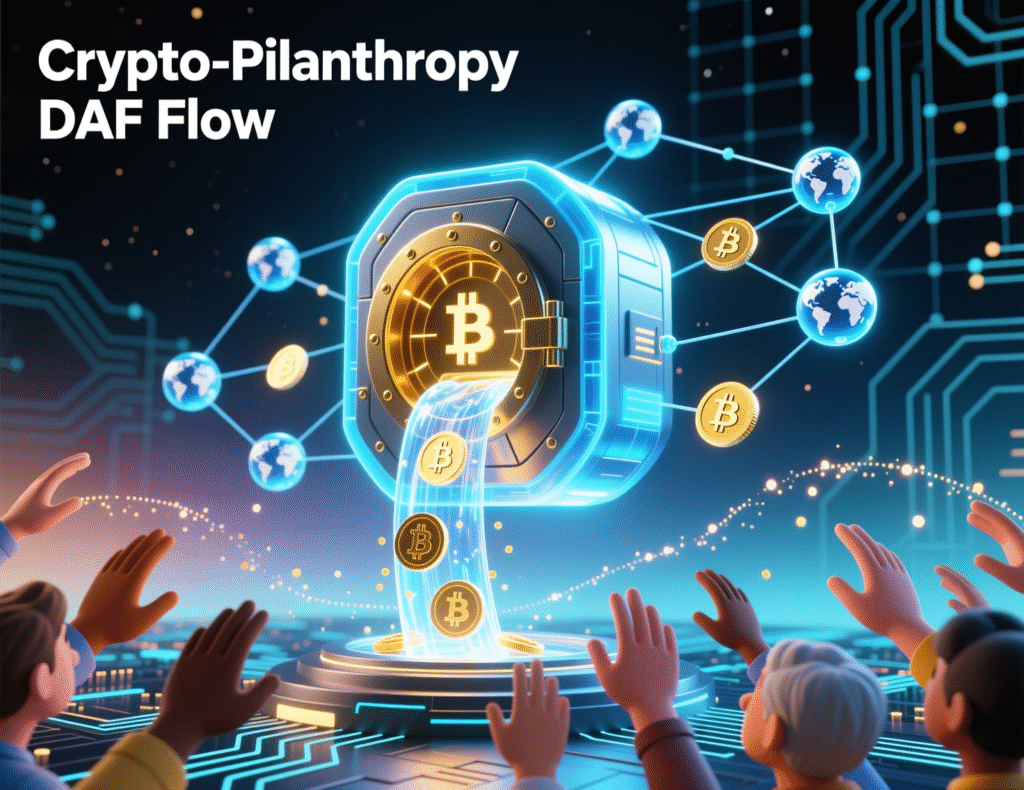
Crypto philanthropy is charitable giving using digital assets (e.g., BTC, ETH, stablecoins) and blockchain infrastructure. Donors transfer assets directly to nonprofits, donor-advised funds (DAFs), or smart contracts that escrow and release funds per predefined rules. Tokenization extends this by issuing impact tokens (e.g., NFTs or fungible tokens) that represent a donation, a sponsorship slot, or a verified impact unit (like “1 student-month of training”). Tokens can also encode access to reporting dashboards or governance votes in community funds.
Why it matters now
Speed & global reach
Near-instant settlement across borders.Transparency
Public ledgers show receipt, movement, and spend.Programmability
Funds can unlock only after proof-of-impact oracles confirm milestones.New donor segments
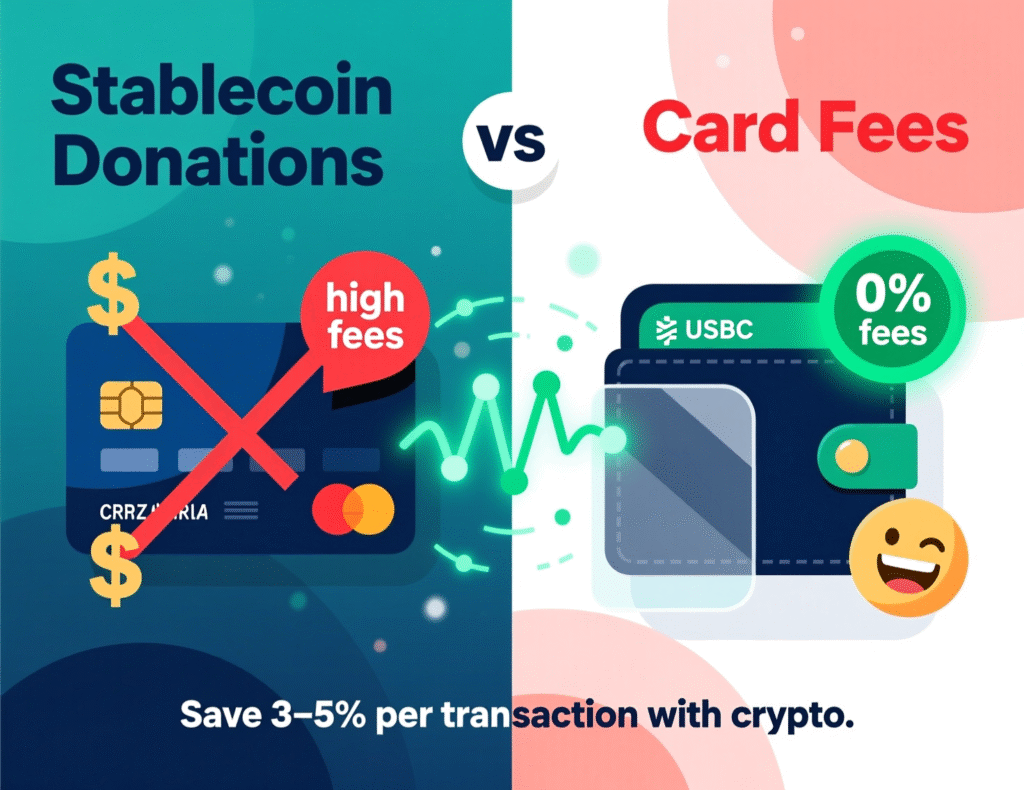
Crypto-native donors often give appreciated assets and value on-chain recognition.Stablecoin rails already move massive volume (nearly $30T in 2024), outpacing card networks evidence the pipes for crypto philanthropy are mature.

The Case for Tokenizing Charitable Giving
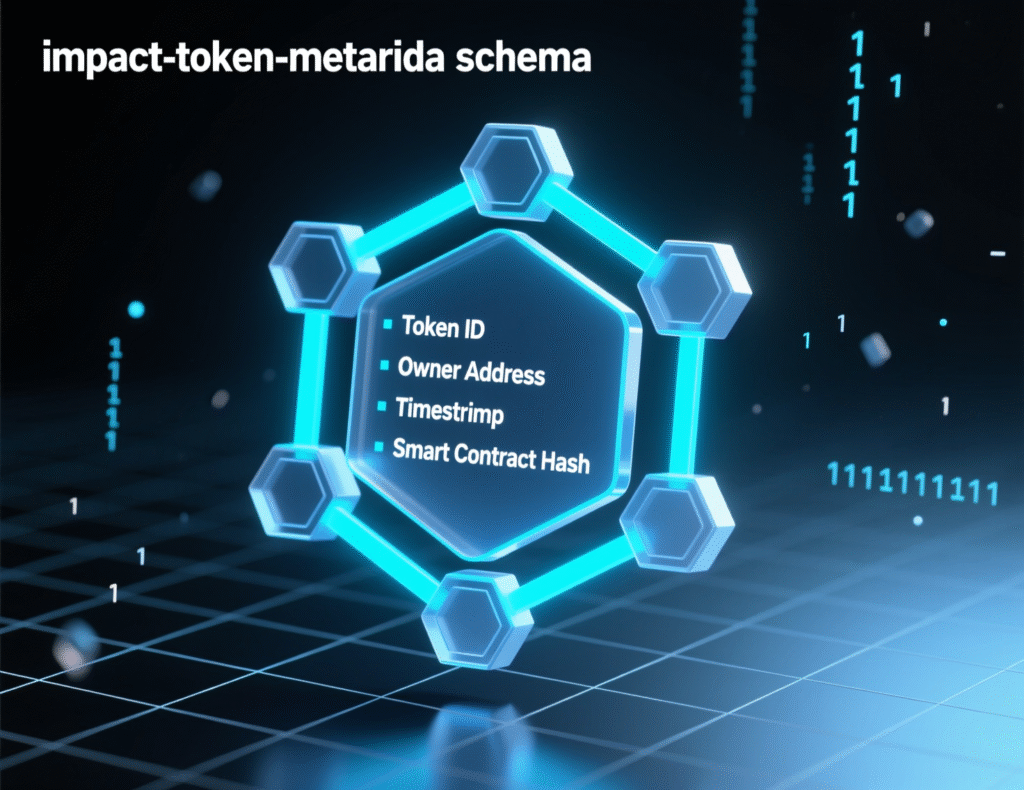
Tokenized donations attach a digital certificate of impact to each gift. Unlike traditional receipts, tokens can carry
Provenance & metadata
Project, cause, SDG tags, region.Dynamic state
“Funded,” “In progress,” “Verified.”Composability
Tokens plug into dashboards, DAO voting, or reputation systems.Liquidity (optional)
Secondary transfer of impact receipts (with or without royalty to the charity) to broaden reach.
Benefits for nonprofits
Proof-of-impact
Build trust with donors and institutional partners.Automated compliance artifacts
On-chain audit trails simplify reporting.Broader distribution
Tokens can act as referral objects on social and community platforms.
Benefits for donors
Tax optimization (jurisdictions vary)
In the U.S., donating appreciated crypto typically avoids capital gains tax and may allow a deduction at fair market value if held >12 months (record-keeping and appraisals apply for larger gifts). Fidelity Charitable+2IRS+2

How Crypto Philanthropy Works (Flow)
Choose rails
BTC, ETH, or stablecoins (USDC/USDT) for volatility control.
Set custody
Nonprofit wallet, DAF, or a compliant payments processor.
Token design
Decide if you’ll issue donation receipts (NFTs), milestone tokens (fungible), or “im
pact certificates.”
Smart contract logic
Add milestones, release conditions, refund rules, and reporting events.
Oracles & data
Connect toacles/dashboards to log proof (delivery receipts, geotagged photos, third-party attestations).
Compliance
KYC/AML as needed, plus tax documentation (e.g., U.S. Form 8283 for >$500 non-cash contributions; qualified appraisal rules for larger crypto gifts).
Reporting
Publish a live impact page with on-chain transactions and milestones.
Market Trends & Momentum in Crypto Philanthropy
Donations potential
The Giving Block projected around $2.5B in crypto donations in 2025 (estimate). Longer-term, crypto donations could reach $89B by 2035 under favorable market scenarios.Stablecoin rails at scale
Nearly $30T stablecoin transaction volume in 2024 highlights mature infrastructure for crypto philanthropy.Institutional adoption
UNICEF’s CryptoFund and Venture Fund have institutionalized digital asset operations and continued blockchain investments for social good.DAFs normalize crypto gifts
Fidelity Charitable educates donors on tax benefits of donating crypto; press coverage reports hundreds of millions in crypto contributed to DAFs by late 2024.Note: Always verify current volumes and policies; markets and regulations evolve.
Compliance, Tax & Risk: What Nonprofits and Donors Must Know
U.S. tax guidelines
The IRS treats digital assets as property. Donating appreciated crypto directly to a qualified charity may avoid capital gains tax and may be deductible at fair market value if held >12 months. Large non-cash donations require Form 8283, and donors may need a qualified appraisal for deductions above certain thresholds.Record keeping
Keep transaction hashes, wallet addresses, valuation methodology (e.g., FMV from a reputable exchange at gift time), and acknowledgments.Volatility & treasury
Convert part of the gift into stablecoins or fiat based on operating needs; define treasury policy (e.g., 70% immediate conversion, 30% retained as crypto).Sanctions/KYC checks
Work with processors that screen addresses and geographies.Broker reporting
New IRS digital asset reporting frameworks are rolling out; keep up with official IRS pages for yearly updates.
Token Design Patterns for Charities
Proof-of-Donation NFTs
Mint a commemorative NFT receipt containing the project ID, amount, date, and link to the on-chain donation.
Perks: Discord role, gated updates, or a donor wall.
Milestone-Based Impact Tokens (fungible)
Each token equals a verifiable unit (e.g., “1 family kit delivered”).
Smart contract releases funds to field partners only after oracle-verified proofs.
Community Pool + Governance
Use a DAO-like pool with staked governance tokens for grant selection.
Quadratic voting (e.g., Gitcoin-style) can prioritize broad donor consensus.
Sponsorship Slots as NFTs
Each NFT = a classroom seat/bed/kit for a period. Donors trade/transfer as recognition objects; resale royalties can split back to the charity.

Tooling Stack (2025 Landscape)
Accepting gifts
Processors and crypto-friendly DAFs that issue receipts and handle conversion. (See The Giving Block’s nonprofit integrations and education resources.)Smart contracts
OpenZeppelin templates for ERC-721/1155; audited escrow contracts for milestone releases.Wallets & custody
Multisig (e.g., Gnosis Safe), hardware wallets for treasury.Oracles/data
Chainlink/attestation layers; simple start: manual verification + IPFS-hosted proof packets.Analytics
On-chain explorers (Etherscan), Nansen-like dashboards, or custom subgraphs.Compliance docs
Generate donor letters + attach transaction hashes; map to Form 8283 data fields (U.S.; adapt per jurisdiction).
Case Studies (Condensed)
Case Study 1: UNICEF’s CryptoFund
UNICEF institutionalized crypto operations after a multi-year pilot, using digital assets to fund open-source solutions; their Venture Fund continues to invest in blockchain-based social impact startups and reports on portfolio progress publicly. Lesson: institutional governance + transparency accelerates adoption.
Case Study 2: DAFs and Crypto Donors
U.S. donors increasingly route appreciated crypto to DAFs for tax efficiency and flexible grant timing. Guidance from Fidelity Charitable explains potential capital-gains avoidance and FMV deductions for long-term held assets. Lesson: DAFs lower friction and help donors plan multi-year giving strategies.
(Community initiatives like Binance Charity report multi-million-dollar education and relief programs, reflecting growing mainstream awareness—useful for benchmarking scale.)
Measuring “Proof of Impact”
To avoid “token theater,” set measurable KPIs.
On-chain
Number of unique donors, average gift, settlement time, conversion lag, on-chain proof submissions.Off-chain impact
Outputs (e.g., meals delivered), outcomes (e.g., attendance), and cost per impact unit.Verification
Third-party attestations, geo-tagged evidence, signed field reports pinned to IPFS/Arweave and hashed on-chain.
Launch Checklist: Your First Tokenized Campaign
Define the impact unit (e.g., “1 hygiene kit”).
Pick your rails (stablecoin first for volatility control).
Draft the token spec (receipt NFT or impact token; metadata schema).
Set the business rules (milestones, refunds, clawbacks for non-delivery).
Treasury policy (conversion %, reserve ratios, custody).
Legal & tax review (jurisdictional charity law + tax rules).
Integrations (donation page, QR, wallet connect).
Data pipeline (collect proofs; publish a live dashboard).
Comms plan (educational content, donor FAQs).
Post-mortem & iterate (compare pledged vs. verified impact; refine).
Common Pitfalls and How to Avoid Them
Volatility shock
Use stablecoins; convert a portion to fiat promptly.Over-engineering tokens
Start with simple receipt NFTs before milestone escrows.Compliance gaps
Maintain KYC/AML policies and thorough documentation for audits.Opaque reporting
Publish hashes, addresses, and progress dashboards in plain English.

Bottom Lines
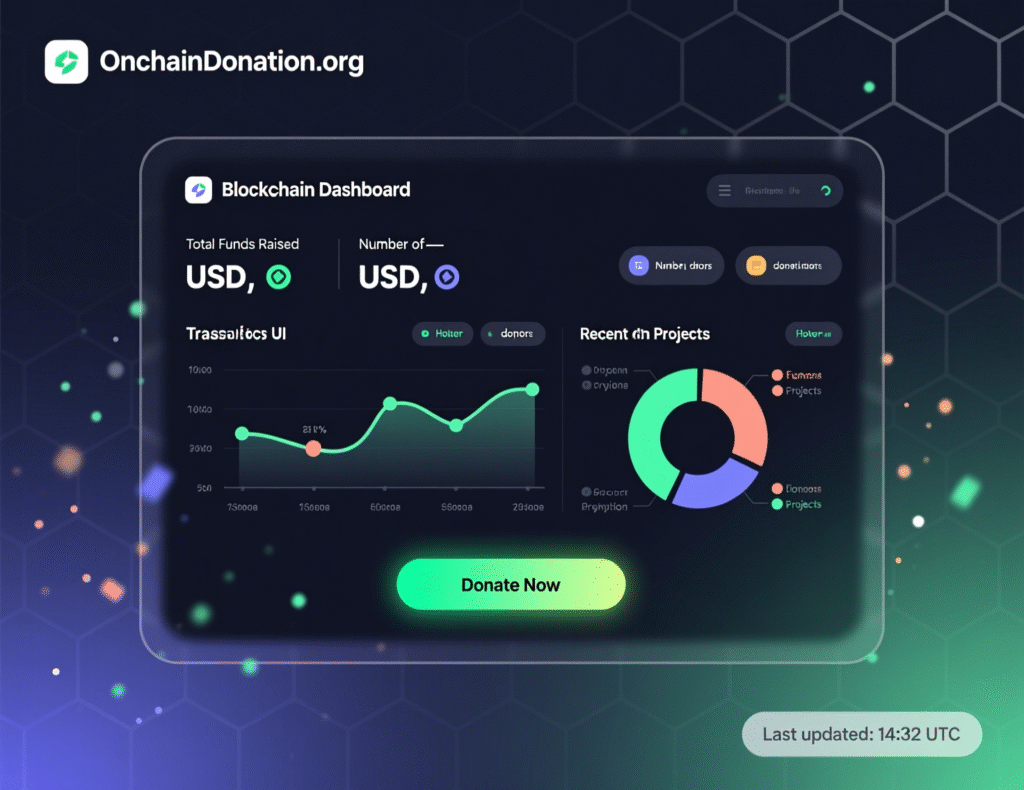
Crypto philanthropy isn’t just about accepting Bitcoin it’s about re-designing trust. Tokenizing charitable giving makes donations auditable, programmable, and globally accessible. For nonprofits, this means differentiated storytelling and verifiable proof; for donors, it means speed, tax-efficient generosity, and on-chain accountability.
With clear policies, a stablecoin-first approach, and a thoughtful token design, you can pilot a low-risk campaign and scale what works. Ready to turn wallets into real-world outcomes? Launch your tokenized giving page, and let crypto philanthropy power transparent, high-impact change.
CTA
Want a done-for-you tokenized giving pilot (strategy, contracts, dashboards, and compliance templates)? Get a free consult and a customized roadmap for your nonprofit.
FAQs
Q : How does crypto philanthropy reduce fees and delays?
A : Blockchain transfers settle in minutes and often cost less than card rails, especially cross-border. Stablecoins are fast and programmable, enabling milestone-based releases and transparent tracking. (Always compare network fees vs. processor fees.)
Q : How can nonprofits accept tokenized donations without deep web3 expertise?
A : Start with a reputable processor/DAF, enable stablecoin donations, and issue simple NFT receipts. Expand later with milestone contracts and oracles. Vendor support plus open templates minimize complexity.
Q : How do tokenized donations improve transparency?
A : Each donation is linked to a token holding metadata and proof links. Hashes and addresses let donors verify receipt and see milestone updates—building trust with measurable proof.
Q : How are crypto donations taxed in the U.S.?
A : The IRS treats digital assets as property. Donating appreciated crypto directly to a qualified charity may avoid capital gains and may allow a fair-market-value deduction if held >12 months. Keep records; Form 8283 may apply for non-cash gifts.
Q : How do I prevent volatility from reducing impact?
A : Adopt a treasury policy (e.g., convert 70% to fiat on receipt, retain 30% in crypto), use stablecoins for pledges, and disclose your conversion approach publicly.
Q : How can donors verify impact beyond the token?
A : Look for live dashboards, third-party attestations, and detailed metadata (project ID, location, time) linked from the token/NFT.
Q : How do stablecoins fit into crypto philanthropy?
A : Stablecoins reduce volatility, enable fast cross-border transfers, and already move multi-trillion volumes ideal rails for tokenized giving.
Q : How do we avoid “token theater”?
A : Tie tokens to specific, measurable units, require milestone proofs for fund release, and publish a transparent methodology (definitions, data sources, and verification partners).
Q : How can we accept very large crypto gifts?
A : Work with a DAF or qualified processor, implement KYC/AML, get appraisals where required, and coordinate with tax counsel to ensure documentation and valuation standards are met.