
Crypto Lending and Borrowing Innovations
The past two years transformed decentralized credit. Protocol upgrades, tokenized Treasuries, and real-world credit rails created new ways to borrow, lend, and manage risk without sacrificing transparency. In this guide, we map the crypto lending and borrowing innovations that matter in 2025, how they work, and when to use them. You’ll learn what Aave V4 introduces, why Compound v3 simplified risk, how Morpho’s market design changes pricing, and where undercollateralized platforms like Maple and Clearpool fit. We’ll also unpack RWAs (like BlackRock’s BUIDL and Ondo’s USDY), LST/LRT collateral strategies, fixed-rate options, and practical security checks you can run before you deploy capital.
Aave’s next release targets dynamic risk-based pricing and better liquidity routing, while Compound’s Comet architecture isolates risk around a single base asset. Tokenized bills make on-chain “cash management” real for compliant investors, which in turn powers new lending markets. As these crypto lending and borrowing innovations mature, the edge goes to users who combine yield with risk controls: conservative LTVs, reputable oracles, isolated markets, and diversified collateral. Below, we break down the landscape—plus playbooks and checklists you can implement right away.
Why Crypto Lending and Borrowing Innovations Matter Now
Institutionalization: Under/uncollateralized pools with real risk agents and disclosures (e.g., Maple, Clearpool) are aligning incentives for larger borrowers. Recent reports show Maple pushing multibillion AUM and expansion to more chains. DL News+1
Tokenized yield as collateral
BlackRock’s tokenized fund BUIDL crossed $1B AUM in 2025, accelerating RWA adoption and on-chain “cash” strategies that can flow into lending markets.Safer architectures
Compound v3 (Comet) focuses each market around one borrow asset for cleaner risk and lower gas; Aave V4 is introducing risk-based premiums and new mechanisms to price collateral quality.
The Big 12: Crypto Lending and Borrowing Innovations to Know
Risk-Based Pricing and a Leaner Core
Aave V4’s roadmap and governance updates point to risk premiums by collateral quality, tighter interest-rate dynamics, and an upgraded liquidity engine designed to improve efficiency without overcomplicating UX. Launch is targeted for late-2025 pending governance. For users, expect more granular pricing by asset risk and improved liquidation behavior.
Play it.
Use E-Mode pairs (e.g., wstETH/ETH) for capital efficiency today on V3 while planning migrations.
Compound v3 (Comet): Single-Asset Borrowing, Isolated Risk
Comet re-architected markets around one borrowable base asset (e.g., USDC). Collaterals are diversified but liquidations, accounting, and risk are simpler useful for institutions and risk-averse strategies. Reviews of 2024 liquidations informed further improvements.
Play it.
Prefer Comet when you want clean borrow accounting (e.g., USDC debt) and isolated exposure to a specific market.
Morpho Blue/V2: Permissionless Markets and Market-Driven Pricing
Morpho allows permissionless market creation, picking oracle, interest model, and Liquidation LTV per pair; V2 adds quote-driven, market-based pricing to align rates with supply/demand. It’s powerful for LST/LRT markets and niche assets.
Play it.
Create or use curated markets (e.g., ezETH/USDC, ezETH/WETH) with conservative LLTV and proven oracles.
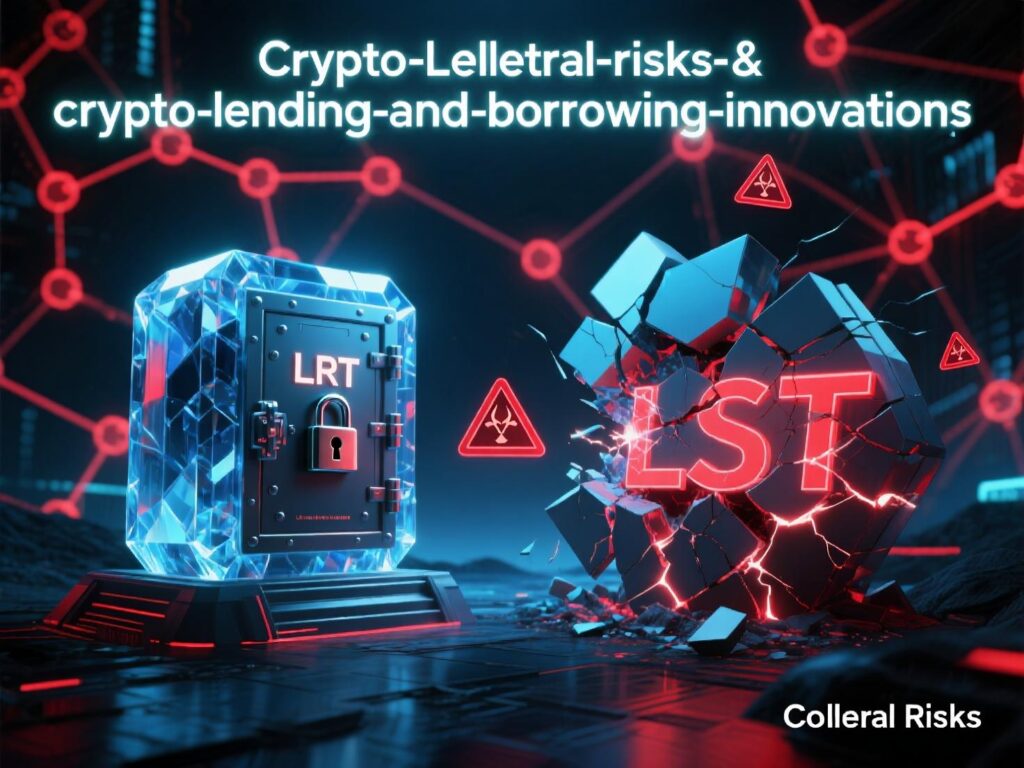
LST/LRT Collateral Strategies (stETH, eETH, ezETH, rsETH)
Liquid staking and restaking tokens (LSTs/LRTs) let you compound staking yields while borrowing. Listings and market share for LRTs on Aave/Morpho expanded through 2024–25 (e.g., weETH, rsETH uptake; ezETH/wstETH loops in specialized instances). Use with caution due to stacked risks (peg, oracle, restaking).
Play it.
Keep LTVs conservative; monitor LRT depeg and AVS risks. Favor blue-chip LSTs (wstETH) in E-Mode where available.
Tokenized T-Bills as On-Chain “Cash” (BUIDL, USDY)
Tokenized Treasuries moved from thesis to traction. BlackRock’s BUIDL launched in 2024 and surpassed $1B AUM by March 2025; USDY expanded to additional chains (e.g., Stellar), enabling yield-bearing dollars for payments and treasury use cases. Access is typically qualified or regional.
Play it.
For compliant treasuries, consider BUIDL or USDY for cash management and as conservative collateral where supported. Track issuer/program risk and transfer restrictions.
Enhanced Savings Rates and RWA Revenues (Maker Endgame, Sky)
Maker’s DSR/SSR design uses protocol revenue (including RWA yield) to pay savers; spikes in rates drew billions into savings in past cycles. Always verify current rates and collateral mix; RWA share and revenues are dynamic across 2024–25.
Play it.
If you borrow DAI, watch DSR/SSR elevated saver rates can increase your borrow cost via governance. Verify live before strategy.
Under/Uncollateralized Credit Markets (Maple, Clearpool)
These platforms add underwriting, KYC’d borrowers, and disclosures. Maple reported multibillion AUM with ambitions for larger origination; Clearpool is pushing “PayFi” credit pools and on-chain risk management partnerships. Institutional adoption is the goal, but risk is real study credit memos.
Play it.
Treat like real credit: diversify pools, monitor borrower updates, and size positions modestly.


Fixed-Rate Lending (Notional V3) and Structured Vaults
Fixed-rate credit helps treasurers lock costs; Notional keeps iterating (V3 on mainnet and Arbitrum). Growth has cycled with markets; check TVL and new vault strategies.
Play it.
Use fixed rates when budgeting cashflows or hedging rate risk; combine with stable collateral (e.g., wstETH E-Mode where relevant).
Isolated/Permissionless Markets for Niche Assets
Isolated risk (Comet) and permissionless markets (Morpho/Euler) let you list novel collaterals while containing blast radius. Always check oracles and liquidation mechanics.
Liquidity & Liquidation Improvements
Recent analyses surfaced delays and behaviors in some marketsfuel for upgrades. Watch governance threads and risk steward updates before using high-vola tility pairs.
Asset Management & Smart Wallets
Asset managers (e.g., Enzyme) integrate directly with Aave, leveraging High-Efficiency (E-Mode) and on-chain strategies. Expect more plug-and-play yield vaults with programmatic risk constraints.
Program Risk Can Change Fast
One issuer (USDM) announced an orderly wind-down in 2025 reminding us to monitor issuer policies, redemption mechanics, and regulatory posture. Never treat yield as guaranteed.
Practical Playbooks
Conservative ETH Staker’s Loop (Advanced)
Deposit wstETH as collateral on Aave V3 (E-Mode if available).
Borrow ETH at a conservative LTV (≤40%).
Restake to an LRT (e.g., eETH/ezETH) or keep ETH unlevered; rebalance weekly if prices move.
Track collateral and borrow caps; avoid chasing points with high LTVs.
Risks
LRT depeg, liquidation cascade, oracle or AVS risk. Keep buffers.
On-Chain Cash Ladder for DAOs
Hold operating funds partly in tokenized T-bill instruments (BUIDL, USDY where eligible).
Keep working capital in stablecoins and route to short-duration pools with fast exit.
For predictable expenses, match fixed-rate borrows to timelines.
Risks
Transfer restrictions, issuer/regulatory risk, smart-contract risk.
Institutional Working Capital via On-Chain Credit
Apply to a Maple or Clearpool pool with the right mandate.
Share audited financials, establish covenants, and accept transparent on-chain reporting.
Borrow for receivables/payments cycles; maintain buffers for liquidity shocks.
Mini Case Studies
Case 1 Maple’s AUM Surge
By Sept 2025, Maple reported ~$3.8B in deposits, expanding multi-chain and targeting $5B by year-end illustrating how undercollateralized credit can scale with proper underwriting and disclosures.
Case 2 Tokenized Treasuries Cross $1B (BUIDL)
BlackRock’s BUIDL surpassed $1B AUM in March 2025, validating tokenized money market funds as a serious building block for DeFi treasury and collateral strategies.
Risk Checklist Before You Lend or Borrow
Oracle quality
Prefer Chainlink or equivalent, validated across venues.
Market isolation
Favor isolated markets for exotic collaterals (Comet/Morpho)
Issuer risk (RWA)
Confirm redemption, transfer rules, and custody (e.g., BUIDL via Securitize)
Liquidation behavior
Review recent market incidents and parameter updates.
Governance cadence
Watch upgrade threads (Aave V4 roadmap, risk stewards).
Concluding Remarks
The credit stack is maturing. Crypto lending and borrowing innovations from Aave V4’s risk-priced markets to Compound’s simplified Comet, from Morpho’s permissionless pairs to tokenized T-bills and institutional credit rails are converging into a safer, more modular system. The top performers combine yield with discipline.
conservative LTVs, isolated risk, robust oracles, and careful issuer selection. As liquidity deepens and compliance tooling improves, more real businesses will finance operations on-chain. Your edge is operational: verify live parameters, favor blue-chip collateral, diversify counterparties, and size positions relative to liquidation and issuer risks. Put simply: use innovations, but earn your yield.
CTA: Want a customized DeFi credit strategy or editorial that targets your industry and jurisdiction? Contact us for a step-by-step plan and compliant collateral mix.
FAQs
Q1 : How do I choose between Aave, Compound, and Morpho?
A : Pick Aave for broad markets and E-Mode efficiency; Compound v3 for simple, single-asset borrowing; Morpho for permissionless, isolated markets and custom pairs. Check governance risk and current parameters.
Q2 : How can tokenized Treasuries improve my collateral strategy?
A : They can provide stable, yield-bearing “cash” that’s easier to model than volatile crypto. Ensure you qualify, understand transfer restrictions, and confirm where tokens are accepted as collateral.
Q3 : How do undercollateralized pools manage risk?
A : Via underwriting, covenants, and ongoing monitoring. Study pool mandates, borrower disclosures, and historical performance before deploying funds.
Q4 : How do I protect against liquidation cascades?
A : Keep LTV buffers, use E-Mode for correlated assets, and prefer isolated markets. Monitor oracle health and market-wide volatility.
Q5 : How does Aave V4 change borrowing costs?
A : By adding risk premiums by collateral quality and dynamic liquidity pricing, making rates fairer relative to asset risk. Timing depends on governance rollout.
Q6 : How can fixed-rate lending help a DAO treasury?
A : It locks borrowing costs and creates predictable cashflows, which complements holdings in tokenized bills or stables. Verify current rates/TVL before committing.
Q7 : How do LRTs (eETH/ezETH/rsETH) affect borrowing?
A : They stack restaking yield on top of staking but introduce added peg/AVS risks. Use conservative LTVs and robust markets only.
Q8 : How quickly can this landscape change?
A : Very issuers can wind down, parameters can shift, and markets can migrate. Always check the latest governance posts and issuer notices.
Q9 : How can I evaluate a new lending market?
A : Confirm oracle, liquidation path, historical usage, caps, and audits. Start small, diversify, and monitor dashboards for anomalies.