

Crypto & AI-Generated Content Rights
The last two years turned “who owns the output?” from a theoretical question into a board-level risk. Court rulings clarified that copyright still hinges on human authorship; meanwhile, NFT royalty policies and on-chain licensing tried sometimes awkwardly to port IP rules to programmable assets.
If you publish, market, or build products with generative models, you need a single, practical lens for AI-generated content rights that also accounts for crypto-native licensing. Below, we distill the latest rulings, the EU AI Act implementation dates you can’t miss, and actionable steps to put rights, attribution, and royalties on rails. (For U.S. guidance on human authorship see the U.S. Copyright Office policy and 2025 report; for the landmark Thaler ruling see D.C. Circuit 2025.)
What “AI-generated content rights” currently mean in law
United States (2025 snapshot).
The U.S. Copyright Office (USCO) requires human authorship for copyright protection. Purely machine-generated output isn’t registrable; however, human selection, arrangement, or material edits may be protected. Applicants must disclose AI-generated portions when registering.
In Thaler v. Perlmutter (Mar. 2025), the D.C. Circuit affirmed that works authored solely by AI are not eligible for U.S. copyright. This cements the human-authorship requirement.
United Kingdom.
UK law uniquely recognizes computer-generated works (CGWs). Under CDPA s.9(3), the “author” is the person who made the arrangements necessary for creation; duration is 50 years from creation (s.12(7)). Moral rights generally don’t attach to CGWs.
European Union (EU AI Act).
The EU AI Act was published July 12, 2024, entered into force Aug 1, 2024, and applies in phases core chapters start Feb 2, 2025, with broader application Aug 2, 2026. Expect transparency duties (esp. for GPAI) to shape dataset/attribution practices.
Why this matters to your stack.
If your content pipeline runs through generative models, U.S. protection focuses on human contribution and disclosure; UK protection may exist as a CGW with a different term and author concept; EU obligations will push transparency and record-keeping. Build policies to capture who did what and how and put it on-chain when it helps with auditabilityHow crypto intersects with AI-generated content rights
Tokenizing outputs doesn’t transfer copyright by default.
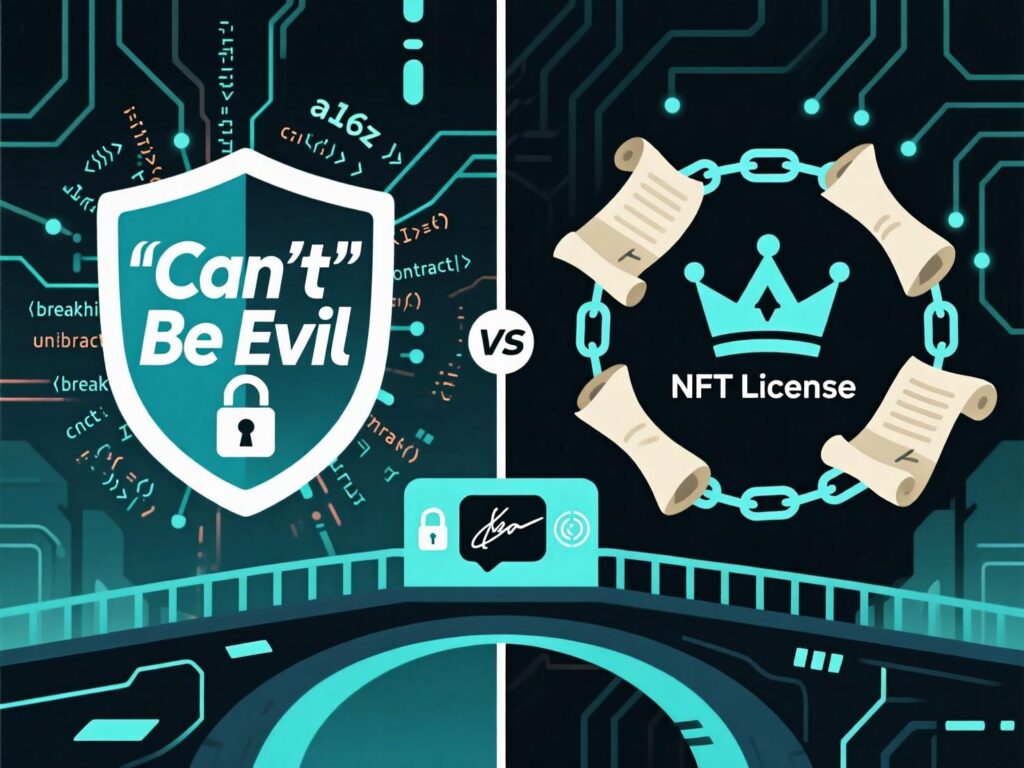
Minting an NFT points to a file; rights to the underlying artwork/text depend on the license. Standardized frameworks like Dapper’s NFT License, a16z’s “Can’t Be Evil” licenses, and project-specific terms (e.g., BAYC) define what holders can do—non-commercial display, capped commercial use, or broad commercialization.
Royalties: social norm vs. code vs. marketplace policy.
Royalties once looked “programmatic,” but in 2023 the largest marketplace, OpenSea, made creator fees optional by sunsetting its on-chain Operator Filter. This pushed projects toward contractual or community enforcement (and marketplaces like Rarible leaned into honoring royalties). Don’t assume automatic royalties design for them.
Trademarks + NFTs: lessons from Yuga Labs v. Ripps.
In July 2025, the Ninth Circuit vacated an $8.8M judgment and remanded for trial, signaling that trademark questions around NFT “appropriation art” require fact-finding; however, the panel recognized NFTs as goods under the Lanham Act context. This narrows room for confusion about marks but keeps the merits live.
Licensing building blocks for AI-generated works
When you ship content that includes model output, pick a license that matches your risk and go-to-market:
Creative Commons (CC)
Familiar, human-readable terms. CC warns that CC licenses address copyright only (not privacy/other rights) and the community continues to debate AI training under CC works. CC0 dedicates to public domain, which some AI creators use for frictionless reuse.
The NFT License
Defines everyday holder rights (display, resale) with optional commercial scopes; widely referenced in early NFT culture (CryptoKitties/Top Shot lineage).
a16z “Can’t Be Evil”
A menu of permissive to restrictive templates designed for Web3 projects. Useful for standardization across collections.
Project-specific grants (e.g., BAYC)
Broad, holder-level commercialization rights; ideal when your strategy is community-driven brand building. Always read current terms.
Pro tip:
Pair your chosen license with provenance notes: which model, which prompt, which human edits. That’s gold for U.S. registrability and EU transparency. NFT License
Compliance & risk: from training data to disclosures
Training data lawsuits keep coming.
In 2025, Anthropic told a U.S. judge it would pay $1.5B to settle author claims tied to allegedly pirated book datasets, while the NYT v. OpenAI/Microsoft case proceeds with key claims intact and a sweeping preservation order for ChatGPT logs. Operational takeaway: track sources and acquisition methods; “fair use” analyses won’t save you from tainted sourcing.EU AI Act
will push provenance signals, model documentation, and disclosure for certain systems. For global products, align U.S. authorship/disclosure with EU risk/tracking to avoid rework.UK CGW regime
continues to raise policy debate (some argue s.9(3) needs reform), but it remains in force use it when it fits your creation process.
A practical framework to manage AI-generated content rights
Decide your authorship model.
U.S. launch? Ensure meaningful human creative control (prompt engineering alone may not be enough); document human selection, arrangement, or editing.
Pick a license strategy that matches your GTM.
CC-BY/CC-BY-NC for open ecosystems; a16z CBE for Web3 collections; custom EULA when you need field-of-use controls.
Capture provenance, on- and off-chain.
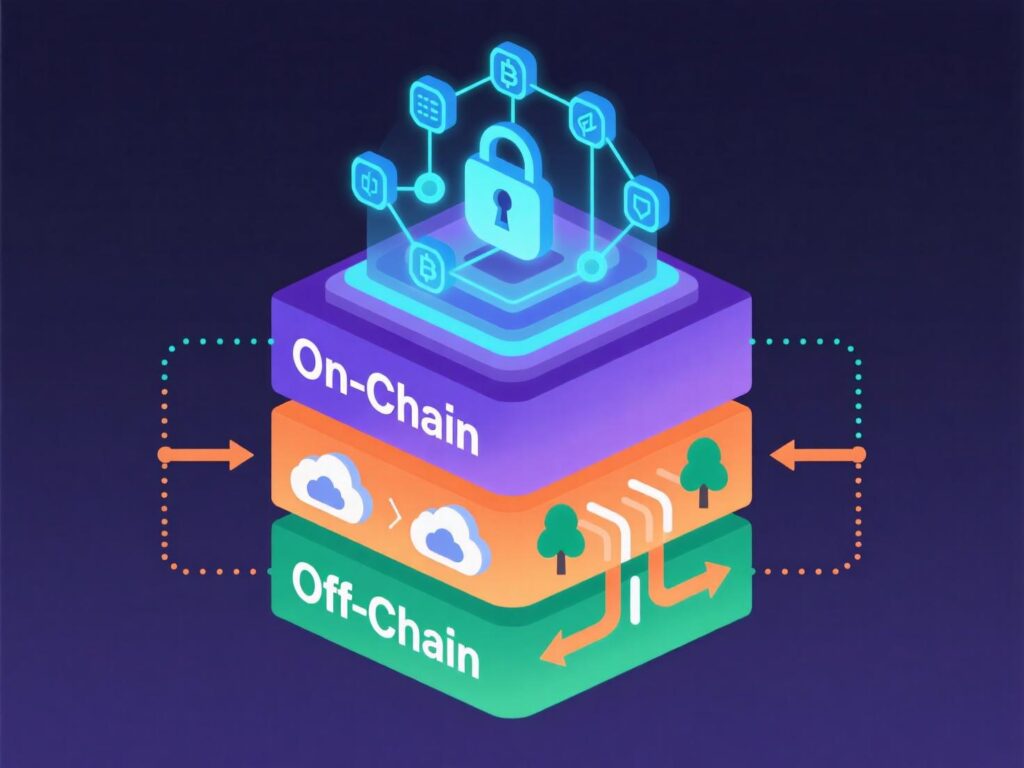
Log prompts, source datasets/permissions, model versions, and human edits. Hash key assets on-chain; store detail off-chain (e.g., IPFS + metadata). EU diligence gets easier later.
Royalty reality-check.
If royalties matter, hard-code payment rails in your own marketplace and bind via contract. Don’t rely on third-party policies.
Register strategically.
In the U.S., register the human-authored portions and disclose the AI-generated material. In the UK, consider CGW registration posture where appropriate.
Moderate trademarks & brands.
Watch for mark usage in generative assets; the Yuga/Ripps appellate posture shows courts will scrutinize confusion vs. commentary.
Mini case studies (real-world lessons)
ACommunity commercialization done right (BAYC-style)
Yuga Labs popularized broad, holder-level commercialization rights, enabling restaurants, merch, and media spinoffs. The trade-off: more brand surface area to police—and live trademark battles can follow. Draft your terms with clear brand guidelines and revocation triggers.
Royalties are not “set and forget.”
When OpenSea shifted to optional royalties, creators relying on secondary-sale revenue saw a shock. Projects that endured paired contractual rights with community-enforced marketplaces like Rarible and/or first-party sales. Design royalty economics conservatively.
Implementation: A 7-step “How-To” you can ship this quarter
Map content flows:
Model(s) used, training sources (first/third party), and human touchpoints.
Choose license:
CC/a16z/NFT License/custom, and pre-write commercial vs. non-commercial scenarios.
Provenance logging:
Store prompts, model versions, and edit history; sign with your org wallet; hash artifacts on-chain.
NFT metadata:
Include license URI, creator wallet, model reference, and checksum; avoid vague “all rights reserved.”
Royalty rails:
Use your own marketplace or contracts that enforce fees where possible; mirror with ToS.
Register:
File U.S. applications naming human authors; disclose AI portions; consider UK CGW filings for UK-centric works.
Governance & review:
Set quarterly legal/SEO audits for updates (EU AI Act timelines; new rulings; marketplace policies).
Conclusion
AI-generated content rights are converging on a few constants: in the U.S., no human authorship means no copyright; in the UK, CGWs exist with distinct authorship and a 50-year term; and in the EU, the AI Act is converting “best practices” into obligations. Crypto doesn’t magically solve IP but it gives you powerful tooling for provenance, licensing disclosure, and revenue routing.
The winning teams won’t wait for perfect clarity; they’ll ship a rights stack that logs provenance, licenses clearly, and monetizes with contracts that survive platform policy swings. Start with the 7-step plan above, then iterate. If you get the rights architecture right, you’ll ship faster, monetize safer, and earn downstream distribution in search and generative answers without waking up to legal surprises.
CTA: Want a tailored rights stack (license + provenance + schema) for your product? Reach out we’ll blueprint it in a week and hand you templates your legal and growth teams will love.
FAQs
Q : How do we register U.S. copyrights for AI-assisted works?
A : Register only the human-authored portions and disclose AI-generated material in the application. This protects the creative selection/arrangement/edits you contributed. Keep prompts, drafts, and edit logs to show human authorship.
Q : How can crypto help with AI-generated content rights?
A : Use NFTs to bundle license + provenance: store license URI, creator wallet, model version, and checksums in metadata; hash assets on-chain. Smart contracts can facilitate revenue splits, but don’t rely on marketplaces to enforce royalties.
Q : How do we handle AI training data risk?
A : Create a sourcing policy: allowed repositories, license checks, and records of acquisition. Avoid datasets scraped from piracy hubs. Courts scrutinize how you obtained data.
Q : How does the EU AI Act affect content teams?
A : Expect documentation and transparency obligations, especially for GPAI providers. Start logging data provenance and model details now to avoid retrofits.
Q: How do NFT royalties work in 2025?
A : They’re mainly policy + contract. Many major marketplaces made royalties optional. If royalties are essential, use first-party sales or marketplaces that enforce them, and back it with ToS.
Q : How do trademark issues show up in NFTs?
A : Courts may treat NFTs as goods under trademark law. Artistic commentary is possible, but confusion analysis is fact-specific (see Yuga/Ripps remand).
Q : How can we license AI-assisted assets for community use?
A : Pick a known template (a16z Can’t Be Evil, NFT License, CC) and specify commercial rights, attribution, and derivatives. Align your metadata and brand guidelines.
Q : How do we prove human authorship internally?
A : Mandate edit logs and creative briefs, keep model versioning, and archive before/after screenshots or diffs. This doubles as SEO provenance and legal evidence.
Q : How does Google treat AI content?
A : Google is fine with AI-assisted content that’s helpful and reliable. Focus on expertise, citations, and reader value; add structured data to assist answer engines.