
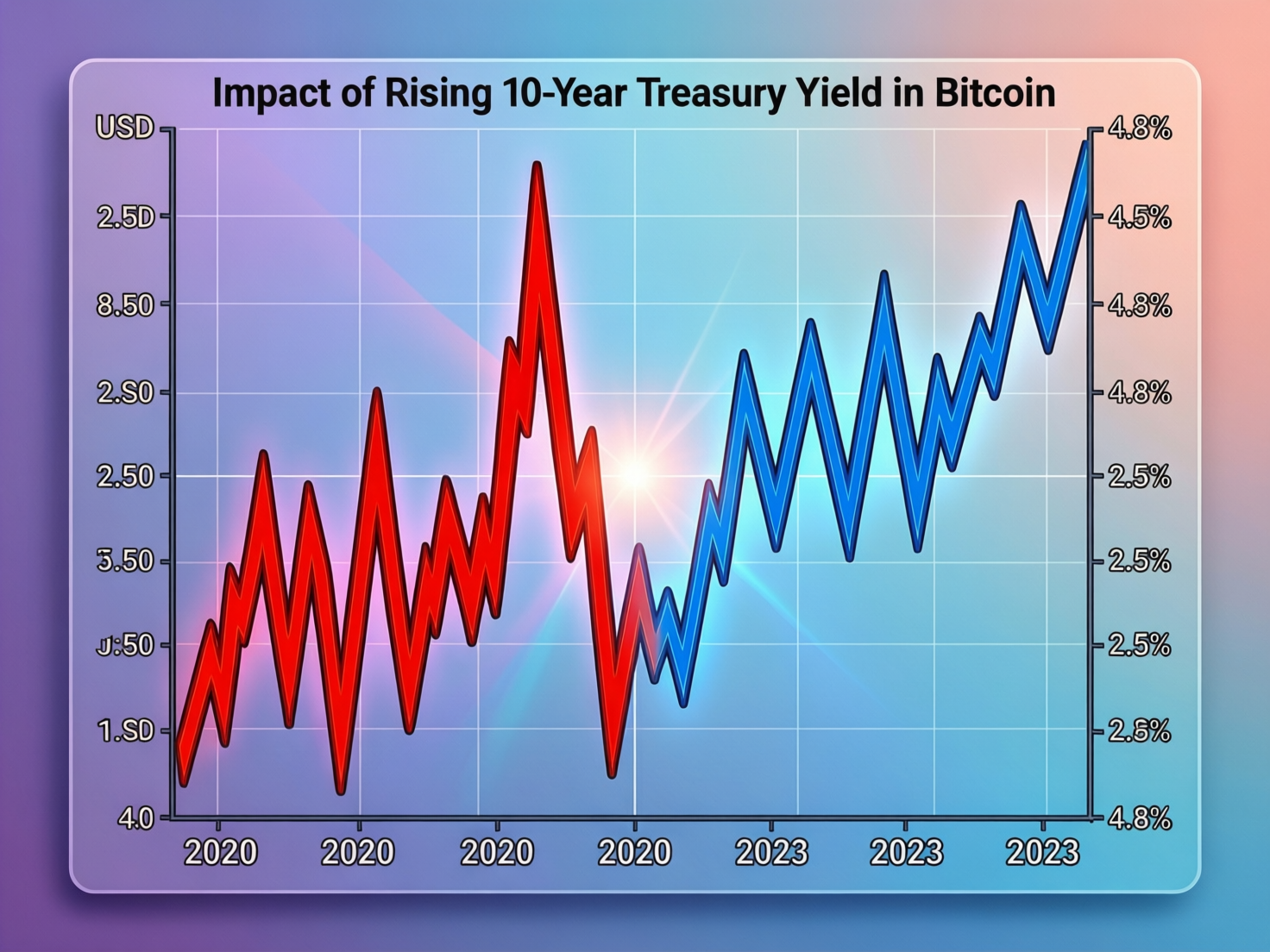

Bitcoin slips as 10-year Treasury hits four-month high
The rising U.S. 10-year Treasury yield has moved into the spotlight after climbing to nearly 4.27–4.28%, marking its highest level in around four months. This increase signals tighter financial conditions and affects borrowing costs across the economy. Higher yields push up mortgage rates, corporate lending expenses, and influence equity valuations, making it more expensive for businesses and consumers to access credit. As returns on safer government bonds rise, investors often reconsider how much risk they are willing to take in other markets.
As a result, appetite for risk-based assets has weakened. Both cryptocurrency and stock markets showed signs of softening as investors adjusted to a more hawkish macro environment. Rising yields also raise the hurdle rate for returns, reducing enthusiasm for speculative investments like Bitcoin and growth stocks.
Why yields matter for markets
The 10-year Treasury anchors global borrowing costs and discount rates used in valuing cash flows. When it rises, financing becomes dearer and present-value math for risk assets turns tougher especially for growth/long-duration names and cryptocurrencies that thrive on liquidity.
What’s driving the latest rise?
Tariff tensions
President Donald Trump threatened new tariffs on several European nations tied to a push regarding Greenland, stoking fears of a transatlantic trade clash.
EU response in focus
European leaders signaled they won’t be “blackmailed,” while reports said the EU is weighing sizable retaliatory measures; officials also downplayed the idea of weaponized Treasury dumping.
Market reaction
Global stocks eased and crypto slipped as uncertainty rose; the 10-year yield printed around 4.27–4.28% on Jan. 20, 2026.
Bitcoin and equities: near-term read-through
Bitcoin hovered near $91,000 in Tuesday trade, while the broader risk complex wobbled. Historically, abrupt yield spikes and tighter conditions correlate with weaker performance in high-beta assets as investors seek safety and higher real yields.
Why the impact of rising 10-year Treasury yield on bitcoin matters now
Cost of capital
Higher yields raise the opportunity cost of holding non-yielding assets like bitcoin.
Liquidity channel
Risk-off episodes can reduce leverage and stablecoin liquidity, amplifying crypto moves.
Cross-asset flows
Equity and FX volatility from tariff headlines can spill over into crypto correlations.
Portfolio tactics amid the impact of rising 10-year Treasury yield on bitcoin
Reassess position sizing and leverage assumptions as funding costs and volatility regimes shift.
Watch policy headlines and yield curve dynamics; macro tape is driving crypto beta.
Diversify time horizons separate trading setups from long-term theses to avoid forced de-risking.
Context & Analysis
Talk of Europe “weaponizing” U.S. asset holdings has surfaced in commentary, but officials have labeled large-scale Treasury dumping a “false narrative,” suggesting market stress is likelier via tariffs than bond liquidation. Even so, persistent geopolitical friction could keep a floor under yields and a lid on risk appetite.

Concluding Remarks
Unless tariff-related tensions ease or economic growth data shows signs of slowing, the near-term outlook points toward continued high bond yields and tighter financial conditions. This environment usually creates pressure on risk-sensitive markets, as borrowing costs remain elevated and liquidity becomes more restrictive. Investors may stay cautious, favoring safer assets over speculative opportunities while waiting for clearer economic signals.
Such conditions often act as a headwind for high-beta assets, including Bitcoin and other cryptocurrencies. Traders are advised to closely monitor policy signals coming from Washington and Brussels, as trade developments can quickly shift market sentiment. At the same time, keeping a close watch on movements in the U.S. 10-year Treasury yield remains essential for near-term direction.
FAQs
Q1 . Why does the 10-year matter for crypto?
A : It sets discount rates and shapes liquidity. Higher yields raise the hurdle for risk assets like Bitcoin, making investors more cautious.
Q2 . Did tariffs trigger the yield move?
A : Tariff threats are a key catalyst cited by markets and officials, contributing to a risk-off tone and higher yields.
Q3 . Where is Bitcoin trading now?
A : Around the $91k area as of Jan. 20, 2026, with intraday dips observed.
Q4 . Could Europe dump Treasurys?
A : Officials call large-scale dumping a “false narrative,” though EU countermeasures remain on the table.
Q5 . How does the impact of rising 10-year Treasury yield on Bitcoin show up in portfolios?
A: Through tighter funding conditions, lower risk appetite, and higher volatility correlations across assets.
Q6 . Are stocks reacting too?
A : Yes global equities softened alongside tariff headlines and higher yields.
Q7 . Is this investment advice?
A : No. This is general market information only.
Facts
Event
10-year U.S. Treasury yield climbs to a four-month high; bitcoin and stocks softenDate/Time
2026-01-20T12:00:00+05:00Entities
U.S. Treasury (UST10Y), Bitcoin (BTC), European Union, President Donald Trump, Greenland disputeFigures
UST10Y ~4.27–4.28% (Jan. 20, 2026); BTC ~$91,000 intradayQuotes
“will not be blackmailed” German & French finance ministers (Reuters). “Dumping U.S. debt is a ‘false narrative’” U.S. Treasury Secretary Scott Bessent (The Guardian).Sources
TradingEconomics (10-year data), CoinDesk (market move), Reuters (tariff threats/retaliation), WSJ (equities reaction).