
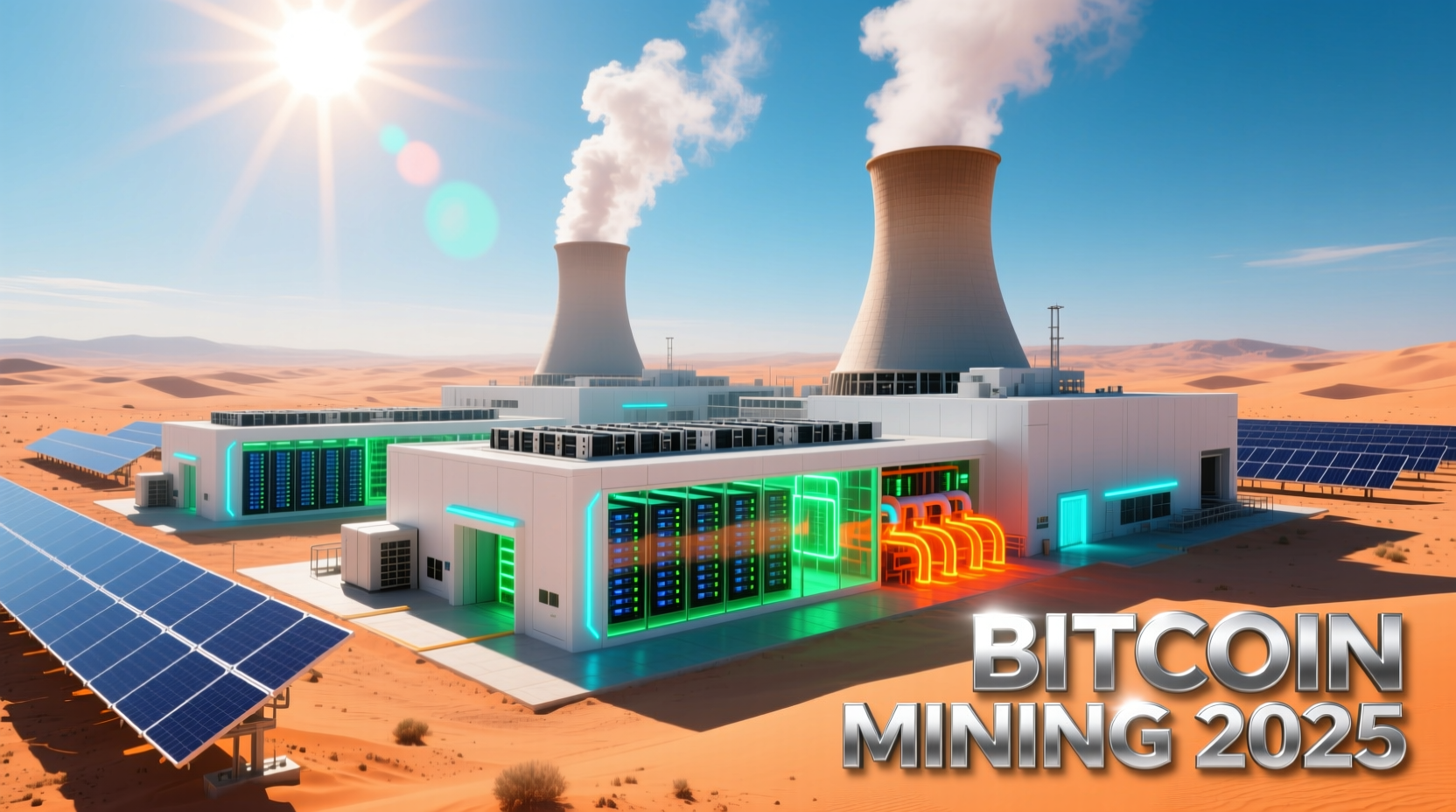

Bitcoin Mining Middle East: Energy, Rules, Reality (2025)
Bitcoin mining in the Middle East is accelerating because parts of the Gulf can combine scalable power, fast-improving data-center capacity, and selective regulatory clarity. But the winners in 2025 aren’t the loudest promoters they’re the operators who solve heat, grid access, and compliance like a utility-grade business.
Direct answer: The Middle East is attractive for mining where you can secure dependable megawatts, run efficient cooling in extreme heat, and stay inside licensing and enforcement boundaries. The upside is real in the UAE, pockets of Saudi Arabia, and some Oman-linked builds but the region is not uniformly “crypto-friendly,” and enforcement can change quickly.
The Middle East Mining Shift in One Minute
Hashrate follows power and policy. In the last two years, miners squeezed by Texas congestion/curtailment risk or European power volatility started looking for a new equilibrium: large generation capacity, state-backed infrastructure, and a push to monetize energy assets beyond oil.
Still, it’s not a blanket bet on “the Middle East.” Results hinge on four things:
Energy economics (contract structure and reliability, not just headline rates)
Infrastructure + cooling (heat is the boss fight)
Regulatory enforcement (what’s allowed on paper vs what gets tolerated)
Sustainability proof (traceability beats slogans)
In 2025, the UAE, Saudi Arabia, and Oman can offer credible paths—while Kuwait is a reminder that crackdowns happen when grids get stressed.
Why Bitcoin Mining Is Moving to the Middle East
The real “energy advantage” story: pricing, stability, scale
The Gulf’s edge isn’t always “the cheapest kWh.” It’s often availability of capacity, grid proximity, and the ability to structure longer-term arrangements in markets where utilities and industrial zones are planned at scale.
In practice, what kills projects isn’t a slightly higher rate—it’s downtime, curtailment clauses nobody modeled, or a site that never gets a final interconnect.
GCC vs Texas/US and EU power markets
Texas/US
Still competitive, but exposed to congestion pricing, curtailment events, and regulatory noise depending on the jurisdiction.
Northern Europe
Cooling is easier, but permitting, industrial tariffs, and political pressure can slow or block mining.
GCC hubs
Places around Dubai and Abu Dhabi increasingly lean into master-planned data-center corridors where grid access, land, and logistics are intentionally paired.
AEO micro-answer: What makes the Gulf attractive vs US/Europe?
Abundant generation capacity, infrastructure buildouts backed by large institutions, and selective regulatory clarity especially in UAE hubs make the Gulf attractive compared with volatile US grids and higher-cost EU power markets.
Bitcoin Mining Middle East Economics.
UAE electricity + hosting models.
In the UAE, many miners access power through colocation/hosting partners rather than direct utility contracts. That changes the margin math. Your profitability often rides on:
Uptime guarantees (and whether penalties are real)
Cooling performance in extreme summer conditions
Load factor and how curtailment is handled
Transparent metering and settlement terms
A common failure mode: a great “headline price” paired with weak service-level terms that quietly eat the upside.
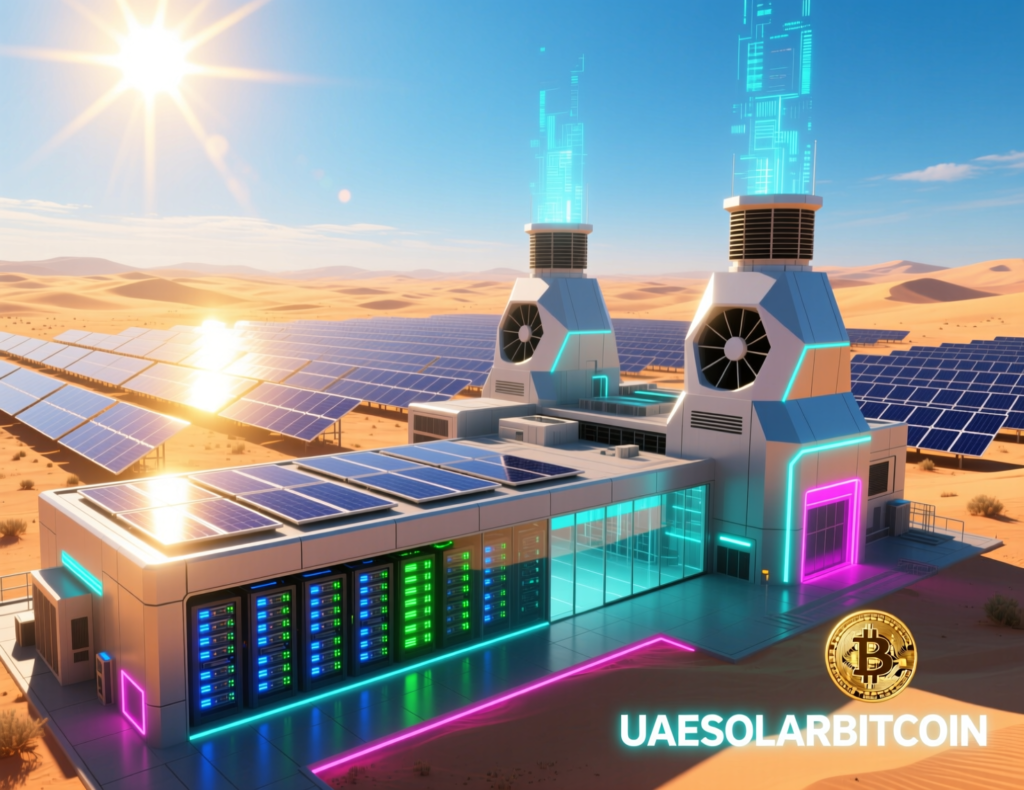
Saudi Arabia: Vision 2030 adjacency and execution risk
Saudi Arabia’s momentum ties closely to the broader push for data centers and industrial digitization. Interest clusters near major economic zones and connectivity routes around Riyadh, Jeddah, and the NEOM narrative.
Power can be plentiful, but investors should model timeline risk and interconnect approvals. Delays aren’t unusual when projects depend on multiple counterparties and staged infrastructure delivery.
Oman and “stranded energy” narratives: real vs hype
Oman gets cited for “stranded” gas or renewables near Muscat and beyond. Some builds are credible; others are basically slide-deck economics.
What separates real from hype.
Verifiable fuel supply and uptime
Clear ownership of the site and permits
Auditable emissions accounting (especially for gas-based claims)
A practical plan for maintenance, spares, and logistics
AEO micro-answer: Why does flare gas / stranded energy keep coming up?
Because miners can monetize otherwise wasted energy when supply, uptime, and emissions accounting are independently verifiable—otherwise it’s just marketing.
Infrastructure & Heat: Cooling, Grid Constraints, and Facility Reality
Heat isn’t a footnote in the Gulf it’s a core operating cost. If your model doesn’t treat cooling as a first-order decision, it’s not a real model.
High-temperature operations: immersion cooling tradeoffs
At 40°C+ ambient conditions, traditional air cooling can struggle to keep efficiency stable. Immersion cooling can improve density and performance, but it can also increase CAPEX, fluid handling complexity, and maintenance requirements.
A practical way to decide.
If power is cheap but land/buildout is constrained → higher density solutions can make sense.
If CAPEX is tight → hybrid or optimized air/liquid approaches may be more realistic.
If uptime is mission-critical → prioritize designs with proven maintenance workflows and spare strategy.
Grid constraints + summer peaks
Peak summer demand stresses grids across the region. For mining, that shows up as:
Demand response obligations
Curtailment clauses
Seasonal pricing shifts
Requirements for backup generation (and fuel logistics)
Ignoring peak dynamics is one of the fastest ways to build a “profitable” spreadsheet and a losing operation.
AI data centers vs Bitcoin mining: competing for megawatts
AI workloads increasingly compete for interconnects and capacity. In premium locations, hyperscalers may get priority pushing miners toward secondary corridors or requiring stronger partnerships to secure dependable allocation.
AEO micro-answer: Biggest operational constraints in the UAE/Gulf?
Heat-driven cooling costs, peak-demand grid stress, and facility lead times are the most common bottlenecks.
Regulation, Enforcement, and Investor Risk Across the GCC
Friendly hubs vs no-tolerance zones
Regulation in the Gulf is not one story it’s many. The UAE, for example, tends to separate:
Mining/hosting as infrastructure
Virtual asset services (brokerage, custody, exchange activities)
Dubai’s VARA and Abu Dhabi’s ADGM FSRA are often cited as clearer frameworks—yet licensing outcomes still depend on the exact activity, counterparties, and location.
Kuwait mining crackdown: a cautionary example
Kuwait’s enforcement actions in 2025 (reported widely, including by Reuters) highlight a pattern seen globally: when grids are strained, unlicensed mining becomes a target, and enforcement can move faster than many operators expect.
The US/UK/EU overlay for serious capital
If you’re raising capital or serving counterparties tied to Western institutions, expect “extra” requirements even offshore:
FATF-aligned AML expectations
OFAC sanctions screening
Data handling rules (GDPR / UK-GDPR and related local equivalents)
EU MiCA implications through counterparties, disclosures, and custody relationships
In simple terms: compliance architecture matters as much as megawatts if you want bankable operations and institutional relationships.
AEO micro-answer: Why are some Gulf states cracking down?
Usually due to grid stress, unlicensed operations, and pre-summer enforcement cycles—not necessarily anti-crypto ideology.
Sustainability & ESG
This is where many pitches get sloppy. In 2025, sustainability claims are increasingly judged on documentation, not vibes.
Renewables-powered mining: what you must be able to prove
Credible “renewables-powered” claims typically require:
Traceable energy sourcing (PPAs or equivalent documentation)
Auditable metering and settlement
Clear boundaries (what portion is renewable vs grid-mix)
Transparent reporting, not selective screenshots
Methane mitigation via flare-gas mining
Flare-gas claims can be legitimate if baseline emissions, capture rates, and uptime are independently measured and reported. If those pieces are vague, you’re buying headline risk.
Carbon accounting + EU expectations
EU buyers and partners increasingly expect formal reporting standards. Even if you’re operating in the GCC, counterparties may request CSRD-style reporting discipline: curtailment logs, lifecycle accounting assumptions, and consistent methodologies.
AEO micro-answer: How can Gulf mining credibly claim sustainability?
By proving energy-source traceability, using independently verifiable emissions methodologies, and publishing transparent uptime and curtailment data.
Will the Middle East Become a Global Bitcoin Mining Hub (2026–2030)?
The “GCC hub” scenario
If policy clarity continues improving and grid/infrastructure investments land on schedule, GCC hubs could become a major hashrate anchor potentially comparable to leading US regions.
The “selective growth” scenario (more likely)
More realistically, growth concentrates where:
Power allocation is dependable
Buildouts actually deliver on time
Licensing is workable
Enforcement risk is predictable
That likely means continued strength in the UAE, meaningful expansion in parts of Saudi Arabia, and selective Oman-related builds while other pockets remain stop-start.
What to watch
Hyperscale data-center announcements and delivery timelines
Grid policy updates (especially around peak season demand response)
Enforcement headlines (what gets targeted and why)
“Mining-as-a-service” offerings tied to major regional firms
How to Evaluate a GCC Mining Project
Feasibility checklist (non-negotiables)
Power contract terms (curtailment, penalties, seasonal clauses)
Cooling design matched to local heat reality
Realistic uptime assumptions and maintenance plan
Insurance coverage and downtime responsibility
Counterparty risk and financial strength
Spare parts strategy and logistics (especially during peak summer)
Compliance checklist (what institutions expect)
Correct entity setup for the jurisdiction and activity
AML program proportional to your counterparties
Sanctions screening workflow
Data handling and retention policy
Audit trails for energy sourcing and operations
Decision matrix: Middle East vs Texas vs Northern Europe
Don’t compare only headline electricity rates. Compare:
Power stability
Regulatory predictability
Cooling costs
Time-to-deploy
Counterparty and enforcement risk
If one column is “unknown,” that’s your red flag.
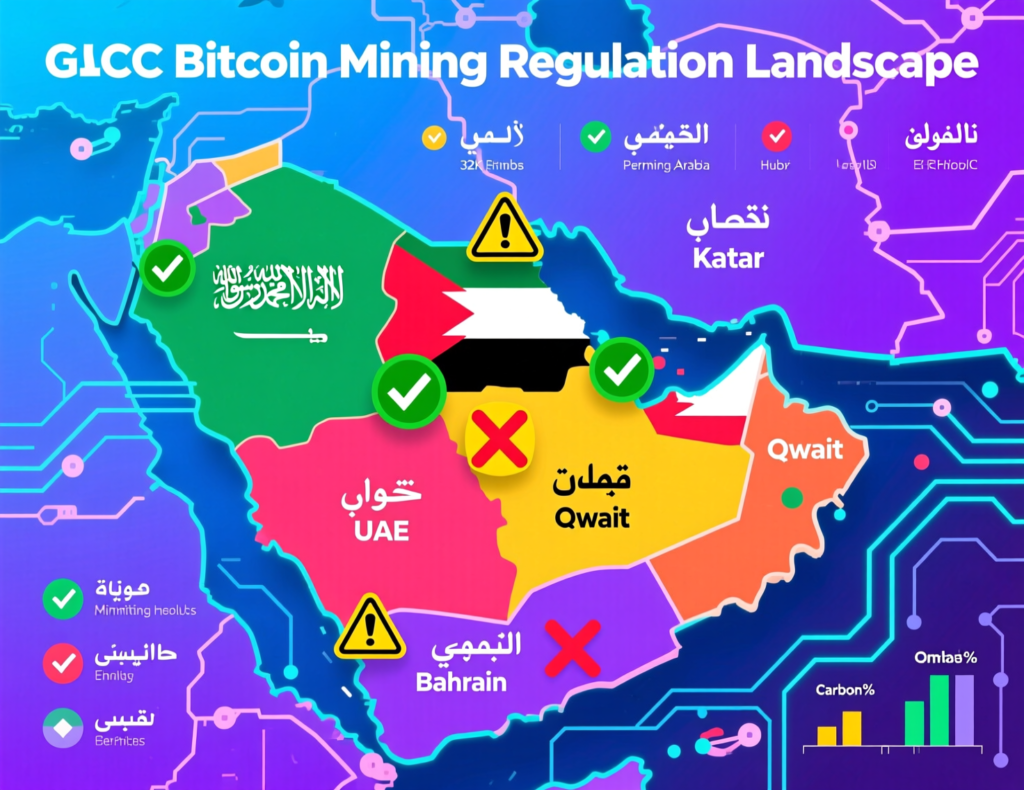
Key Takeaways
The Gulf offers real upside, but mostly in select hubs.
Power availability and grid access often matter more than nominal kWh rates.
Heat makes cooling strategy a first-order decision.
Regulatory clarity varies by country and by activity enforcement is real.
ESG claims must be documented, not asserted.
Planning a Bitcoin mining deployment in the Middle East requires careful technical and regulatory preparation. Before committing, it’s crucial to assess feasibility, including power availability, electrical stability, cooling requirements, and environmental factors like heat and dust that impact miner performance. A compliance readiness review is also essential, as licensing, energy regulations, and data-center standards differ across jurisdictions.
To evaluate hosting options effectively, use a detailed hosting RFP template to pressure-test assumptions on power costs, uptime guarantees, cooling capacity, security, expansion potential, and local compliance. Taking these steps upfront reduces risks and supports long-term mining efficiency.
FAQs
Q : Is bitcoin mining legal in the UAE for businesses vs individuals?
A : In principle, mining can be workable but legality depends on licensing, location, and what you’re actually doing (mining, hosting, or financial services). A permitted business setup in an approved zone is very different from an unlicensed home operation.
Q : How do GCC power contracts differ from US hosting agreements?
A : They often lean toward long-term capacity commitments and defined uptime terms rather than pure spot exposure. That can reduce price volatility but increases execution and delivery risk if the counterparty or infrastructure timelines slip.
Q : What cooling works best in extreme heat?
A : Immersion cooling can deliver high density and efficiency, but it adds CAPEX and operational complexity. Well-designed hybrid liquid-air setups can be a strong middle path when budgets and maintenance constraints are tight.
Q : Does EU MiCA affect GCC miners serving EU customers?
A : Indirectly, yes. Even offshore miners may face MiCA-related expectations through counterparties especially around disclosures, custody relationships, and compliance posture.
Q : What are red flags in flare-gas mining proposals?
A : Unverifiable gas supply, vague emissions claims, missing metering/audit trails, and unrealistic uptime assumptions are the most common red flags.