
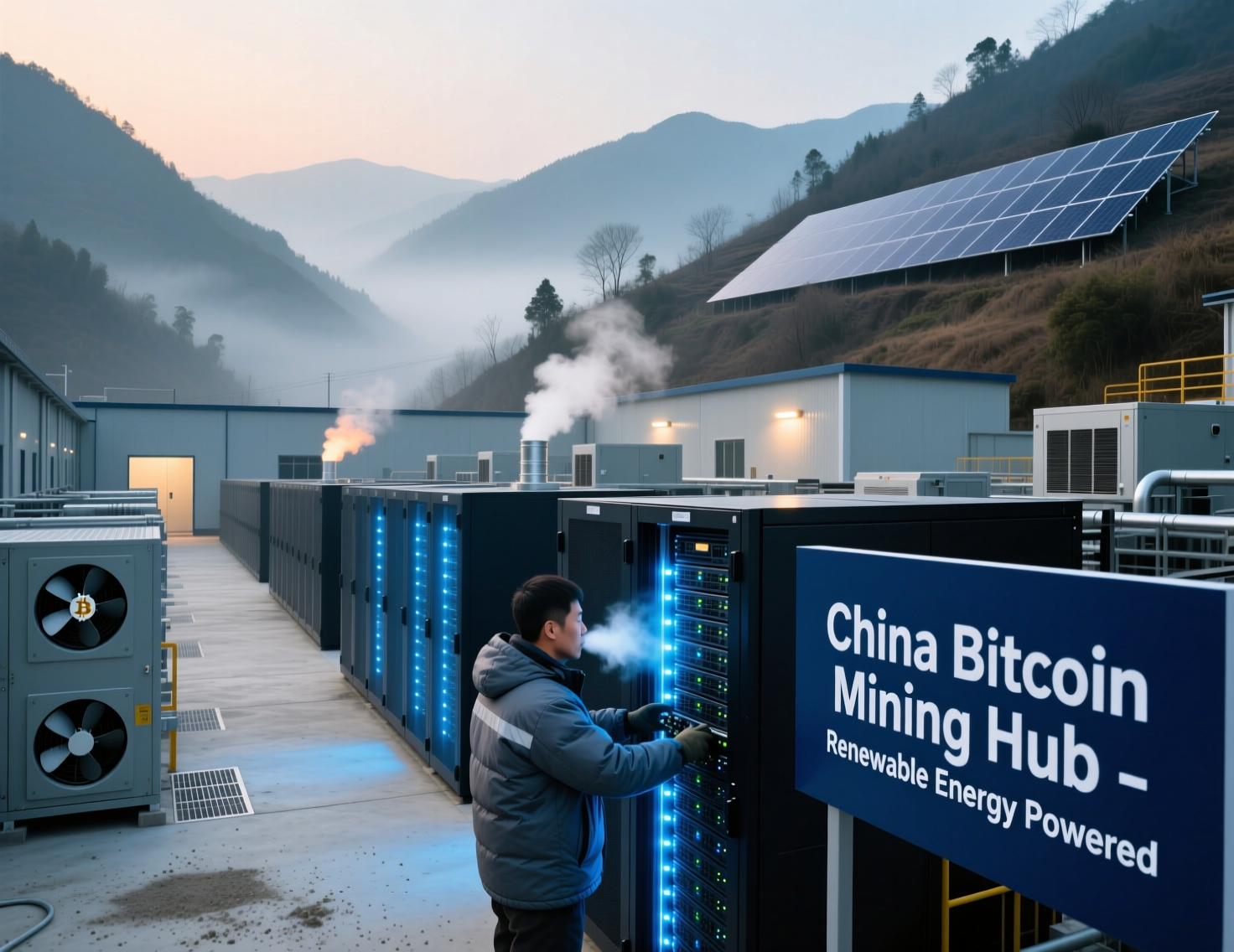

Bitcoin mining in China rebounds, defying 2021 ban
China’s cryptocurrency industry is quietly making a comeback. Despite the 2021 nationwide ban on crypto trading and mining, Bitcoin mining in the country has rebounded to account for roughly 14% of the global market share. This resurgence places China back in the third position worldwide, signaling renewed activity among miners and investors alike.
Analysts and local miners point to several factors behind this revival. Cheap electricity in provinces like Xinjiang makes mining operations more cost-effective, while authorities’ on-the-ground leniency has allowed activities to continue relatively unhindered. Together, these factors are driving the gradual resurgence of China’s crypto footprint, suggesting that the industry may find new pathways for growth despite regulatory restrictions.
China’s mining share climbs back to third
Fresh estimates from Hashrate Index’s Global Hashrate Heatmap put China at ~14.1% of global capacity in Q4 2025 behind the United States and Russia marking a steady rise through 2025. Reuters separately reports a 14% share at end-October. Together, these point to a durable rebound in activity.Reuters+1
Where activity is concentrated and why bitcoin mining in China rebounds
Operators and vendors describe activity concentrated in energy-abundant regions (e.g., Xinjiang), where surplus power and data-center overbuilds lower costs. Higher BTC prices and equipment availability further support returns.

Policy backdrop: ban remains, enforcement varies
China’s 2021 prohibition on crypto trading and mining remains on the books (PBOC/NDRC notices). Still, Reuters cites miners and industry analysts observing mixed enforcement and a generally softer local stance in some areas. Developments in Hong Kong’s crypto framework and discussions around yuan-backed stablecoins add context to shifting regional policy signals.
Industry signals and hardware sales
Mining-rig maker Canaan has reported strong top-line growth in 2025. Reuters adds that, according to a source, China contributed >50% of Canaan’s Q2 sales (the company didn’t confirm the breakdown). The company’s Q3 2025 release shows a large YoY revenue jump, underscoring hardware demand, though it doesn’t break sales by country.
Market implications
A sustained Chinese share near the mid-teens would bolster network security while intensifying competition (higher hashrate/difficulty). For miners, that raises the bar on efficiency and access to low-cost power; for policymakers, it revives environmental and compliance questions tied to coal-heavy grids and grid spillover management.
Context & Analysis
The rebound underscores a persistent incentive mismatch: national policy still bans mining, yet local economics cheap, stranded, or surplus power invite operators back. Provided enforcement remains uneven and electricity remains inexpensive, China’s share could stay elevated, though policy risk remains high.

Conclusion
China’s Bitcoin mining footprint has re-emerged, reclaiming a notable third-place position globally. While official policies remain unchanged, the practical landscape has shifted, allowing mining operations to regain momentum. This resurgence highlights how local dynamics can influence global crypto activity even under strict regulations.
Operators and market participants are advised to monitor developments closely. Quarterly mining heatmaps, regional energy availability, and subtle regulatory signals will be key indicators in assessing whether China’s renewed mining activity is sustainable. Careful observation of these factors can help stakeholders understand the long-term trajectory of China’s role in the global crypto market.
FAQs
Q : What is China’s current share of global bitcoin mining?
A : Around 14% as of Q4 2025, placing China third globally.
Q : Is bitcoin mining legal in China?
A : No. A 2021 nationwide ban prohibits crypto trading and mining, though activity persists in some regions.
Q : Why did authorities ban mining in 2021?
A : Concerns over financial stability and energy use were key drivers cited by top regulators.
Q : Where is most Chinese mining happening?
A : Energy-abundant provinces like Xinjiang, where power can be cheaper or stranded.
Q : How does hardware supply affect the rebound?
A : Stronger mining-rig sales (e.g., Canaan) indicate renewed demand, though geographic sales splits aren’t always disclosed.
Q : Does this mean policy has changed?
A : Formally, no. Reports suggest softer enforcement in places, but the ban remains in force.
Q : Does the article’s exact term “bitcoin mining in China rebounds” appear in data sources?
A : Newswires report a rebound; Hashrate Index shows ~14% share, together supporting that bitcoin mining in China rebounds descriptively.
Facts
Event
China’s bitcoin mining share rebounds to ~14% (No. 3 globally)Date/Time
2025-11-24T14:00:00+05:00Entities
People’s Bank of China (PBOC); National Development and Reform Commission (NDRC); Hashrate Index (Luxor); Canaan Inc. (NASDAQ: CAN); Xinjiang Uyghur Autonomous RegionFigures
China ~14–14.1% share (Q4 2025); 2021 ban still in effectQuotes
“A lot of energy cannot be transmitted out of Xinjiang… people mine where electricity is cheap.” Private miner “Wang,” to Reuters. ReutersSources
Reuters; Hashrate Index (Global Hashrate Heatmap)