
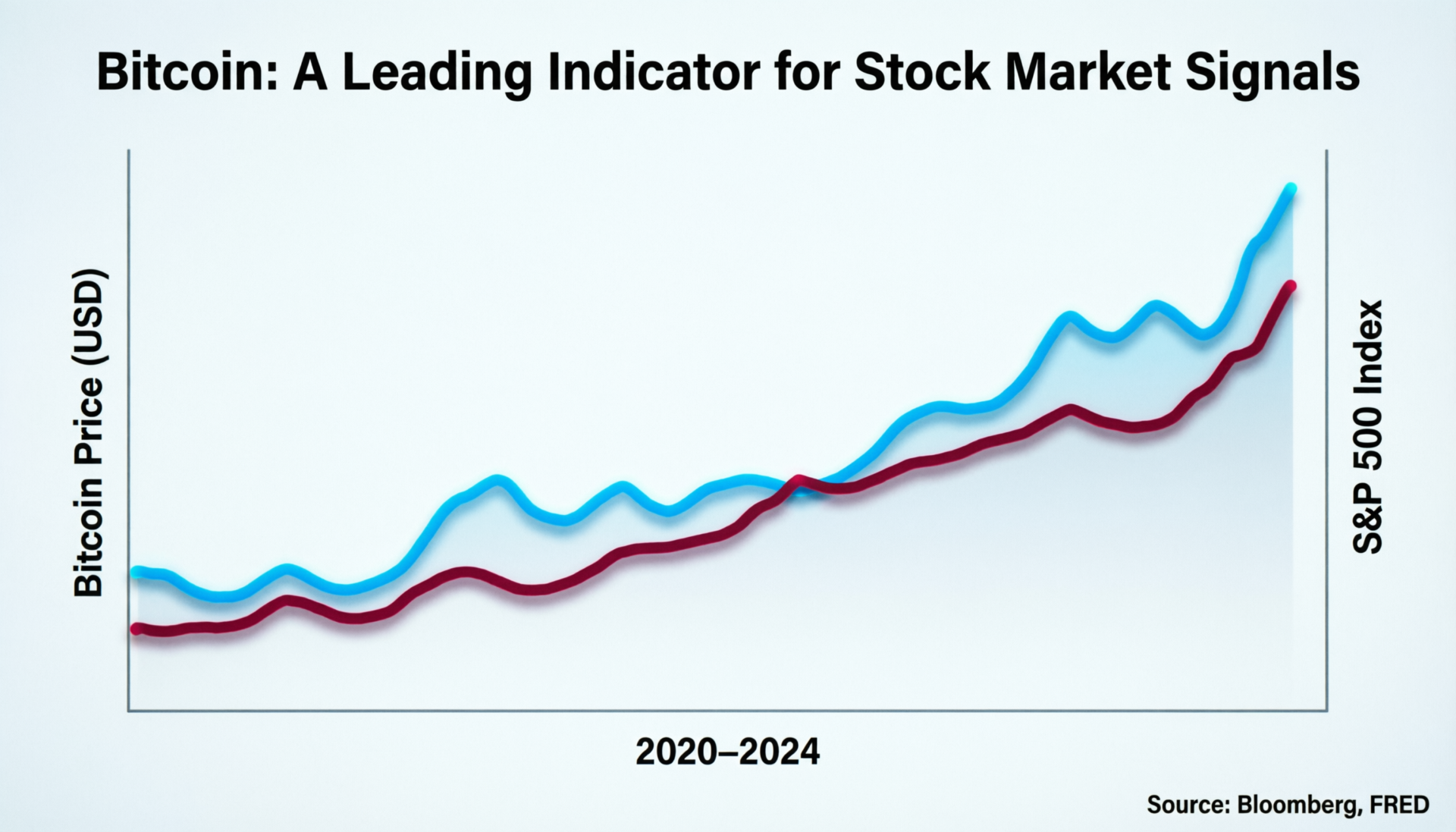

Bitcoin leading indicator for stocks: BTC fell first, equities followed
In the latest bout of cross-asset volatility, the bitcoin leading indicator for stocks narrative has returned to the center of market debate. The basic case is straightforward: bitcoin sold off hard months before a broader risk-off move spread through major equity markets, and traders are again asking whether BTC signaled a shift in sentiment before stocks caught up.
CoinDesk reported that bitcoin peaked above $126,000 in early October 2025, then slid sharply and eventually traded near $60,000 in early February 2026. By March 13, BTC had steadied near $72,551, while stocks were dealing with a fresh wave of pressure tied to oil-price shocks and war-related uncertainty in the Middle East.
Bitcoin leading indicator for stocks: what the latest move suggests
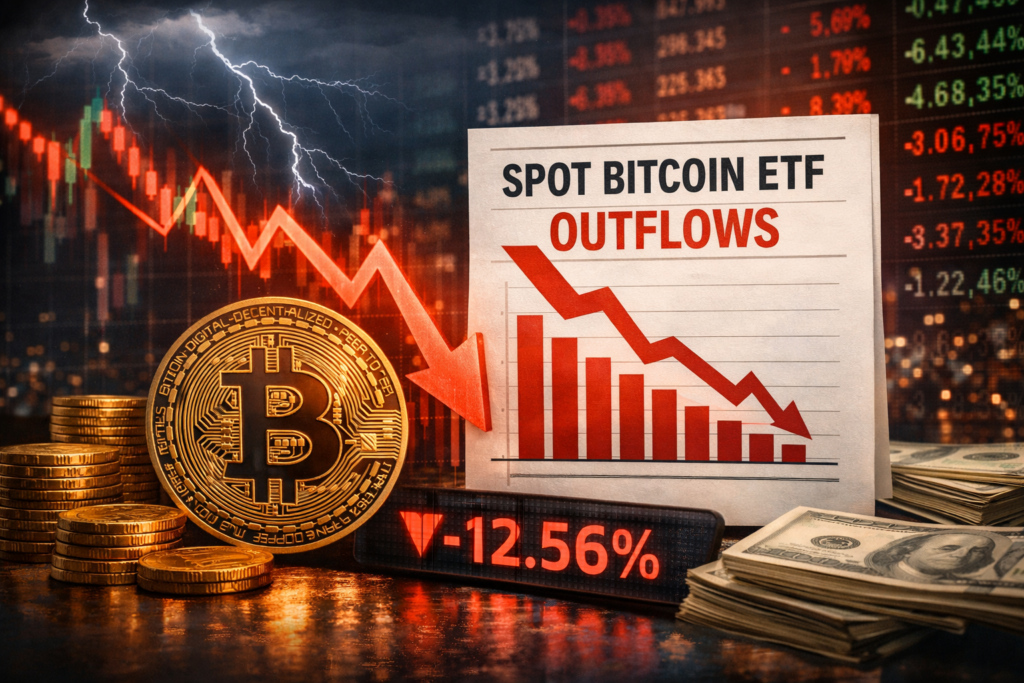
The immediate argument is not that bitcoin caused the equity decline. It is that bitcoin, as a highly liquid and sentiment-sensitive asset, may have reflected weakening risk appetite earlier than stock benchmarks did. CoinDesk framed the earlier BTC slide and spot ETF outflows as a warning sign before the current market stress became more visible in traditional assets.
That idea gained traction as Reuters described a sharp March 12, 2026, sell-off in global shares. The MSCI All-World index fell 1.5%, the S&P 500 dropped about 1.5%, the Nasdaq lost 1.8%, and Brent crude settled above $100 a barrel as attacks on tankers and threats around the Strait of Hormuz intensified inflation fears.
For traders, that sequence matters. A sharp drawdown in bitcoin ahead of a broader equity wobble can be read as an early sign that speculative risk is being repriced. It does not guarantee the same path for stocks, but it can serve as an early warning that financial conditions and investor psychology are worsening.
Why the bitcoin leading indicator for stocks debate keeps resurfacing
The thesis is not new. CoinDesk cited Todd Stankiewicz, president and chief investment officer of SYKON Capital, who said bitcoin showed a tendency to peak before the S&P 500 in late 2017, before the COVID-era crash, and again in late 2021. As quoted in the report: “Bitcoin either rolled over or failed to make new highs while the S&P 500 pushed ahead. In each case, the equity rally eventually stalled and reversed.”
The late-2021 example remains one of the clearest. Bitcoin topped near $60,000 in November 2021 and weakened before the S&P 500 and Nasdaq peaked in January 2022. Equities then entered a prolonged downturn as the Federal Reserve raised rates aggressively.
That history does not make bitcoin a perfect forecasting tool. It does, however, help explain why macro traders keep watching BTC when stress emerges across rates, commodities, and equities. Bitcoin often reacts quickly to tightening liquidity, falling risk tolerance, or positioning shifts that later hit broader markets.
Context and Analysis
One reason the signal matters now is that bitcoin is no longer a niche instrument isolated from traditional finance. U.S.-listed spot bitcoin ETFs have linked BTC more directly to institutional portfolios, capital flows, and macro positioning. That means sharp moves in bitcoin can reflect changing appetite for risk across a wider investor base than in past cycles.
Still, there are limits to the thesis. Bitcoin can overreact, decouple, or stabilize while equities keep falling. In the current episode, BTC was comparatively steady around $72,551 on March 13 even as stock markets remained under pressure. That weakens any simplistic one-direction reading and suggests the relationship is best understood as probabilistic rather than mechanical.
The more defensible conclusion is narrower: when bitcoin breaks down early, especially alongside ETF outflows and rising macro stress, stock investors may want to pay closer attention. It is not a trigger by itself, but it can be a useful sentiment gauge.

Last Words
Bitcoin’s earlier fall before the latest stock-market weakness has revived the argument that BTC can act as an early barometer for broader risk assets. The recent sequence supports that view, but only as a market-read tool, not as proof that stocks will always follow bitcoin’s path. With oil elevated, geopolitics unsettled, and equities still digesting macro shocks, traders are likely to keep watching BTC for the next sign of whether risk appetite is stabilizing or deteriorating further.
FAQs
Q : What does “bitcoin leading indicator for stocks” mean?
A : It refers to the idea that bitcoin may reflect weakening or improving risk appetite before major stock indexes do.
Q : Did bitcoin fall before stocks in this case?
A : Yes. CoinDesk reported that bitcoin began falling after its early-October peak and hit lows near $60,000 before the broader equity sell-off intensified in March 2026.
Q : Why would bitcoin move ahead of equities?
A : Bitcoin trades continuously, is highly liquid, and tends to react quickly to shifts in sentiment, liquidity, and macro risk. That can make it an earlier stress signal than stock benchmarks.
Q : Is bitcoin a reliable forecast for stocks?
A : Not on its own. It can offer useful clues, but it should be read alongside ETF flows, oil prices, bond yields, and equity price action.
Q : What was happening in markets when stocks weakened?
A : Reuters reported that oil surged to around $100 a barrel and global shares fell as Iran-related conflict and tanker attacks intensified inflation and growth concerns.
Q : What is bitcoin leading indicator for stocks telling traders now?
A : Right now, it is mainly telling traders to watch whether BTC remains stable while equities stay weak, or whether another leg lower in bitcoin confirms broader risk aversion.
Facts
Event
Renewed debate over bitcoin as an early warning signal for equity-market stressDate/Time
2026-03-13T15:52:37+05:00Entities
Bitcoin (BTC); S&P 500; Nasdaq Composite; MSCI All-World Index; SPDR Financial Select Sector ETF (XLF); SYKON Capital; Todd Stankiewicz; U.S.-listed spot bitcoin ETFsFigures
BTC peak above USD 126,000 in early October 2025; BTC low near USD 60,000 in early February 2026; BTC at USD 72,551 on 2026-03-13; Brent crude at USD 100.46; WTI at USD 95.70; S&P 500 down about 1.5%; Nasdaq down 1.8%; MSCI All-World down 1.5%Quote
“Bitcoin either rolled over or failed to make new highs while the S&P 500 pushed ahead. In each case, the equity rally eventually stalled and reversed.” — Todd Stankiewicz, president and CIO, SYKON Capital, as quoted by CoinDeskSources
CoinDesk; Reuters; SYKON Capital/linked commentary references; market price data