
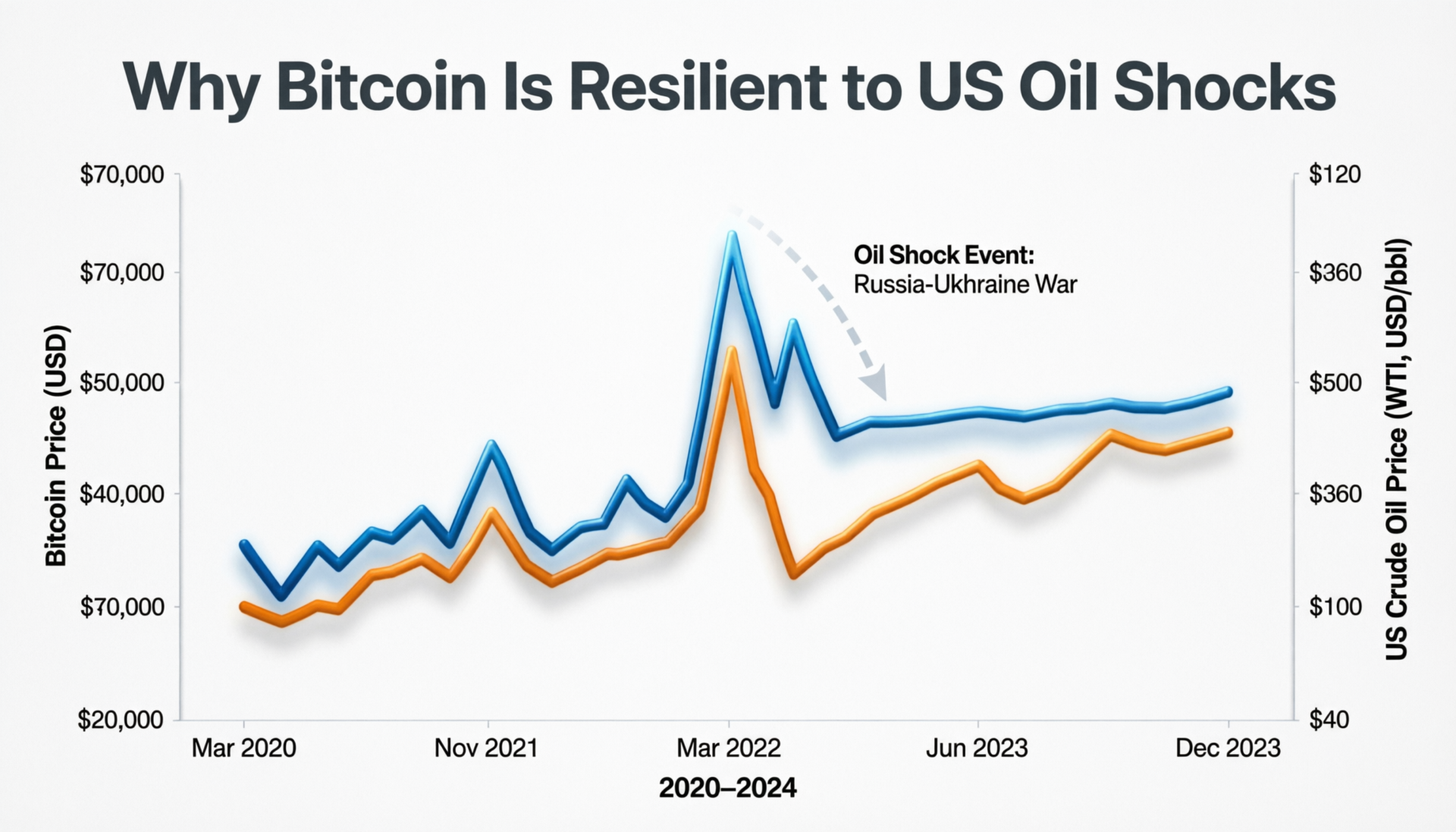

Bitcoin holds firm as oil surges and U.S. markets stay steadier
Bitcoin is showing unusual stability during a geopolitical oil shock, and why bitcoin is resilient to U.S. oil shocks comes down to a mix of U.S. energy positioning, Wall Street correlation and institutional crypto access. As crude climbed above $100 a barrel, the immediate hit to global markets was sharper in oil-importing regions than in the United States, while bitcoin stayed comparatively firm around the high-$60,000 range.
Why bitcoin is resilient to U.S. oil shocks
The central market argument is that the United States is less directly exposed to Middle East oil disruptions than many Asian economies. The U.S. became a net total petroleum exporter in 2020, according to the U.S. Energy Information Administration, and federal data shows crude and broader energy exports remained elevated through 2024. That does not eliminate exposure to global pricing, but it can soften the first-round macro shock versus countries that depend more heavily on imported oil moving through chokepoints such as the Strait of Hormuz.
CoinDesk reported that JPMorgan strategists Kriti Gupta and Justin Beimann argued the U.S. is “not meaningfully exposed” to oil from Iran or, more broadly, the Middle East, helping explain why U.S. equities showed more resilience than some Asian markets as the conflict escalated. Reuters and AP separately reported that oil surged above $100 as the war disrupted shipping and supply expectations, amplifying inflation fears worldwide.
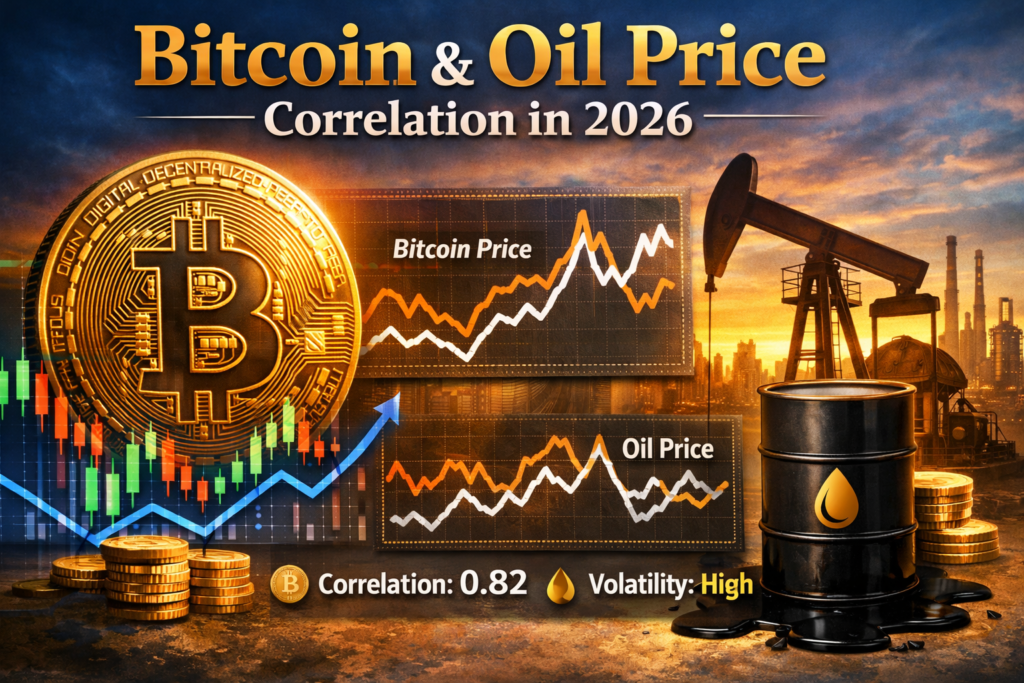
Why bitcoin is resilient to U.S. oil shocks in Wall Street trading
Bitcoin is no longer trading purely as a detached, borderless macro hedge. In practice, it has become increasingly sensitive to U.S. liquidity, institutional positioning and equity-market risk appetite. That shift accelerated after the SEC approved spot bitcoin exchange-traded products on January 10, 2024, making direct bitcoin exposure easier for traditional investors and wealth platforms to access.
That matters in this episode because U.S. markets have absorbed the oil shock better than many foreign peers. If stocks tied to American growth and tech remain relatively stable, bitcoin can inherit some of that steadiness through correlation and ETF-linked flows. CoinDesk’s report framed bitcoin as a quasi-U.S. risk asset, and that description fits the broader post-ETF market structure.
Oil, inflation and the delayed U.S. consumer impact
A short-term buffer is not the same as full immunity. Oil is globally priced, so even an energy-strong U.S. economy can feel the effects through gasoline, freight and inflation expectations if supply disruption lasts long enough. Reuters and AP both noted that the latest conflict-driven price spike is already feeding concern over pump prices and broader household costs.
That lag is important for bitcoin. In the first phase of the shock, traders may focus on relative U.S. resilience and keep treating bitcoin as part of the same risk complex as Wall Street. In a later phase, if crude stays elevated and inflation re-accelerates, higher yields and tighter financial conditions could become a headwind for both equities and crypto.
Context & Analysis
Another reason bitcoin may be holding up is positioning. CoinDesk noted that bitcoin had already fallen materially before the latest geopolitical escalation, which may have reduced near-term selling pressure by clearing out some weak hands. That does not guarantee upside, but it can help explain why a fresh macro shock did not immediately trigger a deeper breakdown.
The bigger structural takeaway is that bitcoin’s market identity continues to evolve. The asset still trades on global narratives, but in stressed macro periods it increasingly behaves like a U.S.-linked risk asset influenced by ETFs, rates, tech sentiment and dollar liquidity rather than by crypto-native factors alone.
Final Thoughts
Bitcoin’s resilience during the latest oil surge appears less mysterious when viewed through a U.S. macro lens. America’s relative insulation from Middle East oil supply shocks, combined with bitcoin’s stronger connection to Wall Street after spot ETF approval, has helped keep the cryptocurrency steadier than many investors might expect. The next test is duration: if crude stays elevated long enough to feed U.S. inflation and consumer prices, bitcoin may face the same macro pressure that eventually hits stocks and bonds.
FAQs
Q : Why is bitcoin holding up during the oil spike?
A : Because traders increasingly treat bitcoin as a U.S.-linked risk asset, and U.S. markets have been relatively more resilient than some overseas markets during the latest oil shock.
Q : Why bitcoin is resilient to U.S. oil shocks right now?
A : The main reasons are America’s lower direct dependence on Middle East oil flows, its net-exporter status in petroleum, and bitcoin’s stronger correlation with Wall Street after spot ETF approval.
Q : Does U.S. energy independence mean Americans avoid higher gasoline prices?
A : No. It may delay or soften the impact, but global crude disruptions can still push up gasoline and transport costs in the U.S. over time.
Q : What role did spot bitcoin ETFs play?
A : They widened institutional access to bitcoin after SEC approval on January 10, 2024, which made bitcoin more integrated into mainstream portfolio and risk-on trading behavior.
Q : Could a longer oil shock hurt bitcoin later?
A : Yes. If higher oil feeds inflation, Treasury yields and broader financial conditions could tighten, which may pressure both equities and crypto.
Q : Is bitcoin acting like a safe haven here?
A : Not in the classic sense. The evidence in this episode suggests bitcoin is acting more like a resilient U.S. risk asset than a pure flight-to-safety trade.
Facts
Event
Oil surged above USD 100 per barrel as conflict involving Iran, the U.S. and Israel disrupted supply expectations and shipping routes.Date/Time
2026-03-09T16:30:33+05:00 (last verification timestamp basis).Entities
Bitcoin (BTC), U.S. Energy Information Administration (EIA), U.S. Securities and Exchange Commission (SEC), JPMorgan, Kriti Gupta, Justin Beimann, Strait of Hormuz.Figures
Oil above USD 100 per barrel; bitcoin around the high-USD 60,000 range in contemporaneous market reports.Quote
“The United States is not meaningfully exposed to oil from Iran, or, more broadly, the Middle East.” Kriti Gupta and Justin Beimann, as quoted by CoinDesk.Sources
CoinDesk market report; EIA petroleum trade data and explainer; SEC statement on spot bitcoin ETP approvals; Reuters oil market reporting.