
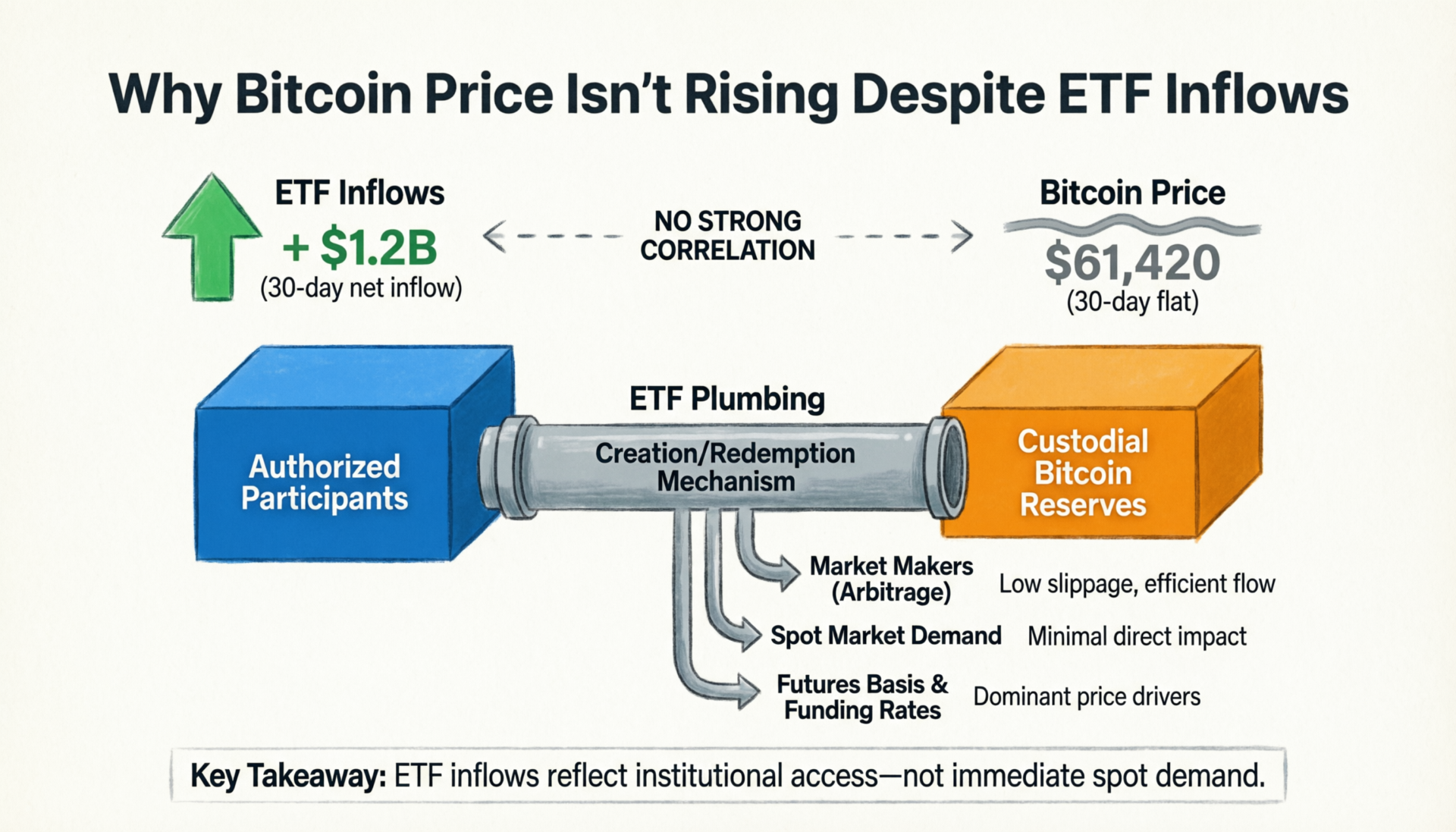

Bitcoin ETFs pull in $1.4B, but BTC stays flat Bitfinex explains the lag
U.S.-listed spot bitcoin ETFs have taken in roughly $1.4 billion over the past five days, yet bitcoin has struggled to break out raising the question of why bitcoin price isn’t rising despite ETF inflows. A Bitfinex analyst explanation points to how ETF plumbing works: inflows can be real, but the underlying spot bitcoin purchase that should follow may not happen immediately.
What the $1.4B inflow figure means and what it doesn’t
ETF inflows are often read as instant “spot demand.” But in practice, ETF share creation/redemption is handled by authorized participants (APs) typically large banks, market makers, or broker-dealers whose job is to keep the ETF trading close to its net asset value (NAV).
When ETF demand rises, APs may create new shares and deliver them into the market. The key nuance: that creation process can involve hedging and timing choices that decouple the ETF share transaction from an immediate spot BTC purchase, especially when creations are processed later in the day or the next business day.
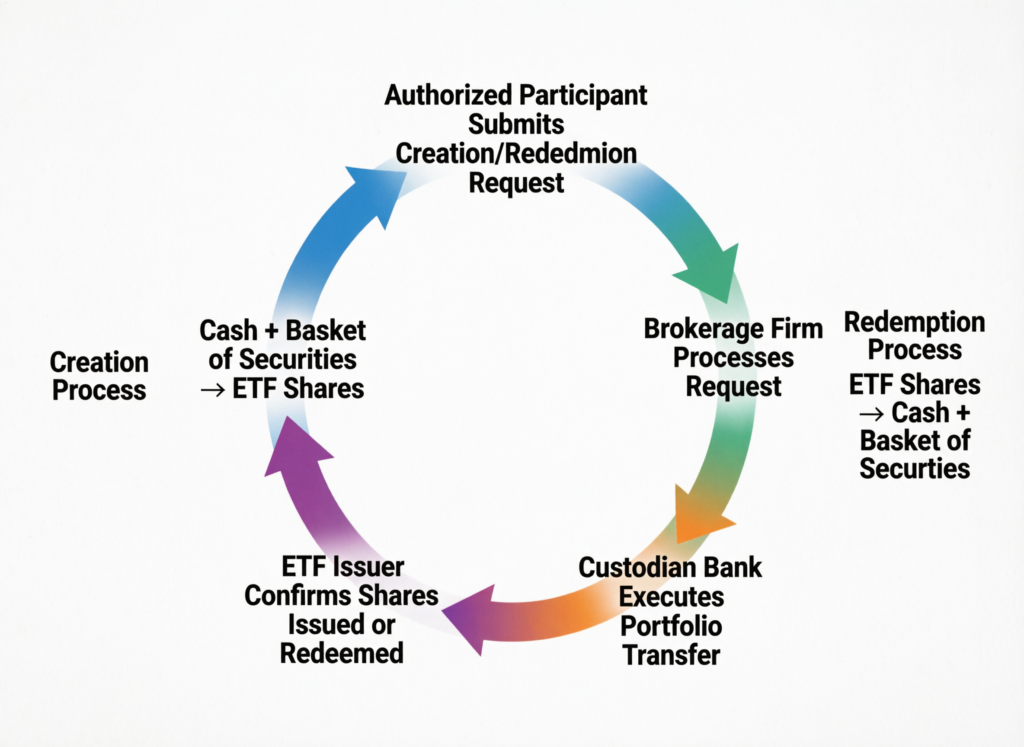
Why bitcoin price isn’t rising despite ETF inflows: the AP “create-then-buy” lag
Bitfinex’s analysts argue that a common misread is assuming every dollar flowing into an ETF forces a same-minute spot buy. Instead, APs can meet near-term share demand first (including by shorting ETF shares in some circumstances) and then buy the underlying bitcoin later to complete the hedge/creation cycle.
This timing gap can make BTC look “stuck,” even while ETF assets grow. In Bitfinex’s framing, the ETF can expand while the spot market doesn’t immediately see the corresponding buy orders so price pressure arrives late (or arrives into a market already facing sellers)
The role of short-selling rules and exemptions
In general, U.S. short-selling rules (Regulation SHO) include a “locate” requirement intended to reduce failures to deliver.
However, market structure includes exceptions for bona fide market making, and Bitfinex’s discussion highlights how such exemptions can shape the timing of ETF share shorts/hedges relative to underlying purchases.
Context & Analysis
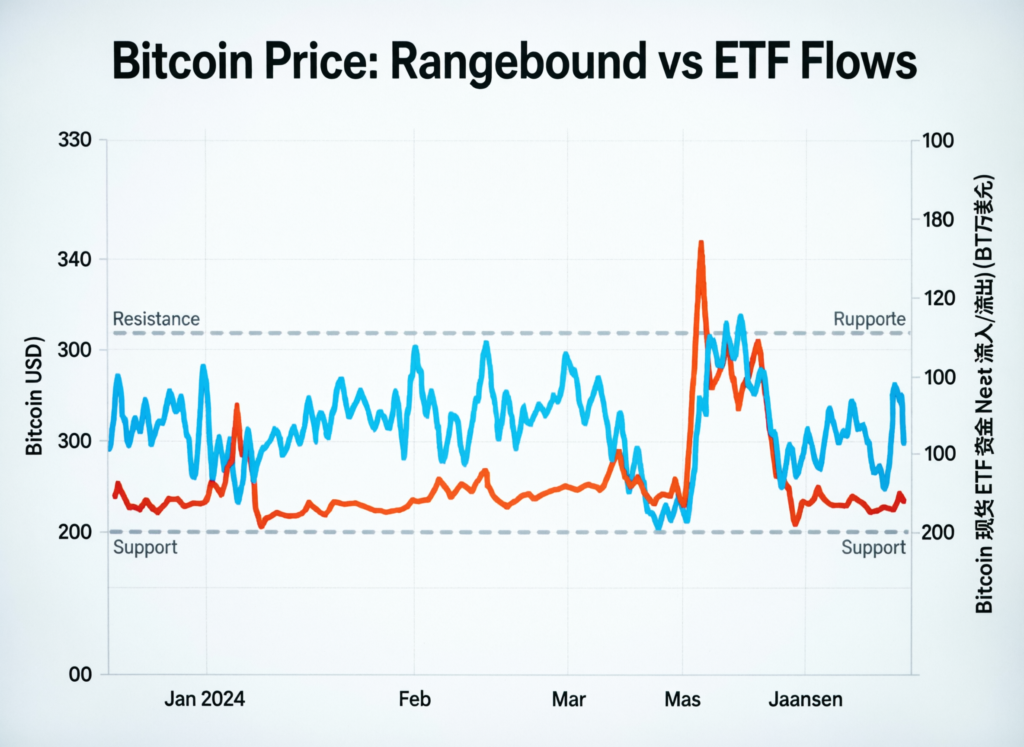
Even if ETF-related spot buying arrives later, it can be neutralized by broader conditions (risk-off sentiment, macro volatility, or competing sell flows). That helps explain why large inflows may coincide with range-bound trading rather than an immediate breakout.
Final Thoughts
The headline number $1.4B into spot bitcoin ETFs in five days signals renewed demand for regulated BTC exposure. But the ETF pipeline can delay when (and how strongly) that demand hits the spot market. The practical takeaway: ETF inflows are meaningful, but they’re not a guaranteed same-day catalyst for price.
FAQs
Q : Why isn’t bitcoin’s price rising despite ETF inflows?
A : ETF inflows often reflect activity in ETF shares first. The actual spot bitcoin purchases can happen later, or be offset by selling pressure elsewhere in the market.
Q : Do spot bitcoin ETF inflows always mean immediate spot BTC demand?
A : No. Authorized participants may hedge their exposure and complete the underlying spot bitcoin purchases with a delay.
Q : Who are “authorized participants” in bitcoin ETFs?
A : They are large institutions typically banks, market makers, or broker-dealers that create and redeem ETF shares to keep the ETF price close to its net asset value (NAV).
Q : What is Regulation SHO and why is it relevant here?
A : Regulation SHO governs short selling and includes a “locate” requirement. Market-maker-related exceptions can affect the timing and mechanics of ETF trading and hedging.
Q : Where can I track daily U.S. bitcoin ETF flows?
A : Daily ETF flow data, including issuer-level breakdowns, is published by trackers such as Farside.
Q : Can delayed ETF-related buying still move bitcoin later?
A : Yes. If spot buying arrives when liquidity is thin or selling pressure is low, it can have a stronger price impact. If selling pressure is heavy, the effect may be muted.
Facts
Event
Spot bitcoin ETFs drew heavy net inflows while BTC price stayed range-boundDate/Time
2026-03-04T00:00:00+05:00Entities
Bitcoin (BTC); U.S.-listed spot Bitcoin ETFs; Bitfinex; authorized participants (APs); SEC Regulation SHO; Farside InvestorsFigures
~$1.4B net inflows over five days (per report); example daily totals published by flow trackers (USD millions)Quotes
“The result is that the ETF grows, but the actual BTC price doesn’t rise…” Bitfinex analysts (as reported)Sources
Moomoo syndication of CoinDesk report; Bitfinex Alpha blog; Farside flow tracker; SEC/FINRA materials