
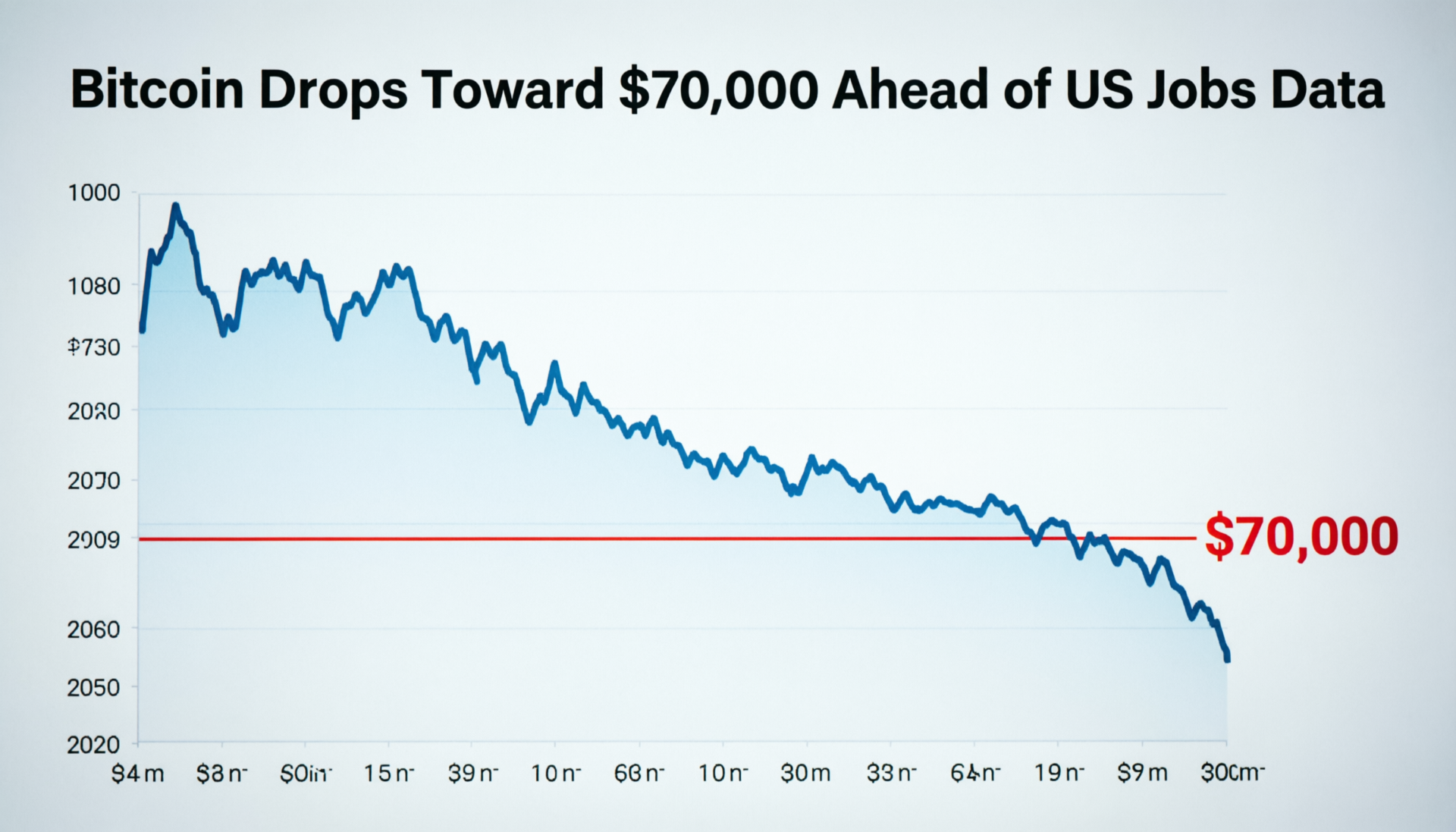

Bitcoin drops toward $70,000 ahead of U.S. jobs data as oil jumps on Iran war
Bitcoin drops toward $70,000 ahead of U.S. jobs data as investors shift into a more defensive posture before one of the month’s biggest macro releases. The move came as oil extended a war-driven rally, the U.S. dollar strengthened, and equity futures signaled softer risk appetite across markets.
Bitcoin drops toward $70,000 ahead of U.S. jobs data as risk appetite fades
Bitcoin traded down toward the $70,000 level early Friday after briefly pushing as high as roughly $74,000 earlier this week. The pullback tracked a broader “risk-off” tone across markets rather than an isolated crypto-specific catalyst. CoinDesk reported that the retreat coincided with rising oil prices, a firmer dollar, and weaker premarket sentiment in tech-heavy equities.
The immediate focus for traders was the U.S. employment report scheduled for 13:30 UTC. Reuters reported that economists expected nonfarm payrolls to rise by 59,000 in February, down from 130,000 in January, while the unemployment rate was forecast to remain unchanged at 4.3%. A softer or stronger print could affect expectations for Federal Reserve policy and, by extension, appetite for higher-volatility assets such as bitcoin.
Why Bitcoin drops toward $70,000 ahead of U.S. jobs data
The labor report matters because it can reset interest-rate expectations quickly. If job growth surprises on the upside, Treasury yields and the dollar can rise further, tightening financial conditions. If the report is weak, markets may weigh slower growth against the possibility of future policy easing. Either way, traders often reduce exposure before the release to avoid headline risk.
At the same time, geopolitical tensions added another layer of caution. Reuters reported that the dollar was heading for its steepest weekly gain in a year as the Iran-Israel conflict boosted demand for haven assets, with the dollar index at 99.14. Oil also remained elevated as fears over Middle East supply disruption intensified.
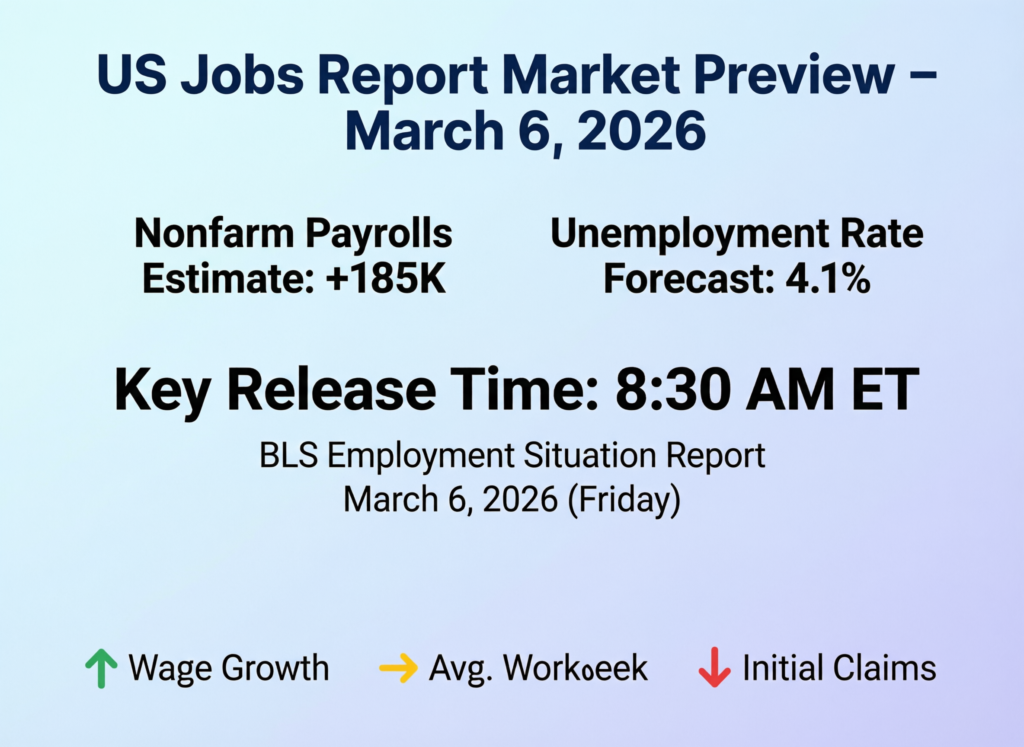
Market backdrop for Bitcoin drops toward $70,000 ahead of U.S. jobs data
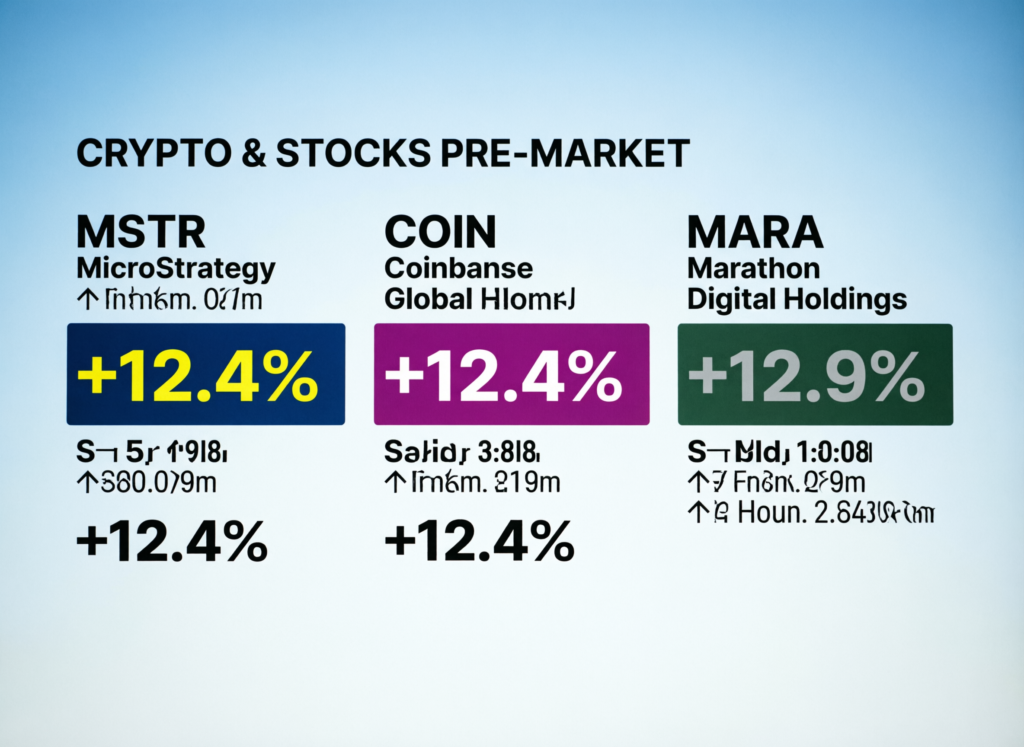
Outside crypto, the cross-asset picture pointed to a defensive session. Reuters said WTI crude rose to $84.77, part of a steep weekly rally tied to conflict-related supply concerns. CoinDesk reported the Nasdaq-100-tracking Invesco QQQ ETF was down about 0.5% in premarket trading, while Strategy (MSTR), Coinbase (COIN), and MARA Holdings (MARA) also traded lower before the open.
That combination matters because bitcoin has recently traded with a mixed identity: at times acting like a risk asset, at other times showing relative resilience versus equities. On this session, the dominant driver appeared to be caution into macro data and a broader repricing of inflation and geopolitical risk. That is an inference based on the simultaneous moves in oil, the dollar, and equity-linked instruments.
Context & Analysis
The bigger macro issue is whether the Iran conflict keeps energy prices high enough to alter inflation expectations. Reuters reported that oil was on track for its biggest weekly gain since Russia’s 2022 invasion of Ukraine, while the stronger dollar reflected haven demand. A sustained oil shock could complicate the Fed’s path even if payroll growth slows, leaving risk assets caught between weaker growth and stickier inflation.
For bitcoin, that creates a more complicated backdrop than a standard “weak data equals easier policy” narrative. In periods of abrupt geopolitical stress, traders often prioritize liquidity and reduce exposure broadly. That appears consistent with the softer tone in crypto-related stocks and the pullback from this week’s highs.
Bottom Lines
Bitcoin entered the March 6 session under pressure as markets awaited fresh U.S. labor data and absorbed the inflation and risk implications of the Iran conflict. The next directional move will likely depend on whether the jobs report reinforces concerns about slowing growth, shifts Fed expectations, or is overshadowed by further moves in oil and the dollar.
FAQs
Q1 : What is happening to Bitcoin today?
A : Bitcoin fell back toward $70,000 on March 6, 2026 as traders reduced risk ahead of the U.S. jobs report and as oil prices rose during tensions involving Iran. Markets often become cautious before major economic data releases.
Q2 : Why does the U.S. jobs report matter for crypto?
A : The payrolls report can shift expectations about policy from the Federal Reserve. Changes in Treasury yields and the U.S. dollar that follow the report can influence demand for higher-volatility assets like Bitcoin.
Q3 : What were economists expecting from the March 6 jobs report?
A : According to Reuters, economists expected 59,000 nonfarm payroll additions and an unemployment rate of 4.3%.
Q4 : Why are oil prices rising?
A : Oil prices surged because the conflict involving Iran raised fears of supply disruption in the Middle East, particularly around the strategic Strait of Hormuz.
Q5 : How are crypto-related stocks reacting?
A : According to CoinDesk, shares of MicroStrategy (Strategy), Coinbase, and MARA Holdings were lower in premarket trading, moving in line with the drop in Bitcoin.
Q6 : Is Bitcoin’s drop toward $70,000 a sign of a broader market shift?
A : It could be part of a wider defensive move in global markets. The simultaneous rise in oil and the U.S. dollar, along with weaker equity sentiment, suggests investors may be reducing risk across multiple asset classes, not just crypto.
Facts
Event
Bitcoin pulled back toward $70,000 before the U.S. February employment report.Date/Time
2026-03-06T13:30:00+00:00Entities
Bitcoin (BTC); U.S. Bureau of Labor Statistics (BLS); Federal Reserve; Invesco QQQ Trust (QQQ); Strategy (MSTR); Coinbase Global (COIN); MARA Holdings (MARA); U.S. Dollar Index (DXY); West Texas Intermediate (WTI)Figures
Payroll forecast 59,000 jobs; unemployment forecast 4.3%; DXY 99.14; WTI $84.77 per barrelQuotes
No direct attributable quote was independently verified from the provided raw text.Sources
Reuters jobs preview; Reuters dollar report; Reuters oil report; BLS January employment summary