
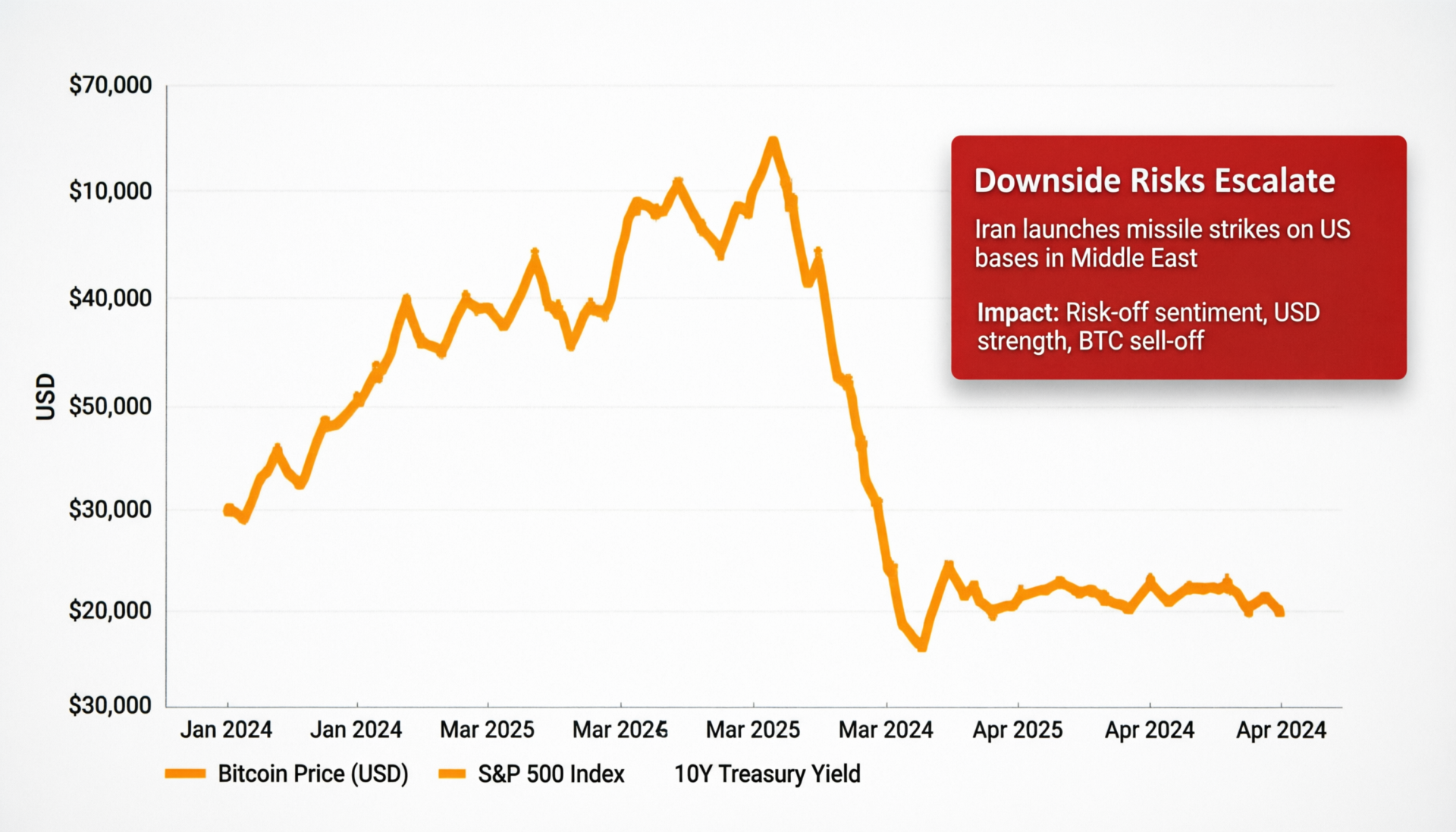

Bitcoin downside risks as Iran attacks U.S. bases across the Gulf
Bitcoin’s downside risks have come back into sharp focus after an Israeli strike on Iran triggered a major regional escalation. The attack has raised fears of possible retaliation by Iran against U.S. bases, increasing uncertainty across global financial markets. As tensions rise, investors are becoming more cautious toward risk-sensitive assets, including cryptocurrencies.
The confrontation is being described as the most expansive military escalation in decades, with reports of missiles and drones moving across several Gulf states. Airspace restrictions have also widened across the Middle East, disrupting travel and trade. This heightened geopolitical instability has added fresh pressure on Bitcoin, as traders reassess risk amid growing security concerns.
What happened overnight
U.S. President Donald Trump said Washington had begun “major combat operations” in Iran an announcement Reuters reported as tied to strikes aimed at Iran’s missile and naval capabilities, with Trump warning American casualties were possible.
Regional updates cited by major outlets included interceptions and disruption across Gulf airspace, alongside reports of explosions and heightened alerts in several locations.
Bitcoin downside risks as Iran attacks U.S. bases: where price stands
Bitcoin held above the mid-$63,000 level during weekend trading and was last quoted at $63,992 (intraday low $63,177, intraday high $66,847) on Feb. 28, 2026 (UTC+05:00).
CoinDesk’s market coverage noted that weekend liquidity can be thinner and that the more consequential test may come when traditional markets reopen, potentially driving cross-asset de-risking.
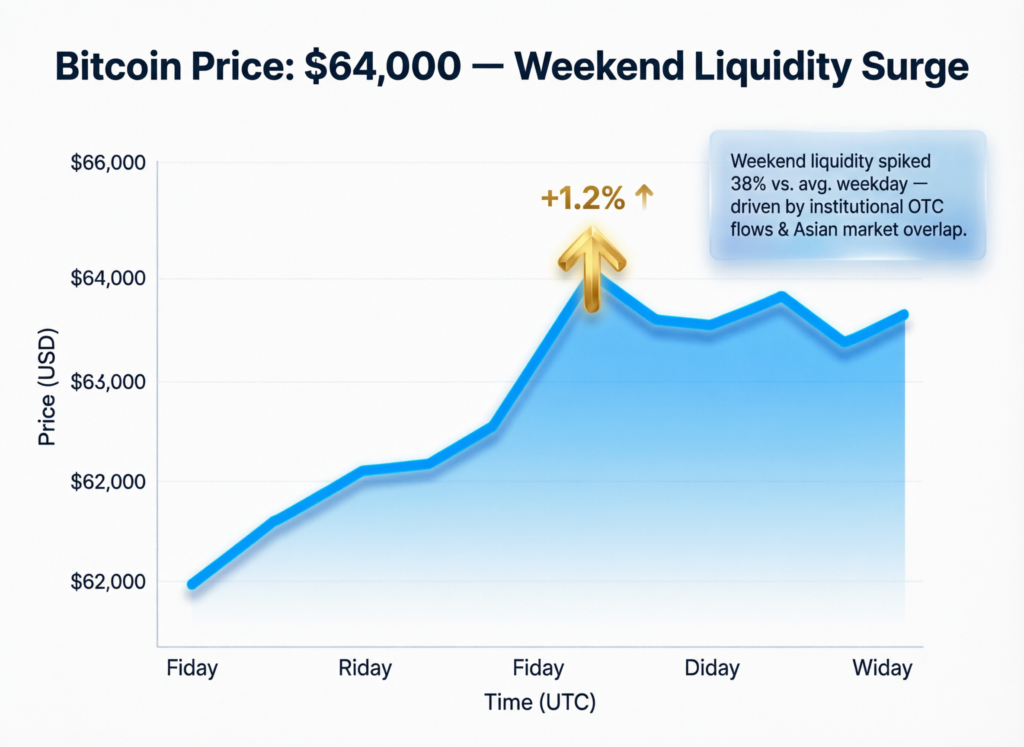
Bitcoin downside risks as Iran attacks U.S. bases: why Monday could matter more
Because bitcoin trades continuously, it can become the first large, liquid market to reprice geopolitical risk before cash equities and many bond markets reopen. If stock index futures and broader risk assets weaken sharply at the open, portfolio risk reduction can spill into crypto as investors raise cash or reduce overall exposure.
Separately, MarketWatch reported weekend bitcoin weakness as investors assessed the potential for a larger market reaction tied to the conflict’s scope.
Context & Analysis
The key macro sensitivity is energy: a conflict touching Gulf infrastructure and shipping lanes can push oil risk premia higher, tightening financial conditions and pressuring risk assets. In that environment, bitcoin has frequently traded more like a high-beta asset than a safe haven supporting the argument for downside tests if broader markets sell off.
Concluding Remarks
Bitcoin’s relative steadiness near $64,000 into the weekend may not be the final verdict. The next major inflection point is the first full traditional-market reaction after the escalation headlines, which could determine whether bitcoin stabilizes or retests the $60,000 zone amid broader de-risking.
FAQs
Q : What are the main risks to Bitcoin from this conflict?
A : Wider “risk-off” selling, a stronger U.S. dollar, and an oil-driven inflation shock can all pressure speculative assets, including cryptocurrencies.
Q : Why can Bitcoin move first on weekend geopolitical news?
A : Bitcoin trades 24/7, while many traditional markets remain closed until futures reopen or Monday’s cash sessions begin.
Q : Is Bitcoin acting like a safe haven here?
A : Recent market commentary suggests Bitcoin often behaves like a risk asset during macro stress, rather than consistently acting like gold.
Q : What price levels are traders watching?
A : Analysts and traders point to $60,000 as a key psychological level if selling pressure intensifies.
Q : Could oil prices matter for Bitcoin?
A : Yes. Higher oil prices can lift inflation expectations and increase risk aversion, which can weigh on crypto markets.
Q : Bitcoin downside risks as Iran attacks U.S. bases — what happens next?
A : The next major catalyst is how equity and bond markets react when they reopen; a broad de-risking move could drag Bitcoin lower.
Facts
Event
Regional military escalation after Israeli strikes on Iran; Iran retaliates with missiles/drones targeting Israel and U.S. interests/bases across the Gulf.Date/Time
2026-02-28T15:38:00+05:00 (last checked)Entities
Iran; Israel; United States; U.S. President Donald Trump; Gulf states including Bahrain, UAE, Kuwait (as reported).Figures
Bitcoin price $63,992; intraday low $63,177; intraday high $66,847.Quotes
“major combat operations” Donald Trump (as reported by Reuters).Sources
Reuters; CoinDesk; The Guardian; Euronews.