
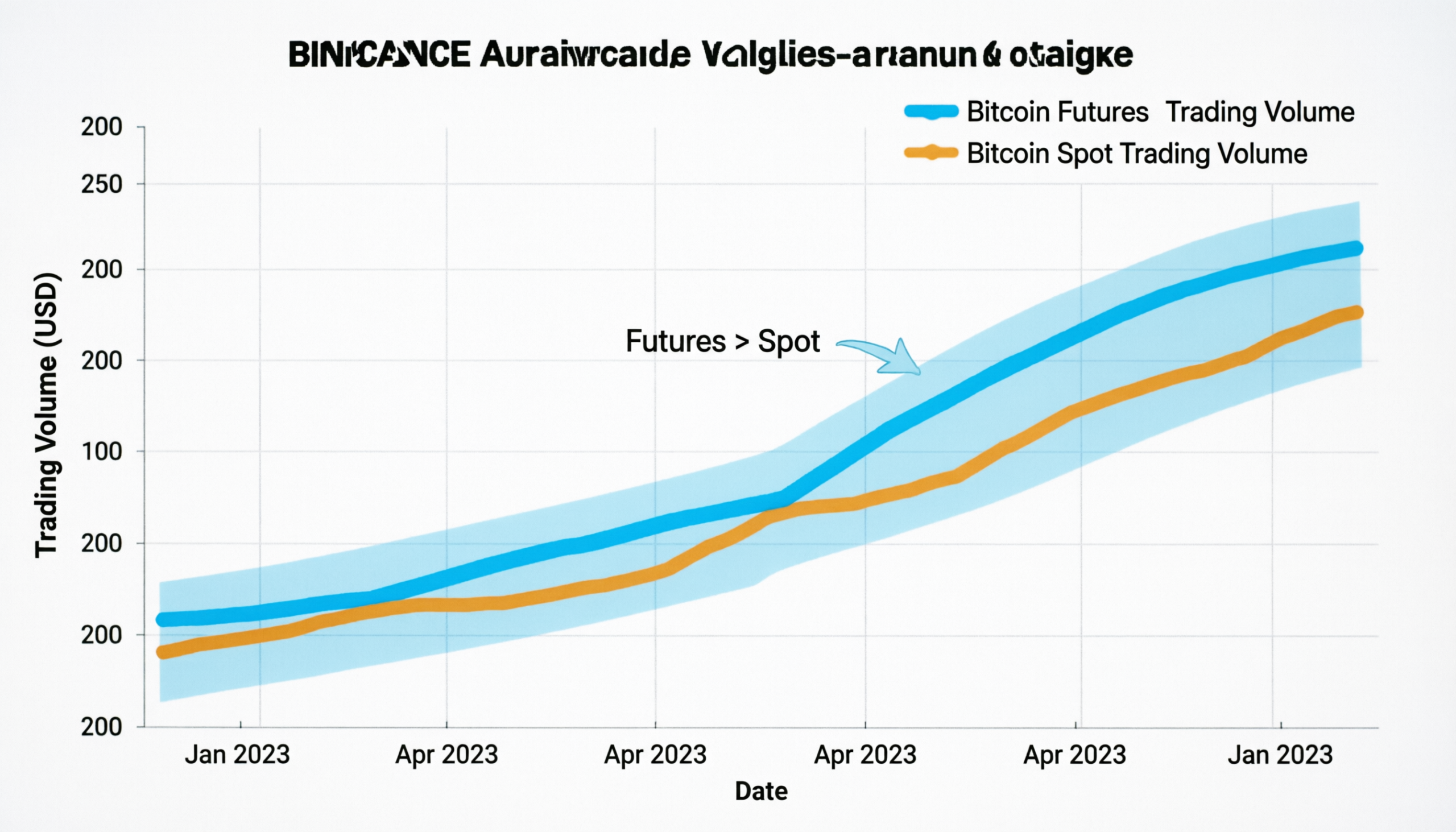

Bitcoin futures trading bigger than spot on Binance as leverage builds
Bitcoin futures trading bigger than spot on Binance is becoming a defining feature of the current market structure, with the exchange’s futures-to-spot volume ratio climbing to about 5.1. The move suggests that leveraged positioning, rather than cash-market conviction alone, is playing a larger role in bitcoin’s recent price swings.
What the 5.1 ratio means for the market
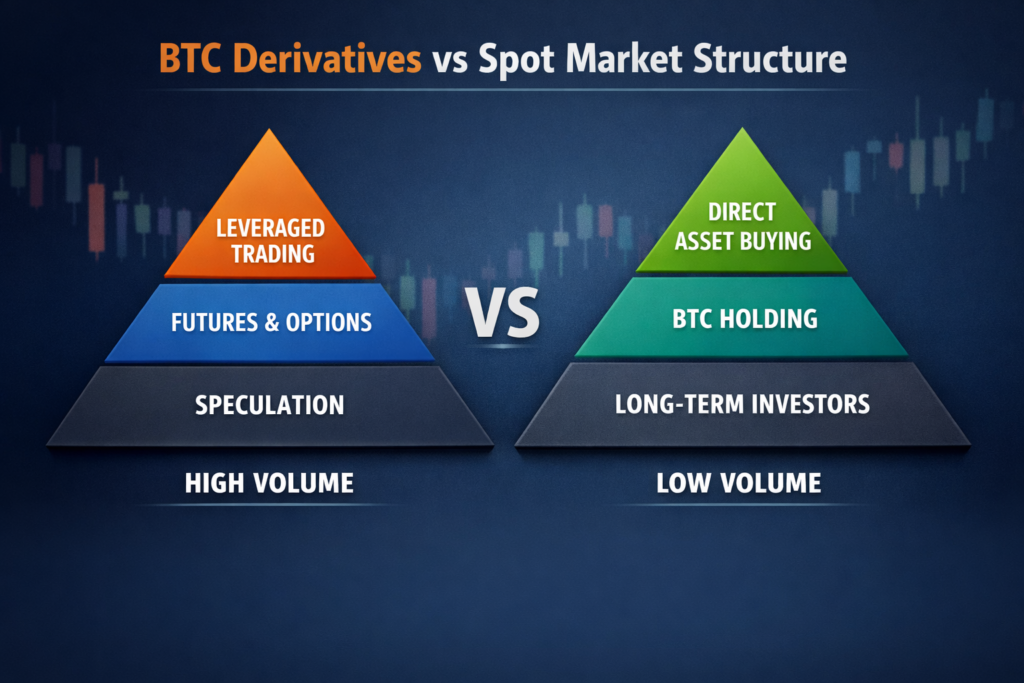
Binance’s futures-to-spot ratio near 5.1 means derivatives traders are doing roughly five times as much business as spot traders on the exchange. In practical terms, that points to a market where perpetual futures, hedging activity, basis trades, and directional leverage are increasingly influential in setting short-term prices.
That does not automatically mean the market is unhealthy. Derivatives usage often rises as markets mature and as professional participants seek more capital-efficient ways to express views. But when futures activity expands much faster than spot trading, the market can become more sensitive to liquidations, funding shifts, and abrupt reversals. That can produce sharp moves that fade quickly, leaving bitcoin close to where it started after a period of high turbulence.
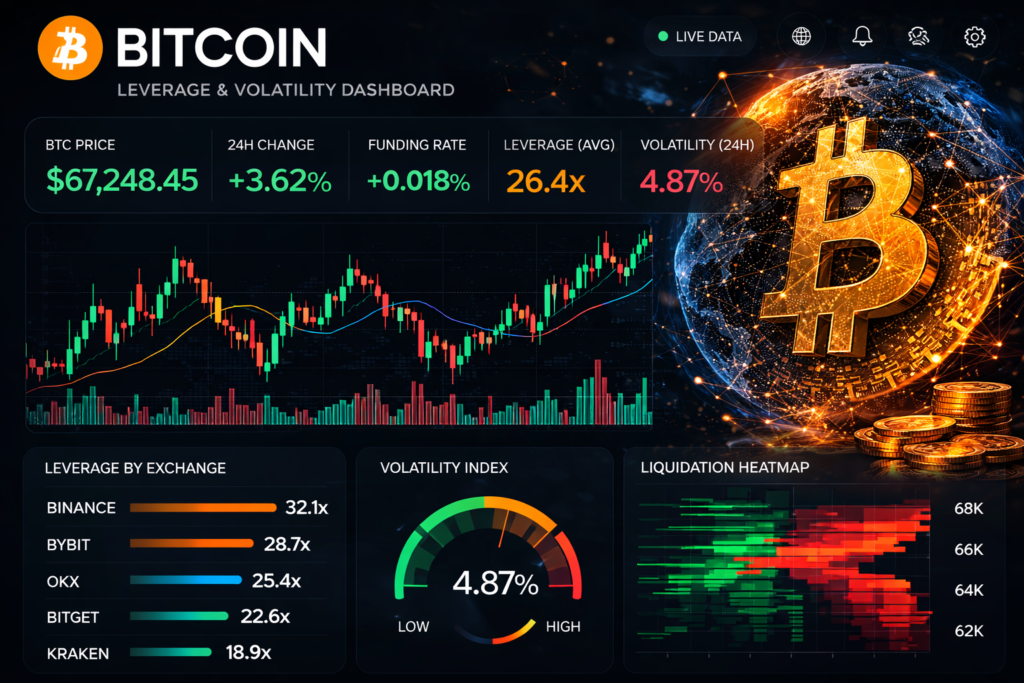
Bitcoin futures trading bigger than spot on Binance points to higher downside sensitivity
The broader on-chain backdrop adds caution. The source report says apparent demand was negative by 30,800 BTC over a 30-day period and that supply in loss was moving toward levels that have historically aligned more with extended downturns than with durable bottoms. Those signals suggest that even if price rebounds occur, they may be vulnerable to selling pressure unless spot demand improves.
Related reporting also highlighted a split between larger and smaller holders. According to that coverage, whales sold roughly 66% of their recent accumulation into the rally toward $74,000, while retail buyers stepped in on dips below $70,000. That pattern can matter because large-holder distribution into strength often caps momentum, especially in a market already dominated by leveraged activity.
Bitcoin futures trading bigger than spot on Binance and current price action
At the time of the source article, bitcoin was quoted around $69,400, down 0.7% on the day and 4.3% on the week. A later market check showed BTC near $70,572, with an intraday range from about $69,014 to $71,271. The change does not alter the main takeaway: price remains highly reactive, and derivatives-heavy positioning can magnify both rebounds and sell-offs.
Context and Analysis
A 5-to-1 futures-to-spot relationship does not guarantee an immediate sell-off. It does, however, describe a market where leverage has more influence than usual. In that setting, headlines, macro shifts, ETF flows, or large liquidations can trigger outsized moves even when underlying spot demand is not materially improving.
For publishers and readers, the most important distinction is structural rather than directional: Binance’s trading mix suggests bitcoin is in a phase where market mechanics may matter as much as narrative. That usually means shorter-lived moves, faster reversals, and greater sensitivity to positioning data than in spot-led rallies. This is analysis based on the cited market data, not a forecast.
Concluding Remarks
Binance’s 5.1 futures-to-spot ratio shows that leverage is now a primary driver of bitcoin’s short-term trading environment. Unless spot demand strengthens, the market may remain prone to fast swings, liquidation-led moves, and rallies that struggle to hold.
FAQs
Q : What does it mean that bitcoin futures trading is bigger than spot on Binance?
A : It means derivatives volume on Binance is outpacing cash-market volume by a wide margin, suggesting leverage is playing a larger role in price discovery.
Q : Why does a 5.1 futures-to-spot ratio matter?
A : A ratio that high can make the market more reactive to liquidations, funding changes, and short-term positioning shifts.
Q : Does bitcoin futures trading bigger than spot on Binance mean BTC will fall?
A : Not necessarily. It signals higher structural volatility, not a certain direction. Price can still rise, but moves may be less stable and more leverage-driven.
Q : What did on-chain data show alongside the Binance ratio?
A : The source report cited negative apparent demand of 30,800 BTC over 30 days and rising supply in loss, both of which point to a fragile backdrop.
Q : How were whales and retail investors behaving?
A : Related reporting said whales sold a large share of recent accumulation into the rally toward $74,000, while retail buyers bought dips below $70,000.
Q : What was bitcoin’s price around publication?
A : The story cited roughly $69,400 at publication time, while a later market check showed BTC near $70,572.
Facts
Event
Binance’s bitcoin futures-to-spot volume ratio rose to about 5.1, its highest level since mid-2023.Date/Time
2026-03-12T00:00:00+05:00Entities
Binance; Bitcoin (BTC); CryptoQuant; Santiment; Shaurya Malwa; Omkar GodboleFigures
Ratio 5.1; apparent demand -30,800 BTC over 30 days; article reference price $69,400; later market check about $70,572Quotes
“When derivatives dominate at this scale, price discovery is increasingly driven by leveraged positioning rather than outright buying and selling.” source article textSources
CoinDesk report, CryptoQuant market data, related CoinDesk whale-flow coverage, BTC market price feed.