


Women in Crypto: From MENA Stories to Global Power
Women in crypto from the Arab world are building exchanges, DeFi tools, NFTs and education communities that link hubs like Dubai, Riyadh, Cairo and Amman with London, Berlin, New York and beyond. As more women in the US, UK, Germany and across Europe collaborate as co-founders, investors and policy partners, Web3 becomes more inclusive, compliant and better aligned with women’s real financial lives.
Introduction
Women in crypto are no longer a side story they’re designing products, running trading platforms and teaching Web3 in Arabic, English and French from Dubai to Berlin. Yet women still hold a minority of crypto assets and leadership roles worldwide, even as participation rises fast in markets like India, the UAE and across Europe.
Here, we zoom in on Arab and MENA women in crypto: what they’re building, the barriers they face, and how women in the US, UK, Germany and the wider EU can partner with them to build a more inclusive Web3.
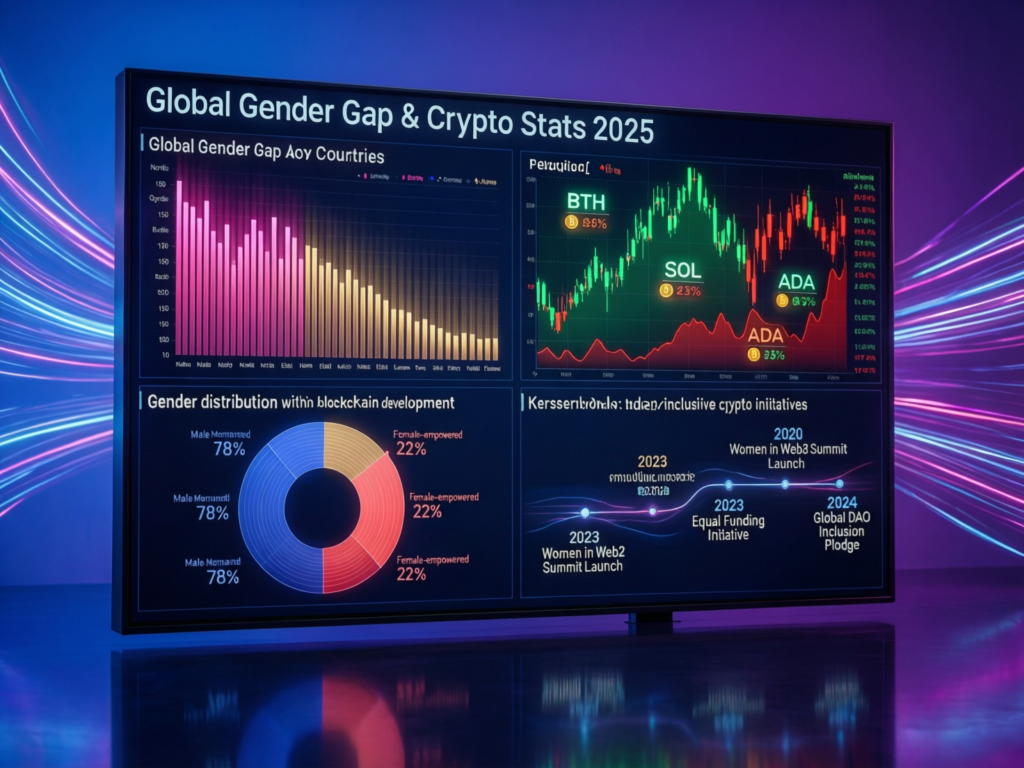
Women still hold a minority of crypto roles and assets worldwide, but their participation is rising as more women launch Web3 startups, funds and education programs in the US, UK, Germany and across Europe. Recent consumer research suggests women now account for roughly 30–35% of crypto owners globally, up from below 20% just a few years ago.
Surveys also show women’s share of crypto jobs and leadership roles lagging behind ownership, with one industry analysis estimating women held only about a quarter of roles in 2023.Yet in regions like Asia, MENA and parts of Africa, women’s adoption is growing quickly as crypto becomes a practical tool for remittances, savings and small-business payments.
How many women are in crypto globally?
There is no single “official” number, but multiple studies converge on one pattern: women are still underrepresented, yet catching up fast. A 2025 survey from Security.org found that about 33% of current cryptocurrency owners are women.Earlier reports put women’s ownership closer to 18–29% at the start of 2023–2024, suggesting a sharp rise within just a couple of years.
Global crypto adoption itself has expanded to an estimated 560 million users, with ownership rates averaging around 6–7% of the world’s population and significantly higher in countries like the UAE.If even a third of those users are women, we’re already talking about hundreds of millions of women experimenting with digital assets investing, earning income, or building careers around Web3.
Where are women leading in crypto and blockchain in the US, UK, Germany and EU?
Across the US, UK, Germany and the wider EU, women are especially visible in three areas: compliance, product leadership and community building. Many US and UK women lead risk, legal and policy teams that ensure exchanges and DeFi platforms meet SEC, CFTC, FCA, MiCA and GDPR requirements.
In Berlin and other EU hubs, women-founded projects are using NFTs and decentralized identity to explore new models of ownership and creative work. Initiatives such as “Unstoppable Women of Web3,” supported by Unstoppable Domains, have committed significant resources in grants and education to bring more women into crypto and metaverse projects worldwide.
As these Western ecosystems mature with stricter rules under MiCA, UK-GDPR and BaFin supervision women leaders are often the ones translating regulation into product design and go-to-market strategy.
Why does the gender gap in the crypto industry persist?
The gender gap persists because crypto has inherited—and often amplified—existing inequalities in finance and tech. Venture funding still skews heavily toward male founders; in MENA, less than 5% of businesses are women-led, versus roughly a quarter globally. “Crypto bro” culture, online harassment and aggressive risk-taking norms signal to many women that the space isn’t built with them in mind.
There are also structural issues: women globally have fewer financial accounts, thinner credit files and less access to collateral constraints that carry over into crypto on-ramps, KYC processes and startup fundraising. Despite progress, the World Bank still finds gender gaps in account ownership across dozens of emerging markets.
What Role Are Arab and MENA Women Playing in the Global Crypto Ecosystem?
Arab and MENA women are building exchanges, DeFi protocols, NFT studios, gaming ventures and compliance-first platforms from hubs like Dubai, Riyadh, Cairo and Amman, while also holding Web3 roles in London, Berlin, New York and beyond. Communities such as Women in Crypto Arabia, NoonDAO and Arabs in Blockchain are turning this activity into a visible, coordinated ecosystem.
These women are often “bridge builders”: they understand both MENA regulations and the expectations of US, UK and EU investors, and they design products that can operate across multiple legal and cultural environments.
Founders, builders and innovators.
Take Zina Ashour, founder of Women in Crypto Arabia and co-founder of iOWN Group: she works on both investor-facing products and women’s education, while speaking publicly about closing the gender gap.Or consider technologists like Eman Herawy, who founded Arabs in Blockchain and co-founded NoonDAO, the first Arab women-led DAO focused on empowering Arab women in blockchain.
Beyond the big names, hundreds of Arab women are quietly building: smart contract engineers in Cairo, compliance leads in Abu Dhabi, product managers in Riyadh, and designers in Istanbul contributing to global DeFi and NFT projects.
When those founders need to ship secure, multilingual Web3 dashboards or investor portals, many turn to specialist engineering partners for Next.js development and frontend performance work, similar to what Mak It Solutions offers for regulated SaaS and fintech products. (Mak it Solutions)
Remittances, financial independence and new income streams for women
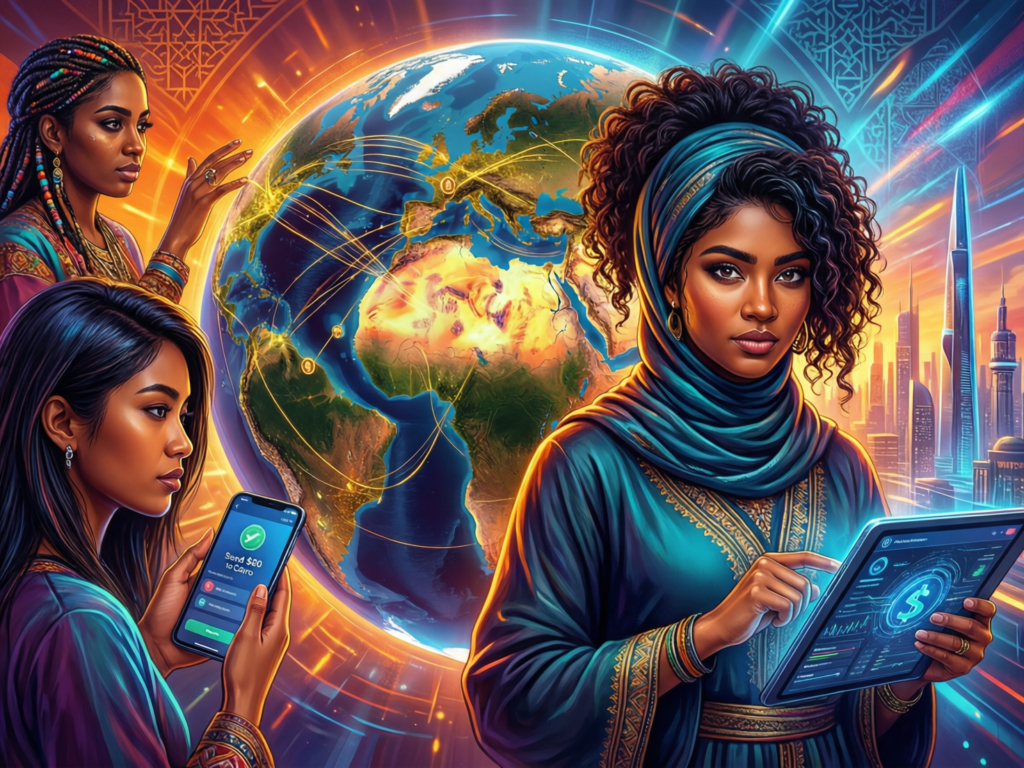
For many women in the Middle East and North Africa, crypto is less about “apes” and more about remittances, savings and side income. Bitcoin and stablecoins allow freelancers in Amman or Cairo to receive cross-border payments more cheaply and quickly than traditional wires, especially when serving clients in London, Berlin or New York.
Rolling Stone’s MENA edition has highlighted initiatives such as an Arab Women in Blockchain association in Jordan, teaching women entrepreneurs how to accept crypto payments and plug into global markets.Women-led NFT and gaming studios in Dubai and Istanbul are also helping artists, designers and coders create new revenue streams that fit around family and care responsibilities.
Behind these user journeys sit Web and mobile products wallets, dashboards, P2P apps that must work on low-end Android devices and pass EU-grade security checks. Building those experiences often calls for cross-platform mobile app development using React Native or Flutter, plus thoughtful UX for Arabic and English audiences, areas where Mak It Solutions already supports fintech and super-app teams across the GCC and Europe. (Mak it Solutions)
Arab women in crypto across global hubs (New York, London, Berlin, Dubai, Riyadh)
MENA women in crypto are increasingly distributed across global hubs:
New York: risk and compliance roles at US exchanges and custodians.
London: product, policy and ecosystem roles, especially around Open Banking and PSD2-style integrations.
Berlin: DeFi, NFTs and DAOs intersecting with EU MiCA rules and data-protection frameworks like GDPR/DSGVO.
Dubai, Abu Dhabi, Riyadh, Doha and Manama: founders using UAE’s ADGM, VARA and Saudi sandboxes to pilot new crypto products with clearer regulatory guardrails.
Many of these women work on remote-first teams, splitting their time between MENA and Europe or the US while building products that must serve users in both regions.
What Barriers Do Arab Women Face in Crypto and How Are They Overcoming Them?
Arab women in crypto face cultural expectations, limited access to risk capital and uneven banking/KYC histories, but they are overcoming these challenges with remote work, global communities, targeted accelerators and regulatory sandboxes in the UAE, Saudi Arabia and beyond. Regulatory clarity especially around VARA in Dubai and central-bank sandboxes in the GCC creates safer spaces to experiment.
At the same time, digital communities and women-only learning spaces lower the intimidation factor of a traditionally male-dominated industry.
Cultural norms, risk perception and “crypto bro” culture
In parts of the Middle East, women face social pressure to avoid “risky” investments or entrepreneurship, even as families increasingly rely on women’s incomes. Combine that with online “crypto bro” behaviour over-confident shilling, harassment and gatekeeping and many women understandably hesitate to show up in public Web3 spaces.
Women-only meetups in Dubai, Berlin and London; Arabic-language Telegram and Discord communities; and programs like Women in Crypto Arabia are deliberately redesigning the learning environment. Instead of hype, they focus on fundamentals: wallets, security, taxes and how to spot scams.
Banking, KYC/AML and funding gaps for women founders
Access to banking and capital is still a major friction point. Across developing economies, the gender gap in account ownership has narrowed but remains about 6 percentage points on average, and in some low- and middle-income countries women are still more than 10 percentage points less likely than men to hold accounts.
In MENA’s financial sector, less than 5% of businesses are women-led, and women-owned firms face systematic barriers to credit and trade finance.That matters for crypto: if you can’t open a corporate account or pass enhanced due diligence, you can’t easily operate an exchange, custody service or fiat on-ramp. Women-led Web3 startups must therefore be meticulous about KYC/AML design, sometimes leaning on partners experienced in secure back-end architecture, analytics and business-intelligence services like those Mak It Solutions delivers to regulated clients. (Mak it Solutions)
Education, mentorship and safe online communities for women in crypto
So what actually closes these gaps? Education, mentorship and networks. Across MENA, we’re seeing:
Women-focused crypto bootcamps and scholarships.
Mentorship programs linking junior developers in Cairo or Amman with senior engineers in London, Berlin or New York.
Online communities like NoonDAO and regional Web3 meetups where women can ask “basic” questions without being dismissed.
Well-designed content hubs blog posts, FAQs, explainers and localized landing pages also matter here. That’s where SEO strategy and technically sound publishing platforms (for example, Next.js front-ends backed by structured content models and strong indexing controls) can make or break discoverability for women-led initiatives. (Mak it Solutions)

Why Women’s Participation in Crypto Matters for Financial Inclusion in MENA
When more women build and use crypto products, they design around the realities of remittances, savings and micro-entrepreneurship that traditional finance often ignores unlocking new financial access for millions of women across the Middle East and North Africa. Financial inclusion data makes this urgent: in many MENA economies, women’s participation in formal finance, entrepreneurship and digital payments still lags far behind men’s.
Crypto will not magically fix patriarchy or labour markets, but it can lower some access barriers: smaller minimum transaction sizes, borderless payments and programmable financial products tailored to women-led businesses.
The financial inclusion gap for women in the Middle East and North Africa
Global Findex and regional reports show that women in developing countries are still less likely than men to have an account, to save formally, or to receive digital payments. In MENA specifically, women lead fewer than 5% of businesses, and much of their economic activity remains informal and under-financed.
That gap affects everything from rural women selling crafts to professional women in Riyadh or Dubai trying to launch fintech products and it’s the gap Arab women in crypto are explicitly targeting.
How crypto, DeFi and open banking can bridge access gaps
Crypto, DeFi and open banking can help in three practical ways:
Cross-border payments and remittances
Stablecoin wallets or compliant P2P apps let women receive money from relatives or clients in the US, UK, Germany or the Gulf without long settlement times and high remittance fees.
Savings and micro-investments
Tokenized savings products, on-chain micro-funds and “round-up” investing apps can help women build financial cushions, even on irregular incomes.
Data-driven credit via open banking
In the EU and UK, PSD2/Open Banking rules let users share bank data with third-party apps. When adapted for MENA, and combined with crypto transaction histories, this can help women with thin credit files prove reliability and access working-capital loans.
All of this only works if underlying platforms are well-built: secure wallets, fast APIs, compliant reporting and robust data-visualization tools areas where Mak It Solutions’ mobile, front-end and business-intelligence services already support fintech and super-app clients in KSA, UAE and beyond. (Mak it Solutions)
Policy and regulation.
For women-led crypto startups, regulation is not a side issue it’s a design constraint. In Europe, MiCA now sets uniform rules for many crypto-assets, from disclosure to licensing and supervision, while GDPR/DSGVO governs data privacy and consent. In the UK, the FCA polices financial promotions and conduct, and UK-GDPR plus Open Banking frameworks shape how financial data can be shared.
In MENA, the UAE’s VARA and ADGM, Saudi Central Bank initiatives and sandboxes in Qatar and Bahrain provide clearer rulebooks for virtual asset service providers (VASPs).
Women-led teams that bake MiCA, GDPR, PCI DSS and SOC 2 thinking into their architectures from day one can more easily access EU banks, payment partners and enterprise clients.
Why International Investors Are Backing Women-Led Web3 Startups from the Arab World
Global VCs, impact funds and family offices are backing women-led crypto startups from the Arab world because these founders combine deep local knowledge with governance, compliance-by-design and access to fast-growing digital economies across the GCC and wider MENA. Investors see a double upside: exposure to new markets plus alignment with gender and inclusion mandates.
What global investors look for in women-led crypto and fintech ventures
Investors in New York, London or Berlin increasingly ask similar questions of MENA women-led Web3 teams:
Is the team strong on both technical delivery and compliance?
Are there clear unit economics and real users (remittances, SME payments, savings products) rather than pure token speculation?
Does the product solve local problems such as cross-border payroll or micro-merchant payments that global competitors don’t understand?
They also examine the quality of the product stack: is the architecture scalable, are APIs well-documented, is the mobile experience stable on mid-range Android devices common in MENA? Partners like Mak It Solutions, with React Native and back-end API expertise, often feature in due-diligence conversations because investors care deeply about execution risk. (Mak it Solutions)
Compliance-by-design as a competitive edge (MiCA, GDPR, PCI DSS, SOC 2)
Women-led teams often turn their lived experience with bias into stricter risk standards. By treating MiCA, GDPR/UK-GDPR, PCI DSS and SOC 2 as product requirements instead of afterthoughts, they can:
Open EU/UK bank and payment-provider relationships faster.
Win enterprise or government pilots in Berlin, London or Abu Dhabi.
Protect end-users (especially women) from fraud and abuse.
Well-structured databases, encryption, observability and logs things Mak It Solutions builds routinely for SaaS and e-commerce clients are exactly what regulated Web3 products need as they mature. (Mak it Solutions)
Funds and accelerators linking MENA founders with US, UK and European capital
Although many deals are still private, the pattern is clear:
GCC accelerators co-investing with European funds in women-led Web3 remittance and payments startups.
Impact funds in London backing MENA female founders as part of gender-lens investing strategies.
Corporate innovation programs in Germany piloting compliance-heavy tokenization or on-chain KYC platforms built by women-led teams from Dubai or Riyadh.
These founders often rely on global-ready web and mobile apps, analytics and SEO to reach both Arabic-speaking users and regulators or partners in the US, UK and EU exactly the cross-border digital presence Mak It Solutions optimizes in its SEO and digital-marketing engagements. (Mak it Solutions)
How Initiatives Like Women in Crypto Arabia Support New Female Founders and Developers
Networks such as Women in Crypto Arabia, Arab Women in Blockchain, NoonDAO and European women-in-tech groups provide mentorship, training, funding introductions and conference platforms that fast-track women into technical and leadership roles.
For early-career women, these communities are often the first safe place to ask “basic” questions, practice pitches and find co-founders.
Key networks and communities.
The ecosystem includes.
Women in Crypto Arabia (WIC Arabia) UAE-based community offering workshops, meetups and Arabic-language education, with growing visibility at MENA conferences like Bitcoin MENA.
Arabs in Blockchain / NoonDAO / Arab women-in-blockchain circles – developer-focused communities and DAOs that organize hackathons, grants and mentorship.
Women in Tech® and WomenTech Network chapters in London, Berlin, Dubai broader tech communities with strong Web3 tracks. (Rolling Stone MENA)
Their events and content newsletters, podcasts, guides work best when supported by reliable content platforms and CMS structures, an area where Mak It Solutions’ web design and Webflow/WordPress experience can help communities scale without breaking their SEO or site performance. (Mak it Solutions)
Crypto careers for women.
You don’t have to be a solidity wizard to build a career in crypto.
Technical roles smart contract and back-end developers, front-end engineers, mobile engineers, data analysts.
Product & UX product managers, UX designers, researchers specializing in wallets, DeFi and gaming.
Risk and policy compliance, legal, policy advocacy with regulators like FCA, BaFin, VARA, ADGM or central banks.
Content & growth education, community management, marketing and analytics.
Because so much of Web3 is remote-friendly, women in Riyadh, Cairo or Amman can work for distributed teams headquartered in New York, San Francisco, London or Berlin—as long as they can demonstrate skills, a strong project portfolio and familiarity with modern stacks like React Native, Flutter, Next.js or Laravel. (Mak it Solutions)
Education, accelerators and scholarships connecting MENA women with US/UK/German opportunities
Global accelerators and scholarship programs are increasingly targeting women in MENA:
Tech scholarships pairing MENA women with European universities and German research labs.
Remote-friendly accelerators that accept MENA Web3 startups and connect them with investors in London, Berlin and New York.
Corporate-backed upskilling programs in the Gulf focused on AI, data and blockchain for women.
When these founders graduate into “real” product builds wallets, data dashboards, compliance portals they often need engineering partners who understand both MENA and EU/US requirements. That’s where firms like Mak It Solutions, with experience in mobile, web and analytics projects across GCC and Western markets, become long-term collaborators. (Mak it Solutions)
How Can Women in the US, UK and Europe Collaborate with Arab Women in Crypto?
Women across the US, UK, Germany and wider Europe can collaborate with Arab women in crypto by co-founding ventures, joining distributed Web3 teams, investing in women-led MENA startups and partnering on research, regulation and ecosystem-building initiatives. The goal is not “helping” from afar, but building mutually beneficial partnerships around shared values: inclusion, compliance and real-world impact.
Collaboration models for founders and operators.
Practical partnership patterns include.
Remote-first teams a London-based product lead and a Cairo-based engineering lead co-founding a DeFi startup targeting remittances between the UK and Egypt.
Joint ventures a Berlin compliance consultancy partnering with a Dubai-based women-led exchange to serve EU corporate clients.
Cross-border DAOs governance tokens that give women contributors in Riyadh, Manchester, Munich and Austin real voting power over treasury and roadmap decisions.
In all of these, solid technical foundations (secure APIs, multilingual front-ends, reliable analytics) are as important as legal structures—areas where working with a seasoned implementation partner such as Mak It Solutions can significantly reduce risk. (Mak it Solutions)
How investors, NGOs and ecosystem partners can back women in crypto in MENA
If you’re an investor, NGO or ecosystem builder in the US, UK or EU, you can:
Allocate a gender-lens thesis or sidecar fund specifically for women-led Web3 teams in MENA.
Fund research and pilots on topics like “crypto for remittances” or “on-chain credit for women-owned SMEs.”
Sponsor women-only training cohorts with credible communities such as Women in Crypto Arabia or Arab women-in-blockchain initiatives.
You can also back enabling infrastructure better data, UX research and secure, localized digital products which is often where technology partners like Mak It Solutions fit in.
How to plug into women-in-crypto networks across MENA, US, UK and Europe
Here’s a simple way to start collaborating, whether you’re in New York, London, Berlin, Dubai or Riyadh.
Map your ecosystem
List the women-in-crypto groups, DAOs and communities active in your city and in MENA (for example, Women in Crypto Arabia, NoonDAO, local Web3 meetups). Connect on LinkedIn, Telegram or Discord.
Show up consistently
Attend at least one event or call per month, contribute your skills (mentoring, code reviews, compliance clinics, UX testing) and listen before proposing big ideas.
Pilot something small
Co-host a webinar, open-source a smart contract pattern, or sponsor a small cohort of women from Cairo or Amman to join an EU or UK-based accelerator.
Scale what works
Once you see traction, formalize partnerships, co-found ventures or set up cross-border DAOs with clear governance and compliance plans.
Mak It Solutions can then help you turn those pilots into production-grade platforms secure mobile apps, data-rich dashboards and SEO-optimized content hubs that speak equally well to users in MENA, the US and Europe. (Mak it Solutions)
Key Takeaways
Women in crypto now represent roughly one-third of global crypto owners, with participation accelerating in emerging markets including MENA.
Arab and MENA women are building exchanges, DeFi tools, NFTs, gaming and education communities from Dubai, Riyadh, Cairo and Amman, while working in Web3 roles across London, Berlin and New York.
Major barriers cultural norms, banking and funding gaps, and “crypto bro” culture are being tackled through women-only networks, education, sandboxes and better regulation (VARA, ADGM, MiCA, FCA, BaFin).
Women’s participation in crypto is a financial-inclusion lever in MENA, especially for remittances, savings and SME finance, complementing World Bank and gender-equality strategies.
International investors, NGOs and ecosystem partners can de-risk collaboration by backing women-led teams with compliance-by-design architectures, clear governance and strong technical partners like Mak It Solutions.
If you’re building or backing a women-led Web3 product that spans MENA and the US/UK/EU, you don’t just need vision you need a secure, compliant, beautifully executed digital experience. Mak It Solutions can help you architect and ship the web, mobile and analytics layers that regulators trust and users love.
Reach out to the Mak It Solutions team to scope a Web3, fintech or data project, or to explore how we can support your women-in-crypto initiative with engineering, UX and SEO that’s ready for Dubai, London, Berlin and beyond. (Click Here’s )
FAQs
Q : Are crypto and blockchain realistic career paths for women in the Middle East with non-technical backgrounds?
A : Yes. Many Arab women in crypto start from non-technical careers in law, marketing, journalism, finance or community organizing. Policy, compliance, operations, ecosystem management, content and investor-relations roles all exist alongside developer and data jobs. Over time, many non-technical women pick up enough technical literacy smart contract basics, security best practices, analytics tools to move into product or leadership roles. Women-only programs in Dubai, Cairo and Amman plus global communities in London, Berlin and New York make the transition more accessible, especially when paired with remote-friendly employers.
Q : Which Web3 and fintech roles offer the most remote and flexible work options for women in the US, UK, Germany and MENA?
A : Remote-friendly roles include front-end and mobile development, smart-contract engineering, product management, UX design, data analytics, technical writing, community management and compliance advisory. Many Web3 teams in New York, London, Berlin and Dubai are “remote-first,” hiring contributors from Riyadh, Cairo or Amman as long as communication and time-zone overlap work. Flexible work becomes more realistic when teams invest in good documentation, async tools and clear governance—often supported by robust dev and analytics platforms built by partners like Mak It Solutions.
Q : How can first-time women investors evaluate the risks of crypto projects aimed at “financial inclusion”?
A : First-time women investors should treat “financial inclusion” as a hypothesis, not a guarantee. Start by checking the project’s regulatory footing (is it operating under MiCA, FCA guidelines or Gulf sandboxes?), the quality of its security practices (audits, bug bounties, custody arrangements) and the realism of its promises. Look for transparent documentation, clear target users (for example, women-owned SMEs or migrant workers), and evidence of real adoption instead of just token price hype. Diversification, small initial allocations and using regulated on-ramps in your jurisdiction (US, UK, EU or GCC) are essential risk-management steps.
Q : What are some of the most active women-in-crypto communities and conferences in New York, London, Berlin and Dubai?
A : In Dubai, Women in Crypto Arabia hosts regular meetups, workshops and conference tracks focused on Arabic-language education and safe learning spaces. In London and New York, you’ll find women-in-crypto and women-in-fintech tracks at larger Web3 and fintech conferences, often supported by global brands like Women in Tech® or WomenTech Network. Berlin hosts Web3 meetups and hackathons where women-led DAOs and NFT projects regularly present. Many of these communities maintain Telegram, Discord, LinkedIn or Slack groups where you can join conversations even if you can’t travel in person.
Q : How do women-led crypto startups approach KYC/AML and regulatory compliance differently from traditional firms?
A : Women-led crypto startups often treat compliance-by-design as a central product feature rather than a cost center. That can mean building KYC/AML flows that are stricter yet more respectful of user privacy, designing consent journeys aligned with GDPR/UK-GDPR, and adopting best-practice frameworks like PCI DSS and SOC 2 from the earliest infrastructure decisions. They also tend to prioritize clear communication around risk, fees and user protections especially when targeting women or vulnerable groups. With strong engineering partners, they implement auditable data pipelines, access controls and monitoring that make it easier to work with EU, UK and GCC regulators and banking partners over time.