


Silver volatility eclipses bitcoin as supply tightens, year ends
Silver has recently overtaken bitcoin in volatility as year-end trading activity thins out, pushing traders to express macro uncertainty through precious metals instead of crypto. With physical supply tightening and market depth shrinking, silver’s realized volatility has surged into the mid-50s, highlighting how quickly its price is reacting to shifting expectations around interest rates and industrial demand. These rapid swings reflect a market that is becoming increasingly sensitive to even small changes in liquidity and sentiment.
In contrast, bitcoin is experiencing a period of relative calm, with its 30-day realized volatility dropping into the mid-40s below its one-year average. Despite broader macro movements, BTC remains largely range-bound as traders wait for clearer catalysts, including regulatory signals, ETF flows, and early-2026 liquidity shifts. This divergence shows how metals are currently absorbing more macro-driven positioning than crypto.
Why silver overtakes bitcoin on volatility
Silver’s late-December rally pushed prices to fresh records before sharp reversals, producing the biggest one-day drop in nearly five years on Dec. 29. The same moves left silver up roughly 150% year-to-date its strongest annual run in decades while intraday peaks above $80/oz and swift selloffs underscored fragile liquidity.
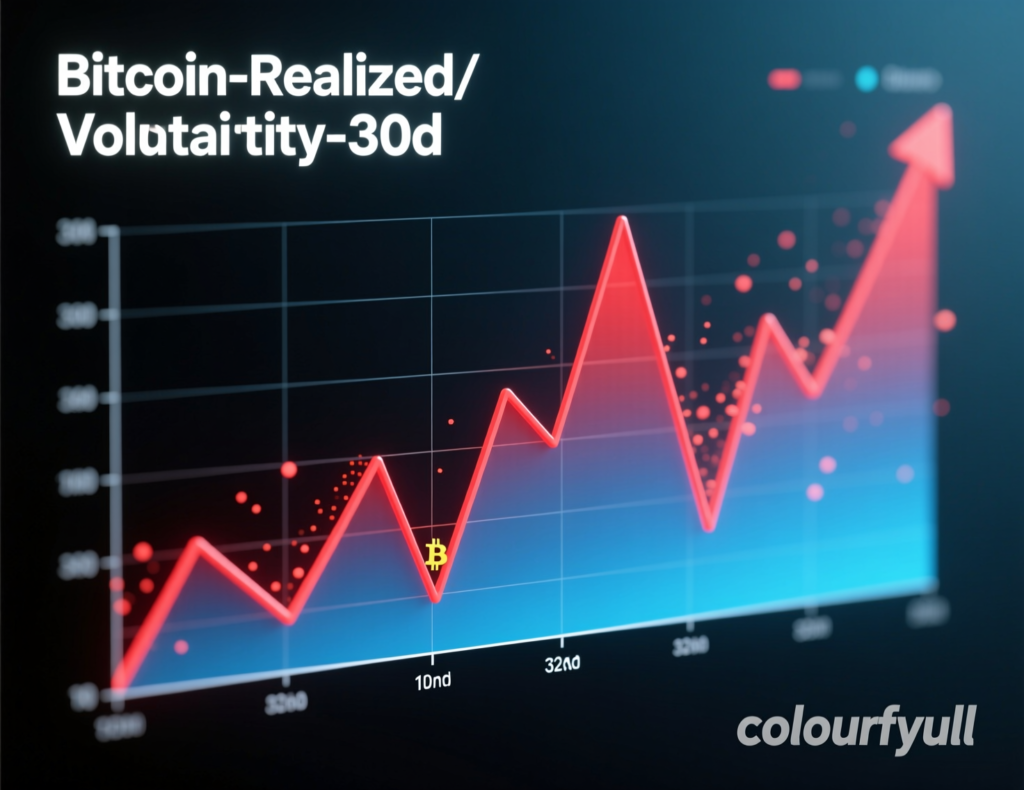
In contrast, bitcoin’s realized volatility has been trending lower. The 30-day measure sits around the mid-40s beneath its 365-day average mirroring a market stuck in a tight range with fading momentum relative to earlier ETF-driven flows.
Market data: silver overtakes bitcoin on volatility
Silver realized vol: mid-50s (late December).
Bitcoin realized vol (30-day): mid-40s vs. 365-day ~high-40s.
These levels capture December’s divergence: metals repricing macro risk versus crypto’s low-volatility drift.
What’s driving silver’s spike
Physical tightness features prominently: reports of steep backwardation and elevated regional premiums, alongside thin holiday liquidity and higher margin requirements, amplified moves. Headlines around China’s plan to require licenses for silver exports from Jan. 1, 2026 added to scarcity expectations and price sensitivity. Financial Times
Industrial demand remains a key pillar solar, EVs and electronics leaving users more exposed to price jumps when supply looks constrained.
Why bitcoin stayed muted
Bitcoin ended December in a low-volatility holding pattern. With realized volatility compressed and spot prices hovering well below all-time highs, traders cite market mechanics not a dramatic sentiment shift as the reason for the calm: lower realized vol discourages optionality bets, which in turn helps keep price ranges tight.
Context & Analysis
The divergence highlights where macro uncertainty is being priced. Metals, tethered to supply chains and industrial use, respond quickly to perceived scarcity, especially when export policies tighten and margin settings change. Crypto’s realized volatility can lag when spot positioning is balanced and catalysts are scarce. If silver’s physical stress eases in January or liquidity returns, the gap could narrow; conversely, any new supply shock could prolong metals-led volatility.
Bottom Lines
Silver has become the preferred vehicle for expressing macro risk as the year draws to a close, overtaking bitcoin in capturing trader sentiment. With market activity thinning, even modest order flows are producing outsized price swings, keeping metals firmly in focus while crypto holds within familiar ranges.
The upcoming licensing rules in China, set to begin on January 1, 2026, are adding another layer of uncertainty and fueling short-term volatility. As liquidity remains limited, metals may continue to see sharp intraday moves, whereas bitcoin and broader crypto markets are likely to stay relatively subdued in the near term.
FAQs
Q : Why did silver’s volatility jump?
A : Thin holiday liquidity, margin adjustments, and supply concerns including China’s upcoming export licensing sharply amplified intraday moves.
Q : Why is bitcoin less volatile right now?
A : BTC is stuck in a tight range with fading catalysts, keeping 30-day realized volatility in the mid-40s, below its 1-year average.
Q : Is silver up more than bitcoin in 2025?
A : Yes. Silver is up roughly 150% YTD, while bitcoin is slightly negative for the year.
Q : What does backwardation signal in silver?
A : It reflects immediate scarcity, where near-dated futures trade above longer-dated ones due to tight physical supply.
Q : Does ETF demand still matter for bitcoin?
A : Yes, but today’s low realized volatility shows flows aren’t currently generating large price swings.
Q : Will the China policy be a “ban” on silver exports?
A : Reports indicate a licensing system from Jan 1, 2026, not a full ban but stricter rules may still limit supply.
Q : Where can I compare real-time volatility?
A : Check trusted data dashboards for crypto realized volatility and monitor futures curves/premiums for metals.
Facts
Event
Silver’s realized volatility surpasses bitcoin’s amid year-end liquidity and supply tightness.Date/Time
2025-12-30T12:00:00+05:00Entities
Silver (Ag), Bitcoin (BTC), China’s Ministry of Commerce (MOFCOM), CME Group, COMEX, London Bullion MarketFigures
Silver ~150% YTD gain (2025); BTC 30-day realized vol mid-40s; silver realized vol mid-50s; largest one-day silver drop in ~5 years on Dec. 29. The Wall Street Journal+2CoinDesk+2Quotes
“This is not good. Silver is needed for many industrial processes.” Elon Musk. Yahoo FinanceSources
CoinDesk (analysis/volatility), FT/WSJ/Barron’s (price/vol), Yahoo Finance (Musk quote).