
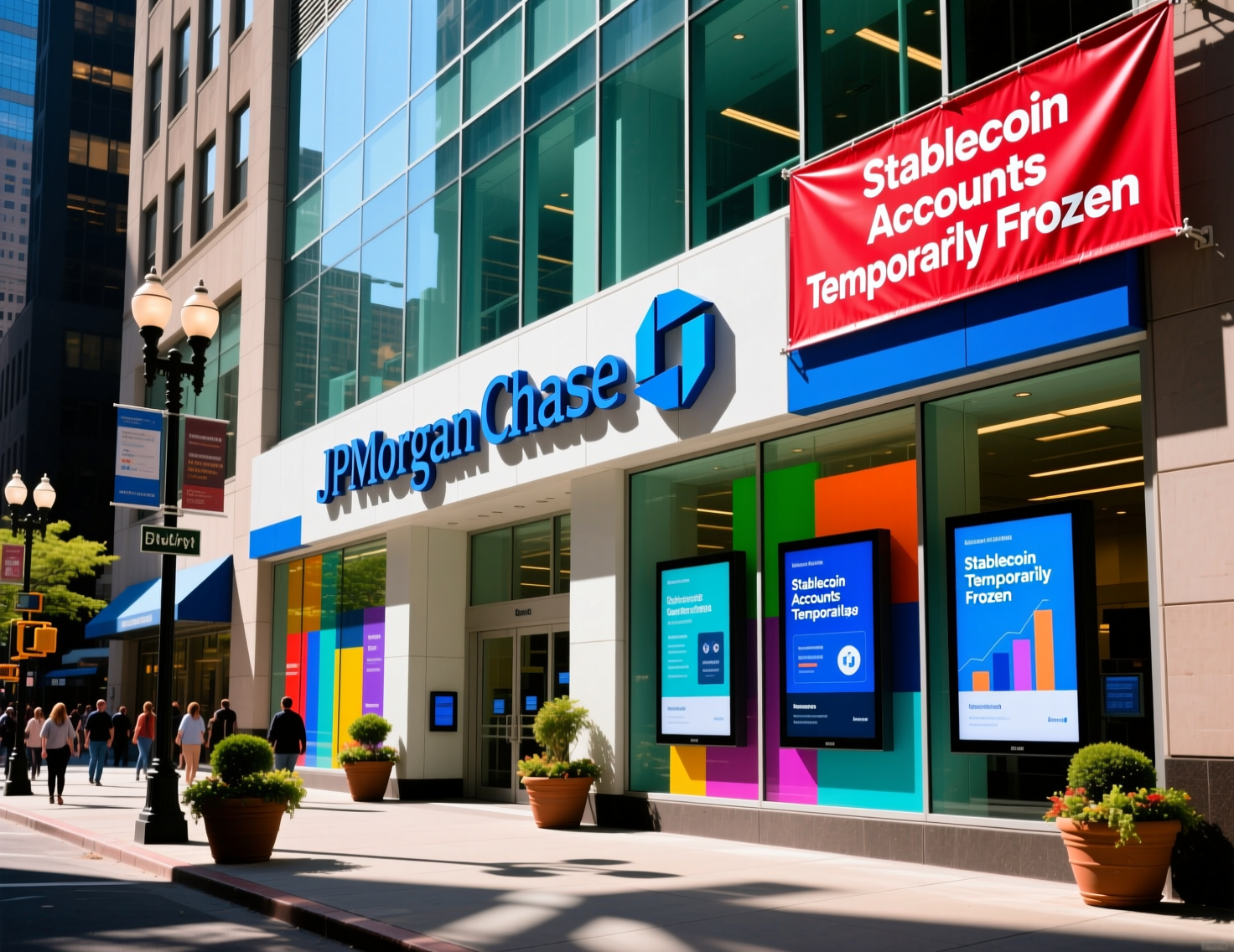

JPMorgan freezes stablecoin accounts after sanctions exposure flags
JPMorgan has reportedly frozen stablecoin-related accounts connected to BlindPay and Kontigo after internal compliance reviews highlighted potential exposure to sanctioned or high-risk jurisdictions, including Venezuela. According to multiple media outlets, the firms accessed JPMorgan’s banking services through Checkbook, a digital payments intermediary. The bank’s review flagged activity patterns that raised concerns around regulatory risk, prompting swift action to limit any potential compliance breach.
The companies also experienced a notable rise in chargebacks, adding further pressure to their operational standing and contributing to the decision to close their accounts. The situation underscores how major U.S. financial institutions are tightening scrutiny on crypto-linked businesses, especially those operating across borders or handling digital assets tied to sensitive regions. Both firms are now reportedly seeking alternative partners to maintain service continuity.
What we know as JPMorgan freezes stablecoin accounts
Media reports say JPMorgan closed or froze accounts tied to Y Combinator–backed stablecoin startups BlindPay and Kontigo after detecting transactions or business activity involving sanctioned/high-risk locations. A JPMorgan spokesperson told The Information the action wasn’t a stance against stablecoins, noting the bank continues to serve stablecoin issuers and related firms.
Checkbook CEO PJ Gupta said rapid onboarding led to a surge in chargebacks among several firms, including BlindPay and Kontigo, prompting account closures. The firms primarily operate across Latin America.
Timeline: JPMorgan freezes stablecoin accounts
Earlier in 2024
Checkbook expands B2B digital check services; later that year it joins the J.P. Morgan Payments Partner Network.
Recent months (2025)
JPMorgan flags activity linked to Venezuela and other high-risk jurisdictions; accounts tied to BlindPay and Kontigo are frozen/closed.
Today (Dec. 27, 2025)
Multiple outlets summarize the report; JPMorgan reiterates it continues to bank stablecoin firms.
Drivers and context
Sanctions/AML exposure
U.S. banks must restrict services to sanctioned jurisdictions; Venezuela remains high-risk under U.S. sanctions, raising KYC/AML red-flag obligations for counterparties and partners. The reported freezes reflect this risk posture. TradingView
Onboarding and chargebacks
Checkbook’s CEO attributed closures partly to a surge in chargebacks from fast online onboarding an operational risk signal that can trigger de-risking by correspondent banks.
Bank–fintech partnerships
In November 2024, Checkbook joined the J.P. Morgan Payments Partner Network to let corporate clients send digital checks illustrating how bank–fintech integrations can broaden risk perimeters when downstream clients misbehave or outgrow controls.
Market impact and what’s next
For stablecoin firms
Expect tighter onboarding, enhanced sanctions screening, and higher documentation standards when seeking traditional bank rails.
For banks
Continued “risk-based” exits from clients with elevated sanctions/chargeback profiles even if crypto-related business is otherwise permitted.
For Latin America
Crypto use in Venezuela has grown amid currency instability; cross-border flows will face more compliance friction.
Context & Analysis
The actions reflect standard de-risking logic: when sanctions exposure and operational losses (chargebacks) overlap, banks retreat even if the product (stablecoins) is not the target. JPMorgan’s note that it “recently took a stablecoin issuer public” underscores this nuance: the bank isn’t exiting the sector wholesale, but tightening client selection.
Conclusion
The freezes highlight a maturing stage for crypto payments, where gaining and keeping access to Tier-1 banking rails depends on strong sanctions compliance, tight chargeback management, and controlled, transparent growth. As traditional institutions raise their risk thresholds, crypto firms must demonstrate clean operational practices to avoid sudden disruptions.
For emerging startups, the message is clear: compliance, fraud prevention, and monitoring systems must be treated as essential product functions rather than secondary tasks. Building these capabilities early not only reduces regulatory exposure but also strengthens trust with banking partners, investors, and users as the industry evolves.
FAQs
Facts
Event
JPMorgan freezes bank accounts tied to BlindPay and Kontigo after sanctions/high-risk exposure flags; chargebacks cited by partner.Date/Time
2025-12-27T18:30:00+05:00Entities
JPMorgan Chase & Co. (JPM); BlindPay; Kontigo; Checkbook (payments partner).Figures
Not disclosed; “surge in chargebacks” noted by Checkbook CEO. PYMNTS.comQuotes
“This has nothing to do with stablecoin companies… We bank both stablecoin issuers and stablecoin-related businesses, and we recently took a stablecoin issuer public.” JPMorgan spokesperson (to The Information). The Information
“They opened the floodgates and a bunch of people came in over the internet.” PJ Gupta, CEO, Checkbook (to The Information). The Information
Sources
The Information (report) + URL; Cointelegraph recap + URL. The Information+1