


Adam Back slams Nic Carter about quantum risk to Bitcoin
In a heated exchange on X, Adam Back slams Nic Carter about quantum risk to Bitcoin, accusing the Castle Island Ventures partner of spreading “uninformed noise.” Carter counters that many Bitcoin developers remain in “total denial,” while emphasizing he publicly disclosed his fund’s investment in Project Eleven, a company focused on post-quantum defenses.
What happened
Back, the Blockstream CEO, told Carter he was “not helping” the debate by amplifying quantum-threat narratives, responding to Carter’s thread explaining Castle Island Ventures’ rationale for backing Project Eleven. Carter says he was “quantum-pilled” by Project Eleven CEO Alex Pruden and has put capital behind his concerns.
Why it matters
The dispute highlights an emerging split in the Bitcoin community over how urgent quantum resistance is and how public the conversation should be. While some argue serious work is already underway “quietly,” others warn timelines could compress as investment and research accelerate.
Adam Back vs. Nic Carter: the quotes and disclosures
Back’s post called Carter’s comments “uninformed noise,” suggesting they could be an attempt to “move the market.” Carter replied that he disclosed his investment in the first sentence of an Oct. 20 essay and has been transparent about potential conflicts.
Back’s post on X (quote referenced by Cointelegraph).
Carter’s Oct. 20 Substack disclosure and ongoing quantum series.
Carter’s X thread reiterating that some Bitcoiners are “in denial.”
Adam Back slams Nic Carter about quantum risk to Bitcoin community reaction
Carter’s stance resonated with other voices warning of nearer-term risk windows. Meanwhile, Back has also said being “quantum ready” is prudent but views the threat as likely decades out, aligning with several national guidance timelines. Cointelegraph+1
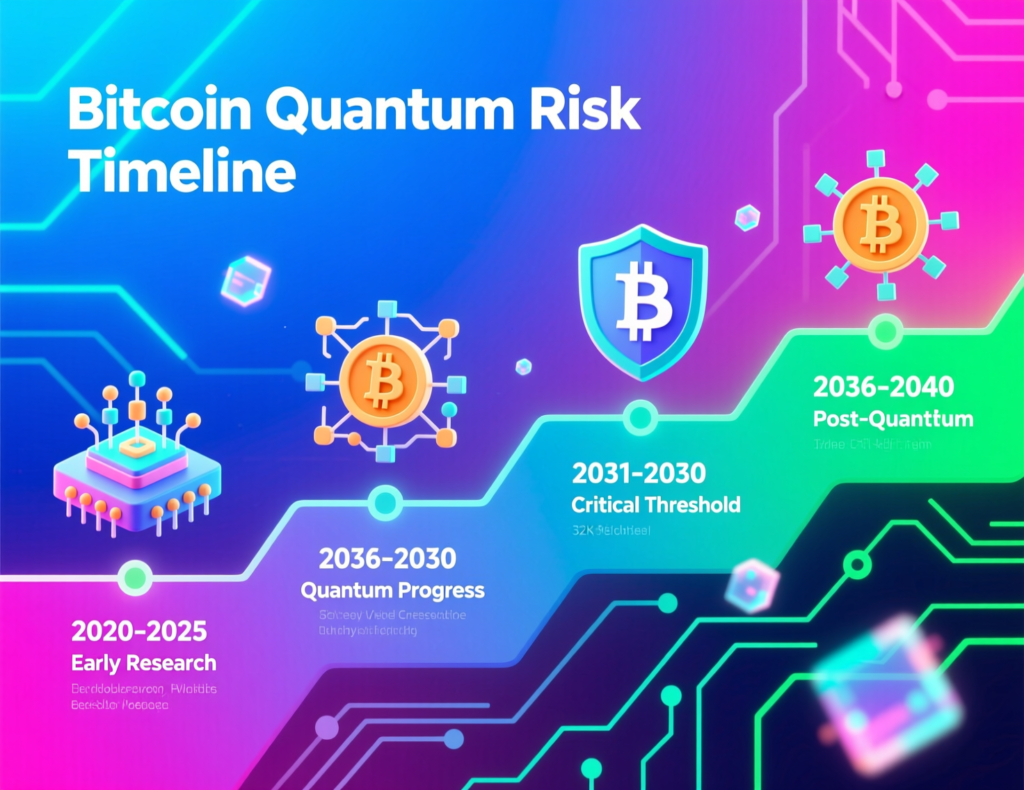
The broader quantum-Bitcoin timeline
Near-term warnings
Charles Edwards suggested a 2–9 year window for credible risk without upgrades to quantum-resistant cryptography.
Skeptical views on targeting Bitcoin first
Kevin O’Leary told Cointelegraph Magazine quantum would likely be used for higher-value tasks (e.g., AI-driven research) before trying to break Bitcoin.
Policy context
The UK’s NCSC recommends organizations aim to transition to post-quantum cryptography by 2035, underscoring preparation rather than panic.
Technical state of play
Google’s Willow chip, while a breakthrough, is far short of a “cryptanalytically relevant quantum computer” capable of breaking modern cryptography.
Practical implications for Bitcoin users and builders
Short term
Keys and addresses using best practices remain safe for now; no CRQC exists today to break Bitcoin’s primitives. Preparation work (R&D, standards watching) continues.
Medium term
Older, reused, or poorly managed keys could face higher relative risk if credible quantum capabilities emerge; monitoring and planned migration paths matter.
Long term
An orderly shift to quantum-resistant schemes is feasible but requires coordination across wallets, nodes, and protocol governance.
Context & Analysis
While Carter frames Bitcoin as a “bug bounty” for quantum breakthroughs, public-sector roadmaps (e.g., NCSC) and industry updates (e.g., Google) still point to a multi-year runway. The friction is less about if Bitcoin must migrate (consensus: yes, eventually) and more about when and how loudly to message that to markets.
Conclusion
The Back–Carter exchange highlights a genuine engineering challenge complicated by public messaging. While the technical community continues to explore post-quantum solutions, the conversation often becomes muddled as different groups frame the risks and timelines in their own ways.
Developers will keep advancing PQ research, and investors and media will continue debating how quickly change is needed. For everyday users, the safest and most practical approach is to rely on guidance from reputable standards bodies and stay updated on trusted security tools rather than getting caught in unnecessary fear cycles.
FAQs
Q : What did Adam Back say about Nic Carter’s comments?
A : He said Carter was making “uninformed noise” and “not helping” the discussion around Bitcoin’s quantum risk.
Q : Why is Nic Carter talking about quantum risk now?
A : He disclosed an investment in Project Eleven and argues timelines may be shorter than assumed, urging open discussion.
Q : Is there consensus on when quantum threatens Bitcoin?
A : No. Estimates range from a few years to decades, and agencies still recommend phased preparation.
Q : Did Nic Carter disclose a conflict?
A : Yes he says he disclosed Castle Island Ventures’ investment in the first sentence of his Oct. 20 article.
Q : What does “post-quantum” mean for Bitcoin?
A : Migrating to cryptographic schemes designed to resist attacks from large-scale quantum computers.
Q : Could quantum break Bitcoin soon?
A : Most researchers say not soon; no CRQC exists today, but preparation is still advised.
Q: Does this debate move markets?
A : Some worry public alarm can affect prices; others argue transparency is necessary hence the clash where Adam Back criticizes Nic Carter’s warnings about quantum risk.
Facts
Event
Public dispute over Bitcoin’s quantum risk narrative and disclosuresDate/Time
2025-12-20T12:00:00+05:00Entities
Adam Back (Blockstream CEO); Nic Carter (Castle Island Ventures); Alex Pruden (Project Eleven CEO); Charles Edwards (Capriole Investments); Kevin O’Leary (entrepreneur)Figures
“2–9 years” quantum risk window (Edwards, via X); 2035 migration target guidance (NCSC, UK); ~4M+ qubits often cited for RSA-scale breaks (context from Google Willow coverage). Cointelegraph+2The Guardian+2Quotes
“You’re not helping.” Adam Back (via X, quoted by Cointelegraph). “Quantum-pilled.” Nic Carter (Substack/X). Cointelegraph+1Sources
Cointelegraph article; Nic Carter Substack (links below).