
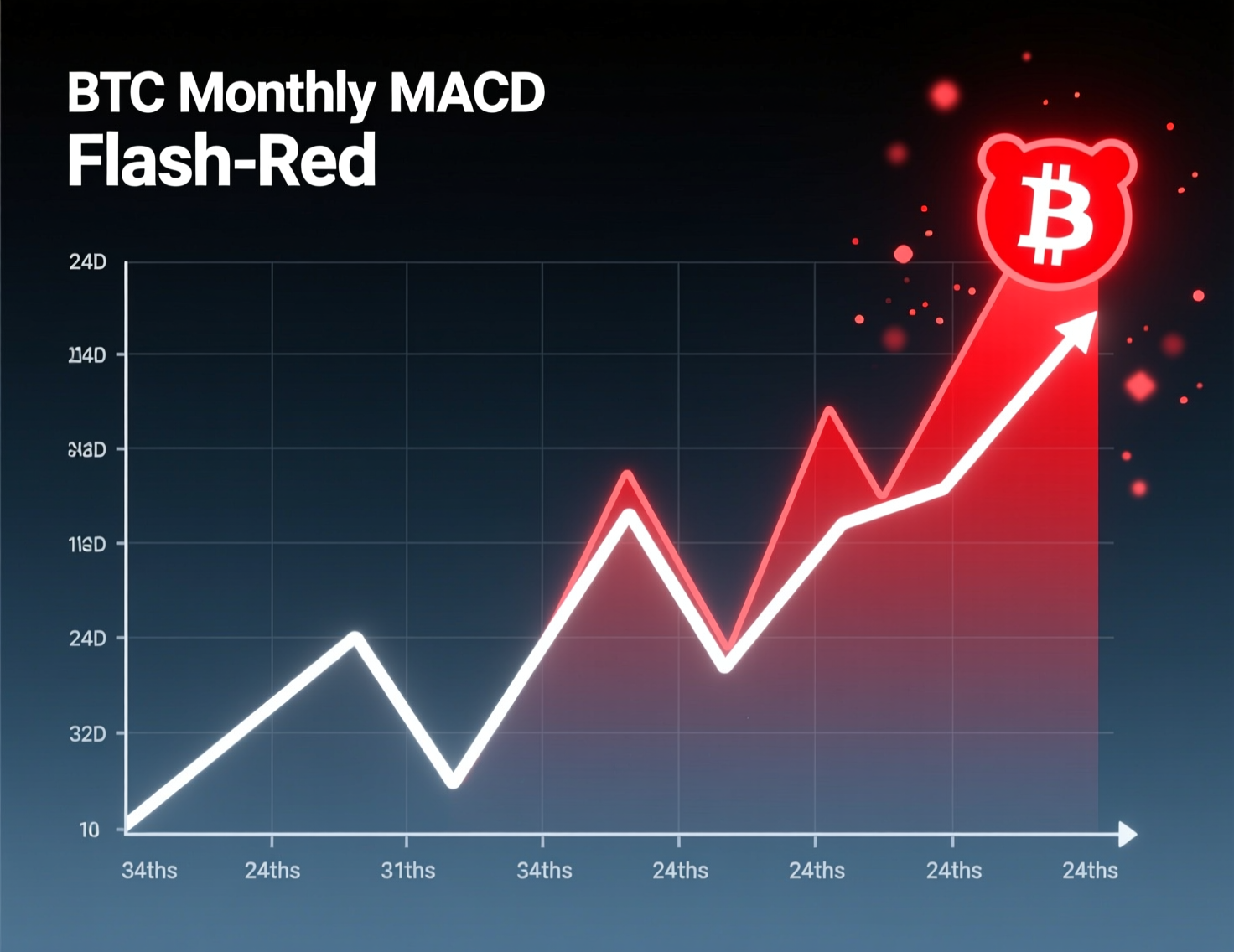

Bitcoin’s Monthly MACD Flashes Red: Echoes of Past Bear Markets
Bitcoin’s monthly MACD has turned red, signaling a historically bearish shift that has often preceded extended market downturns. The indicator flipped in November, coinciding with a sharp 17% decline in BTC. This marks the first negative histogram bar below the zero line, confirming a transition from bullish momentum to a more cautious, downward-leaning trend. Such MACD flips in previous cycles have frequently indicated weakening buyer strength and the potential for deeper corrections.
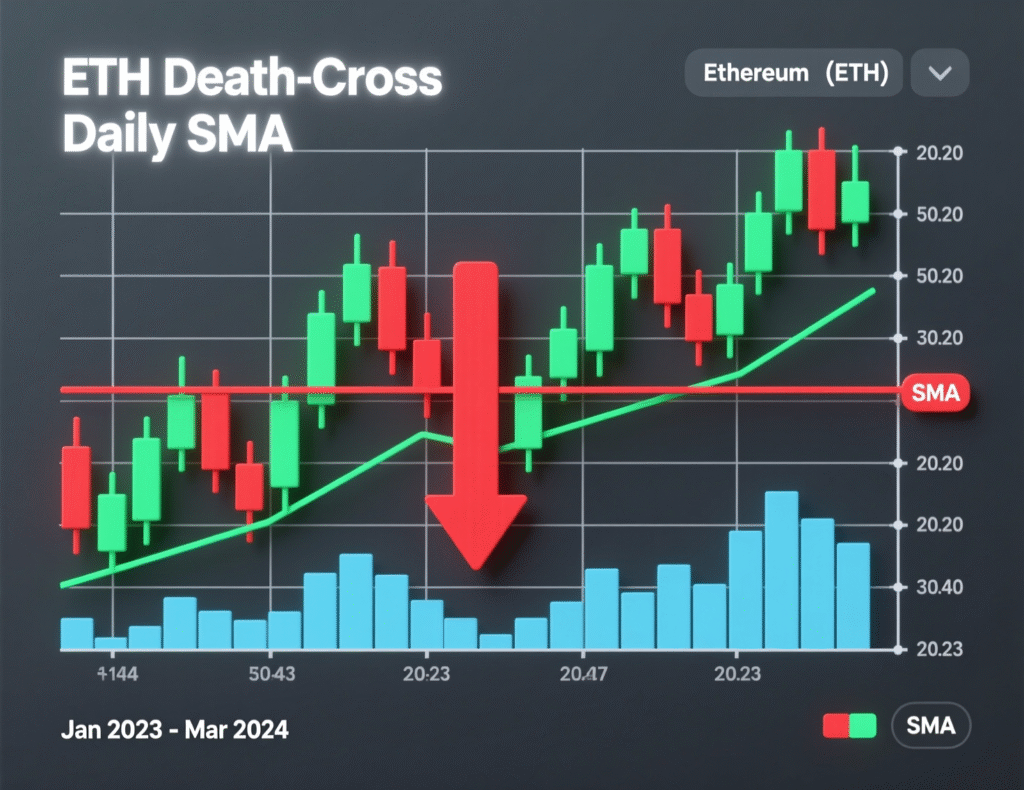
Ether is echoing this cautious sentiment by confirming a death cross on its higher-time-frame charts. A death cross is typically viewed as a warning of continued downside pressure, especially when it aligns with broader market weakness. With both major cryptocurrencies flashing bearish technical signals, traders are increasingly shifting toward a more defensive stance as volatility rises.
Why the monthly MACD matters
The monthly MACD histogram turning negative has aligned with deeper drawdowns in 2014, 2018 and early 2022 after initial sell-offs, according to prior cycle studies. While no indicator is infallible, the flip below zero highlights deteriorating trend strength on higher timeframes that traders often respect for positioning.
Levels to watch if pressure builds
First support is clustered near $84,500 (rising trendline off 2023–2024 higher lows). Below that, April’s low around $74,500 and the prior cycle peak near $70,000 come into focus. Breaches of these zones could embolden bears; successful defenses could set up range-bound consolidation. moomoo.com
Signal, not destiny
Ether’s death cross the 50-day SMA crossing below the 200-day underscores weak intermediate momentum, though its standalone track record in crypto is mixed. Context matters: trend strength, breadth and flows can mute or magnify its impact.
Why the backdrop leans cautious
A resilient U.S. dollar index and Treasury yields, despite talk of Fed cuts, plus recent net outflows from spot ETFs, complement the technical warnings. Together, they point to tighter financial conditions and weaker risk appetite conditions that have historically weighed on crypto.
What “bitcoin monthly MACD flashes red” means for traders
For discretionary and systematic traders alike, a red monthly histogram typically argues for reduced risk, tighter stops and patience for higher-quality entries. It also raises the bar for bullish confirmations (e.g., reclaiming key moving averages and invalidating lower-high structures).
Managing risk when bitcoin monthly MACD flashes red
Volatility often expands after major momentum flips. Using position sizing, staged entries and predefined invalidation levels can mitigate drawdown risk while preserving upside optionality if conditions improve.
Context & Analysis
In prior cycles, monthly MACD flips often arrived after an initial sell-off, with trend deterioration persisting for months. Today’s setup rhymes with that history, but macro and micro structure can diverge: ETF flows could stabilize dips, and risk may remain two-sided into policy pivots. Balance caution with flexibility.

Conclusion
The shift in monthly momentum suggests traders should stay cautious. It’s important to respect any key support breakdowns, control leverage, and wait for clear confirmation signals before reacting to short-term market bounces. Sudden reversals can be misleading, so disciplined risk management is essential during this phase.
If Bitcoin successfully holds the $84.5k support level and begins to regain trend strength, the bearish impact of the signal may weaken. However, if this support fails, historical patterns indicate the market could face increased volatility and extended periods of choppy price action before stability returns.
FAQs
Q : What does it mean when the bitcoin monthly MACD flashes red?
A : It indicates bearish momentum on a higher timeframe, historically aligning with extended drawdowns.
Q : Is a MACD flip a guarantee of a bear market?
A : No. It’s a risk signal, not a certainty; price action and macro factors can still invalidate it.
Q : What support levels are traders watching now?
A : ~$84,500 first, then ~$74,500 and near the ~$70,000 prior cycle peak.
Q : How does ETH’s death cross affect Bitcoin?
A : It doesn’t directly, but broad risk aversion across majors can create pressure on BTC as well.
Q : How should traders adapt positioning after a monthly MACD flip?
A : Reduce risk, define invalidation levels, and wait for trend confirmation before scaling exposure.
Q : Are ETF flows relevant here?
A : Yes. Recent outflows have added caution even as long-term adoption themes remain intact.
Q : Where can I track the latest BTC price while assessing the signal?
A : Use a reputable charting platform and real-time price feeds. (Live widget shown above.)
Facts
Event
Monthly MACD histogram for BTC turns red; ETH confirms death crossDate/Time
2025-12-01T09:50:00+05:00Entities
Bitcoin (BTC), Ethereum (ETH), Omkar Godbole (analyst), CoinDesk (publication)Figures
BTC support levels ~$84.5k / ~$74.5k / ~$70k; November BTC drop >17% (per article)Quotes:
“The indicator printed the first red bar below the zero line in November… confirming a bullish-to-bearish trend change.” CoinDesk analysisSources
CoinDesk Bitcoin’s Monthly MACD Flashes Red: Echoes of Past Bear Markets; Yahoo Finance Bitcoin’s Monthly MACD Flashes Red… (syndicated)