
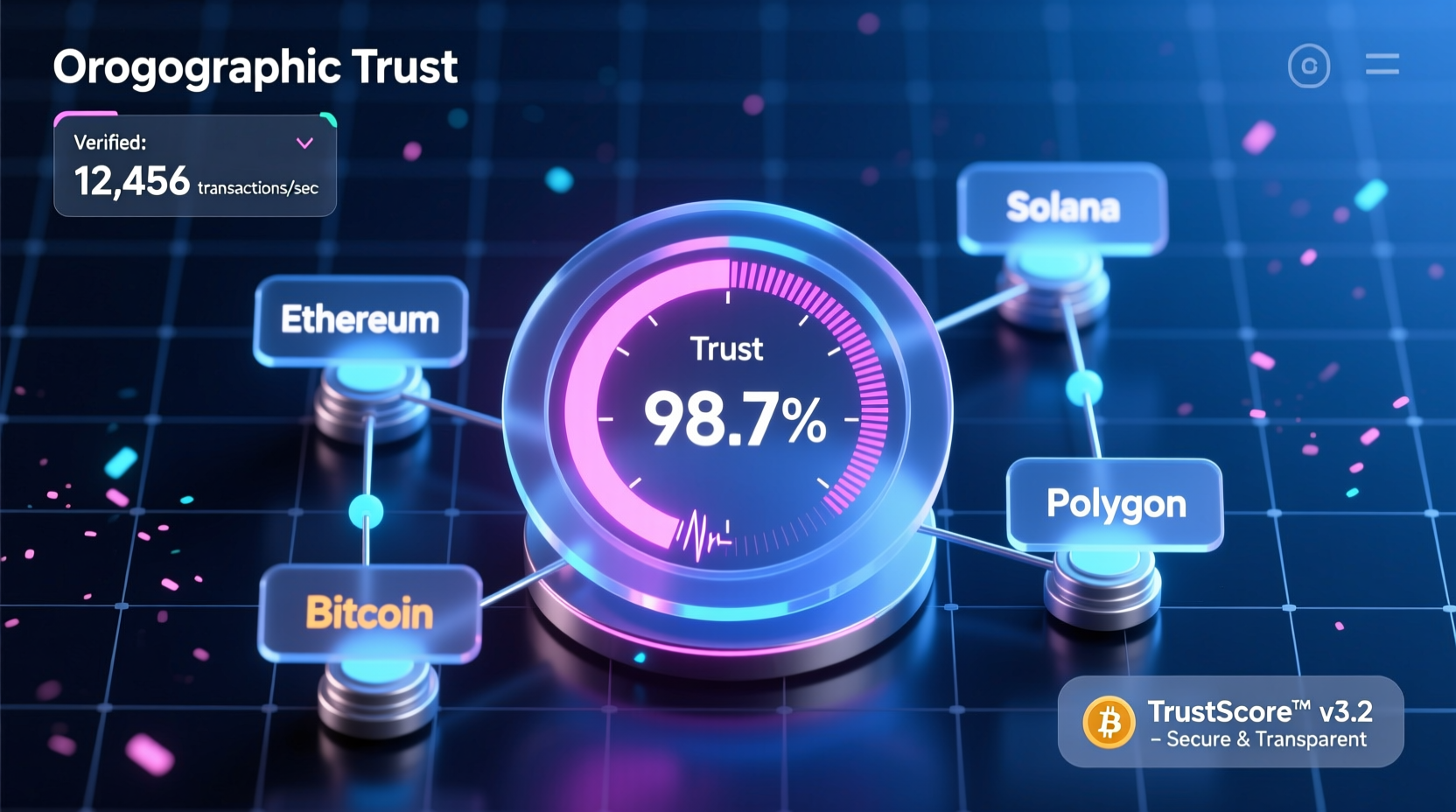
Building Trust in Crypto Projects
Trust is the ultimate moat in Web3. Tokens pump and narratives fade, but crypto project trust compounds when users see evidence: transparent communication, verifiable audits, and a community that can challenge, vote, and fork when needed.
That trust is sorely needed. Chainalysis’ 2025 data shows illicit crypto addresses received roughly $40.9B in 2024, and mid-year 2025 losses had already surpassed 2024 totals fueling user skepticism and regulatory heat. Chainalysis+1
At the same time, security firms continue to track multi-billion-dollar exploit losses and wallet compromises, reminding founders that crypto project trust is earned by design, not marketing.
This guide distills practical steps any team L1s, DeFi, NFTs, RWA, wallets, or exchanges—can use to build crypto project trust from day one. You’ll learn the transparency rituals, audit paths, proof mechanisms, and community patterns that signal credibility and keep you accountable.
Why Trust Is Non-Negotiable in Crypto
Borderless risk, instant blast radius.
Smart contract bugs and key compromises spill globally in minutes. In Q1 2025 alone, CertiK tracked $1.6B stolen across 197 incidents, with private-key compromises a growing vector.
Scam fatigue is real.
Chainalysis and major outlets report that scams (e.g., pig-butchering, drainer kits) continue evolving keeping end users defensive. Transparent teams stand out.
Governance + social proof.
Research on blockchain governance links clear rules and accountability to higher stakeholder confidence an essential pillar of crypto project trust.
Bottom line
in zero-trust environments, crypto project trust becomes a product feature you must design, ship, and maintain.
Radical Transparency
Transparency is the cheapest, fastest way to increase crypto project trust because it doesn’t require a code change, it requires habits.
Do this
Publish an open roadmap & changelog
Date everything. Note delays honestly.
Share treasury & runway updates
Use a simple dashboard; if you custody assets, publish a Proof-of-Reserves (PoR) page with verifiable Merkle proofs or zk-SNARK attestations (see Binance PoR model).
Document risks and trade-offs
Every protocol has them (oracle risk, admin key risk, bridge dependency). Write a “Risks” doc and keep it fresh.
Incident post-mortems within 72 hours
Show timeline, blast radius, user impact, remediation, and prevention.
Licenses & open source
Where feasible, open critical contracts with permissive licenses and clear contribution guidelines.
Transparency checklist (copy/paste for your repo/wiki)
/SECURITY.md (how to report vulns, bounty tiers, response SLAs)
/RISKS.md (explicit assumptions and known risks)
/AUDITS.md (links to reports, dates, scope, fixes tracked)
/GOVERNANCE.md (who can change what, how, when)
/TREASURY.md (addresses, signers policy, reporting cadence, PoR link if custodial)
/ROADMAP.md + /CHANGELOG.md (dated)
This level of clarity raises crypto project trust because users can verify, not just believe.

Security Audits (Done Right)
Audits aren’t a certification; they’re a process. Teams build crypto project trust by showing how they scope, select, and act on audits.
Audit path for startups.
Threat model first.
List assets at risk (user funds, keys, governance, oracles).
Static + dynamic testing.
Use linters, formal verification where relevant, and fuzzing.
Choose auditors with domain fit.
DeFi, bridges, wallet infra, or NFTs have very different failure modes.
Multi-auditor strategy for high TVL.
Two independent audits catch different classes of bugs.
Public reports + fix-tracking.
Publish the PDF, link PRs that fix each finding, and schedule a re-test.
Continuous monitoring.
Integrate on-chain monitors and alerting.
Why it matters
2024–2025 reports show sustained multi-billion losses from exploits, with sector-specific risk (e.g., RWA protocols saw evolving on-chain and operational failures in H1 2025). Audits + monitoring materially raise crypto project trust by shrinking unknowns.
Resource picks (starter)
CertiK’s Hack3d reports (quarterly & annual).
Smart-contract audit guides (overview).
Proof-of-Reserves & Solvency Signals
If you custody funds (CEX, lender, custodian), solvency proofs are table stakes for crypto project trust.
Options to implement.
Merkle-tree PoR with user-verifiable leafs
Regular snapshots, public Merkle root, independent review.Zero-knowledge PoR
Use zk-SNARKs to prove liabilities without exposing user balances.On-chain attestations
For assets held on-chain, publish addresses and enable real-time verification.
Leading exchanges publish PoR dashboards and mechanics users can inspect this practice tangibly increases crypto project trust when combined with auditor attestations and clear methodology.

Pro tip.
Pair PoR with Proof-of-Liabilities. A one-sided “assets only” proof won’t cut it.
Community, Governance & Communication
Healthy communities don’t happen by accident. They are designed to amplify crypto project trust.
Design patterns that work
Transparent governance
Publish roles, voting thresholds, and emergency procedures; summarize every vote’s rationale research links clear governance to greater stakeholder confidence.Weekly dev notes + monthly AMAs
Keep sessions short, time-boxed, and archived.Contributor pipeline
Label “good first issues,” reward meaningful PRs, and run mentorship cohorts.Community risk drills
Tabletop exercises for incident response; publish outcomes.Moderator code of conduct
Enforce it. Document bans and appeals.


Case snapshot – DeFi Lender X (hypothetical composite):
A mid-cap protocol added a second auditor before scaling TVL, instituted monthly PoR attestations for its pooled liquidity, and moved governance from multisig to timelocked on-chain votes with emergency pause thresholds. Within two quarters, unique depositors grew 28% while support tickets dropped 32% strong signals of rising crypto project trust. (Figures illustrative; use as a pattern.)
Handling Incidents Without Losing Trust
Breaches happen. You can still retain crypto project trust with disciplined response.
Freeze and protect
Pause contracts if designed, contact market-makers, bridges, and exchanges; share attacker addresses.
Communicate within 60 minutes
Acknowledge facts, avoid speculation; give the next ETA and channel.
Publish IOC sets
Share indicators of compromise for community defense.
User restitution plan
Define tiers (full, partial, or time-based) and funding sources (insurance, treasury, backers).
Independent review
Commission a third-party analysis; publish the report, fixes, and dates.
Re-launch criteria
Set objective checklists (coverage tests, audits, bounties) before resuming.
Investopedia’s mid-2025 summary citing CertiK highlights how a few mega-events can dominate yearly losses clear, credible communication protects crypto project trust even when the headlines are rough.

Bounties, Monitoring & Continuous Assurance
Bug bounties
Calibrate rewards to TVL and impact; triage publicly.
Runtime security
On-chain monitors for anomalies (TVL swings, oracle deviations).
Access hygiene
Remove hot-wallet privileges, enforce HSMs/MPC, least privilege, and rotation policies private key compromise was a leading cause of losses in early 2025.
Quarterly posture reviews
Re-score risks; publish outcomes to reinforce crypto project trust.
Marketing That Proves, Not Promises
Avoid hype; provide artifacts that bolster crypto project trust.
Short videos walking through audits and fixes.
Interactive PoR verifier.
A public “Trust Center” hub collecting all the items in this article.
Real-World Example: Transparent Exchange Y (composite pattern)
Exchange Y launched a Trust Center with live PoR (Merkle + zk), quarterly auditor attestations, a wallet-security whitepaper, and a proof-of-liabilities method. They instituted “Fix-it Fridays,” publishing any security changes weekly. Result: reduced withdrawal panics during market stress and tighter spreads due to improved market-maker confidence practical dividends of crypto project trust. (Pattern inspired by PoR implementations from leading exchanges.
Concluding Remarks
If you remember one thing, make it this: crypto project trust is a product you ship every week. Ship it via transparent docs and dashboards, real audits with fix-tracking, solvency proofs users can verify, community governance that invites scrutiny, and incident responses that respect users’ time and money. In a market still contending with scams and exploits, these habits are your competitive edge. Start today, and let your receipts not tweets do the talking.
CTA
Want a plug-and-play “Trust Center” framework and audit sprint plan? Get our free checklist and templates then ship your first public trust update this week.
FAQs
Q1) How do I build crypto project trust before mainnet?
A : Start with transparency: publish risks, security policy, and a clear audit plan. Open a public roadmap and changelog, and run a small, incentivized testnet with clear bug-bounty tiers. If you custody funds (even test tokens), publish addresses and demonstrate PoR mechanics on a sandbox. These early receipts build crypto project trust before real TVL arrives.
Q2) How often should we audit smart contracts?
A : At minimum before launch and after any material code change. For protocols with growing TVL, schedule annual or biannual audits and use ongoing monitoring. Publish reports and fix trackers each time—this visibility compounds crypto project trust.
Q3) How can Proof-of-Reserves increase user confidence?
A : PoR lets users verify assets exceed liabilities without trusting a press release. Pair Merkle proofs with zk-proofs for privacy and auditor attestations for rigor. Publish methodology and update cadence. Done right, PoR meaningfully increases crypto project trust.
Q4) How do we communicate during an incident?
A : Acknowledge within 60 minutes, state known facts, share the next ETA, and centralize updates. Publish attacker addresses and IOC sets, then post a full post-mortem with restitution steps. Clear communication preserves crypto project trust even under pressure.
Q5) How does governance affect trust?
A : Transparent, well-documented governance—roles, thresholds, emergencies—signals accountability. Research indicates clarity in blockchain governance correlates with stakeholder confidence, reinforcing crypto project trust.
Q6) How big are crypto losses from hacks lately?
A : Security firms estimated multi-billion losses across 2024 and H1 2025, with wallet compromises and a handful of mega-incidents driving totals. Always consult the latest reports before quoting numbers; they change fast.
Q7) How can small teams afford audits?
A : Scope tightly: audit only critical contracts, use pre-audit tooling (linters, fuzzers) to fix basics, and apply for grants/bounty programs. Publish results and fixes to strengthen crypto project trust.
Q8) How do we prove we fixed audit findings?
A : Map each finding to a commit/PR, request a re-test, and publish a “Fix Matrix” table. Close the loop in public to grow crypto project trust.
Q9) What metrics track trust?
A : Monitor retention, withdrawal ratios during volatility, time-to-acknowledge incidents, bounty SLA adherence, and community vote participation. Improvements here signal rising crypto project trust.