


The Psychology of Crypto Trading in 2025
The psychology of crypto trading is no longer a side topic it’s center stage in 2025. Markets are faster, narratives are louder, and social feeds can trigger buy/sell impulses in seconds. Recent reports highlight that rallies across assets are increasingly emotion-driven, with FOMO and greed rising together, even in traditionally uncorrelated assets. Academic and clinical reviews also link crypto trading to emotion-heavy behaviors overconfidence, social media influence, anxiety, and addiction-like patterns shaping decisions as much as charts do.
In this guide, we unpack the psychology of crypto trading: the core biases, tools that reflect market mood (like the Crypto Fear & Greed Index), and practical routines to build discipline. You’ll learn how to spot emotional traps in advance and install habits that protect your P&L and your mental bandwidth.
Why 2025 Feels Different (But Familiar)
Markets always mix fear and greed, but in 2025 we’re seeing an unusual blend: simultaneous enthusiasm across crypto, AI equities, and even safe-haven assets. Strategists attribute a lot of this to FOMO and greed sentiment that can detach from fundamentals and create sharp swings. The Economic Times Meanwhile, Bitcoin search interest sometimes diverges from price action, making “vibes” a bigger factor than retail Google searches alone.
Social dynamics also matter: day trading remains isolating for many, and isolation can magnify emotional decisions. Community participation is rising precisely to counter this psychological toll.
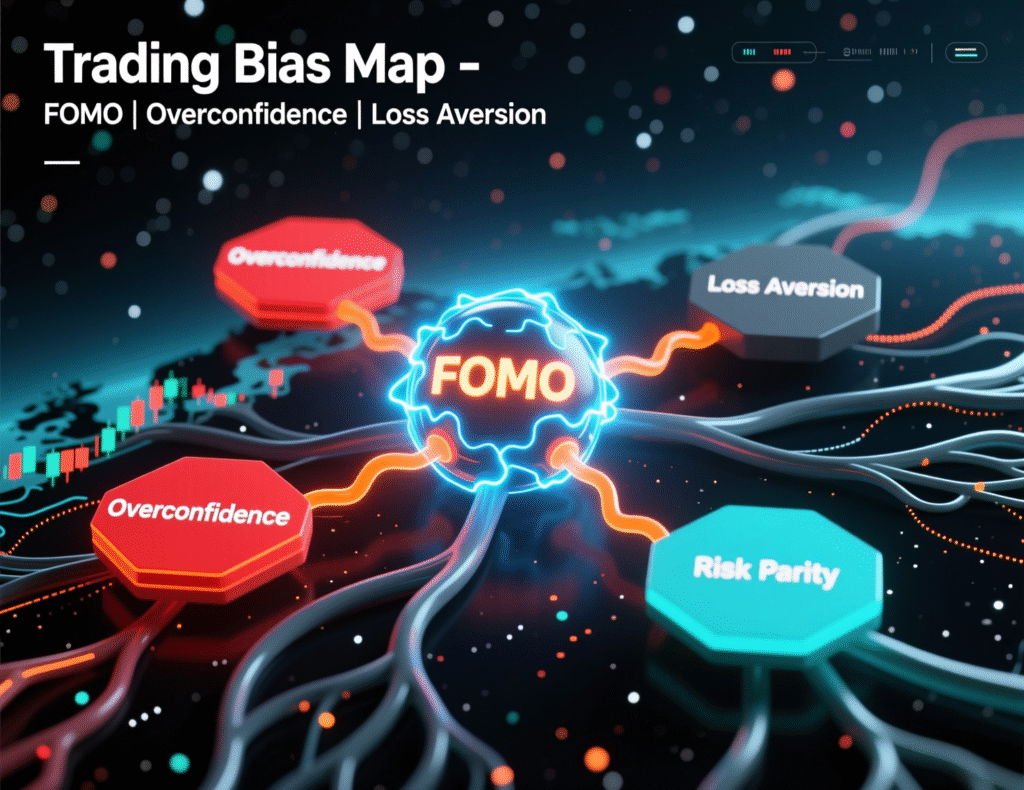
The Bias Map: What Most Traders Battle Daily
FOMO (Fear of Missing Out)
FOMO pushes entries late and exits early. Empirical work across crypto investors repeatedly finds FOMO near the top of impactful biases often interacting with herding and loss aversion.
Antidotes
pre-commit to entry zones; scale in; require confirmation by multiple, independent signals (e.g., price structure + on-chain activity + funding/OI shifts).
Overconfidence & Confirmation Bias
Overconfidence leads traders to overestimate skill and risk more capital; confirmation bias narrows their information diet to only agreeable views. Clinical and review literature flags both as prominent in crypto.
Antidotes
Red-team your thesis; write a “kill list” of invalidation points; track forecast accuracy monthly.
Loss Aversion & the Disposition Effect
Holding losers too long and selling winners too soon is classic prospect-theory behavior and widely observed in trading.
Antidotes
fixed exit ladders; stop-loss placement based on structure/volatility; post-trade reviews that grade process, not just P&L.
Herding & Attention-Driven Momentum
Evidence suggests retail traders may be contrarian in stocks yet exhibit momentum-following in crypto an environment ripe for herding.
Antidotes
use watchlists with delayed triggers; ignore first 15–30 minutes after major headlines; trade smaller during “trend-everywhere” days.
Recency & Anchoring
Fresh moves or round numbers (e.g., $100k BTC) can distort judgment and create “psychological levels.”
Antidotes
frame trades on higher-timeframe structure; journal the why behind each anchor (round number, last high, influencer take, etc.).
Reading the Room: Sentiment Tools That Reflect Market Mood
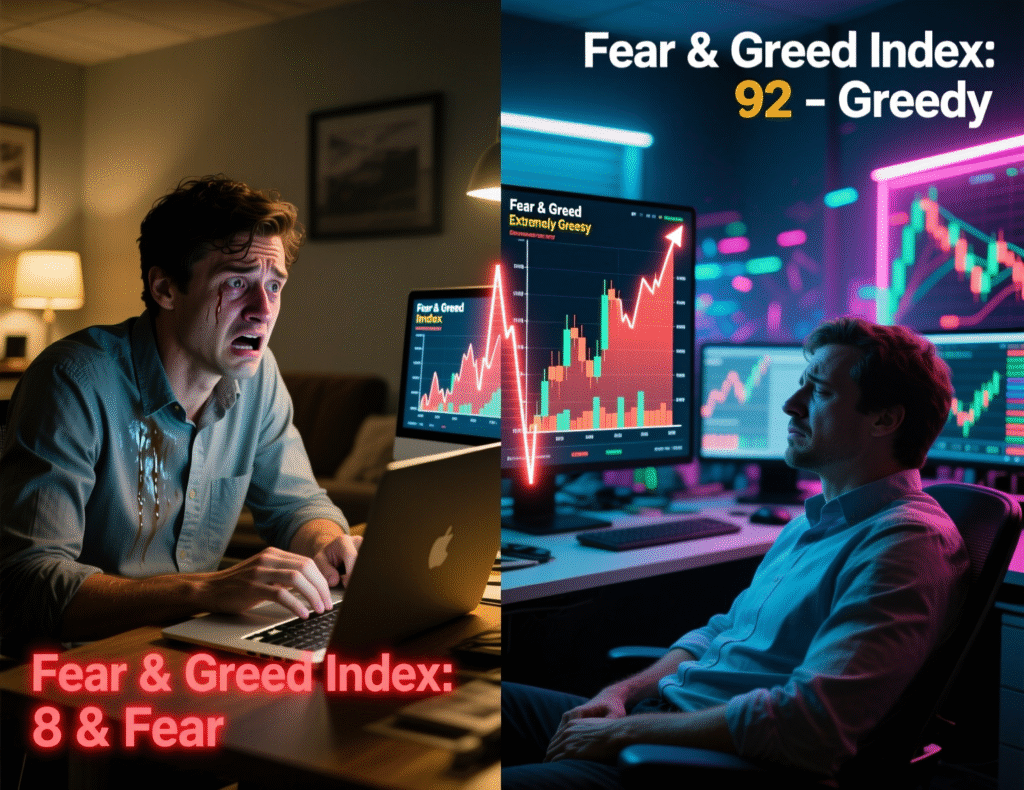
Crypto Fear & Greed Index
A 0–100 daily meter for BTC sentiment with historical series. Useful for “extreme” conditions: panic washes or euphoria peaks.Alternative Providers (CMC / Bitbo views)
Alternate dashboards and history charts to cross-reference extremes.Blended Sentiment Inputs
Social mentions, funding & open interest, on-chain flows, and search trends commonly recommended as a basket in 2025 guides.How to use (not worship) sentiment
Treat extremes (≤20 or ≥80 on Fear & Greed) as context, not signals. Combine with market structure, liquidity maps, and risk limits. Log what the tool read and what you did.
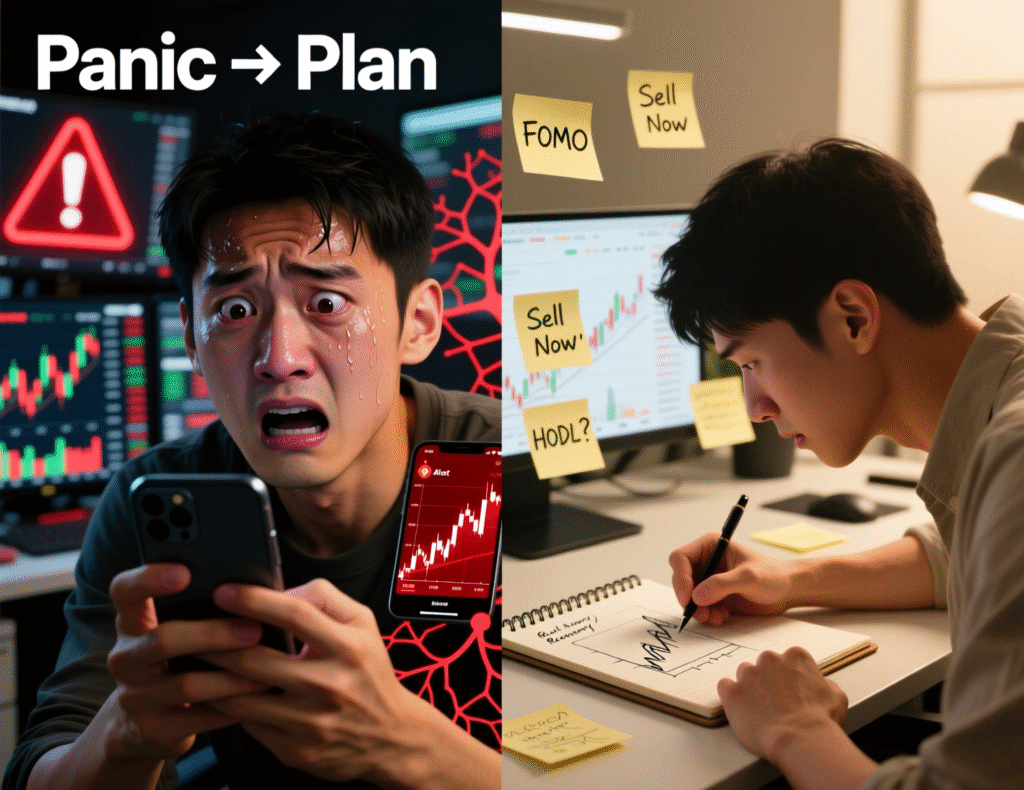
Case Study #1: Panic Low, Calm Plan
In mid-cycle corrections, Fear & Greed can plunge into “extreme fear” while structure shows higher-lows on higher timeframes. A trader who pre-defines scale-in zones and sizes at panic levels can capture the reversion when fear normalizes—if risk per trade is capped and invalidation is respected. (Try tagging each entry with the index reading to build your own data.)
Case Study #2: Euphoria at Round Numbers
At psychological milestones (e.g., $100k BTC), social proof surges and “this time is different” narratives bloom. Smart routines: cut size by half at round-number breakouts, move to trailing stops, and require a second-leg confirmation before adding.
Building Your 2025 Trading Psychology Stack
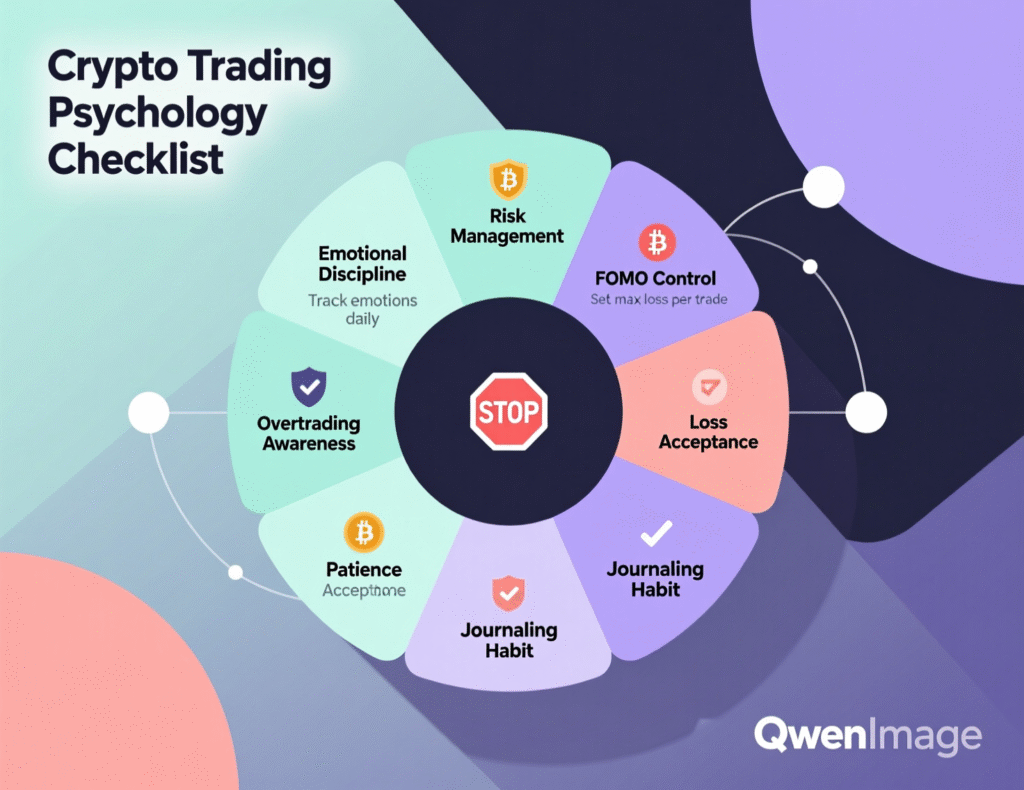
A. Pre-Market Checklist (10 minutes)
Sleep & stress check (binary: trade / reduce risk).
Bias scan: what would prove me wrong today?
Context board: higher-TF trend, liquidity zones, macro calendar.
Sentiment snapshot (Fear & Greed, funding/oi, social heat).
Scenario planning: continuation vs. mean reversion; position sizes for each.
B. Intraday Rules
Two-strike rule:
If two trades break plan, reduce size to 25% or stop trading for the session.News cooldown
15-minute buffer post-headline; widen stops or stand down.Emotional tells
Racing heart, compulsive timeline refresh switch to SIM, journal, or walk.
C. Post-Trade Review (15 minutes)
Tag each trade with bias categories (FOMO, herding, loss aversion).
Grade process quality (A–D), not outcome.
Record one improvement for next session.
D. Social & Community Hygiene
Trading can be isolating, and isolation amplifies stress. Curate one peer group or mentorship circle to get feedback and guardrails many traders are doing this to reduce the psychological toll.
Advanced Angle: Personality & Risk Preferences
Individual traits (self-efficacy, locus of control, risk preference) influence crypto investment intentions and how traders respond to volatility. Recognize your baseline sensation-seeking or highly cautious and tune systems (size, timeframes) accordingly.
What Generative Trends Mean for Trader Psychology
AI-amplified narratives, gamified UIs, and algorithmic content can supercharge FOMO and herding demanding stricter filters and slower decision loops. Deploy deliberate friction: second-screen confirmations, time delays, or mandatory checklist completion before order entry.
Common Myths, Debunked
“Sentiment tells me what to do.”
It offers context; structure and risk rules decide.“Good traders feel nothing.”
They feel and systematize responses (checklists, size caps). Clinical and scoping reviews stress emotional regulation not emotionlessness.“HODL or nothing.”
Timeframe discipline matters; short-term traders and long-term allocators face different psychological traps. Evidence shows differing behaviors by asset and horizon.
The 12 Rules of Rational Crypto Trading (2025 Edition)
Define invalidation before entry.
Size positions by volatility; cap daily loss.
Use sentiment extremes as context only.
Pre-write exit ladders.
Automate as much as possible (alerts, stops, DCA).
Journal emotions alongside metrics.
Red-team your narrative weekly.
Respect round numbers trade smaller, trail sooner.
Stand down after two plan breaches.
Build community to counter isolation.
Review outcomes monthly; grade process.
Protect mental health; there’s always another trade.
To Sum Up
The psychology of crypto trading has real, documented effects from FOMO and overconfidence to anxiety and isolation. The good news: you can systematize your responses. Use sentiment as context, pre-commit to risk protocols, and build routines that separate signal from noise.
In fast, AI-amplified markets, mental discipline is not “soft” it’s the hard edge that compounds over time. If you make psychology of crypto trading a daily practice, your decisions and results improve.
CTA.
Want a printable checklist and journaling template? Download our free “Crypto Trading Psychology Kit” and start implementing these rules today.
FAQs
Q : How does the psychology of crypto trading affect results?
A : Cognitive biases (FOMO, overconfidence, loss aversion) and emotions (anxiety/euphoria) strongly shape entries, exits, and risk-taking. Reviews link these factors to poor decision-making. Building evidence-based habits—like structured reviews, predefined rules, and consistent routines—helps reduce their impact and improve long-term results.
Q : How can I measure market sentiment reliably?
A : Use multiple data points such as the Crypto Fear & Greed Index (0–100 scale), funding rates, open interest, on-chain flows, and social activity. Historical series show that extreme readings often precede reversals. Always confirm sentiment signals with price structure before acting.
Q : How do I stop FOMO buying tops?
A : Pre-commit to entry zones, scale in only after confirmation, and trade smaller near round-number breakouts. Apply a “two-minute pause” rule before executing impulsive trades. Journaling emotional triggers helps identify and prevent repeated FOMO patterns.
Q : How does isolation affect traders?
A : Day trading can be socially isolating, which heightens stress and impulsive decision-making. Joining vetted online or local trading communities, or participating in mentorship groups, provides accountability, shared learning, and emotional support.
Q : How can I reduce overconfidence?
A : Challenge your own thesis (“red-team” it), track forecast accuracy, and set predefined invalidation levels for trades. Academic studies highlight overconfidence as widespread in crypto. Keeping a monthly accuracy score encourages realism and disciplined reflection.
Q : How does loss aversion show up in crypto?
A : Traders often hold losing positions and take profits too early the classic disposition effect described in prospect theory. Combat it by using structured exits, stop-losses, and post-session reviews to ensure consistency and objectivity.
Q : How do psychological price levels influence trades?
A : Round numbers like $100K BTC act as psychological magnets where orders and emotions cluster a “round-number bias.” To manage risk, trade smaller near these milestones and trail stops tightly to guard against reversals.
Q : How can beginners practice healthy trading psychology?
A : Start with simulation or minimal size, use a daily checklist, cap maximum loss per session, and journal emotions. Combine sentiment, structure, and data for multi-signal confirmation rather than relying on any single indicator.
Q : How does herding differ in crypto vs stocks?
A : Studies show retail traders who act contrarian in stocks often chase momentum in crypto, amplifying herding during sharp rallies or sell-offs. This attention-driven momentum dynamic makes emotional discipline especially critical in crypto markets.