
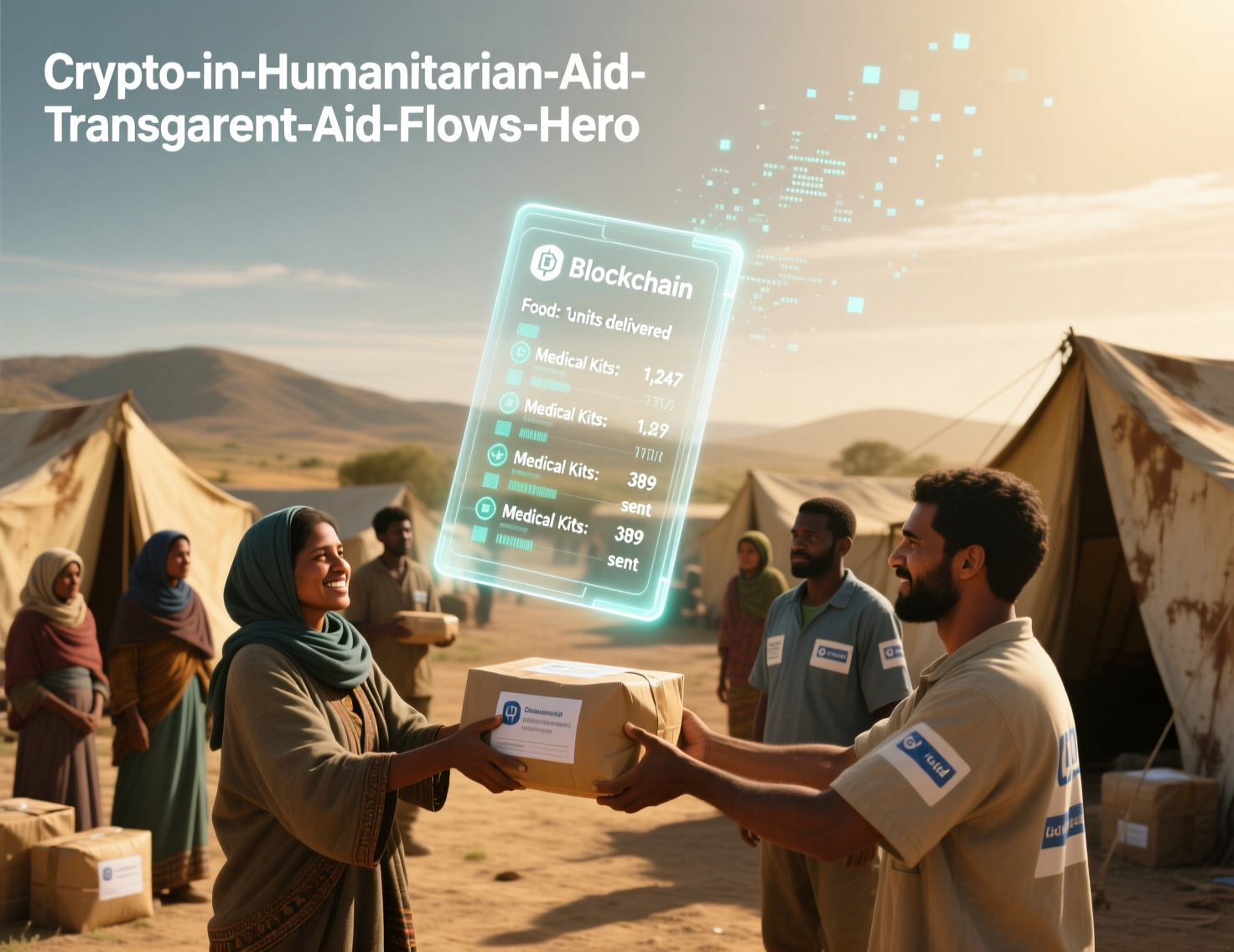
Crypto in Humanitarian Aid
When people donate during a crisis, they want speed, transparency, and accountability. Public blockchains offer a radical improvement: money can move within minutes, each transfer is traceable on-chain, and audit trails are preserved by default. That’s why crypto in humanitarian aid has surged supporting disaster relief, refugee cash assistance, and rapid response campaigns.
Programs like the World Food Programme’s Building Blocks have routed hundreds of millions of dollars in assistance with blockchain rails, while crypto-philanthropy campaigns have raised nine-figure sums for crises like Ukraine results that would have been hard to match via traditional banking rails during the most chaotic days of conflict.
This guide shows NGOs and donors how to use crypto in humanitarian aid to create transparent aid flows with governance, compliance, and practical steps you can implement today.
What “Transparent Aid Flows” Mean on a Blockchain
End-to-end traceability
Every transaction (donation, conversion, distribution) is recorded on-chain, enabling auditors and donors to verify flows without waiting for quarterly reports.
Program-level wallets
Segment wallets (or sub-wallets) by program, geography, and vendor. Publish read-only explorers for donor visibility.
Conditional controls
Use multisig approvals and smart-contract rules for spend limits, approved vendors, and role-based access.
Real-time dashboards
Aggregate wallet activity into live dashboards for program managers and comms teams.
Bottom line.
a public ledger lets you prove how funds moved, when, and to whom—without exposing beneficiary identities.
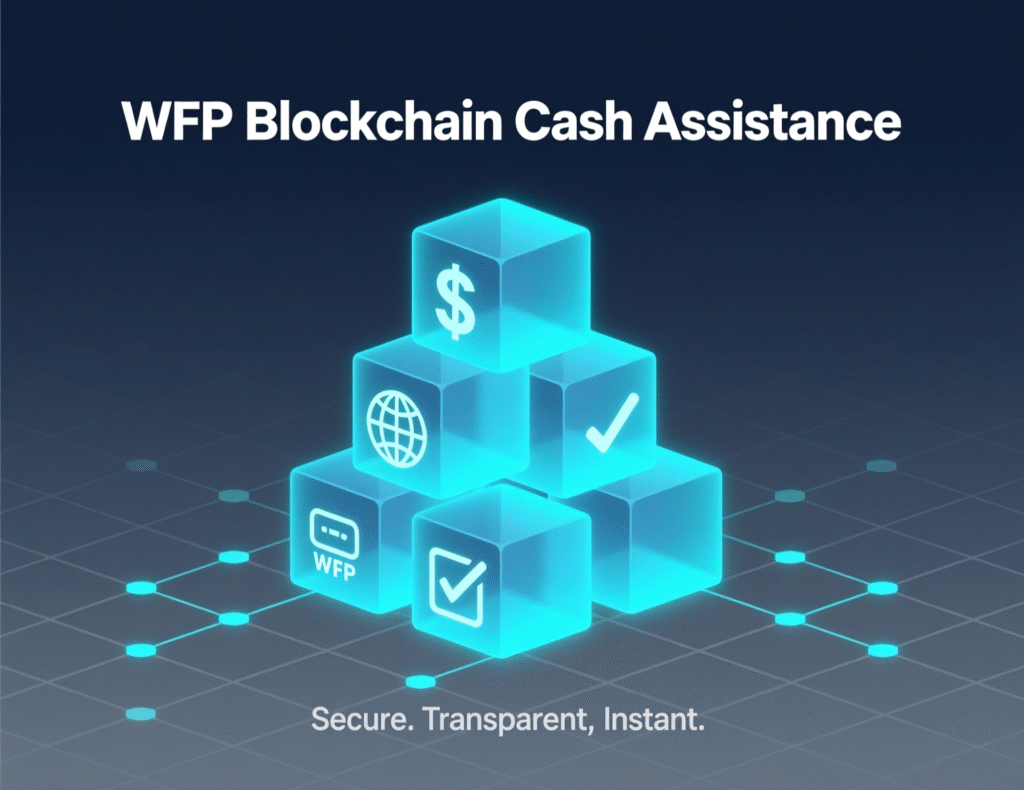
Case Study #1: World Food Programme’s “Building Blocks”
WFP’s Building Blocks network has delivered over US$325 million in cash transfers to around 1 million refugees across Bangladesh and Jordan, making it one of the largest blockchain implementations in humanitarian assistance. The system allows multiple agencies to channel aid to the same blockchain account, coordinate entitlements, and reduce third-party fees.
Why it matters for transparency.
Agency-to-agency coordination on a shared ledger reduces duplication.
Immutable logs support fraud reduction and faster reconciliation.
Program leads see live entitlements and can adapt to market conditions.


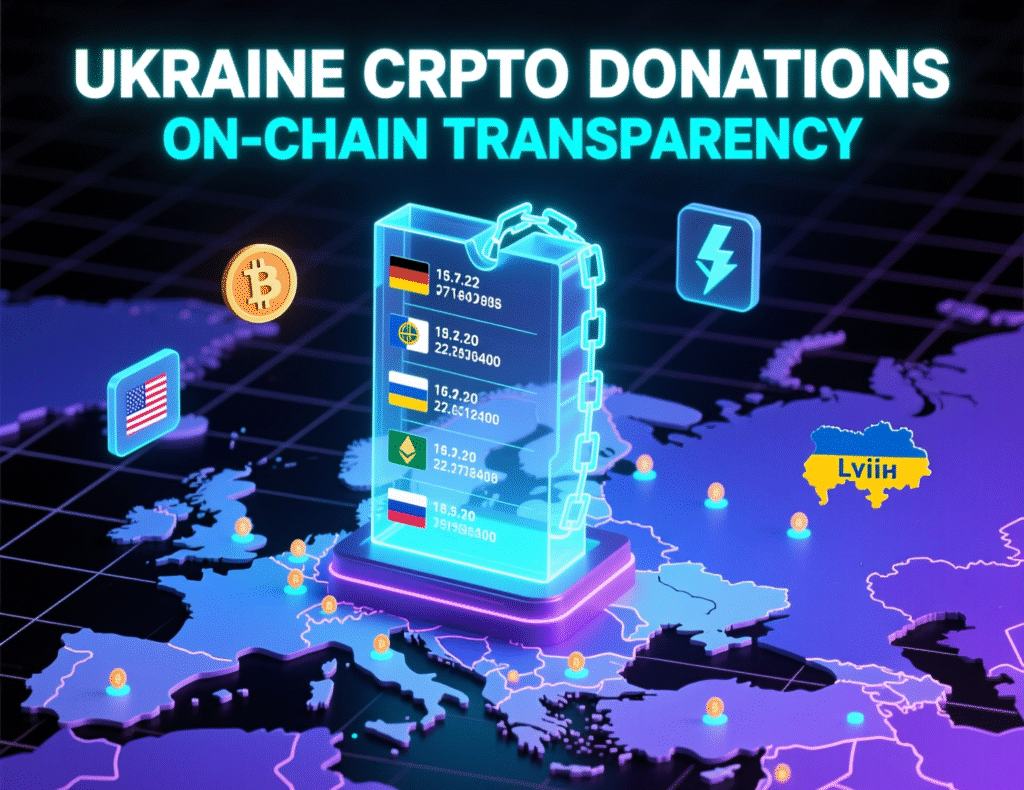
Case Study #2: Ukraine Crypto for Rapid Response
Independent analytics indicated more than $200 million in crypto flowed to pro-Ukraine efforts in 2022–2023, with at least $80+ million going to official government-listed wallets early in the war. These crypto channels enabled rapid, borderless fundraising precisely when banking rails were constrained.
A related insight: NFT-based fundraising (e.g., the Ukraine DAO flag sale) raised millions within days showing how Web3 communities can amplify donations while keeping flows auditable on-chain.
Who’s Already Using Crypto in Humanitarian Aid
Save the Children accepted Bitcoin as early as 2013 and continues to run global crypto donation programs, including pilots to streamline cash & voucher assistance (CVA).
UNICEF operates a CryptoFund / Innovation Fund to invest in open-source digital public goods for children, including blockchain projects.
WFP USA accepts cryptocurrency donations and highlights blockchain’s potential to reduce transaction costs and improve data protection in aid delivery.
Benefits: Why Crypto Improves Transparent Aid Flows
Speed in Emergencies
Funds can reach field operations in minutes, even when correspondent banking is disrupted. (Ukraine experience; early-war donations moved within hours.)
Programmable Controls
Multisig, allowlists, and spending caps make governance enforceable in code.
Lower Friction Costs
Routing via stablecoins on efficient chains can cut fees vs. legacy wire corridors; some programs report substantial fee reductions.
Audit-ready Transparency
On-chain histories simplify donor reporting and third-party audits.
Inclusion at the Last Mile
When paired with e-vouchers or agent networks, beneficiaries in fragile settings can receive value without bank accounts (as in Building Blocks).
Risks & How to Mitigate Them (Governance First)
Regulatory compliance (AML/CFT)
Follow FATF virtual asset standards, implement Travel Rule where applicable, and use VASP partners with robust KYC/OFAC screening. Recent FATF updates stress gaps in implementation and urge stronger enforcement.
Sanctions exposure
Enforce geofencing and blocklists; align with OFAC advisories, and choose exchanges with proven compliance records (note recent large settlements in the sector).
Volatility
Prefer major stablecoins for program disbursement; convert to local value quickly via vetted off-ramps.
Operational security
Use hardware wallets for treasury, role-based access, and incident playbooks.
Privacy
Keep beneficiary PII off-chain; store only hashed references or program IDs; comply with local data protection laws.
Implementation Blueprint: Crypto in Humanitarian Aid (Step-by-Step)
Strategy & Policy
Define when to use crypto (e.g., cross-border surge funding; CVA in cash-constrained corridors; donor-direct on-chain campaigns).
Approve a token policy (stablecoins allowed, network choices, rebalancing rules).
Set transparency targets: publish read-only wallet explorers for each program.
Compliance & Partners
Create an AML/CFT risk assessment referencing FATF R.15 and NPO guidance.
Onboard two exchanges/OTC desks in different jurisdictions for redundancy; require screening & Travel Rule adherence.
Wallet Architecture
Treasury multisig (e.g., 2-of-3) with policy-based spending limits.
Program wallets per country/project with tagged metadata for accounting.
Vendor allowlists: pre-screened wallets for suppliers/agencies.
Stablecoin & Network Choices
Use high-liquidity stablecoins on low-fee networks (e.g., L2s).
Maintain a small ETH/MATIC buffer for gas; automate refills via custodial rules.
Disbursement Models
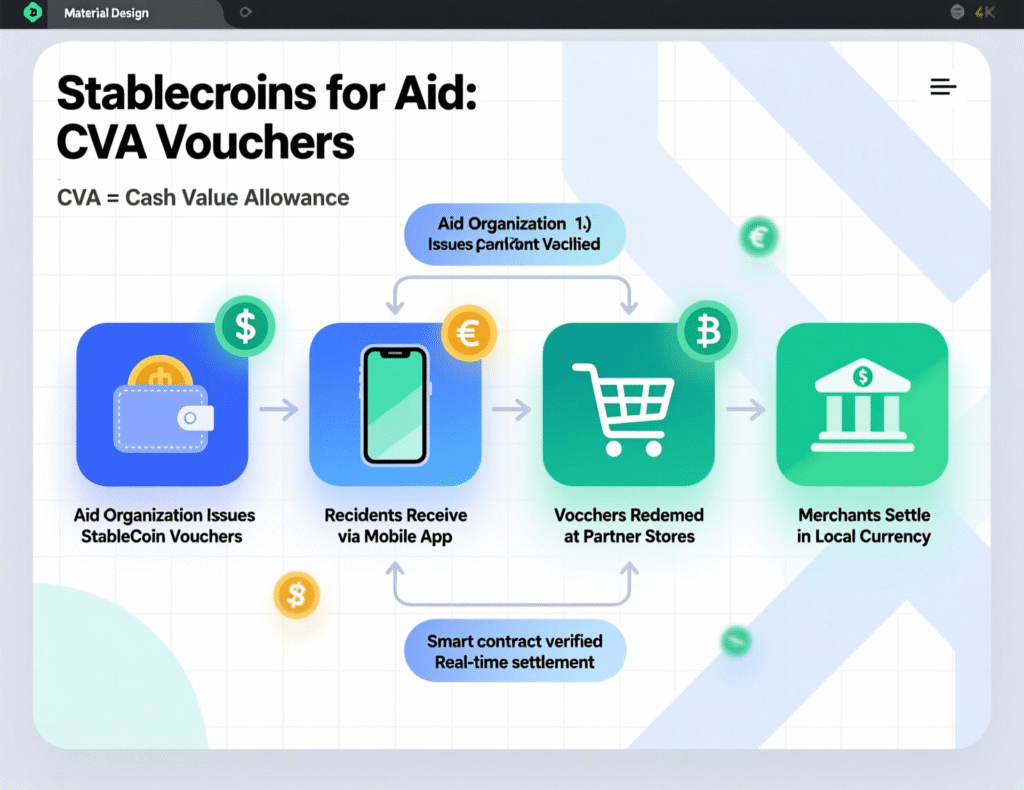
Cash & Voucher Assistance (CVA)
Tokenized vouchers redeemable at pre-vetted merchants; or direct wallet top-ups via agency kiosks.
E-voucher QR codes
Avoids exposing beneficiary wallets; maintains privacy. (Pattern inspired by Building Blocks.) World Food Programme
Transparency UX
Public dashboards
Show total received, total disbursed, fees saved, and top supplier categories.
Downloadable CSVs for auditors
Merkle proofs for snapshot attestations.
Reporting & Communications
Dedicate a “Verify on-chain” page where donors can click through to explorers for each program wallet (e.g., like Save the Children’s “Don’t trust, verify” messaging).
Tooling Stack (Recommended)
Custody
Reputable custodians or audited multisig contracts.
Compliance
Chain analytics (screening, sanctions, exposure), Travel Rule provider.
Off-ramps
Two+ regulated VASPs/exchanges per corridor; backups documented.
Dashboards
Open-source indexers + BI (Grafana/Metabase) for live transparency pages.
Security
HSMs, hardware wallets, SOC playbooks, access reviews.
Real-World Results You Can Model
WFP Building Blocks
Large-scale blockchain CVA with multi-agency coordination and significant fee reduction potential.Ukraine Crypto Relief
$200M+ routed in early conflict phase; NFT fundraisers (e.g., Ukraine DAO) mobilized global support rapidly and transparently.Save the Children
First major INGO to accept Bitcoin (2013); ongoing crypto donation rails and pilots for CVA.
Governance & Ethics: Guardrails for Trust
Do no harm
Thorough context assessments to ensure crypto doesn’t expose beneficiaries to coercion or targeting.
Cash-out choice
Offer opt-in off-ramps (mobile money, vouchers, local currency) to avoid forcing crypto literacy.
Public accountability
Publish quarterly on-chain transparency reports summarizing flows, FX slippage, and fees.
Outlook
Transparent aid flows are more than a buzzword they’re how organizations prove impact and accelerate relief. By adopting crypto rails for well-scoped use cases (surge funding, CVA, cross-border vendor payments), NGOs can cut friction, increase auditability, and strengthen donor confidence. The building blocks are already here: proven program patterns (WFP), battle-tested rapid-response campaigns (Ukraine), and operational playbooks from early adopters (Save the Children, UNICEF Ventures).
Start small. Pick one corridor, one stablecoin, and one program wallet with strict controls. Publish your wallets, your policies, and your metrics. That’s how crypto in humanitarian aid delivers transparent aid flows and how your organization earns lasting trust.
CTA
Want a ready-to-use playbook (wallet policy, vendor allowlist template, and a transparency dashboard schema)? Reach out we’ll share a starter kit your team can deploy in a week.
FAQs
Q : How does crypto improve transparency in humanitarian aid?
A : Public blockchains record every transaction, creating an immutable audit trail. NGOs can publish read-only wallets for donors, segment by program, and automate spend controls via multisig/smart contracts. This reduces reconciliation time and strengthens trust.
Q : How fast can funds move with crypto in humanitarian aid?
A : Minutes, even across borders. During crises like the early Ukraine conflict, official wallets received millions within days when banking rails were constrained—demonstrating crypto’s rapid-response advantage.
Q : How can NGOs reduce volatility risk when using crypto?
A : Use stablecoins for program disbursement, convert promptly via regulated off-ramps, and set treasury policies (caps, rebalancing, buffers for gas).
Q : How do transparent aid flows protect against fraud?
A : Immutable logs and analytics flag unusual patterns. With allowlisted vendors and multisig approvals, suspicious payments are harder to execute and easier to audit.
Q : How do we handle KYC/AML and sanctions?
A : Adopt FATF standards (R.15), use compliant VASPs, implement the Travel Rule, and screen addresses. Monitor OFAC advisories and maintain a blocklist.
Q : How can crypto support cash & voucher assistance (CVA)?
A : Programs like WFP’s Building Blocks demonstrate tokenized entitlements and shared ledgers for multi-agency coordination, streamlining CVA and reducing fees.
Q : How do we protect beneficiary privacy on transparent blockchains?
A : Keep PII off-chain; use hashed references or program IDs; apply data minimization and comply with local privacy laws. E-voucher models help avoid exposing personal wallets.
Q : How do donors verify where their crypto went?
A : Publish explorer links for program wallets and monthly CSV exports. Some INGOs (e.g., Save the Children) encourage “Don’t trust—verify” through on-chain transparency.
Q : How can we start a pilot safely?
A : Start with a narrow use case (e.g., supplier payments in one corridor), choose a stablecoin and two vetted off-ramps, define a clear exit to fiat, and run a 90-day M&E plan.