

How Ethereum’s Fusaka Upgrade Could Be a Game-Changer, Asset Manager VanEck Explains
Global asset manager VanEck says the upcoming Ethereum Fusaka upgrade will simplify scaling for layer-2 rollups by easing the data burden on validators. This technical improvement is designed to make transaction processing more efficient, allowing rollups to operate faster and at lower costs.
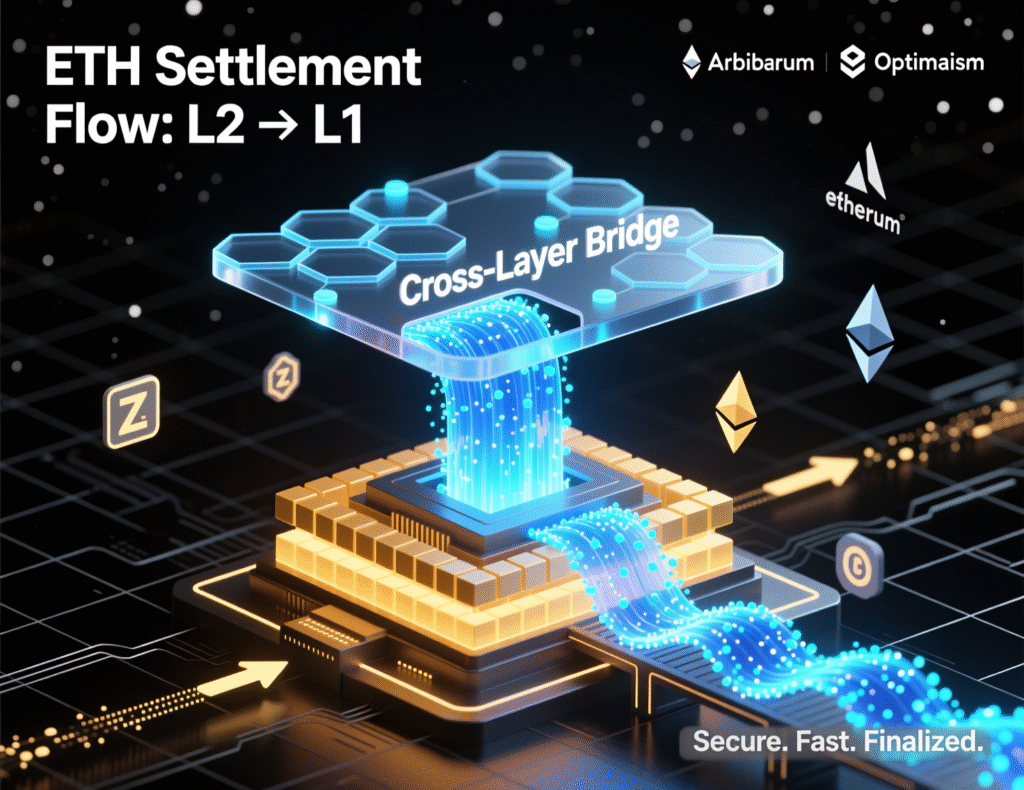
According to VanEck, these enhancements could significantly reduce end-user fees while strengthening Ethereum’s position as the leading settlement layer for the broader blockchain ecosystem. By optimizing data handling and improving network efficiency, the Fusaka upgrade may help Ethereum maintain its competitive edge amid growing demand for scalable and cost-effective decentralized applications.
What VanEck says about the Ethereum Fusaka upgrade
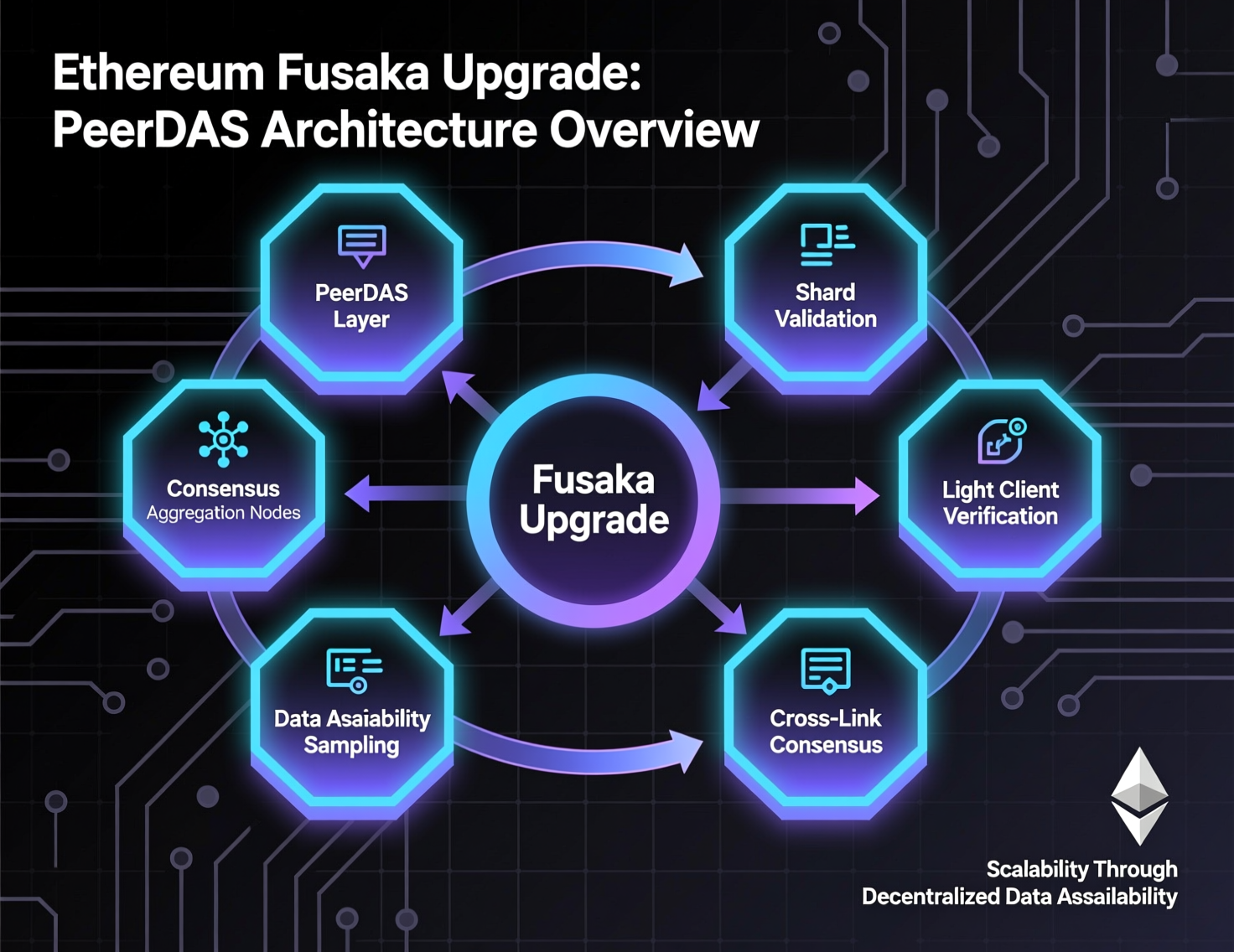
VanEck’s September recap frames Fusaka as a pivotal step in Ethereum’s rollup-centric roadmap: PeerDAS reduces bandwidth/storage needs for validators, allowing developers to raise blob capacity more safely and cheaply supply DA to L2s. The firm adds that Base and World Chain together submit about 60% of L2 data today evidence of L2 centrality and that cheaper L2s should pull more onchain activity onto Ethereum.
Costs and throughput after the Ethereum Fusaka upgrade
PeerDAS reorganizes how blob data propagates and is verified (sampling + erasure coding), letting the network expand blob targets without forcing “every node downloads everything.” That supports lower L2 fees as capacity ramps via BPO forks (e.g., moving targets/max from 6/9 to 10/15 and 14/21 on testnets), with mainnet increases gated by stability checks.

Why PeerDAS matters (and how it works)
Ethereum.org describes PeerDAS (EIP-7594) as a significant scaling upgrade since EIP-4844: nodes subscribe to subsets of “blob columns,” sample small pieces, and still gain strong availability guarantees via KZG commitments and erasure coding. Practically, it reduces per-node bandwidth needs and enables stepwise blob increases that should benefit L2 users over time.
Timeline and parameters
Testnets
Holesky activated Oct 1, with Sepolia Oct 14 and Hoodi Oct 28; BPO forks progressively raise blob targets afterward. Ethereum Foundation BlogMainnet window
Multiple reports cite Dec 3, 2025 as the target; EF notes mainnet is contingent on successful testing and client releases.Additional protocol improvements in Fusaka include a default gas limit increase to 60M (EIP-7935) and networking cleanups (eth/69), laying groundwork for future throughput increases.
Implications for ETH and investors
VanEck stresses that while L1 fee revenue can decline as usage migrates to L2s, ETH’s role as the settlement/money layer strengthens: more activity relies on ETH-secured finality. The firm also flags dilution risk for unstaked holders as institutions accumulate ETH to stake for yield.
<section id=”howto”> <h3>How to prepare your app/rollup for lower fees after Fusaka</h3> <ol> <li id=”step1″><strong>Step 1:</strong> Track blob usage and base fees on your L2 to set fee markets and user messaging.</li> <li id=”step2″><strong>Step 2:</strong> Benchmark transaction sizes and batching frequency to capitalize on expanded blob capacity.</li> <li id=”step3″><strong>Step 3:</strong> Update infra (clients/SDKs/indexers) for PeerDAS-aware endpoints once providers ship mainnet releases.</li> <li id=”step4″><strong>Step 4:</strong> Stress-test throughput and UX with canary cohorts as BPO parameters increase.</li> <li id=”step5″><strong>Step 5:</strong> Revisit tokenomics/fees as costs fall to optimize retention and onchain volume.</li> </ol> <p><em>Note: Process may vary by provider/jurisdiction. Confirm requirements before acting.</em></p> </section>
Analysis
PeerDAS is a networking-layer breakthrough that should broaden DA supply without raising centralization risk as sharply. The near-term effects on retail fees depend on how quickly blob targets rise on mainnet and how much L2s pass savings to users. (Analysis)
Conclusion
If testing proceeds smoothly, the Fusaka upgrade could significantly boost layer-2 network capacity and help lower transaction costs. The improvements aim to make rollups more efficient, strengthening Ethereum’s scalability and reducing congestion across the ecosystem.
Analysts say this upgrade could also reinforce ETH’s role as core settlement collateral, deepening its importance in decentralized finance. However, market participants should wait for the Ethereum Foundation’s mainnet slot confirmation and the gradual rollout of BPO increases before expecting the full impact of fee reductions to be reflected in prices.
FAQs
Q : When is Fusaka scheduled to go live?
A : Reports cite December 3, 2025, pending successful testnets and client releases.
Q : What is PeerDAS?
A : It’s a protocol (EIP-7594) for data availability sampling that reduces per-node bandwidth by sampling blob data.
Q : Will fees drop immediately?
A : Not instantly. BPO phases will gradually raise blob capacity after activation, so fee relief depends on network health and L2 pass-through.
Q : How does this affect ETH’s value proposition?
A : VanEck says it reinforces ETH’s role as a monetary and settlement asset, even if L1 fee revenue trends lower.
Q : Which L2s are driving blob demand?
A : VanEck highlights Base and World Chain, which together account for about 60% of L2 data submitted.
Q : Does the exact phrase “Ethereum Fusaka upgrade” refer to a hard fork?
A : Yes. Fusaka is the network upgrade (hard fork) bundling EIPs including EIP-7594.
Q : What else ships with Fusaka?
A : The Ethereum Foundation notes a default gas limit of 60M (EIP-7935) and networking cleanups such as eth/69, among other improvements.