

The Future of Crypto Mining
The future of crypto mining will be decided by three forces working in tandem: relentless hardware efficiency gains, access to low-cost/low-carbon energy, and new/volatile revenue sources on top of base block rewards. In April 2024, Bitcoin’s fourth halving cut issuance, and transaction fees briefly surged as the Runes protocol launched an omen of how miner revenues could depend more on activity-driven fees during peak demand. That dynamic, combined with rising network difficulty and regional power constraints, is pushing miners to become sharper power buyers, better heat managers, and more creative data-center businesses.
For operators and investors, the future of crypto mining is no longer a simple hashrate race. It’s a portfolio problem: acquire the right ASICs, secure durable energy advantages, hedge hashrate with market data, and diversify revenue sometimes beyond Bitcoin. This guide maps where mining is headed from 2025 to 2030 and the practical moves that separate resilient firms from the rest.
What will shape the future of crypto mining in 2025–2026
Post-halving economics
Base rewards are lower, so fee cycles matter more. The April 2024 halving coincided with Runes minting, spiking fees and briefly lifting daily miner revenue above pre-halving levels evidence that protocol-level demand shocks can still move the needle. Expect episodic fee windfalls, not permanence.Hashprice discipline
Track USD/BTC hashprice to understand expected revenue per TH/s per day; miners increasingly hedge with forward markets and pool payout options. Hashrate Index+1Difficulty migration
As efficient fleets deploy (and inefficient gear retires), difficulty drifts upward, compressing margins especially for operators paying >$0.06/kWh.


Hardware & efficiency defining the future of crypto mining
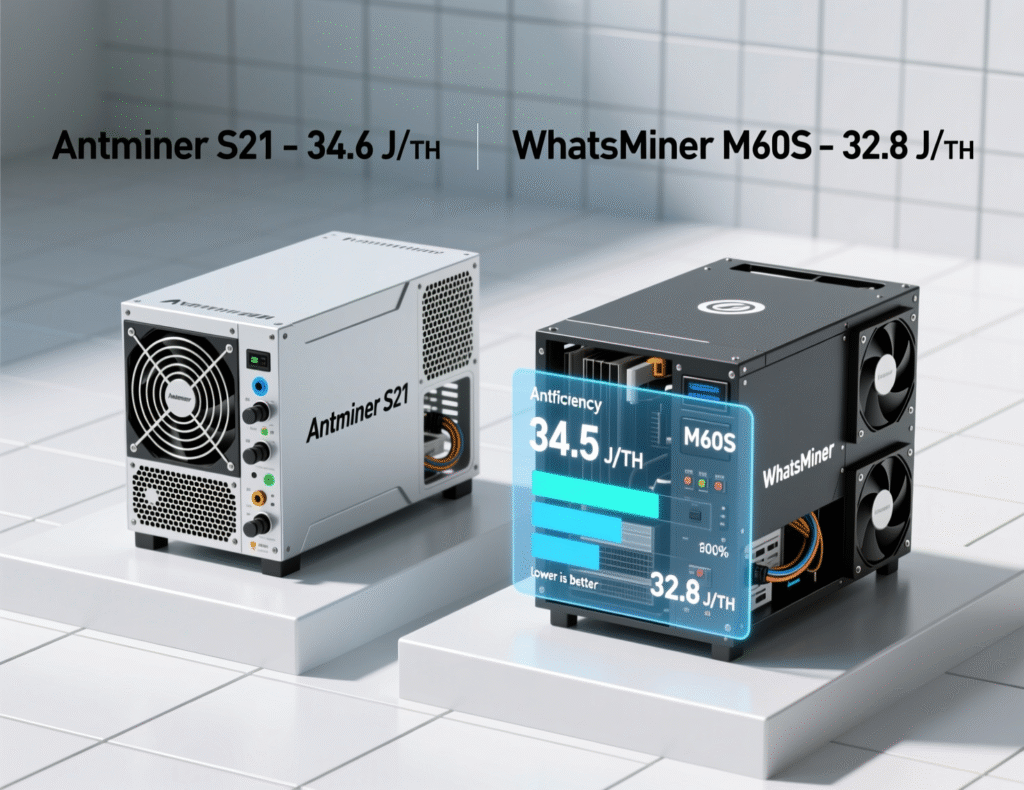
The future of crypto mining leans on the newest ASICs and cooling. 2024–2025 gear like Bitmain’s Antminer S21 (≈200 TH/s at ~17.5 J/TH) and MicroBT’s WhatsMiner M60S++ (~226 TH/s at ~15.5 J/TH) set the current performance envelope for air-cooled/hydro-ready deployments. Efficient rigs extend runway when hashprice dips, particularly for sites with sub-$0.05/kWh power.
Immersion cooling and the future of crypto mining operations
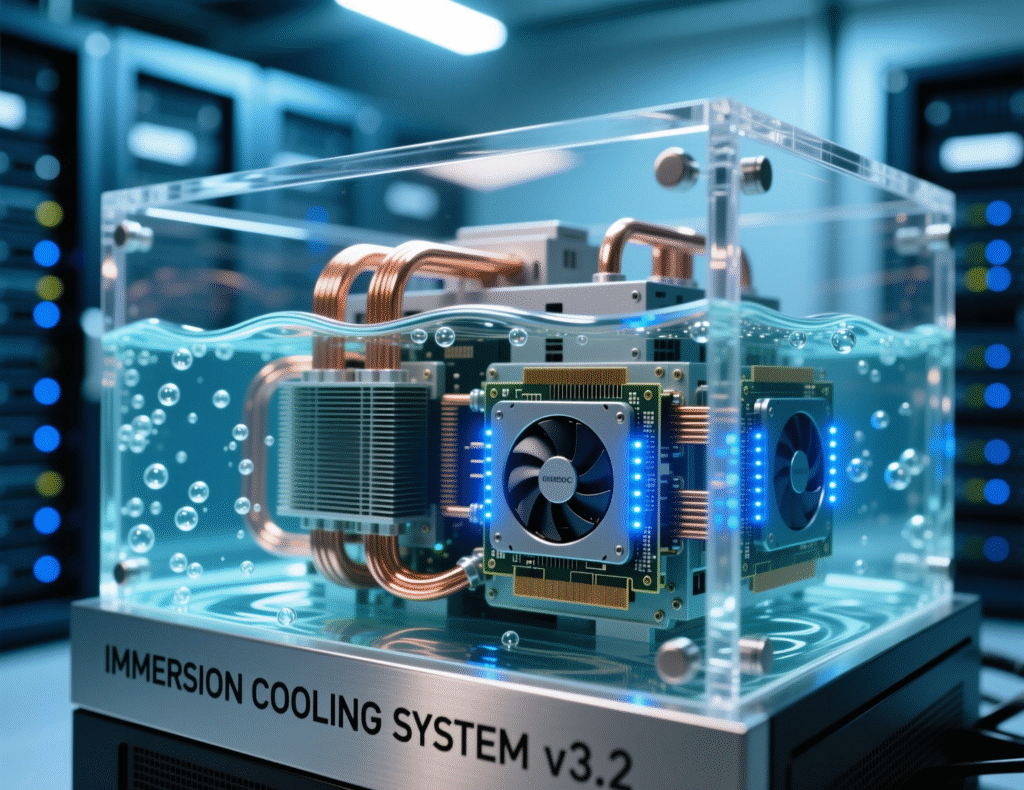
Immersion/hydro setups unlock higher density, more consistent thermals, and longer machine life. As ambient temperatures rise and power density goes up, modern mines in hot regions (e.g., Texas) are shifting to immersion and hydro pods to stabilize uptime and reduce fan power draw.
Practical playbook
Standardize on a small set of models (e.g., S21 class, M60x series) to simplify spares/firmware.
Use firmware/pool options that balance PPS/FPPS and fee capture.
Engineer for 35–50 kW per rack (air) or >75 kW per tank (immersion), planning for heat reuse pilots where feasible.
Energy strategy: the biggest lever in the future of crypto mining
Power is the P&L. Leaders in 2025 are acting like energy traders with data centers attached.
Index your costs
Lock multi-year PPAs where possible; negotiate curtailment credits and ancillary services revenue. Texas miners like Riot have shown how demand response can offset OpEx during peak prices.Sustainable/stranded energy
Flaring-to-power projects and behind-the-meter renewables can cut costs and emissions. Firms such as Crusoe deploy Digital Flare Mitigation® to convert otherwise wasted gas into power for compute.Know your footprint
The Cambridge Bitcoin Electricity Consumption Index (CBECI) is the standard reference for network-level power estimates; its methodology blends hardware baskets with economic assumptions. Use it to benchmark communications with utilities and ESG teams.
Caution
Water usage is the new flashpoint. Peer-reviewed research highlights Bitcoin’s growing water footprint, especially for thermoelectric-powered facilities. Immersion and site selection (e.g., non-freshwater cooling, dry climates with adequate air-cooling) will feature in ESG reviews.
Policy & grid realities shaping the future of crypto mining
The regulatory arc is toward transparency, curtailment readiness, and environmental disclosures:
EU MiCA
Requires sustainability disclosures in asset documentation and on websites—mining-adjacent teams should expect clearer reporting norms on energy and emissions.US grid governance
Texas has tightened expectations for massive power users and can curtail loads during emergencies, raising the bar on backup planning and interconnection diligence.Data transparency battles
US efforts to survey miner energy use have faced legal friction—expect ongoing debates and potential reporting mandates.
Bottom line
The future of crypto mining will reward sites that are curtailment-ready, metered, and able to document energy/water footprints in a defensible, audit-friendly format.
New revenue layers: fees, services, and AI crossovers
On-chain activity spikes
Events like the 2024 Runes launch showed that fees can occasionally dominate block rewards, re-emphasizing the value of staying online during demand bursts.AI/HPC diversification
Some miners are converting power footprints and real estate to host GPU clusters or hybrid compute. 2024–2025 deals between AI cloud specialists and mining/data-center firms demonstrated how energy-rich sites can pivot to steadier revenue.
Case study #1 Texas demand response
In August 2023, Riot earned $31.7M in power and demand response credits more than all credits received in 2022 showing how flexible participation in ERCOT/MISO can materially enhance returns in tight power markets.
Case study #2 From mining to AI hosting
Core Scientific’s 2024 engagement with AI cloud provider CoreWeave (and the 2025 acquisition talks that followed) illustrates the optionality of mining-built infrastructure in the AI era. For energy-dense campuses with great interconnects, “mining-to-AI” has become a credible path.
Risk map for the future of crypto mining
Price/difficulty whiplash
Use hashprice hedges and staggered hardware refreshes.Policy shocks
Track regional rules on water, emissions, and grid access. Be ready with curtailment playbooks.Supply chain
Lead times for top ASICs and immersion components can stretch in bull markets—pre-plan procurement.
A 6-step playbook for 2025 builds (How-To)
Model revenue with hashprice scenarios
(bear/base/bull), including fee upside.
Pick ASIC cohorts
(e.g., S21/M60S++) and unify firmware/pool strategies.
Engineer cooling
(air vs. immersion/hydro) based on climate, density, and water constraints.
Lock power
(PPA/behind-the-meter) with curtailment credits and ancillary services where possible.
ESG/Compliance pack
(energy/water metering, CBECI context, MiCA-style disclosures).
Option to diversify
(AI/HPC hosting pods) if your site has the right interconnect and heat rejection.
Conclusion
The future of crypto mining favors operators who treat mining as an energy business with optional compute services, not just hashrate. Efficiency-first fleets, resilient power contracts, curtailment revenue, and credible ESG reporting are the new minimums. Opportunistically, activity-driven fee spikes and AI/HPC crossovers can smooth cyclical cash flows if sites are engineered for flexibility.
From 2025–2030, expect consolidation, more immersion deployments, and tighter alignment between miners and regional grids as digital infrastructure becomes a first-class citizen in energy planning. Build for durability, document everything, and let efficiency be your moat.
CTA: Want a site-specific plan? Share your target power price, location, and capex, and I’ll map a tailored mining-plus-AI build comparing air vs. immersion with breakeven hashprice curves.
FAQs
Q : How will the 2024 halving change the future of crypto mining profits?
A : It compresses base rewards, so profitability relies more on fee spikes, difficulty trends, and power costs. The Runes launch showed fees can surge temporarily, but operators should underwrite projects on conservative fee assumptions and cheap power.
Q : How can immersion cooling help in hot regions?
A : Immersion stabilizes thermals, reduces dust/fan failures, and can enable mild overclocks with similar or lower failure rates. It also reduces acoustic footprint, which is key for permitting. Plan for tank density, dielectric fluid logistics, and heat reuse pilots.
Q : How do miners hedge revenue volatility?
A : Use hashprice forwards, flexible pool payouts, and staggered hardware refresh cycles. Tracking Luxor’s Hashprice Index helps with timing and benchmarking.
Q : How do ESG pressures impact the future of crypto mining?
A : Expect stronger disclosure norms (e.g., EU MiCA), scrutiny of water and emissions, and grid-emergency curtailment requirements in some US states. Sites with defensible energy data and curtailment readiness will have smoother operations.
Q : What ASICs are most efficient right now?
A : Flagships include Bitmain’s S21 (~17.5 J/TH) and MicroBT’s M60S++ (~15.5 J/TH). Efficiency leadership changes fast; build procurement with refresh windows and spare parts plans.
Q : How can stranded or flare gas improve economics?
A : Digital Flare Mitigation® converts wasted methane into electricity, lowering costs and emissions. It’s useful where grid interconnections are slow or expensive.
Q : How does AI hosting fit into a mining site?
A : Power-dense sites with good interconnects can carve out capacity for GPU clusters. Contracts can be long-dated and reduce revenue volatility versus pure mining, but they demand different cooling and networking.
Q : How much water does mining use, and what can be done?
A : Research shows a growing water footprint in PoW mining, especially where thermoelectric cooling dominates. Options include air-cooling in dry climates, non-freshwater cooling, and immersion systems designed for minimal water use.
Q : How can small miners stay competitive post-halving?
A : Co-locate with low-cost energy, buy efficient second-hand ASICs during bear dips, use pool features to smooth payouts, and keep overhead lean. Watch hashprice and difficulty to time expansions.