


Crypto Passive Income Ideas for 2025
If you’re hunting for crypto passive income in a maturing, more regulated market, 2025 has genuinely improved options compared with cycles past. In this guide, we’ll map out Crypto Passive Income Ideas for 2025 that balance risk and reward, highlight current yield ranges where available, and show you practical next steps. We’ll cover core plays like staking and stablecoin lending, plus newer opportunities such as restaking and tokenized T-bill yields—while calling out the gotchas (slashing, smart-contract risk, impermanent loss, and regulatory change). The goal: help you decide which crypto passive income paths fit your time, risk tolerance, and capital without hype.
Quick reality check: base ETH staking yields hover around ~3–5% depending on setup and MEV; restaking can boost returns but adds layered risk; stablecoin lending rates vary across Aave/Morpho and centralized programs. Verify live rates before committing funds.
Top crypto passive income ideas for 2025 (snapshot)
Here’s the shortlist we’ll explore in depth:
Native & pooled staking (ETH, SOL, etc.)
Liquid staking tokens (LSTs) like stETH, rETH
Restaking (EigenLayer & liquid restaking protocols)
Stablecoin lending (Aave/Morpho; onchain USDC lending)
Liquidity provisioning (e.g., Uniswap v4 custom hooks)
Tokenized T-bill yields (BUIDL, OUSG – qualified investors)
CeFi “earn” products (with caution)
Airdrop/points “passive-ish” strategies
Validator-as-a-Service & delegated staking
DeFi structured vaults (delta-neutral, basis trades)
Bitcoin-adjacent yields (via L2s/bridges; advanced)
DePIN-lite “hands-off” models (selective)
Staking: the foundation of crypto passive income
What it is: Lock your PoS assets to help secure a network and earn protocol rewards.
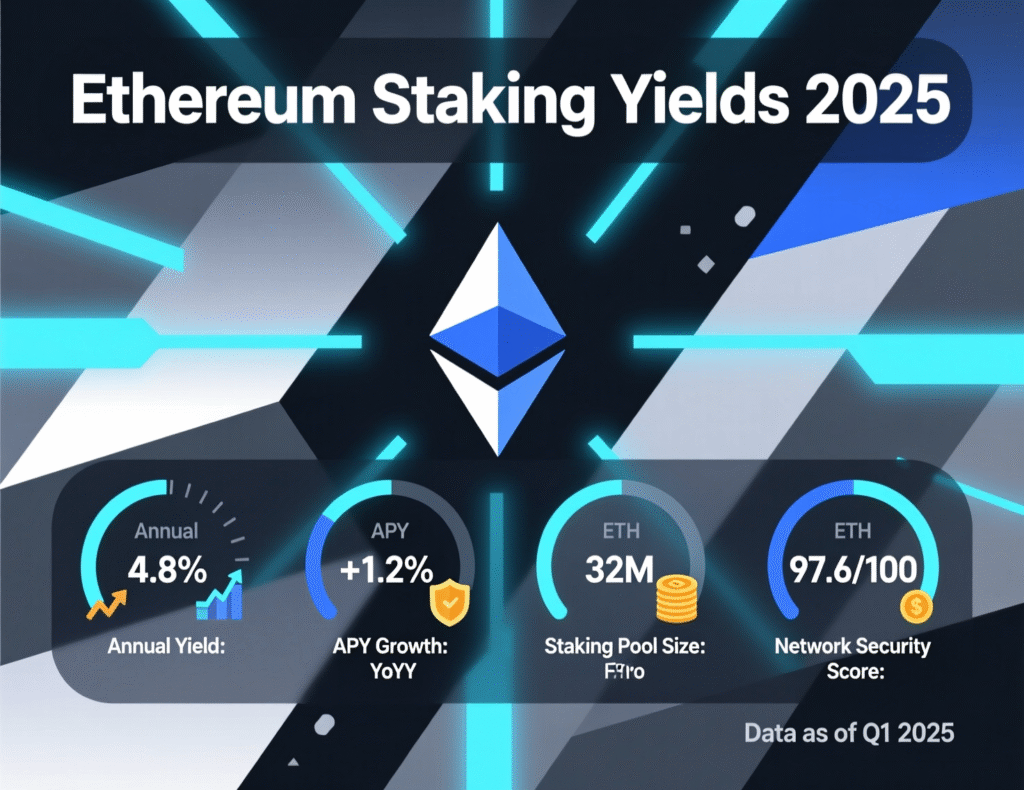
Why it matters in 2025: Staking is now mainstream, with clear educational resources and maturing infrastructure. On Ethereum, solo or pooled staking pay ~3–5% APY, with MEV-enabled validators near the higher end. Risks include downtime penalties and slashing. Liquid staking adds smart-contract risk. blocknative.com+2ethereum.org+2
How to start (ETH examples)
Solo/at home
32 ETH + hardware + uptime discipline.Pooled/Service
use reputable pools or exchanges (understand custody and fee structure).
2025 note
Lido remains the largest LST protocol but its market share has fallen to ~24–25% as competition and restaking segments grew reducing concentration risk vs 2023 highs.
Liquid Staking Tokens (LSTs): keep capital flexible
What it is: Stake, receive a token (e.g., stETH/rETH/cbETH) you can deploy in DeFi.
Why it matters: You can farm extra yield while staying staked (e.g., LST lending/LP).
Regulatory tailwind (U.S. context): Recent coverage indicates liquid staking tokens are not, per se, securities per SEC guidance updates supportive for mainstream adoption (policy can change; still verify locally).
Risks
Smart-contract risk, depegs from extreme market stress, and stackable risk when pairing with DeFi positions.
Restaking (EigenLayer): layered yield with layered risk
What it is
Reuse staked ETH or LSTs to secure additional services (AVSs) for extra rewards. Liquid restaking lets you deposit LSTs/other tokens into EigenLayer smart contracts. TVL soared through 2024–2025, reflecting the hunt for yield and protocol growth.
Pros
Extra yield/points; expanding AVS ecosystem.
Cons
Contract/consensus coupling, correlation risk, complex liquidation paths. (Institutional research and think pieces stress caution.)
Actionable tip
Cap restaked exposure (e.g., a fraction of your LST stack) and track AVS-specific risks.
Stablecoin lending: Aave, Morpho & onchain USDC programs
For many, stablecoins are the “sleep-at-night” side of crypto passive income. In 2025:
Aave V3 USDC
Deposit rates commonly sit in the low- to mid-single digits (e.g., ~4% recently on Ethereum V3; varies by market and utilization).Morpho vaults
Curate under-the-hood strategies; some USDC vaults have shown ~5–8% APY ranges (dynamic, not guaranteed).Coinbase onchain USDC lending
(Integrated with Morpho on Base) recently advertised up to ~10.8% APY (boosted; variable and time-limited). Verify live before acting.
Risks
Smart-contract exploits, oracle failures, depegs, and policy changes. Over-collateralized DeFi loans mitigate credit risk but don’t eliminate market/liquidity risk.
Liquidity Provision (LP): Uniswap v4 in focus
What it is
Provide token pairs to AMMs and earn swap fees (and sometimes incentives).
What’s new
Uniswap v4 launched in 2025 with “hooks” that let pools run custom logic (dynamic fees, TWAMM, etc.). This unlocks more configurable LP strategies.
Big risk
Impermanent loss when price moves, LP value can underperform simply holding. Learn it before you LP.
Tokenized T-bill yields (RWA): cash-like return, crypto rails
What it is
Qualified investors can access tokenized money market funds such as BlackRock’s BUIDL or Ondo’s OUSG, bringing T-bill yields on-chain with daily accruals/redemptions. Yields float with short-term rates (~4–5% in recent materials); participation and availability depend on jurisdiction and KYC.
Why it matters for crypto passive income
Portfolio ballast that’s blockchain-native; sometimes usable as collateral on exchanges earning yield while posted.
“CeFi earn” products: proceed carefully
Centrally managed “earn” accounts can be convenient but concentrate counterparty risk. Prefer transparent, on-chain programs with auditable contracts and real-time rate discovery—or diversify across providers and keep allocations modest. (Regulatory posture improved for some staking products in 2025, but risk is not eliminated.)
Airdrops & points: the “passive-ish” gray zone
Networks and dApps still reward early users. Many “points” programs (e.g., AVS, L2s) act like shadow loyalty systems. It’s not fully passive you’re performing tasks but once set up (bridges, deposits, restake), maintenance can be minimal. Treat it as speculative: no guarantee of a token or allocation.
Validator-as-a-Service & delegated models
Don’t want home hardware? Consider Validator-as-a-Service or delegated staking (on chains like SOL, ATOM, etc.). You share rewards with operators who handle uptime/security. Always vet providers; check commissions, slashing history, and decentralization stance.
DeFi structured vaults
Delta-neutral or hedged vaults aim to transform volatile yield into steadier returns. They’re not risk-free (basis risk, smart-contract risk) but can be a good crypto passive income diversifier for a small slice of your portfolio. Use reputable aggregators and audit histories.
Real-world examples (mini case studies)
Case Study 1 “ETH Core + Restake Satellite”
Profile: Long-term ETH holder, moderate risk tolerance.
Move: 80% of ETH staked (solo/pool) for ~3–5% base; 20% via LSTs allocated to EigenLayer for incremental restaking incentives/AVS rewards.
Outcome idea: Base rewards continue; restaking may add upside but increases correlated risk. Manage exposure caps and monitor protocol updates.
Case Study 2 “Stablecoins as the Yield Core”
Profile
Yield seeker who wants low volatility.Move
Allocate USDC to Aave V3 (core) and a Morpho curated vault (satellite). Keep a small tranche for onchain USDC lending inside Coinbase when boosted rates are attractive.Outcome idea
Blended APY in mid-single digits with bursts higher when boosts apply. Rebalance when boosts expire or utilization spikes.
Risks you can’t ignore (read this twice)
Smart-contract risk
Even audited code can fail.Slashing/downtime
Specific to staking/validators.Impermanent loss
LP positions can underperform HODLing.Liquidity/regulatory risk
Programs can change quickly; yields are variable.
How to choose your crypto passive income mix (quick framework)
Objective
Income, growth, or both?
Time & skill
Hands-off (staking/LST/RWA) vs hands-on (LP/points).
Risk budget
Cap restaking/LP/smaller-cap plays.
Diversify rails
Combine staking + stablecoin lending + RWA tokens (if eligible).
Monitor quarterly
Rebalance when APYs/risks shift.
Bottom Lines
The 2025 landscape is more sophisticated and that’s good news for building crypto passive income that fits your life. Start with resilient cores (staking, stablecoins), layer in selective risk (restaking, LP), and, if qualified, consider tokenized T-bill yields for ballast. Keep your allocations dynamic: yields, regulations, and protocol incentives evolve fast. Stick to transparent programs, audit risk, and rebalance when boosts fade. If you treat Crypto Passive Income Ideas for 2025 like a long-term portfolio exercise not a weekend hunt for the highest APY you’ll likely sleep better and compound more.
CTA: Want a custom allocation plan by risk level (Conservative / Balanced / Adventurous) with current live yields? Tell me your budget, target chain(s), and risk tolerance—I’ll draft three model pies.
FAQs
Q : How can beginners start earning crypto passive income?
A : Start with staking via reputable pooled options and simple stablecoin lending (e.g., Aave). Keep it small, learn the risks (slashing, smart-contract risk), and only then consider restaking or LP. Verify live APYs before acting.
Q : How does Ethereum staking pay rewards?
A : Validators earn priority fees and protocol rewards. Typical ranges hover around ~3–5% depending on validator setup and MEV. Going offline incurs penalties; malicious behavior can be slashed.
Q : How risky is restaking for passive income?
A : Restaking stacks smart-contract/consensus risks and can correlate failures. While TVL has surged, institutions warn about systemic risks and complex liquidations manage position sizes.
Q : How do stablecoin lending yields compare to staking?
A : Stablecoin lending can offer similar or higher APYs at times (e.g., ~4–8% on Aave/Morpho), but rates are variable and program-dependent; “boosted” campaigns won’t last forever.
Q : Are liquid staking tokens safe?
A : They’re widely used, but they add smart-contract/depeg risks. Regulatory commentary in 2025 has been more permissive, yet rules can change—always verify locally.
Q : What is impermanent loss and why does it matter?
A : It’s the underperformance LPs can face versus simply holding tokens when prices move. It’s the top pitfall for AMM liquidity providers learn it before deploying capital.
Q : What are tokenized T-bill yields and who can access them?
A : On-chain funds like BUIDL/OUSG bring money-market yields onto public chains; access often requires accreditation/KYC depending on region. Useful as a lower-volatility anchor.
Q : Do I need 32 ETH to earn from staking?
A : No. Pooled staking and liquid staking tokens let you participate with small amounts, at the cost of extra smart-contract/custody risk.
Q : What’s the best “set-and-forget” approach?
A : Blend pooled staking (LSTs), conservative stablecoin lending, and (if eligible) tokenized T-bills, rebalanced quarterly. Add a small restaking or LP “satellite” for upside.