

Crypto for Millennials vs Gen Z
The conversation about Crypto for Millennials vs Gen Z isn’t just clickbait it’s a live signal for exchanges, fintechs, and investors deciding where the next wave of adoption will come from. In 2025, new data shows Gen Z’s participation growing fast while Millennials still dominate in absolute purchasing power. Gemini’s multi-country 2024 survey found 51% of Gen Z respondents had owned crypto (current or past), versus 49% of Millennials in the U.S. a near tie with a youthful edge to Z.
At the same time, overall sentiment remains mixed: Pew’s 2024 study shows 63% of U.S. adults aren’t confident crypto is “safe and reliable,” even as younger cohorts keep experimenting and learning. Pew Research Center This article clarifies what’s the same and what’s different in Crypto for Millennials vs Gen Z, then offers data-backed portfolio playbooks, channel strategies, and FAQs you can use today.
Why Crypto for Millennials vs Gen Z Matters (in 2025)
Younger investors influence culture, products, and policy. Morning Consult’s 2025 analysis calls crypto traders “trend-setting early adopters” who over-index on X and Reddit—platforms where narratives (and prices) move quickly. Millennials are still the largest slice of active traders, but Gen Z’s growth rate is notable.
Meanwhile, the market structure is maturing: spot crypto ETFs opened a gateway for traditional brokerage accounts. The Nasdaq 2025 ETF Retail Survey reported 50% of Millennials and ~46% of Gen Z holding crypto-themed ETFs evidence of mainstream on-ramps that appeal to both groups.
Crypto for Millennials vs Gen Z: Adoption at a Glance
Ownership momentum
Gemini reports 51% of Gen Z globally (surveyed markets) have owned crypto; U.S. Millennials clocked in at 49% signal that both cohorts are highly engaged.Confidence gap:
Despite activity, Pew finds only 17% of U.S. adults have ever used crypto and 63% remain skeptical on safety/reliability sentiment that skews older, but affects everyone.Payments vs investing
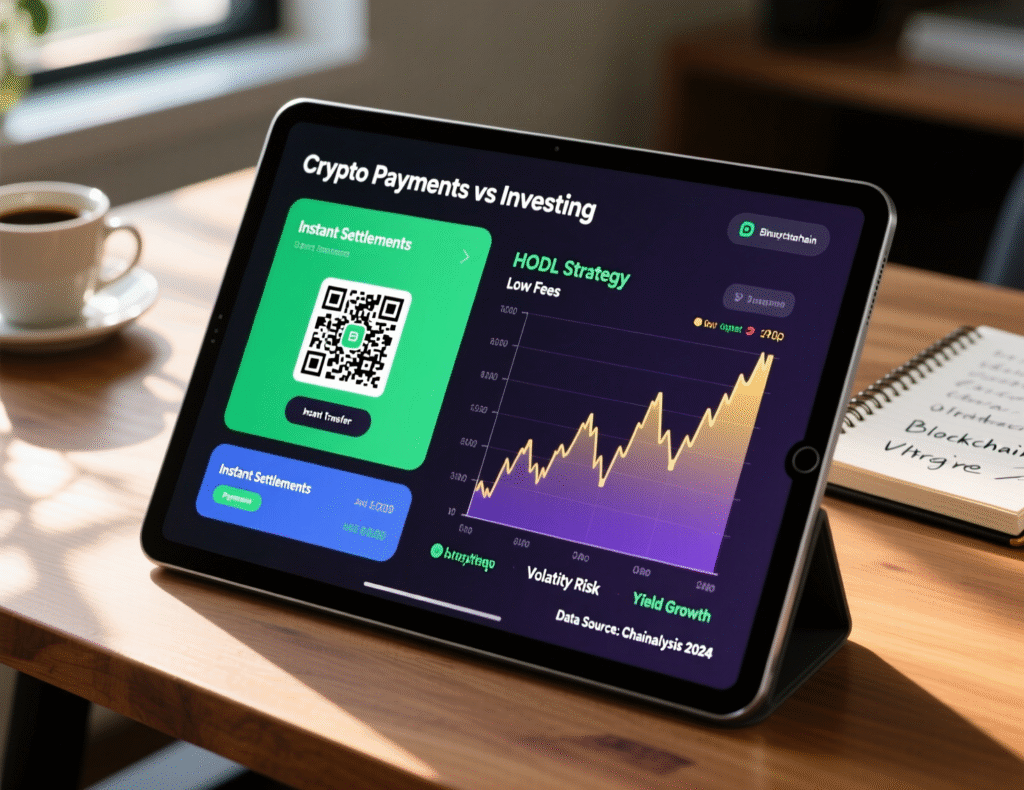
Crypto as a payment method remains niche; a fresh Kansas City Fed brief (2024 data) shows paying with crypto is low-single-digits of consumers. Translation: for most Millennials and Gen Z, crypto is still primarily an investment or speculative asset, not day-to-day money.Global context
Chainalysis’ 2024 adoption index shows usage patterns vary widely by country; grassroots adoption is strongest in select emerging markets—relevant for Gen Z’s cross-border apps and games.TL;DR: Crypto for Millennials vs Gen Z is less about who “wins,” and more about how each uses different on-ramps (brokerages/ETFs vs exchanges/apps) and learns in different places.

Crypto for Millennials vs Gen Z: Platforms & Social Habits
Gen Z and Millennials both gather alpha online but in different “rooms.”
Gen Z
Disproportionately on Reddit, X, Twitch, and short-form video. Morning Consult shows crypto traders (a group skewing younger) use X & Reddit at much higher rates than the general population; half are Twitch users.Millennials
Also heavy on X and Reddit, but more likely to cross over into LinkedIn for thought leadership and traditional finance news, per the same dataset.
This matters for onboarding: if you’re building education funnels or community, tailor content accordingly. Use explainers on TikTok/Shorts for Gen Z, and longer LinkedIn or newsletter formats for Millennials.
Crypto for Millennials vs Gen Z: Portfolio Playbooks
Both cohorts can thrive with structured risk. Here are sane, example frameworks (educational only; not financial advice).
Millennial Playbook (Peak earning, growing family/career risk)
Core (40–60%): Bitcoin & Ethereum exposure, optionally via spot ETFs for tax-advantaged accounts where applicable. Millennial ETF participation is strong per Nasdaq’s 2025 survey.
Satellites (20–40%)
Large-cap L1/L2, quality DeFi blue chips with real fees/TVL.Speculative (≤10–15%)
Rotational themes (AI, RWA, restaking), with strict position sizing and stop-loss rules.Process
Automate DCA; rebalance quarterly; document thesis per asset.
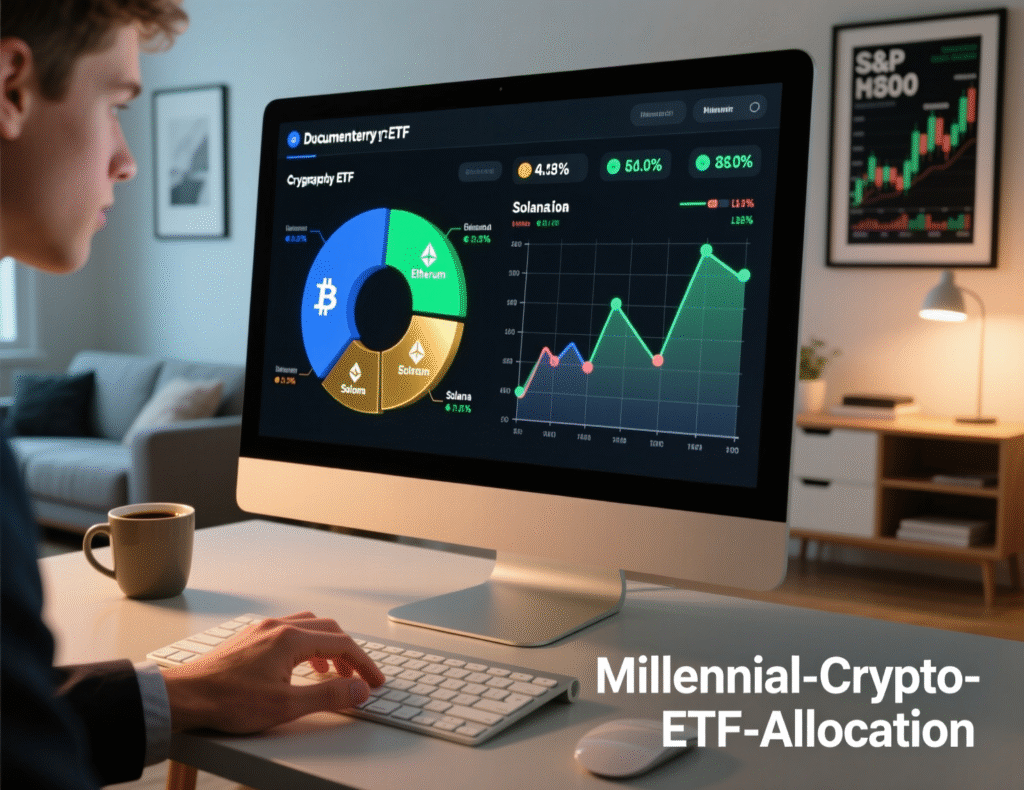
Gen Z Playbook (Long runway, lower absolute capital, higher learning velocity)
Core (30–50%)
Bitcoin/Ethereum; micro-DCA size. Consider ETFs where available/affordable. Their interest in ETF access is rising (see Gemini report on ETF appeal to Gen Z).Exploration (30–40%)
L2 ecosystems, on-chain gaming, creator tokens.Speculative (≤10–20%)
Memecoins/NFT plays with pre-committed max loss; use test wallets, never trade from vault.Process
Learn in public (Reddit/X threads), paper-trade new strategies first, and use exchange risk controls.Practical note for Crypto for Millennials vs Gen Z: keep fee drag low (use DCA windows), centralize tax records, and avoid over-trading.
Risk & Time Horizon in Crypto for Millennials vs Gen Z
Millennials often show higher absolute deposits and a bias toward ETF/brokerage rails; they’re also more likely to be balancing mortgages/childcare and prefer cleaner custody.
Gen Z shows higher experimentation, stronger presence on real-time social, and comfort with in-app flows; they self-educate via creators and forums, even while acknowledging risk. Recent reporting highlights high Z awareness of crypto’s risks alongside persistent participation.
Payments & ETFs in Crypto for Millennials vs Gen Z
Payments remain small
Overall (single-digit % of consumers), but friction is falling. Don’t build a plan around paying rent in crypto just yet.ETF access
Is a unifying bridge: 50% of Millennials and ~46% of Gen Z hold crypto-themed ETFs in Nasdaq’s study allowing exposure without private keys.

Mini Case Studies
Case 1 Millennial, 36, software PM (US)
Shifted from exchange custody to a tax-advantaged account holding spot BTC/ETH ETFs for 60% of crypto exposure; rotated a 10% sleeve into AI-adjacent L2s and held 30% in BTC/ETH. Result: lower operational risk, easier reporting, fewer impulsive trades during volatility. (Approach aligns with Millennial ETF interest signals.)
Case 2 Gen Z, 23, design student (UK)
Started with $25/week BTC/ETH DCA, learned wallet hygiene using small amounts, and limited “fun” memecoin punts to ≤10% of portfolio. Used Reddit/X for real-time learning and avoided leverage. Kept a running risk log to cap losses. (Behavior mirrors social-platform patterns among younger crypto participants.)
Guardrails Both Cohorts Should Use
1–2 core assets first; satellites later
DCA + auto-rebalance; define exit rules before entries
Separate hot wallet from vault; test transactions
No leverage until you can explain liquidation in your sleep
Treat crypto taxes as a product feature, not an afterthought
Surveys indicate durable intent to stay invested: 88% of crypto holders plan to keep investing over the next 12 months (Kraken 2025). Use that endurance to your advantage—via process, not prediction.

Wrapping It Up
The story of Crypto for Millennials vs Gen Z is convergence: Z brings experimentation and community speed; Millennials bring capital scale and cleaner rails (ETFs, brokerages). Data shows high ownership or prior ownership in both cohorts, with Z slightly ahead globally and Millennials still prominent among active traders.
If you’re building a portfolio or a product, align to how each learns and transacts: Crypto for Millennials vs Gen Z isn’t about crowning a winner it’s about meeting them where they are, reducing friction, and respecting risk.
CTA
Want a custom, age-aware crypto content funnel or an editorial calendar targeting both cohorts? Tell me your target markets and budget, and I’ll draft it.
FAQs
Q : How do Millennials and Gen Z differ in crypto ownership?
A : Gemini’s survey (2024, global sample) shows Gen Z slightly ahead globally (51% have owned) with U.S. Millennials close behind (49%). Both cohorts are highly engaged, but Gen Z leans experimental while Millennials lean structured via ETFs. Schema expander: Cite survey source and dates.
Q : How does social media shape these behaviors?
A : Crypto traders (skewing younger) over-index on X and Reddit, amplifying narrative cycles and learning curves. Planning content and education to match each platform’s culture is key. Schema expander: Note higher Twitch usage among traders.
Q : How can I reduce risk without killing upside?
A : Use a core-satellite approach, dollar-cost averaging, and pre-defined exits. Keep speculative bets ≤10–20% and segregate wallets. Schema expander: Remind readers about tax records.
Q : How do ETFs change the equation for Millennials and Gen Z?
A : ETFs let both cohorts gain exposure without self-custody. Half of Millennials and ~46% of Gen Z hold crypto-themed ETFs per Nasdaq’s retail survey. Schema expander: Mention global differences in ETF availability.
Q : How much crypto should be in a young investor’s portfolio?
A : There’s no universal number. Many financial educators suggest small allocations (e.g., 1–5% core for starters) adjusted for income stability and goals. Schema expander: This is education, not advice.
Q : How does payment usage compare to investing?
A : Paying with crypto remains niche (low single digits of consumers); most activity is investment-driven. Schema expander: Briefly summarize 2022 vs 2024 trend.
Q : How can Gen Z avoid common pitfalls?
A : Start with micro-DCA, avoid leverage, test wallets, and cap any memecoin/NFT sleeve. Learn in public but verify sources. Schema expander: Emphasize risk logs.
Q : How do Millennials typically approach custody?
A: More are comfortable with ETFs/brokerages for simplicity and tax handling, while still keeping a smaller on-chain sleeve. Schema expander: Note security conveniences.
Q : How can both cohorts vet information quality?
A : Cross-reference claims with reputable surveys (Pew, Chainalysis) and official publications; beware of influencer hype. Schema expander: Cite source freshness dates.