
Ripple, Securitize Bring RLUSD to BlackRock and VanEck Tokenized Funds
Ripple has introduced a major step in bridging traditional finance with crypto through its RLUSD integration. Partnering with BlackRock and VanEck, Ripple enables a seamless, always-on pathway between tokenized money-market fund shares and on-chain dollars. This move positions RLUSD as a direct link between institutional-grade assets and blockchain-based liquidity, opening new avenues for efficiency and accessibility.
The integration leverages Securitize’s newly launched smart contract, allowing qualified holders of BlackRock’s BUIDL and VanEck’s VBILL to exchange shares for RLUSD at any time. With 24/7 access, this system reduces friction in transferring value across markets, reinforcing the role of tokenization in the next wave of finance. By tightening these connections, Ripple is pushing the boundaries of how digital assets interact with traditional financial structures.CoinDesk
What the Ripple RLUSD integration with BlackRock and VanEck does
Securitize has enabled a share-for-stablecoin swap that functions as a stablecoin off-ramp for tokenized Treasuries. Eligible investors can request redemptions of BUIDL or VBILL shares into RLUSD at any time, receiving programmable USD liquidity without waiting for fiat rails.
Funds covered
BlackRock USD Institutional Digital Liquidity Fund (BUIDL) and VanEck Treasury Fund (VBILL).Why RLUSD
Ripple’s stablecoin is designed for institutional use, issued under a New York DFS trust charter, and backed 1:1 by high-quality liquid assets with third-party attestations.
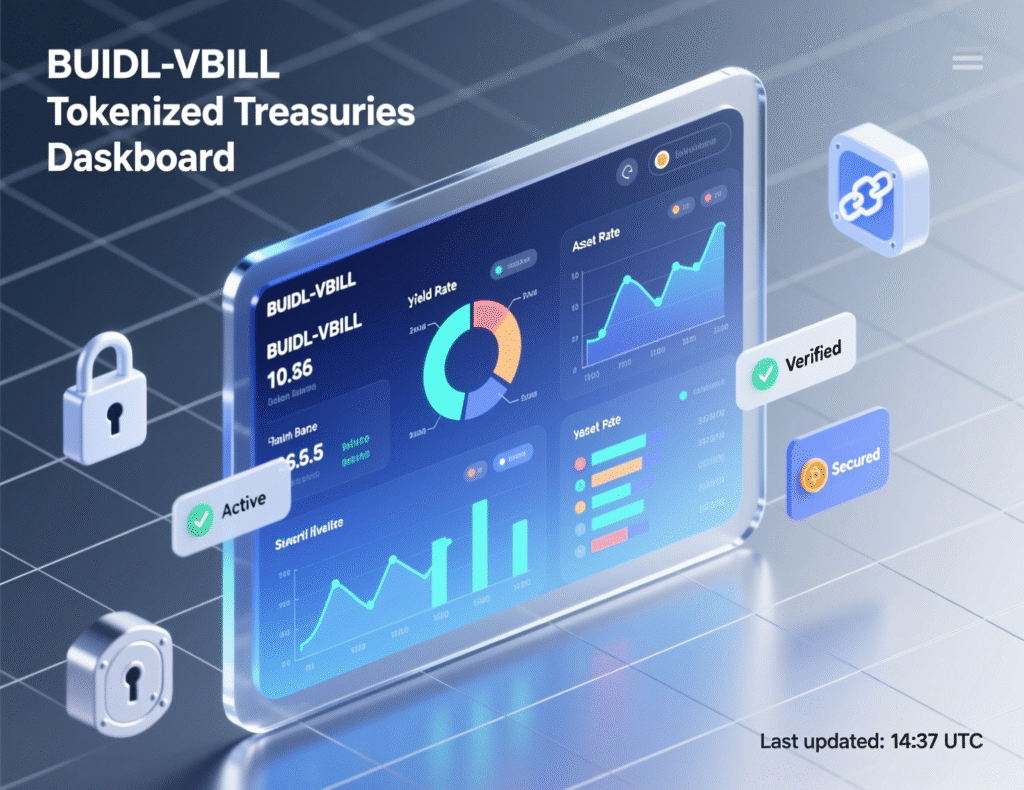
How the Ripple RLUSD integration with BlackRock and VanEck works
Securitize’s smart contract acts as a rules-based bridge: when shares are presented for redemption, it executes the swap and delivers RLUSD to the investor’s on-chain address, reflecting the fund’s tokenized share value. Ripple and Securitize frame this as “real-time settlement” unlocking DeFi composability for RWA positions.
<section id=”howto”> <h3>How to redeem tokenized fund shares for RLUSD via Securitize</h3> <ol> <li id=”step1″><strong>Step 1:</strong> Log in to your verified Securitize account and confirm eligibility for BUIDL or VBILL.</li> <li id=”step2″><strong>Step 2:</strong> Select your fund position (BUIDL/VBILL) and choose the RLUSD redemption option.</li> <li id=”step3″><strong>Step 3:</strong> Enter the amount to redeem and provide the destination wallet address for RLUSD (supported network).</li> <li id=”step4″><strong>Step 4:</strong> Review fees/hold periods and submit the redemption; the smart contract executes the share-for-RLUSD swap.</li> <li id=”step5″><strong>Step 5:</strong> Confirm RLUSD receipt on-chain and reconcile custodian/accounting records.</li> </ol> <p><em>Note: Access is typically limited to qualified investors; terms, eligible networks, and timing depend on fund documentation and Securitize policies.</em></p> </section>
Risk & compliance snapshot
Regulatory status: RLUSD is issued under a NYDFS trust charter; Securitize entities are SEC-registered (broker-dealer/ATS/transfer agent). Investors must meet fund eligibility requirements.
Reserves & custody: RLUSD reserves are held with major custodians (e.g., BNY Mellon), with segregation and attestations described by Ripple.
Operational notes: Redemptions are “24/7” at the smart-contract level; processing and limits still follow fund docs and platform controls.
Context & Analysis
Tokenized Treasuries have grown as on-chain cash equivalents; adding an always-on stablecoin exit can reduce friction for treasury and trading workflows. RLUSD’s compliance posture aims to appeal to institutions that require strong controls. Future XRPL connectivity could extend distribution and DeFi routes, but practical uptake will hinge on fees, network support, and counterparty policies.

Conclusion
By linking BlackRock’s BUIDL and VanEck’s VBILL directly with RLUSD, Ripple and Securitize strengthen the bridge between tokenized real-world assets and on-chain liquidity. This connection brings a new level of efficiency, creating a smoother path for institutions to move between traditional markets and digital assets.
The rollout will reveal key details such as VBILL’s launch timing and the supported blockchain networks. Institutions are expected to explore use cases like streamlined cash management, faster settlement, and more direct access to DeFi opportunities. This integration highlights how tokenization is reshaping financial strategies and expanding institutional adoption in crypto markets.