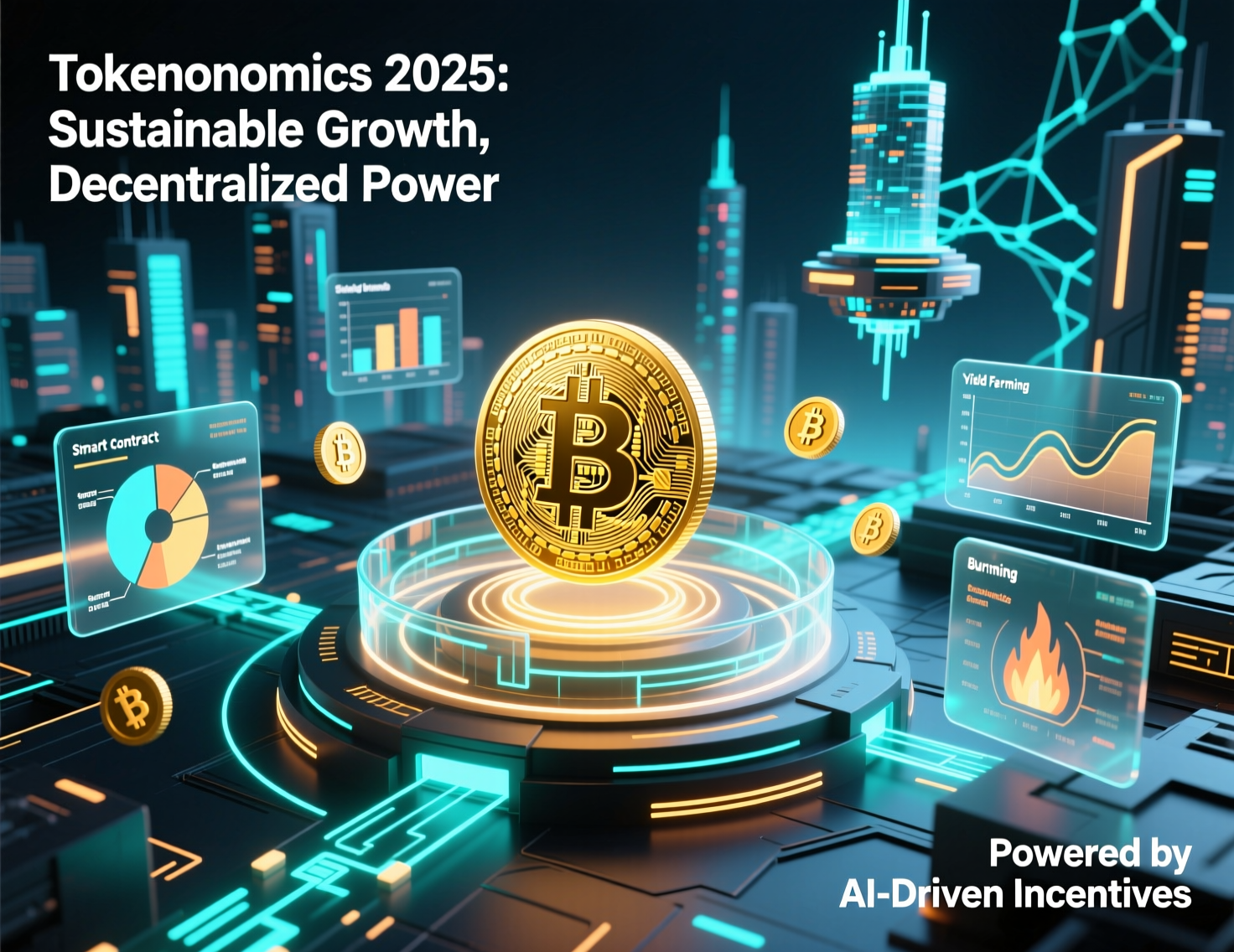

Crypto Tokenomics for 2025
Crypto Tokenomics for 2025 isn’t just about setting a max supply and hoping network effects do the rest. In the last 18 months, structural shifts spot crypto ETFs unlocking new demand channels, Layer-2 (L2) scaling accelerating on Ethereum, significant ETH burn since EIP-1559, a revived stablecoin market, and the staged rollout of MiCA rules in the EU have reshaped incentives and market microstructure. US spot Bitcoin ETFs alone have attracted tens of billions in net inflows since launch, showing how “traditional rails” can feed token demand at scale.
Designers and investors now need a playbook that aligns issuance, unlocks, utility, and governance with real demand. That means tying token mechanisms to economic sinks (fees, burns, lockups), orchestrating predictable supply (vesting, unlocks), and measuring value capture (revenue share, buyback & burn, or fee rebates) while staying inside evolving regulatory lines (e.g., MiCA’s sequencing of stablecoin and CASP provisions). This guide delivers a practical, step-by-step framework for Crypto Tokenomics for 2025, highlights battle-tested patterns and pitfalls, and shows exactly which metrics to track so teams can avoid inflation traps, smooth out sell pressure from unlocks, and build tokens that people actually want to hold and use.
Why Crypto Tokenomics for 2025 looks different
Several market forces are changing the calculus.
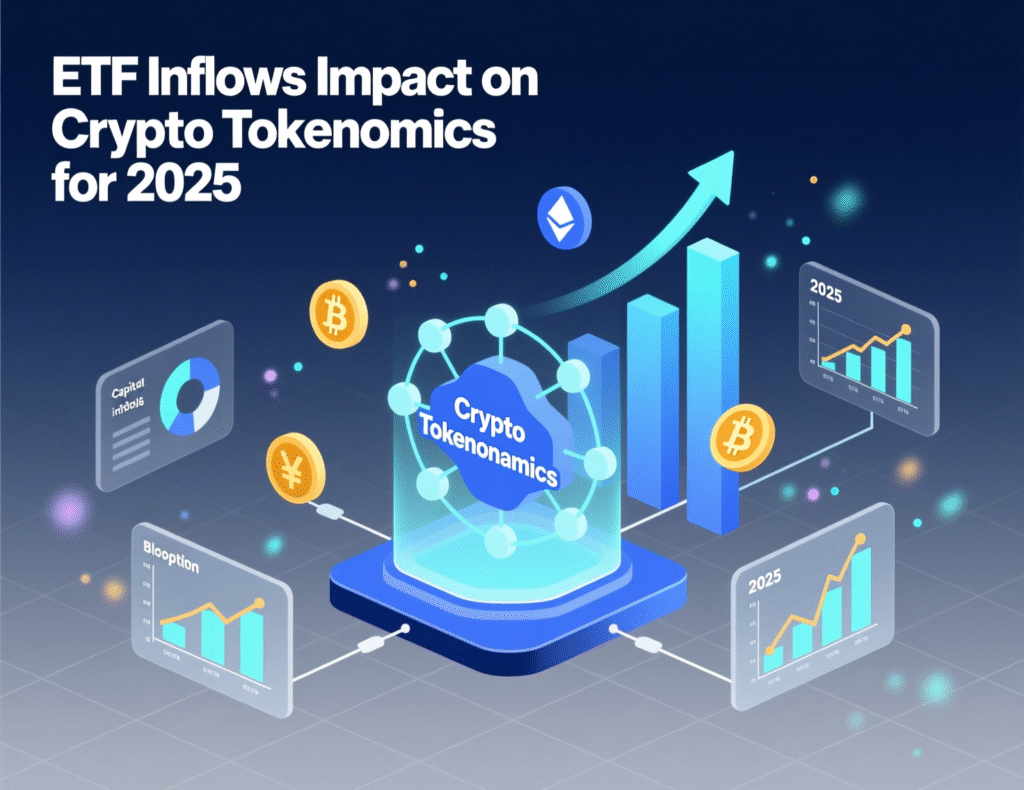
Institutional access via ETFs
Net inflows into US spot Bitcoin ETFs neared $50B by July 2025 evidence of persistent, non-crypto-native demand that can spill over into broader assets and infra tokens.Ethereum burn + L2 adoption
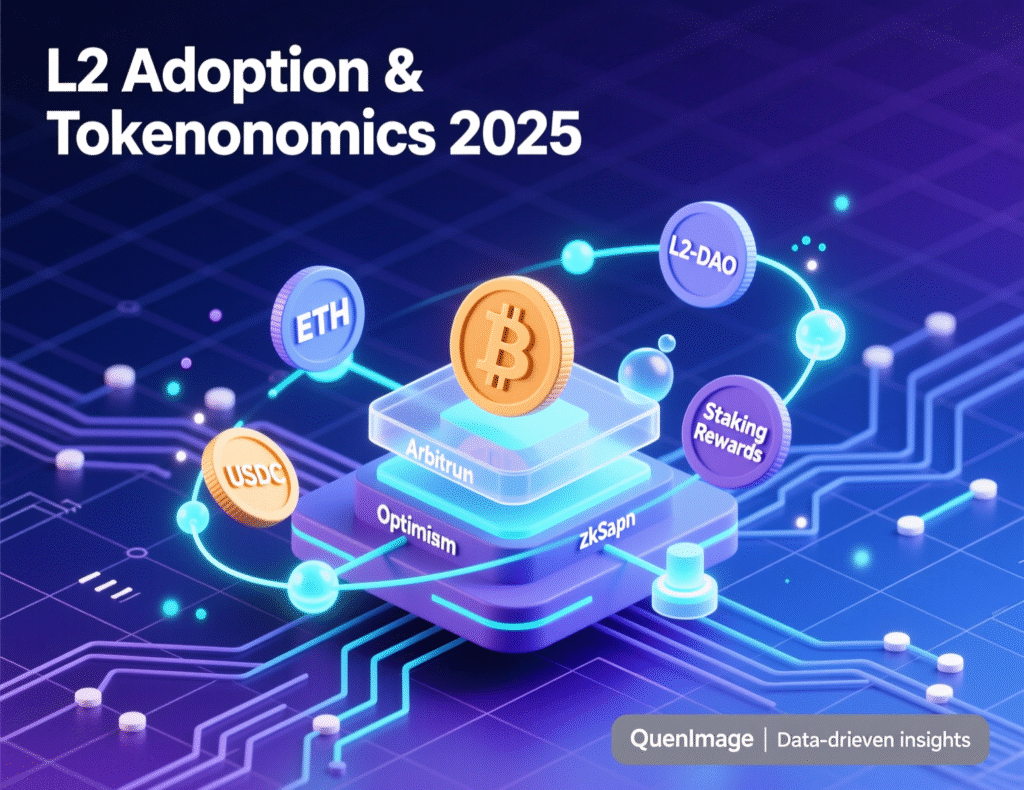
Since EIP-1559, over 5.3M ETH has been burned, hard-linking network activity to reduced supply. Meanwhile, L2 rollups secure ~$44.7B of assets today, pushing usage and fees into scalable environments where token incentives can be more granular.Stablecoin plumbing
The total stablecoin market cap hovers around $293B, providing deep liquidity for DeFi and trading, and a neutral unit of account for protocol fees and payouts.MiCA and global rules. MiCA’s stablecoin provisions took effect in June 2024, with broader licensing phases in 2025, nudging European projects toward clearer disclosures and risk controls especially crucial for treasury-backed or yield-sharing designs.
Bottom line
Crypto Tokenomics for 2025 must price in institutional demand, efficient scaling, and regulation while aligning token flows with real, recurring utility.
Tokenomics fundamentals (2025 edition)
Anchor your design around seven primitives:
Supply schedule.
Hard cap vs. tail emissions; dynamic issuance (e.g., activity-linked).
Distribution.
Fair launch, sales, airdrops, rewards; transparent allocations to team/treasury/investors.
Unlocks & vesting.
Cliff + linear schedules; market-aware pacing to reduce supply shocks; public calendars. (Track unlock calendars to anticipate flows.) CryptoRank
Utility.
What the token does: pay fees, secure the network (staking), collateralize, govern, or access features.
Value capture.
Fee rebates, buyback & burn, revenue share (watch securities rules), or staking yield.
Sinks.
Burns (EIP-1559-style), lockups, bonding, or time-weighted voting locks (ve-models).
Governance.
Who proposes/approves parameter changes; quorum/thresholds; delegate markets; safeguards.
A practical framework for Crypto Tokenomics for 2025 (7 steps)
Use this for new launches or redesigns.
Map demand drivers.
Identify why users need the token: fee savings, staking rewards, in-app perks, collateral utility, or governance. Tie each driver to events (e.g., product launches, L2 expansion, ETF marketing cycles).
Size supply vs. sinks.
Model monthly net issuance = emissions + unlocks − burns − lockups − buybacks. Stress test during high-volatility periods and “unlock weeks.”
Stage unlocks.
Publish a public unlock calendar and align liquidity support (LP incentives, market-maker lines) to reduce slippage. Prioritize unlock communications and utility rollouts in the same window.
Price utility.
Quantify fee rebates or staking APY that comes from real fees/revenue, not pure emissions. Where feasible, denominate value capture in stablecoins to reduce reflexivity. (Stablecoin depth remains high.)
Governance guardrails.
Use staged powers (emergency multisig → broad DAO), quorum that scales with float, and delegate incentives.
Chain & L2 choice.
L2s now secure ~$44.7B, with healthy ecosystems (Arbitrum, Base, OP). Pick a chain that aligns with your fee economics (cheap micro-tx? high-value settlement?).
Disclose & iterate.
Quarterly tokenomics reports: supply, treasury, buybacks, emissions, unlocks, fee revenue, active users, and roadmap changes.
Design patterns trending in Crypto Tokenomics for 2025
Fee-burn + floating issuance
Mirror EIP-1559: base-fee burn tied to usage with separate, capped emissions for security or growth. Over time, activity can offset issuance (as Ethereum has shown with multi-million ETH burned).ve-models & time-weighted voting
Locking boosts governance weight and rewards. Good for aligning long-term holders, but beware plutocracy and illiquidity.Revenue-share / “real yield.”
Direct distributions or buybacks from on-chain fees; require careful legal review (MiCA/other regimes).Points → token transitions
Use points to test incentives pre-TGE, then convert to tokens with vesting and anti-sybil filters.Dual-token setups
Separate utility/fee token from a governance token to isolate risk and simplify value flows.
Pitfalls to avoid (hard-learned lessons)
Runaway inflation
Case in point: Axie Infinity’s SLP suffered severe inflation during 2021-2022, with token emissions outrunning sinks and demand an object lesson in dynamic sink design and emissions throttles.Unlock cliffs
Large, clustered unlocks without matching demand or liquidity can swamp order books; publish calendars and coordinate market structure.Revenue mirage
Emissions-funded “APY” is not revenue. Separate protocol fees from token emissions in dashboards.Governance capture
Over-centralized multisigs or whales can nuke credibility; use time-locks and independent risk committees.
Case studies that matter in Crypto Tokenomics for 2025
Ethereum: fee burns as structural sink
Post-EIP-1559, Ethereum burns a portion of every transaction’s base fee; cumulative burn exceeds 5.3M ETH. The mechanism creates an activity-linked sink that can outpace issuance during busy periods, helping constrain net supply growth. For teams, the lesson is to tie sinks to real usage rather than fixed schedules.
Axie Infinity (SLP): emissions outrunning utility
Rapid user growth plus generous rewards produced a flood of SLP with insufficient sinks, crushing price. Designing adaptive emissions and high-utility sinks (consumables, upgrades, limited-edition items) is essential to avoid reflexive spirals.
Metrics & dashboards to track weekly
Float vs. locked
Circulating supply, % locked in staking/ve, lockup duration.Unlock runway
Next 4–12 weeks of unlocks by cohort.Unit economics
Fees (stablecoin-denominated), revenue share/buybacks, treasury runway.Demand proxies
Active users/addresses, L2 activity, TVS/TVL shifts (watch L2Beat’s TVS).Market health
Depth at ±2% on major pairs, realized volatility, borrow rates.
How to evaluate a token in 30 minutes (field checklist)
Purpose
What must holders do with it today?
Supply math
Max supply? Emissions? Current float?
Unlock risk
Next 90 days of unlocks vs. average daily volume.
Value capture
Burns, buybacks, fee sharing are they material?
Chain context
Fees and users growing? (L2 TVS trend helps.)
Governance
Who can change parameters? Time-locks?
Regulation
Any MiCA-style disclosures or stablecoin rules relevant?
Concluding Remarks
In 2025, winning tokens earn their place: they power real usage, align supply with sinks, and disclose economics the way public companies disclose earnings. ETFs open fresh demand channels; L2s give you the canvas to design granular incentives; MiCA-era disclosures force clarity. Use the framework above to shape Crypto Tokenomics for 2025 around measurable utility, adaptive supply, and transparent governance then iterate as markets evolve. Want help? Book a tokenomics audit or grab our checklist and start shipping a design users will value.
CTA: Need a second set of eyes on your design? Request our 7-step tokenomics audit and modelling template today.
FAQs
Q1 . What is “tokenomics” in simple terms?
A : Tokenomics is the economic design of a crypto asset—its supply, distribution, utility, sinks (like burns), and governance. Strong tokenomics align incentives so usage and value reinforce each other.
Q2 . How do ETFs affect tokenomics in 2025?
A : ETF inflows expand the buyer base and liquidity for major assets; second-order effects include deeper derivatives and collateral markets, which can benefit ecosystem tokens indirectly.
Q3 . How does EIP-1559 change Ethereum’s tokenomics?
A : EIP-1559 burns a portion of transaction fees. Over time, the burn can offset issuance during high activity, tightening net supply.
Q4 . How can I avoid inflation traps?
A : Throttle emissions, pair rewards with real sinks (fees, burns, lockups), and review monthly net issuance. Stress test in bear-market volumes and “unlock weeks.”
Q5 . How do I plan token unlocks?
A : Publish a transparent calendar, spread unlocks, and pair them with product releases and market-maker support to reduce slippage.
Q6 . How does MiCA impact token design?
A : MiCA phases (stablecoins first, CASP licensing later) push better disclosures and risk controls, particularly for asset-backed or yield-sharing tokens.
Q7. What metrics should I monitor weekly?
A : Circulating/locked supply, unlock runway, fee revenue, L2 activity (TVS/TVL), and market depth.
Q8 . How can stablecoins improve tokenomics?
A : Denominating fees/rewards in stablecoins reduces volatility, clarifies unit economics, and avoids reflexive sell pressure. The stablecoin base is deep enough to support this.