DAO Legal Frameworks in 2025
The web3 ecosystem has matured fast and so have DAO legal frameworks. In 2025, teams can choose between DAO-specific statutes (e.g., Wyoming, Utah, Tennessee), offshore foundation models (Cayman, Marshall Islands), or civil-law associations and foundations (Switzerland, Liechtenstein). At the same time, case law and EU-level rules such as MiCA have sharpened liability and compliance expectations for token governance and on-chain operations. This guide maps the global landscape so you can select the right structure, reduce risk, and scale with confidence. Along the way, we’ll translate legislation and court rulings into plain-English checklists you can act on today.
Whether you’re launching a protocol, an investment collective, or a research consortium, understanding DAO legal frameworks is no longer optional. It affects who can sign contracts, hold IP, open bank accounts, run payroll, pay taxes and who is on the hook when something goes wrong. We’ll cover jurisdictional snapshots (US, EU/UK, APAC, offshore), compare wrappers (LLC vs foundation vs association), summarize key liability cases, and share a practical formation workflow you can follow.
What are DAO legal frameworks?
At the simplest level, DAO legal frameworks are the laws and entity types that let a decentralized community act as a recognized legal person with limited liability, bankability, and tax posture. Some jurisdictions created DAO-specific entities (e.g., DAO LLCs). Others adapt existing vehicles foundations, associations, or companies to “wrap” the DAO’s governance and treasury.
Global snapshot of DAO legal frameworks in 2025
A growing number of jurisdictions now recognize or pragmatically accommodate DAOs. Here’s what’s changed and what hasn’t in core hubs. We’ll also note where DAO legal frameworks remain “wrapper-only” rather than status in law.
United States (Wyoming, Utah, Tennessee; Virginia proposed)
Wyoming
Pioneered the DAO LLC via the Decentralized Autonomous Organization Supplement (2021), enabling DAOs to form as LLCs with on-chain governance. The Secretary of State’s DAO supplement and FAQs outline requirements (registered agent, articles with smart-contract identifier).Utah
Enacted the Decentralized Autonomous Organization Act (HB 357), effective January 1, 2024, creating a “Utah DAO” structure with defined administrators and limited liability.Tennessee’s
Decentralized Organization Act allows LLCs to register as “decentralized organizations” by including specific notices in the articles; formation and conversion mechanics are codified.Virginia
considered HB 1796 (2025) to recognize DAO LLCs illustrating the continued state-level competition.
Liability backdrop in the U.S.
Courts have treated unwrapped DAOs as unincorporated associations or partnerships, exposing token voters to joint liability. See CFTC v. Ooki DAO (default judgment & injunction) and Sarcuni v. bZx DAO (claims against an alleged general partnership moved forward). In late 2024, a court allowed partnership-theory claims against Lido DAO to proceed past dismissal.
European Union (MiCA)
MiCA
entered into force in 2023 with phased application through December 30, 2024 and transitional windows into 2025 for CASP licenses. MiCA regulates issuers and crypto-asset service providers, not DAOs per se; it does not explicitly recognize DAOs as legal persons. Projects interacting with EU users often appoint or wrap a responsible legal entity to be the accountable “issuer”/“CASP.”
United Kingdom
No DAO-specific entity yet; however, the UK Digital Securities Sandbox (DSS) launched in Jan–Sep 2024, letting firms operate tokenized market infrastructure under modified rules for five years useful for protocols touching securities.
Asia-Pacific
Singapore
Doesn’t recognize DAOs as distinct legal persons; teams commonly use companies or foundations.Hong Kong
Has no DAO statute (yet). It advanced a 2025 stablecoin regime and VA roadmap but DAO recognition remains open.Japan
Is progressing broader Web3 reforms; DAO-specific status remains evolving teams typically wrap via companies or associations pending clearer statutory paths.
Offshore and “wrapper-friendly” hubs
Marshall Islands
DAO LLC law (2022) recognizes DAOs as LLCs popular for nonprofit DAO LLCs.Cayman Islands
Foundation companies are the leading vehicle to wrap DAOs (legal personality, no shareholders, flexible governance). 2025 guides affirm widespread DAO usage.Liechtenstein
The TVTG (Blockchain Act) provides a comprehensive token law; DAOs typically use foundations/associations under TVTG-friendly infrastructure.Switzerland
DAOs often use associations (Vereine) or foundations; several high-profile projects have adopted these.

Formation models within DAO legal frameworks
Choosing a wrapper depends on your goals (profit/nonprofit), token design, target users, and risk tolerance. Below are the models most teams consider inside modern DAO legal frameworks.
DAO LLC (e.g., Wyoming, Utah, Tennessee, Marshall Islands)
Pros
Clear limited liability; U.S. nexus eases hiring/banking; statute references smart contracts.
Cons
U.S. regulatory exposure; careful securities/commodities compliance still required; operating agreements must mirror on-chain rules.
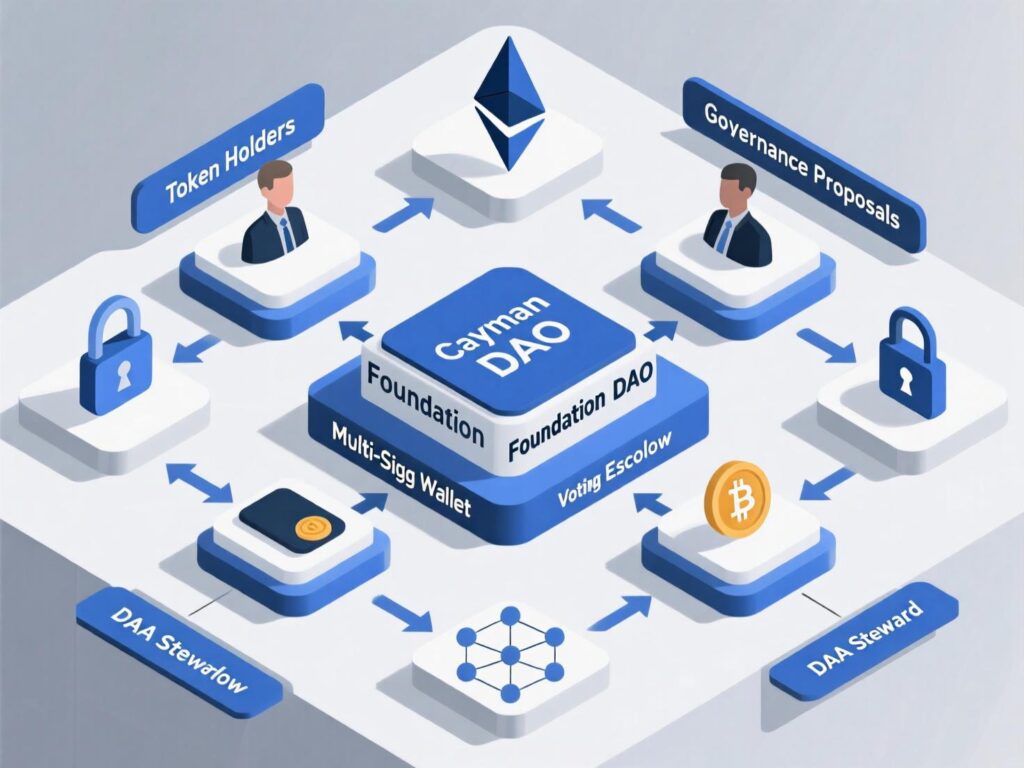
Foundation companies / Foundations (e.g., Cayman, Liechtenstein, Switzerland)
Pros
legal personality without shareholders; aligns with protocol-as-commons; widely used for treasury, grants, IP, and governance servicing.
Cons
setup and ongoing governance costs; board fiduciary overlay must faithfully implement token votes.
Associations (e.g., Switzerland)
Pros
Low capital requirements; community-aligned; good for non-profit missions.
Cons
commercial activity may trigger registration and reporting; less suitable for token issuance without additional structuring. Example: In 2024, VitaDAO proposed a Swiss association (“Vitality Now”) to steward governance execution while preserving tokenholder control.
Compliance & tax notes inside DAO legal frameworks
MiCA transitions in the EU mean CASP-like activities (custody, exchange, advisory) require licensing or partnering with a licensed entity; transitional periods run into late 2025 in some Member States.
U.S. exposure requires careful analysis of investment-contract risk and CFTC jurisdiction for derivatives. The Ooki DAO order also highlighted BSA/CIP obligations when acting like an FCM.
Risk and liability under DAO legal frameworks
Courts increasingly look past “code is law” to ask who is legally responsible. Without a wrapper, plaintiffs and regulators have argued that token voters constitute a general partnership or unincorporated association, with joint liability. Sarcuni v. bZx DAO and Samuels v. Lido DAO show claims can proceed on a partnership theory; Ooki DAO shows regulators can obtain injunctive relief and penalties. Wrappers reduce but do not eliminate risk; off-chain agreements and policies must align with on-chain execution.
EU angle
MiCA doesn’t recognize DAOs as persons; it regulates accountable issuers/CASPs. Therefore many EU-facing DAOs appoint a foundation/company as the liable interface.
Two quick case studies
Research DAO (Switzerland + global grants)
A biomedical collective chose a Swiss association for purpose-driven governance and bankability, while keeping token voting in control of funding decisions. The association executes community-approved grants and contracts, aligning off-chain fiduciary duties with on-chain votes (e.g., VitaDAO’s move to a Swiss Verein steward).
Protocol DAO (Cayman foundation + EU users)
A DeFi protocol with EU users adopted a Cayman foundation company to hold IP, manage grants, and interface with service providers. For activities touching the EU’s regulated perimeters, it partnered with licensed CASPs to satisfy MiCA pathways. Foundation bylaws embed token-vote execution, reducing misalignment. Global Practice Guides
How to choose a wrapper under DAO legal frameworks (10-step checklist)
Map activities & touchpoints
(token issuance, fees, custody, dev grants, IP, payroll)
Identify user geographies
(U.S., EU/UK, APAC) and assess licensing triggers (e.g., CASP under MiCA).
Pick wrapper candidate(s)
DAO LLC (U.S./Marshall Islands), foundation (Cayman/Liechtenstein), association/foundation (Switzerland).
Draft governance docs
(charter/bylaws/operating agreement) mirroring smart-contract logic and dispute resolution.
Establish compliance stack
KYC/AML where required, conflicts policy, treasury controls, incident response.
Tax & accounting
Engage cross-border counsel; model token treatment & payroll.
Data & IP
Assign protocol IP to the wrapper; set contributor IP terms.
Security & audits
Mandate audits and emergency pause processes.
Delegation & execution
Empower a service entity or administrators to implement token votes.
Annual reviews
Capabilities, risk, and regulatory changes (e.g., MiCA transitions through 2025).
Bottom Lines
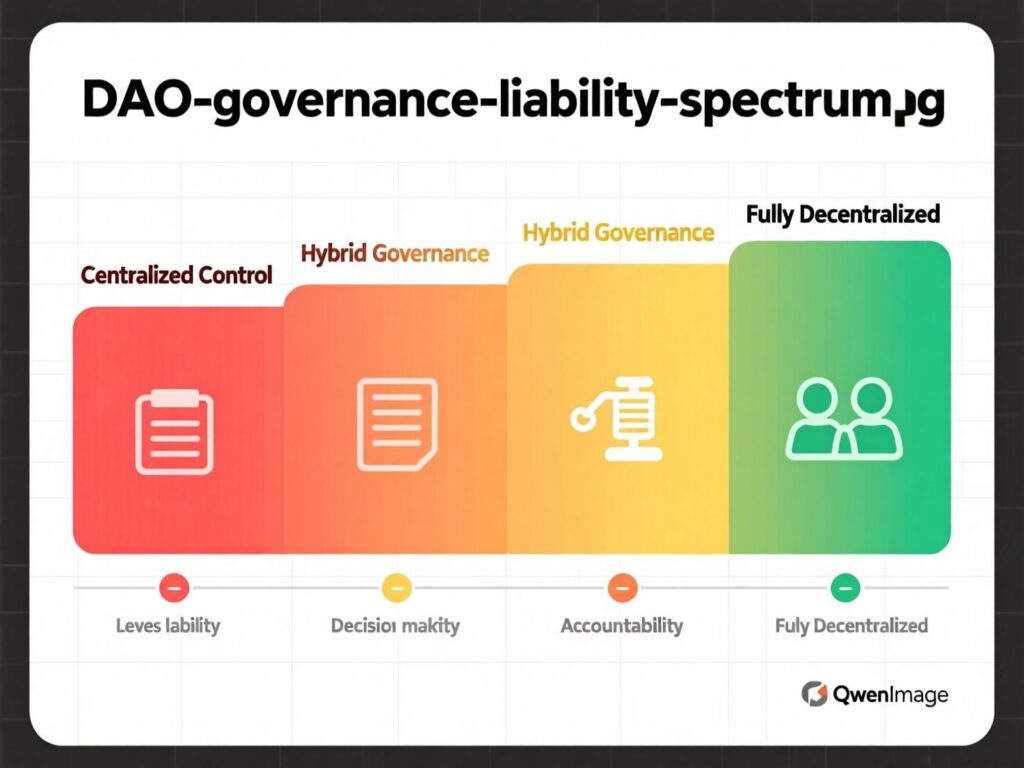
DAO legal frameworks now span statutory DAO LLCs (Wyoming/Utah/Tennessee), EU-level rules (MiCA) that regulate accountable intermediaries, and robust wrapper options offshore (Cayman, Marshall Islands) and in Europe (Switzerland, Liechtenstein) Case law has reinforced a simple message
Unwrap at your peril without a legal interface, governance token voters risk partnership-style liability. The practical path is to adopt a wrapper that reflects your mission (profit vs. purpose), embeds on-chain governance into enforceable bylaws, and satisfies licensing where your users live.
Call to action
If you’re planning or refactoring a DAO, use the checklist above, then engage local counsel to finalize entity docs and compliance so your community can build confidently on a durable legal foundation.
FAQs
Q : How do DAO LLCs work in Wyoming?
A : Wyoming lets DAOs form as LLCs if articles include a smart-contract identifier and other statutory disclosures; you must maintain a registered agent. This supplies limited liability but doesn’t preempt federal rules (e.g., securities/CFTC).
Q : How does MiCA affect DAOs operating in the EU?
A : MiCA regulates issuers and CASPs. If your DAO provides EU-facing services (custody, exchange, advice), you’ll need a licensed entity or partner and to meet disclosure, governance, and AML standards during 2024–2025 transitions.
Q : How can a DAO get limited liability without a U.S. entity?
A : Many use Cayman foundation companies or Swiss associations/foundations; both provide legal personality to sign contracts, hold IP, and implement votes.
Q : How are DAO members exposed to liability?
A : Unwrapped DAOs have been treated as partnerships/associations in U.S. courts; token voters have faced partnership-style exposure (Ooki DAO, bZx DAO, Lido DAO litigation phases). Wrappers reduce risk when aligned with on-chain governance.
Q : How do DAO legal frameworks handle administrators?
A : Utah’s DAO Act, for example, contemplates appointed administrators for defined operations, reflected in bylaws; similar roles appear in foundation structures via directors/trustees.
Q : How can DAOs bank and pay people?
A : Use the wrapper to open accounts, contract payroll providers, and run KYC/AML where needed. EU-facing activity may require CASP partnerships under MiCA.
Q : How do DAO legal frameworks affect token launches?
A : They don’t immunize securities rules. You still analyze token functionality, disclosures, and distribution. Many teams separate governance tokens from utility/access and avoid public sales in certain jurisdictions.
Q : How can DAOs operate in Hong Kong or Singapore?
A : Both lack DAO-specific recognition; teams usually wrap as companies/foundations and comply with applicable VA/stablecoin or payment rules.
Q : How do I pick between an LLC, foundation, or association?
A : Match mission (profit/nonprofit), target markets (U.S./EU/APAC), licensing needs (MiCA CASP), and governance style. Then model tax and operational costs before finalizing.