

The Future of Crypto Crowdfunding
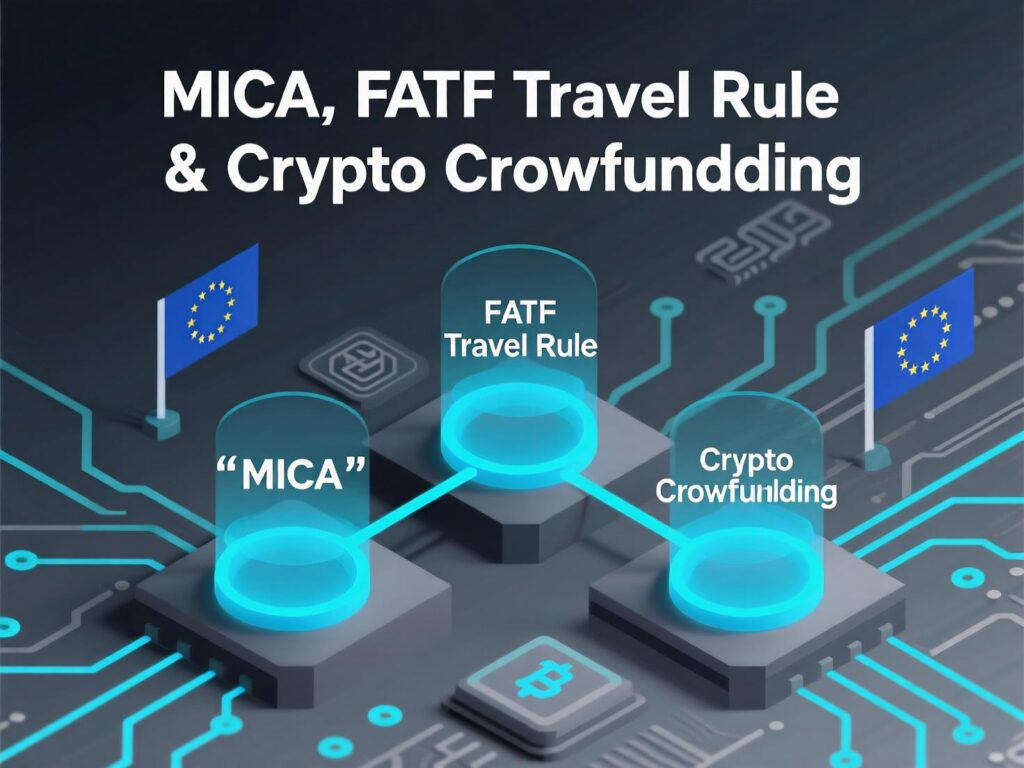
Launching a token in 2025 is very different from the ICO chaos of 2017. Crypto crowdfunding is becoming more compliant, modular, and data-driven. Token launchpads now bundle KYC flows, vesting, audits, and community activation; quadratic funding rounds reward breadth of support over whale dominance; and tokenized Treasuries and other RWAs give projects new ways to manage runway and collateral. At the same time, regulators are tightening expectations. The EU’s MiCA is rolling out licensing and disclosure regimes, FATF is pushing Travel Rule enforcement, and the SEC continues to publish granular crowdfunding stats together nudging crypto crowdfunding toward professionalization.
One important tailwind: on-chain capital markets are maturing. Tokenized U.S. Treasuries on public chains sit around $7B, and broader tokenized real-world assets (RWAs) exceed $30B—signaling deeper liquidity venues and safer treasury options for projects raising via crypto crowdfunding. Financial Times+2RWA.xyz+2
Why Crypto Crowdfunding Is Evolving
Higher trust expectations
Post-FTX, investors demand escrow, on-chain vesting, and real audits; launchpads respond with built-in controls.
Regulated access
MiCA licensing and disclosures, ESMA warnings on marketing clarity, and FATF Travel Rule all push platforms to standardize.
Better primitives
Open-source QF tooling, identity attestations, and RWA rails enable new funding designs.
Regulation Is Defining the Next Phase of Crypto Crowdfunding
MiCA & the EU reality
MiCA harmonizes EU rules for crypto-asset issuance and services, with phased application (e.g., ART/EMT rules since June 30, 2024; broader CASP regimes thereafter). Expect EU-facing token sales to align with clearer disclosures and supervision. ESMA also cautioned firms not to over-market “regulated status.” This will shape how crypto crowdfunding campaigns pitch risk, rights, and utility.
Note on ECSPR
The EU Crowdfunding Service Providers Regulation (ECSPR) isn’t the umbrella for token sales; EU materials explicitly distinguished ICOs from ECSPR scope so founders shouldn’t assume non-crypto crowdfunding rules apply to token sales.
FATF Travel Rule becomes operational
FATF’s 2024 targeted update shows 70% of surveyed jurisdictions passed Travel Rule laws but less than one third of those have active enforcement actions, creating “sunrise” gaps. Launchpads that embed Travel Rule-ready flows (counterparty due diligence, IVMS messaging) will have an edge in cross-border crypto crowdfunding.
The U.S. lens: conventional crowdfunding benchmarks
While not token-specific, the SEC’s latest analysis reports $10B+ collectively raised via Reg A and Reg CF through 2024, showing sustained retail appetite for online fundraising and offering process templates (disclosure, escrow, comms) that crypto crowdfunding platforms increasingly mirror.
Funding Mechanisms: What’s Winning (and Why)
IDOs/Launchpads 2.0
Modern launchpads go beyond listings: KYC tiers, vesting contracts, liquidity locks, smart-contract audits, and community KPIs. The best differentiate on deal quality, fair-launch mechanics, and post-raise support. As crypto crowdfunding matures, expect diligence scorecards and transparent risk flags to become table stakes.
Quadratic Funding (QF) for community alignment
QF rewards the number of backers, not just amounts. Gitcoin’s rounds continue to demonstrate wide participation, with cumulative allocations surpassing $63.9M by late 2024 and fresh 2025 rounds experimenting with dynamic QF and retroactive funding. For founders, QF is a credible path to validate product-market-community fit within crypto crowdfunding.
RWAs as treasury & incentive rails
Tokenized Treasuries (~$7.3B) and the broader RWA market (~$30B) give projects stable, transparent parking for proceeds, and in some cases, on-chain collateral to bootstrap ecosystem programs. Integrating RWAs into crypto crowdfunding raises requires policy clarity (are yields securities?) but improves risk-adjusted runway.
Architecture of a 2025-Ready Crypto Crowdfunding Campaign
Pre-raise compliance design
Jurisdiction mapping (EU CASP under MiCA, FATF Travel Rule obligations, sanctions screening).
Entity + token classification memo (utility vs. financial instrument; disclosures).
Choose a launchpad with verifiable KYC/AML tooling and Travel Rule readiness.
Tokenomics & rights clarity
Document utility, access rights, or governance—and what holders don’t get.
Vesting schedules on-chain; cliff + linear vesting; transparent unlocks dashboard.
If using RWAs for treasury, spell out custody and yield policies.
Trust primitives
On-chain escrow & milestone-based releases.
Smart-contract audits with public reports.
Sybil-resistant identity (e.g., attestations, Passport-style stamps) to protect QF.
Distribution & liquidity
Tiered allocations with clear eligibility.
Liquidity plans (AMM/market maker), guardrails (anti-MEV measures where possible).
Post-raise comms cadence and KPI reporting.
Data rooms for retail
Public KPI dashboard (active users, revenue, treasury, runway).
Risk factors section in plain language.



Case Study 1: Quadratic Funding for OSS/Public Goods
Goal
fund an open-source SDK.
Mechanism
QF round with a $600k matching pool; nearly 10k unique donors supported OSS programs in 2025 rounds.
Why it worked
social proof (many small donors), Sybil resistance, clear impact narrative.
Takeaway
For early community software, QF within crypto crowdfunding is a fit to prove broad support before a token sale.
Case Study 2: Using RWAs for Treasury Management
Goal
protect runway after an IDO.
Mechanism
allocate part of proceeds to tokenized Treasuries with transparent on-chain positions; use as collateral for short-term working capital.
Why it worked
reduced volatility vs. parking in a single stablecoin; on-chain proof of reserves.
Takeaway
RWA rails can professionalize crypto crowdfunding treasuries—subject to jurisdictional rules.
Risk Map & Red Flags for Investors
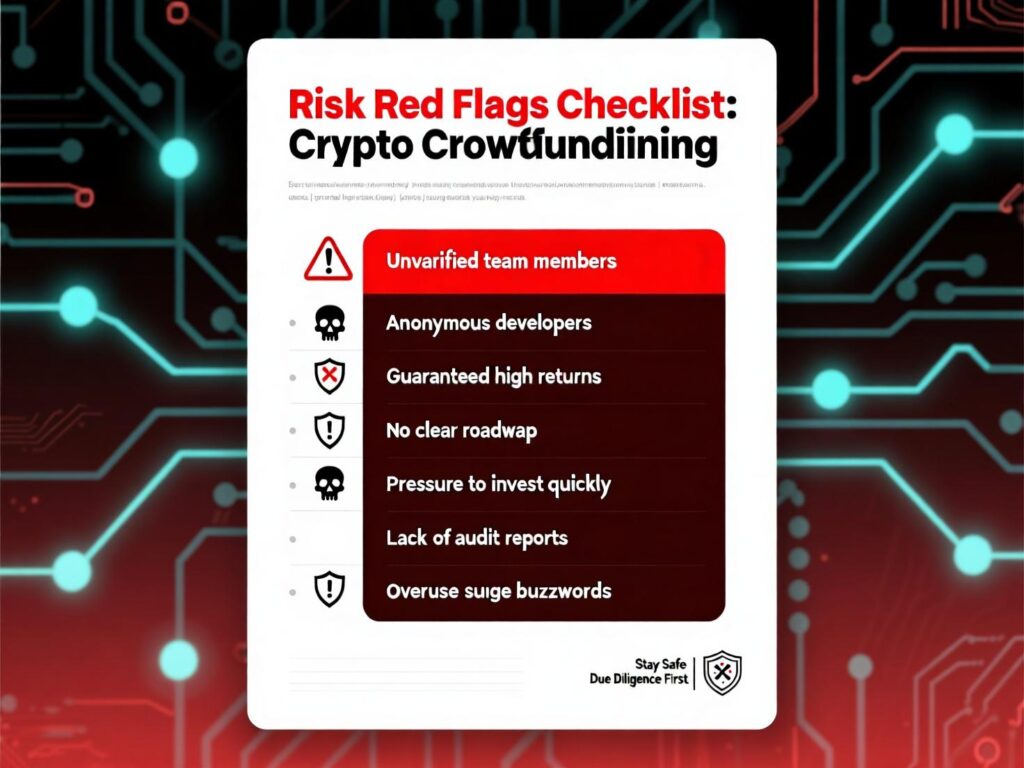
Regulatory misstatements
Marketing implying “fully regulated” without clarifying product scope under MiCA.
No Travel Rule or KYC plan
Cross-border exchanges may block transfers later.
Opaque vesting
Missing on-chain schedules or lax lockups.
Wallet-only governance
Without verified participation, whales can dominate.
Treasury concentration
All funds in a single CEX or stablecoin.
What Founders Should Measure Post-Raise
Community breadth
Unique contributors (QF/IDO whitelists), churn, NPS.
Product traction
Weekly actives, retention, on-chain usage.
Financial health
Runway, RWA share, DEX/CEX liquidity depth.
Compliance ops
% of counterparties with Travel Rule compatibility, KYC success rate.
Disclosure cadence
Monthly treasury + KPI updates.
5 Trends That Will Define Crypto Crowdfunding
MiCA-driven standardization
EU-oriented sales converge on unified disclosures and CASP processes.
Launchpad consolidation
Fewer, stronger platforms with real due-diligence pipelines.
QF + retroactive funding
Blends with milestone grants; community influence rises.
RWA-aware treasuries
Tokenized funds as default runway management.
Travel Rule interoperability
Messaging standards (IVMS) become invisible plumbing for compliant transfers.
Concluding Remarks
The next era of crypto crowdfunding will reward teams that ship like public companies: audited code, clear rights, vesting you can verify, and treasury policies you can track on-chain. Regulations (MiCA, FATF’s Travel Rule) will keep tightening, but the market is also gifting founders better rails QF to signal real demand, and RWAs to professionalize treasury. If you design for compliance, transparency, and community from day one, crypto crowdfunding becomes not just a raise but the start of long-term governance and growth.
CTA: Want a launch-ready playbook (tokenomics memo, risk factors, vesting & KPI dashboards, compliance checklist) tailored to your jurisdiction and timeline? Get the Crypto Crowdfunding Readiness Kit book a 30-minute scoping call.
FAQs
1) Quadratic Funding and Fairness in Crypto Crowdfunding
A : Quadratic funding (QF) weights the number of contributors more than the size of contributions. This reduces whale dominance and channels matching funds to broadly supported projects, which is ideal for community-centric crypto crowdfunding. (Schema expander: mention Gitcoin’s public rounds and matching pools.)
2) MiCA Compliance During Token Sales
A : Map whether you’re a CASP, prepare white-paper-style disclosures, and avoid implying protections where none exist. Use a launchpad that supports KYC and Travel Rule-ready transfers, and be precise about rights/utilities. (Schema expander: include ESMA guidance note link.)
3) RWAs in Crypto Crowdfunding Treasuries
A : Teams can park proceeds in tokenized Treasuries or money-market funds to reduce volatility and improve transparency, sometimes even posting RWAs as collateral. Ensure custody, yield, and jurisdictional rules are documented. (Expander: cite RWA.xyz data.)
4) Evaluating Crypto Crowdfunding Campaigns
A : Look for on-chain vesting, escrow, audits, Travel Rule/KYC support, treasury diversification, and monthly KPI disclosures. (Expander: emphasize vesting dashboards and risk sections.)
5) FATF Travel Rule and Token Sales
A : They require originator/beneficiary information to “travel” with transfers. Many countries have laws, but enforcement is uneven, so platforms must plan for counterparty due diligence and standards like IVMS. (Expander: include the “sunrise issue.”)
6) Preventing Sybil Attacks in Community Rounds
A : Use attestations/passport systems, minimum account-age checks, contribution limits, and post-round audits. (Expander: mention sybil-resistance reviews pre-matching.)
7) SEC Reg CF Stats and Crypto Crowdfunding
A : They show durable retail interest in compliant online raises. While token sales differ, process lessons disclosure, escrow, investor comms—apply directly to crypto crowdfunding. (Expander: link to SEC stats.)
8) Combining QF with an IDO
A : Run a QF round first to validate demand, then an IDO with vesting for committed contributors. (Expander: recommend separate disclosures and matching pool partners.)
9) Avoiding Over-Promising in MiCA Jurisdictions
A : State clearly what protections apply (if any), keep marketing precise, and maintain parity between whitepaper and website claims. (Expander: reference ESMA’s warning on misleading promotions.)