


Crypto derivatives expansion 2025
After two years of rebuilding market structure, crypto derivatives are back at the center of digital-asset trading. The combination of deeper institutional participation, clearer rule-making in major jurisdictions, and product innovation (from dated futures to on-chain perps and structured options) is accelerating Crypto Derivatives Expansion in 2025. Volumes and open interest have climbed to cycle highs on both regulated venues and offshore platforms, while options markets beyond BTC and ETH think SOL, XRP, and emerging L2 assets gain traction.
On the regulated side, CME reported record open interest across suites, while U.S. regulators signaled more coordinated oversight of leveraged crypto products. Offshore, perpetuals still dominate but are now complemented by rising alt-options liquidity and more sophisticated basis/volatility strategies. Even token launches increasingly see their price discovery shaped first in perps and options before spot lists.
This guide distills the forces behind the 2025 surge in crypto derivatives, the regulatory pivot points to watch, where growth is likely to concentrate next, and how market participants exchanges, funds, and corporates can position. You’ll also find practical hedging frameworks, real-world examples, and a checklist to operationalize opportunity while managing risk.
Why crypto derivatives are expanding in 2025
Record institutional OI:
CME highlighted a record quarter in Q2 2025 for its Bitcoin options, with notional OI approaching $4B, and Ether options ADV up 65% YoY a clear signal of deeper, longer-dated risk transfer on regulated rails.Fresh all-time highs in combined OI:
CME also reported $36B open interest across crypto futures and options on Aug 22, 2025, reflecting wider institutional re-engagement.High baseline exchange activity:
CCData’s 2025 reviews show centralized-exchange volumes trending near multi-year highs, underpinning derivatives liquidity. A June 2025 recap pegged $80T in total CEX trading over the prior 12 months. CryptoSlatePerps still rule, but diversify:
Binance Research notes DEX share has grown (including ~9.3% in futures at peaks), while CEXs continue to dominate absolute volumes.
Takeaway:
Institutional depth + product choice + a firmer regulatory glidepath are amplifying crypto derivatives growth.
Regulation is finally catching up (and it matters)
U.S. coordination:
On Sept 2, 2025, SEC and CFTC staff issued a joint statement signaling coordinated guidance around trading certain spot crypto asset products and leveraged transactions—an incremental but important step for venue optionality and clarity. Reuters covered the initiative the same day.U.K. recalibration:
The FCA moved to open retail access to crypto ETNs (from Oct 2025) while keeping the retail ban on crypto derivatives (CFDs/futures) in place—supporting more regulated exposure without reviving high-risk leverage for retail.EU under MiCA:
ESMA published March 2025 guidelines clarifying when a crypto-asset qualifies as a financial instrument (thus falling under MiFID II rather than MiCA) a key reference for structuring derivative-like products tied to indices, commodities, or other instruments.Offshore access via U.S. pathways:
The CFTC refreshed guidance around FBOT considerations and advisories in Aug/Sept 2025 relevant to how offshore venues interface with U.S. participants.
Why this fuels growth:
Clearer boundary lines let risk teams approve mandates, allocators scale positions, and exchanges list products with more confidence sustaining the expansion of crypto derivatives.

Product innovation: beyond BTC/ETH
Alt options and event-driven perps:
Kaiko shows traders front-run major token events using perps, with open interest sometimes exploding from tens of millions to $360M within days after listings (e.g., WLFI-USDT perps after Aug 23).Dated futures, indices, and structured payouts:
Venues continue to add dated futures and crypto indices (e.g., BTC dated futures with USDC settlement, with more assets slated through 2025).On-chain derivatives growth:
DeFi perps and options still trail CEX depth but march higher, supported by more robust risk engines and oracle design. Market dashboards from The Block track this secular rise.
Case study 1: CME’s institutional options flywheel
What happened:
Record notional OI (~$4B) in Bitcoin options during Q2 2025, plus a 65% YoY Ether options ADV increase.Why it matters:
As treasury and macro funds adopt options for hedging/vol premia, liquidity at regulated venues reinforces the credibility loop, attracting more sophisticated strategies (calendar spreads, collars, structured carry).Signals to watch:
Large Open Interest Holders counts, weekly expiries adoption, and cross-asset vol correlation with equity/FX.
Case study 2: Offshore innovation & listing flywheels
What happened:
New tokens/segments often see perp OI surge first. Kaiko documented $21M → $360M OI in five days around WLFI’s launch illustrating how crypto derivatives now set early price discovery.Why it matters:
Project teams and market makers increasingly stage liquidity via perps/options before (or alongside) spot listings, compressing the “liquidity bootstrapping” timeline.
Consolidation & institutional plumbing
M&A for derivatives depth: In June 2025, the FT reported Coinbase agreed to acquire Deribit for $2.9B (pending approvals) a landmark deal that, if completed, could fuse deep options liquidity with a mainstream brand and U.S. distribution.
Traditional finance connectivity: Banks and brokers expand access to crypto futures/options on regulated venues; custodial and clearing rails mature.
Where the next leg of growth may concentrate
Options beyond majors:
SOL, AVAX, and L2 ecosystems developing standardized expiries and strikes; demand for listed spreads and structured payoffs. (See ongoing alt options coverage by Deribit/BlockScholes.)
Basis and funding strategies at scale:
With higher OI baselines, cross-venue arbitrage (CEX/DEX/CME) becomes more persistent especially around macro data and ETF flows.
Volatility markets:
Crypto-VIX style indices and variance swaps gain traction as hedging/alpha tools.
Index-linked and basket derivatives:
Multi-asset risk transfer (e.g., “Layer-2 index perps”) to simplify portfolio overlays.
Regulatory on-ramps:
SEC/CFTC coordination and EU MiCA harmonization enable more compliant products, while the U.K. cETN move may pull ETF-adjacent flows without lifting retail derivatives bans.

Practical playbook: strategies for 2025
For institutions
Hedge core holdings
with CME options (collars on BTC/ETH) across weekly and monthly expiries; monitor skew/term structure into macro prints.Exploit basis:
Fund neutral carry via delta-hedged perp longs vs. quarterly futures, with dynamic re-hedging around funding spikes.Alt exposure via listed options:
Start with defined-risk spreads while liquidity builds in SOL/AVAX maturities.
For exchanges & brokers
List responsibly:
Prioritize liquidity partnerships and robust risk engines before adding long tail assets.Add education layers:
ETN/ETF-style disclosures for retail where applicable; scenario analysis and payoff visualizers.Cross-margin & portfolio margin:
Encourage multi-product adoption while enforcing conservative limits for new assets.
For treasurers & corporates
Stable yield with risk caps:
Use covered call programs on treasuries of BTC/ETH; codify governance and VaR triggers.Event hedging:
Ahead of major unlocks or launches, employ zero-cost collars to smooth cash-flow exposures.
Risk radar (don’t ignore this)
Leverage cycles:
Funding and OI spikes often precede sharp mean-reversions. Monitoring perp funding, options skew, and realized/impl-vol gaps is essential.Regulatory headlines:
U.S. policy coordination is improving but still evolving; UK/EU rules remain nuanced (e.g., cETNs vs. retail derivatives ban; MiCA vs. MiFID II split).Liquidity cliffs in alts:
Outside BTC/ETH, open interest can be concentrated—manage slippage and liquidation risks accordingly.
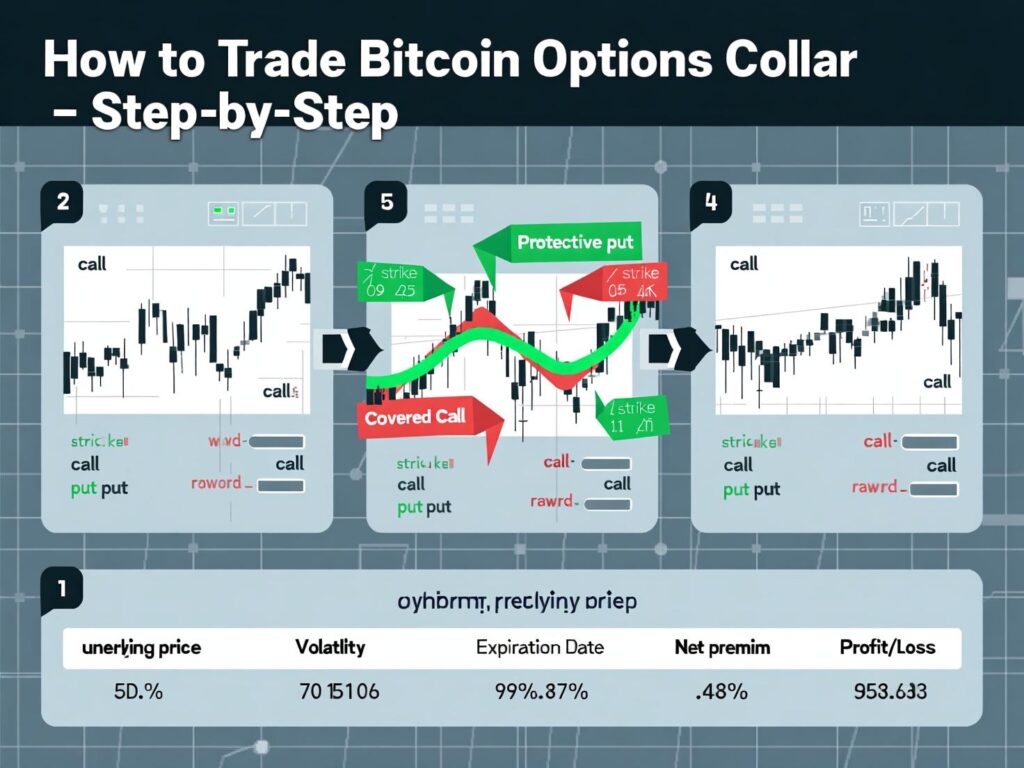
How to implement a simple BTC hedge (mini-framework)
Define risk window:
e.g., 30–60 days.
Pick instrument:
CME monthly BTC options; target 20–30 delta puts sized to cover 50–70% of spot exposure.
Finance premium:
Sell 10–15 delta calls (“collar”) within same expiry; adjust strikes to keep upside tolerance.
Monitor:
If skew normalizes or realized vol collapses, roll down puts; otherwise let expire/roll monthly.
To Sum Up
Crypto derivatives have crossed from cyclical rebound to structural expansion in 2025. Record open interest on regulated venues, more coherent U.S./EU policy signals, and product breadth across perps, options, and indices are reinforcing a higher-liquidity regime. The next phase is less about raw leverage and more about quality—institutional-grade risk transfer, safer retail wrappers (cETNs/ETFs), and smarter on-chain risk engines.
For builders and traders, the play is to embed discipline: robust margining, governance, and scenario planning. For executives, the mandate is to sequence listings and risk thoughtfully and invest in education and analytics. If you align structure with opportunity, the Crypto Derivatives Expansion in 2025 can be a durable source of alpha and resilience.
CTA: Want a one-page derivatives growth checklist (product, risk, GTM)? Copy this article into your workspace and adapt the templates below.
FAQs
Q1 . How do crypto derivatives differ from traditional derivatives?
A : They mirror many mechanics (futures, options) but settle in crypto or stablecoins, run 24/7, and often list on venues with different regulatory statuses. Margining and risk engines can vary; on CME and other regulated venues, models resemble TradFi standards.
Schema expander: Settlement currency, venue oversight, and 24/7 trading are key differentiators.
Q2 . How can institutions get compliant exposure to crypto derivatives?
A : Use regulated venues (e.g., CME futures/options) for BTC/ETH and adhere to internal risk/clearing policies. In the U.K., cETNs will be permitted for retail from Oct 2025, while retail crypto derivatives remain banned.
Schema expander: Reference SEC/CFTC joint statements and EU ESMA guidance.
Q3 . How do perpetual futures funding rates impact returns?
A : Funding transfers value between longs and shorts. Persistent positive funding can erode long carry; negative funding can benefit longs. Manage with basis trades and dynamic hedges.
Schema expander: Monitor funding, basis, and volatility spreads.
Q4 . How to hedge a Bitcoin treasury with options?
A : Use collars (long puts + short OTM calls) over 30–60 days; size to partial coverage, then roll as events approach. On regulated venues, this adds clarity for auditors and boards.
Schema expander: Note delta selection (20–30 put / 10–15 call) and roll rules.
Q5 . How big is the crypto derivatives market in 2025?
A : CEX trading reached about $80T in the prior 12 months, with derivatives the majority; CME reported records in OI during 2025. Offshore perps still dominate absolute volumes.
Schema expander: DEX share in futures also ticked up in 2025.
Q6 . How are options on altcoins developing?
A : Liquidity is growing for SOL and others, often around catalysts. Start with defined-risk structures; mind spreads and slippage.
Schema expander: Watch exchange notices for new expiries/strikes.
Q7 . What risks should traders watch during expansion phases?
A : Leverage pile-ups, thin books in alts, and regulatory headlines. Diversify venues, set stop-outs, and cap leverage around high-impact events.
Schema expander: Track OI and funding as leading indicators.
Q8 . How can exchanges grow derivatives responsibly?
A : Sequence listings, invest in risk engines, education, and portfolio margin prioritizing assets with proven spot depth.
Schema expander: Provide payoff visualizers and stress-testing tools.
Q9 . How does regulation in 2025 affect retail?
A : U.K. retails gain cETNs access (Oct 2025) but not crypto derivatives; U.S. moves indicate more coordination, not blanket approvals. EU clarifies MiCA vs. MiFID scoping.