


EU lawmakers skeptical of digital euro as ECB renews pitch
European lawmakers pressed the European Central Bank (ECB) over how a central bank digital currency would work in practice, sharpening focus on digital euro privacy concerns and potential risks to banks as the ECB stepped up its case for a rollout this decade.
The ECB’s Piero Cipollone told Parliament’s economic committee that a digital euro would serve as a crisis-proof payment option “free and universally accepted,” even during outages or cyberattacks. Lawmakers welcomed resilience goals but questioned whether those goals outweigh digital euro privacy concerns and the possibility of deposits shifting from commercial banks to the central bank.
Why the ECB wants a digital euro now
Cipollone argued that much of the EU’s payments stack relies on non-EU providers, a dependency that could hamper Europe’s autonomy in an emergency. A digital euro, he said, would act as a fallback rail, complementing cash rather than replacing it. That argument sits at the core of the ECB’s response to digital euro privacy concerns, positioning the CBDC as public infrastructure, not a surveillance tool.
Lawmakers’ pushback: privacy and bank disintermediation
Members of Parliament warned that, without ironclad safeguards, a CBDC could expose citizens’ data or skew competition by giving the ECB a safer alternative to retail bank deposits. Several asked how “holding limits” would be set to prevent large shifts of money into the ECB during stress. These questions are tied closely to digital euro privacy concerns, as trust in confidentiality often determines whether citizens will adopt a state-issued wallet at all.
The ECB’s assurances: “as good as cash” offline mode
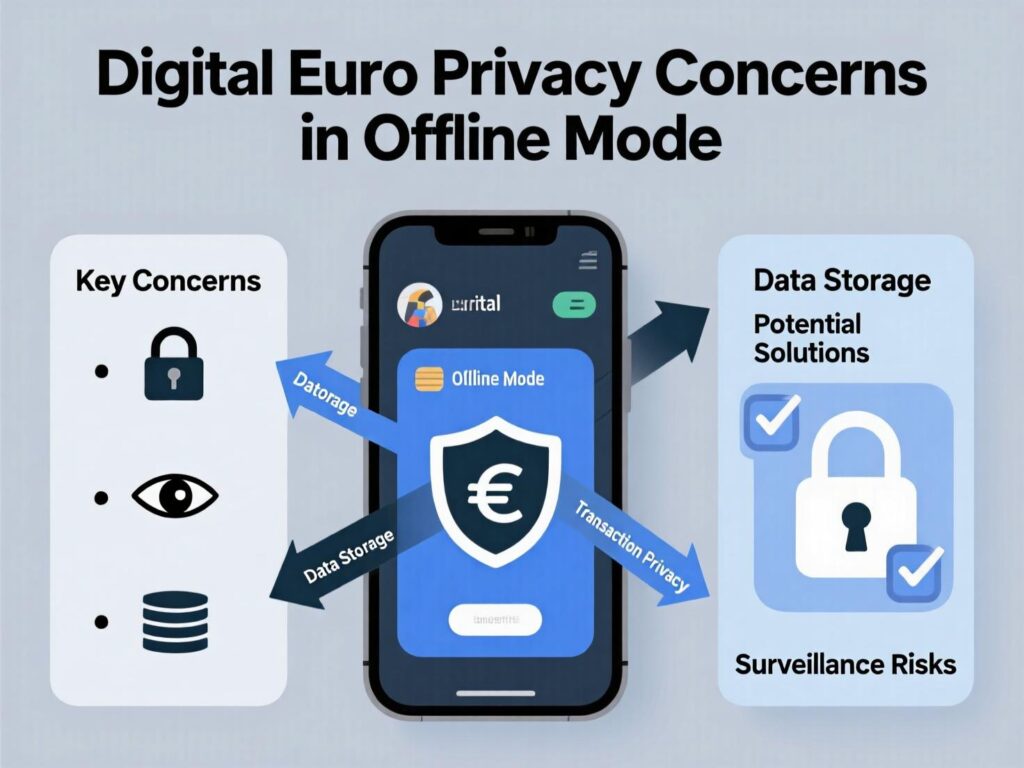
Cipollone stressed that the ECB would not know who pays whom in day-to-day transactions and pointed to an offline mode designed to be “as good as cash” on privacy. The pitch: intermediaries would handle onboarding and compliance, while the ECB runs the core ledger. Still, skeptics say digital euro privacy concerns persist until lawmakers see, in legislation and code, exactly what data is created, who can access it, and under what legal thresholds.
Holding limits and crisis behavior
To counter disintermediation, the ECB says it would cap balances based on “rigorous analysis,” with any adjustments transparent and rules-based. Critics worry that caps could still rise in a crisis and accelerate outflows from banks. The ECB counters that, in a real shock, capital can move to dollar stablecoins just as quickly so digital euro privacy concerns shouldn’t overshadow the need for a resilient, euro-denominated option.
2026 law, testing toward 2029
Digital euro legislation has been under debate since 2023 and could land by Q2 2026 if Parliament, the Commission, and the Council agree. Only then would the ECB finalize and test the infrastructure—likely a multi-year effort—suggesting a potential launch window around 2029. That long runway gives Brussels time to turn digital euro privacy concerns into enforceable privacy-by-design standards, clear holding limits, and a supervisory framework that protects competition.
Banking “friction” in Australia
The debate echoes challenges elsewhere. In Australia, crypto users and exchanges report “debanking” and transfer limits despite regulatory progress, highlighting how private rails can shape access to digital assets. Proponents say fit-for-purpose rules would help banks distinguish good actors from bad, while critics argue that restrictions push activity offshore. For Europe, the lesson is clear: address digital euro privacy concerns early, or risk low adoption that sends users to non-EU alternatives.

Bottom line
The European Central Bank is presenting the digital euro as a safety net for payments, especially in times of disruption. The idea is to ensure stability and resilience if traditional systems face challenges.
At the same time, lawmakers are demanding firm assurances on privacy, fair competition, and crisis management. The success of this project may ultimately depend on how well its final framework addresses digital euro privacy concerns while still balancing the needs of banks, consumers, and merchants.
FAQs
Q1 . What are the biggest digital euro privacy concerns for citizens?
A : Key digital euro privacy concerns include who sees transaction data, how offline payments stay anonymous, and whether law-enforcement access is tightly limited and auditable.
Q2 . How will the ECB address digital euro privacy concerns in everyday payments?
A : The ECB proposes intermediated wallets and an offline mode so routine transactions keep identifiers hidden, directly targeting digital euro privacy concerns.
Q3 . Do digital euro privacy concerns increase bank-run risks?
A : Privacy and holding limits are separate, but critics link them: if trust rises without caps, deposits could shift. The ECB says rules will manage this alongside digital euro privacy concerns.
Q4 . When could the digital euro launch if privacy issues are resolved?
A : If legislation lands by 2026 and testing proceeds, a rollout around 2029 is possible assuming digital euro privacy concerns are solved in law and design.
Q5 . Will cash disappear because of the digital euro?
A : No. The ECB says the CBDC will complement cash; addressing digital euro privacy concerns includes preserving cash-like anonymity for small, offline payments.