

Crypto Payment Gateways for E-Commerce in 2025
If you sell online in 2025, you’ve heard the pitch: accept crypto, lower fees, reach more buyers. The question isn’t whether crypto helps which crypto payment gateways make business sense for your store. Between stablecoin rails (USDC, PYUSD), on-chain checkout, and plug-and-play apps for Shopify and WooCommerce, the landscape matured fast. Stripe now supports stablecoin payments (USDC) on multiple chains with fiat settlement, Coinbase rebuilt Commerce on an Onchain Payment Protocol, and PayPal rolled out Pay with Crypto for U.S. merchants signals that crypto at checkout is shifting from experiment to infrastructure. Stripe DocsCoinbase+1PayPal Newsroom
This guide compares leading crypto payment gateways by fees, settlement, currencies, platform integrations, and risk/ops so you can assemble a stack that cuts costs and unlocks global demand without adding headaches. We’ll cover BitPay, NOWPayments, BTCPay Server, Coinbase Commerce, Triple-A, CoinPayments, Binance Pay, Stripe, and PayPal, plus how they connect to Shopify, WooCommerce, and Magento. We’ll also flag regulatory realities (EU MiCA), typical accounting flows, and real-world examples you can emulate.
Main takeaway: crypto works best at checkout when you lean on stablecoins for price stability, use automatic conversion/settlement, and pick crypto payment gateways with the right plugins and fee structure for your order values and markets.
Why 2025 Is the Year for Stablecoin Checkout
Stablecoins became the practical fuel for crypto commerce: they reduce volatility while retaining 24/7/365, near-instant settlement. Corporate and fintech reports point to rapid growth—McKinsey calls 2025 a pivotal year for tokenized cash rails; Circle reports USDC monthly transactions hit $1T in November 2024 and $18T all-time volume. For merchants, that translates to lower cross-border friction and better authorization rates vs. some card flows.
Tip: When in doubt, default your crypto payment gateways to stablecoin acceptance (USDC/PYUSD/USDT) with auto-convert to fiat or corporate USDC treasury, then gradually add BTC/ETH as a customer perk.
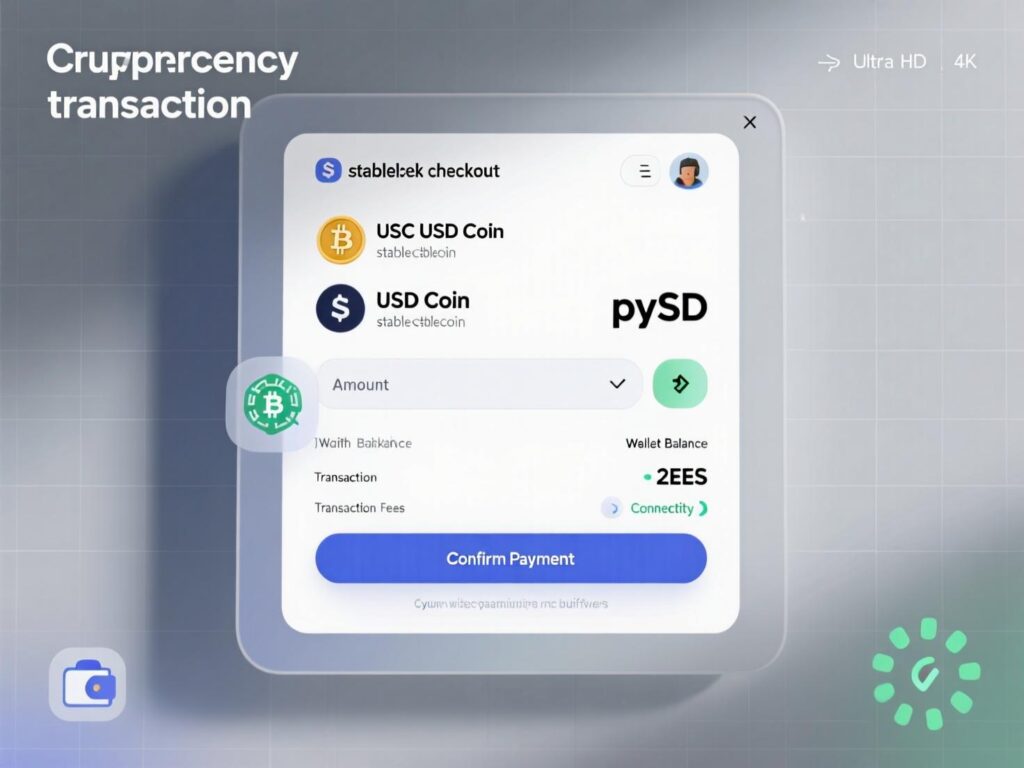
Top Crypto Payment Gateways in 2025 (At-a-Glance)
BitPay Mature merchant stack, dynamic checkout, volume-tiered fees (2%→1% + $0.25), broad wallet support, card-like ops. Good for SMBs → enterprise.
NOWPayments 0.5% single-currency / 1% multi-currency processing, wide coin support, easy API and plugins.
BTCPay Server — Self-hosted, 0% gateway fees, privacy-preserving; technical ownership required; great for Bitcoin/Lightning-first brands.
Coinbase Commerce Rebuilt on Onchain Payment Protocol with on-chain swaps to USDC and instant settlement to a wallet you choose; deep ecosystem trust.
Triple-A — Next-day fiat bank settlement with focus on stablecoins and regional compliance. Useful for APAC/EMEA expansion.
CoinPayments Long-running multi-coin processor with fees as low as 0.5%; rich coin coverage.
Binance Pay Wallet-to-merchant flows with zero gas for users and 0.8% payout fee (cap $5) for certain merchant products; 30k+ merchant endpoints.
Stripe (Stablecoin Payments) USDC on Ethereum, Solana, Polygon, Base with 1.5% fee and fiat settlement to Stripe balance; limited availability.
PayPal (Pay with Crypto, U.S.) Accept 100+ cryptos with instant conversion to PYUSD → USD into your account; Seller Protection does not apply to Crypto Payments. (Check PayPal Merchant Fees for current rates.)

Fees, Settlement & Currency Support
Processing Fees & Price Protection
BitPay: 2.0% (<$500k MTD) → 1.0% (≥$1M) + $0.25 per transaction; higher for high-risk. Price locked at invoice; settlement options include fiat and stablecoins. NOWPayments: 0.5% for single-currency; 1% for multi-currency auto-convert.
CoinPayments: as low as 0.5%.
BTCPay Server: 0% gateway fee (you still pay miner/network fees); you self-custody and manage nodes/hosting.
Stripe Stablecoin: 1.5% with auto-fiat settlement to your Stripe balance.
Binance Pay: user gas $0; payout fee 0.8% (cap $5) on specified products.
PayPal Crypto Payments: see Merchant Fees; Seller Protection doesn’t apply to Crypto Payments—plan refunds/chargebacks policy accordingly.
Coinbase Commerce: on-chain swap to USDC to cut volatility; fee deducted then rest settled to your wallet. (Check live pricing in dashboard.)
Currencies & Chains
Expect BTC/ETH + leading stablecoins (USDC, USDT, PYUSD) and growing Solana/Base coverage for faster, low-cost rails.
How Crypto Payment Gateways Integrate with Shopify, WooCommerce & Magento
Shopify: enable crypto providers (BitPay, Crypto.com Pay, Strike, Lunu, etc.) under Settings → Payments → Additional methods. BitPay and others provide step-by-step setup. BTCPay Server supports Shopify via app connector.
WooCommerce: official and community plugins exist for Coinbase Commerce (add from WooCommerce.com or WP plugins), plus others (NOWPayments, CoinPayments).
Magento (Adobe Commerce): BitPay’s open-source plugin supports native checkout; several third-party modules exist for broader coin coverage.
Implementation Downtime: Typically 30–90 minutes for SaaS plugins; 1–3 days for API integrations including webhooks, server-side validation, and accounting mappings.
Compliance & Risk You Can’t Ignore (Shortlist)
EU MiCA (2024–2025 roll-out): uniform rules for crypto-assets; stricter treatment of e-money tokens (stablecoins). If you sell to EU consumers, ensure your gateway/issuer is compliant and understand settlement entity/chain.
US (Stablecoin & Tax): Stripe’s stablecoin docs clarify supported chains and that settlement lands as fiat in your Stripe balance; keep clear audit trails. Coordinate with your CPA for sales tax/VAT treatment.
Seller Protection: PayPal’s Seller Protection doesn’t apply to Crypto Payments—set refund and dispute SOPs.



Real-World Examples (Quick Wins)
Electronics retailer (Newegg) via BitPay: Crypto accepted with category restrictions; clear public documentation reduces support load. Model: enable BTC/ETH/stablecoins + auto-settle USD.
Travel (Travala) with Binance Pay/crypto checkout: 100+ crypto options; crypto users show higher average order value. Consider for global travel/luxury profiles or cross-border segments.
Choosing the Right Crypto Payment Gateways for Your Store
Decision framework
What do you want to optimize?
Lowest processing cost → BTCPay (self-hosted), NOWPayments/CoinPayments (0.5–1%), Stripe (1.5% with fiat convenience).
Settlement preference
Instant fiat to bank/Stripe/PayPal → BitPay, Triple-A, Stripe, PayPal.
USDC treasury (keep on-chain) → Coinbase Commerce, Binance Pay.
Integration speed
Shopify/WooCommerce/Magento plugins → BitPay, Coinbase Commerce, NOWPayments, CoinPayments.
Regions & compliance
EU focus (MiCA) → ensure issuer/gateway alignment (e-money token treatment). Triple-A and Stripe provide clear documentation of flows.
Starter stacks by scenario
Shopify cross-border starter: BitPay (plugin) + Stripe (stablecoins as backup) → auto-settle USD; add Coinbase Commerce for USDC treasury.
WooCommerce with maximal coin choice: NOWPayments or CoinPayments (0.5–1%), plus Coinbase Commerce for stablecoin-first on-chain flows.
Privacy/Bitcoin-native brand: BTCPay Server + Lightning; pair with fiat off-ramp for payroll and OpEx.
Implementation Checklist
Pick 1–2 crypto payment gateways aligned to fee/settlement goals.
Enable stablecoins (USDC/PYUSD) first; add BTC/ETH later.
Install plugin (Shopify/Woo/Magento) and test sandbox.
Configure instant conversion to USD/EUR or on-chain USDC; set webhooks for order capture.
Update refund policy and buyer messaging (finality, network delays, rate locks). PayPal users: document lack of Seller Protection.
Add accounting tags for coin, chain, tx hash; reconcile with PSP export.
Launch with geo-targeted banners where card decline rates are high; measure AOV and approval lift.

Final Words
Crypto at checkout is no longer a science project. In 2025, stablecoin rails, mainstream PSP support, and robust apps make crypto payment gateways a pragmatic way to cut fees, increase cross-border conversion, and settle faster. Start simple: enable USDC (and PYUSD if you’re U.S.-based), turn on instant conversion or USDC treasury, and connect a plugin on your commerce platform. As volume grows, add a second gateway for redundancy, then experiment with Bitcoin/Lightning for communities that value it. Keep compliance in view (MiCA for EU), document your refund/charge policies, and wire webhooks into finance ops from day one.
CTA: Want a tailored stack and rollout plan? Ask for a 1-page architecture mapping your platform, regions, target coins, fees, and settlement flows.
FAQs
Q : How do crypto payment gateways reduce fees?
A : Most charge 0.5–1.5% vs. 2–3%+ for many card transactions. Examples: NOWPayments 0.5–1%, Stripe stablecoins 1.5%, BitPay tiered 2%→1% + $0.25. You’ll still pay network fees or payout fees where applicable. Expander: Check your order values—percent + fixed fees matter for small baskets.
Q : How can I avoid volatility risk?
A : Use stablecoins (USDC/PYUSD) and enable auto-conversion to fiat or USDC at receipt (Coinbase Commerce/Stripe). Expander: Lock rates per invoice and communicate timing windows.
Q : How do refunds work with crypto payments?
A : Crypto is final on-chain; gateways implement refund workflows that send coins back or credit fiat after reconciling tx hash. PayPal Seller Protection doesn’t cover crypto payments document policies. Expander: Automate refund webhooks and anti-fraud checks.
Q : How does this integrate with Shopify/WooCommerce?
A : Install the provider app (e.g., BitPay/BTCPay/Commerce), configure keys, and enable on the Payments page; Woo has official Coinbase Commerce plugin. Expander: Test in sandbox first.
Q : How does settlement work?
A : Options: instant fiat to bank/PSP balance (BitPay, Triple-A, Stripe, PayPal) or USDC to your wallet (Coinbase Commerce/Binance Pay). Expander: Map treasury policy by currency/chain.
Q : How do regulations affect me in the EU?
A : MiCA sets unified rules, with stricter oversight for stablecoins (“e-money tokens”). Coordinate with your PSP and check issuer compliance if selling into the EU. Expander: Update T&Cs for geography.
Q : How can crypto improve cross-border sales?
A : Stablecoins reduce currency friction and weekend cutoffs; merchants report higher approval and faster settlement. Expander: Pair with localized pricing and tax automation.
Q : How do I choose between BitPay, NOWPayments, and BTCPay?
A : Pick by fees, settlement, integration effort, and custody: BitPay (enterprise polish, fiat), NOWPayments (low fee, many coins), BTCPay (0% fees, self-hosted, dev-friendly). Expander: Consider a dual-gateway strategy.
Q : How can I take stablecoin payments without holding crypto?
A : Use Stripe stablecoins or PayPal Crypto Payments—they convert to fiat/PYUSD automatically and settle to your account. Expander: Confirm eligibility/fees by country.